

Total Knee Replacement

Key Takeaways
- It is usually considered when arthritis or other damage makes walking, climbing stairs, or resting comfortably difficult.
- Symptoms often include persistent pain, stiffness, swelling, reduced range of motion, and difficulty with everyday activities.
- Diagnosis combines medical history, examination, and imaging, with treatment plans tailored to the person’s age, health, and goals.
- Recovery depends on rehabilitation, home support, and steady follow-up after surgery.
- Preventive habits such as weight management, muscle strengthening, and joint-friendly activity may help protect the knees before surgery is needed.
Total knee replacement is a surgical option for people whose knee pain and stiffness continue to limit daily life despite non-surgical treatment. It can help restore mobility, reduce pain, and support a more active routine when the joint has been significantly damaged.
Overview
Total knee replacement, also called total knee arthroplasty, is an operation in which damaged surfaces of the knee joint are replaced with artificial components. It is usually recommended when the joint has been worn down or injured to the point that pain and stiffness begin to shape the person’s daily routine more than the condition itself does.
The goal is not simply to “fix” a knee in the abstract. The practical aim is to help a person stand up more easily, move with less pain, and return to ordinary activities with greater confidence. For many patients, that includes a long journey of deciding whether surgery is truly needed, arranging care, and planning recovery from home or while traveling for treatment.
Most total knee replacements are performed for advanced osteoarthritis, but they may also be considered after inflammatory arthritis, certain fractures, or other severe joint damage. A careful orthopedic evaluation helps determine whether surgery is the best next step or whether another approach should come first.
Symptoms
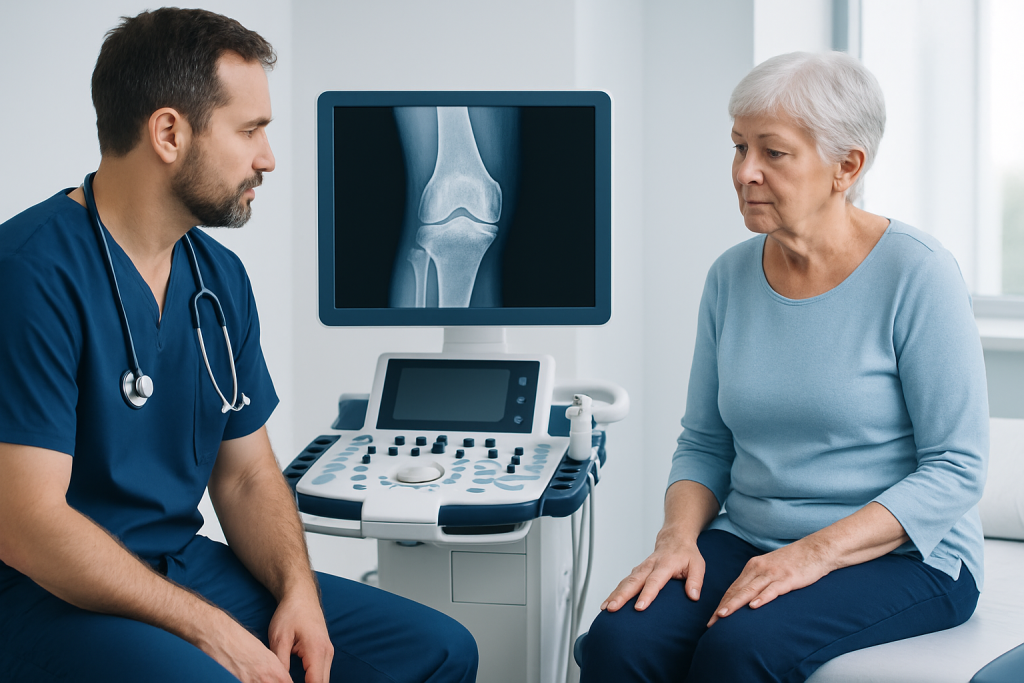
People who eventually consider total knee replacement often describe a pattern rather than a single symptom. The knee may ache during walking, feel stiff after sitting, swell repeatedly, or become difficult to bend and straighten fully. Some people notice that their mobility shrinks gradually, until climbing stairs, getting in and out of a car, or walking across a room takes more effort than it once did.
Pain can appear in different ways. It may be present during activity, after activity, or even at rest, including at night. Some patients also hear grinding, feel instability, or sense that the knee is no longer dependable on uneven ground or when turning.
- Persistent knee pain that limits daily life
- Stiffness, especially in the morning or after sitting
- Swelling or warmth around the joint
- Reduced range of motion
- Difficulty walking, kneeling, or using stairs
These symptoms do not automatically mean surgery is needed. They do, however, signal that the joint deserves a proper orthopedic assessment, especially when conservative treatment is no longer providing meaningful relief.
Causes & Risk Factors
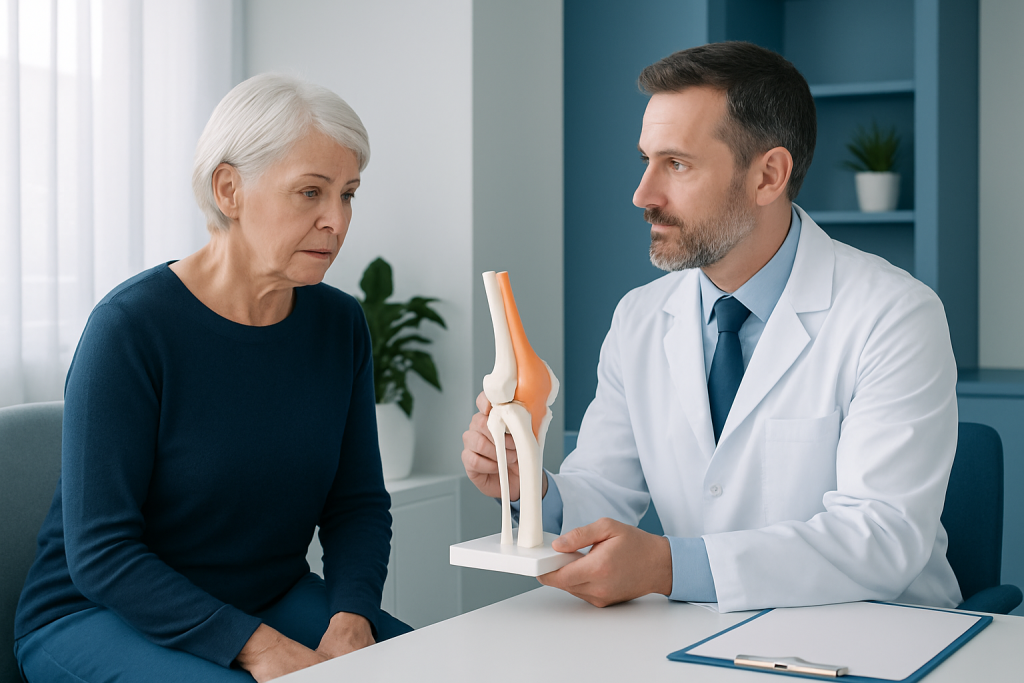
The most common reason for total knee replacement is osteoarthritis, a condition in which the smooth cartilage that cushions the joint wears away over time. As the surfaces become rougher and less protective, movement becomes more painful and the knee may begin to deform or lose function.
Other forms of arthritis, such as rheumatoid arthritis or post-traumatic arthritis, can also damage the knee. In some people, the joint is harmed by a previous injury, repeated stress, or structural problems that alter how weight is distributed across the knee.
Several factors may increase the likelihood of severe knee disease. These include older age, excess body weight, prior knee injury, a family history of arthritis, and occupations or sports that place repeated load on the joint. Risk factors do not determine the outcome on their own, but they can make joint wear more likely over time.
International patients sometimes arrive after years of adapting around knee pain, using short-term solutions, or postponing care because of work and travel commitments. Understanding the cause helps the orthopedic team build a treatment plan that fits both the condition and the person’s real-life obligations.
Diagnosis
Diagnosis begins with a detailed conversation about symptoms, activity level, past injuries, and the treatments already tried. A physical examination helps the doctor assess how the knee moves, whether it is stable, and where the pain is located. This step is important because the same complaint can reflect several different knee problems.
Imaging studies are usually part of the evaluation. X-rays can show joint-space narrowing, bone changes, deformity, and the degree of arthritis. In some cases, other tests may be used to better understand nearby structures or to rule out a different cause of pain.
The surgeon also reviews general health factors that affect surgical planning, such as diabetes, heart or lung disease, smoking status, and medications. For someone traveling for care, this assessment may include preoperative coordination, lab tests, and a discussion of how recovery and follow-up will work after returning home.
Not every painful knee needs replacement. Doctors usually consider whether nonsurgical care has been tried and whether the person’s symptoms are severe enough to justify the risks and recovery involved in surgery.
Treatment Options
Non-surgical treatment is often considered first, especially in earlier stages of knee disease. Options may include physical therapy, activity modification, weight management, braces, anti-inflammatory medicines when appropriate, and targeted injections in selected cases. These measures can reduce pain and improve function, although they may not be enough when joint damage is advanced.
Total knee replacement is considered when conservative treatment no longer provides adequate relief and daily life remains restricted. During the operation, the surgeon removes damaged bone and cartilage from the end of the femur and tibia and replaces them with shaped metal and plastic components that recreate a smoother joint surface. In some cases, the underside of the kneecap is also resurfaced.
Recovery starts soon after surgery. Patients are typically encouraged to begin moving the knee early, under the guidance of the care team, to support circulation and restore function. Pain control, physical therapy, and gradual walking are key parts of the process. For international patients, planning matters: the timing of flights, rehabilitation access, and the ability to attend follow-up visits should be discussed before travel.
As with any major operation, total knee replacement carries possible risks such as infection, blood clots, stiffness, bleeding, implant wear, or limited improvement. A qualified orthopedic surgeon reviews these risks in the context of the person’s overall health and expected benefit.
Prevention & Self-care
Not every knee problem can be prevented, but the joint often responds well to habits that reduce unnecessary strain. Maintaining a healthy body weight can ease pressure on the knees, while regular strengthening exercises help support the muscles that stabilize the joint. Low-impact activities such as walking, cycling, swimming, and supervised exercise programs are often easier on the knees than repetitive high-impact loading.
People with knee pain may also benefit from practical adjustments in daily life. Supportive shoes, pacing activities, using handrails on stairs, and avoiding prolonged positions that increase stiffness can make a noticeable difference. If a doctor or physical therapist recommends an exercise plan, consistency usually matters more than intensity.
After surgery, self-care becomes part of recovery. Following wound-care instructions, using medicines exactly as directed by the surgical team, attending physical therapy, and watching for signs of complications are all important. Patients recovering away from the hospital should know whom to contact if pain suddenly worsens, fever develops, the incision changes, or walking becomes unexpectedly harder.
Good self-care also includes realistic planning. Recovery is easier when home support, mobility aids, and follow-up appointments are arranged before the patient leaves the treatment center.
When to See a Doctor
A doctor should evaluate knee pain when symptoms persist for more than a short period, interfere with sleep, limit walking, or make everyday tasks difficult. This is especially true if the knee repeatedly swells, gives way, locks, or becomes visibly deformed. Early assessment can clarify whether the problem is arthritis, an injury, or another condition.
People already diagnosed with knee arthritis should seek medical advice if pain relief is no longer adequate, if the joint function continues to decline, or if they are considering surgery and want to understand whether they are a candidate. A consultation with an orthopedic specialist can help compare surgical and non-surgical options in a calm, structured way.
After knee replacement, medical review is important if there is increasing redness, drainage, fever, calf swelling, chest symptoms, new severe pain, or an inability to bear weight. These signs deserve prompt attention, even if the overall recovery had seemed to be progressing well.
For international patients, it is especially helpful to choose a center that can coordinate assessment, surgery, and rehabilitation across borders. Acibadem Health Point’s multidisciplinary specialists and JCI-accredited hospitals diagnose and treat total knee replacement for international patients with coordinated, patient-centered care.
Recovery and Life After Surgery
Recovery after total knee replacement is a gradual process rather than a single event. In the first weeks, the main goals are to control pain, reduce swelling, restore motion, and rebuild the ability to walk safely. Most patients find that progress comes in stages, with some days feeling easier than others, which is a normal part of healing.
Physical therapy is usually central to regaining function. Exercises are designed to improve bending, straightening, and strength while also helping the person relearn normal movement patterns. Staying active within the surgeon’s guidance often supports better long-term results than resting for too long.
Long-term success also depends on protecting the new joint. Maintaining muscle strength, following follow-up recommendations, and using the knee sensibly in daily life can help the implant serve well over time. Many people ultimately return to routine walking, household tasks, and other low-impact activities with far less pain than before surgery.
Frequently asked questions
Who usually needs a total knee replacement?
It is usually considered for people with advanced knee arthritis or other major joint damage whose pain and stiffness continue despite non-surgical treatment. The decision depends on symptoms, exam findings, imaging, and overall health. A surgeon also considers whether the person’s daily life is being significantly limited.
Is total knee replacement the same as partial knee replacement?
No. Total knee replacement resurfaces the entire joint, while partial knee replacement treats only one damaged compartment in selected patients. The right option depends on where the damage is located and how much of the knee is affected.
How long does recovery take?
Recovery varies from person to person. Many patients begin walking with assistance soon after surgery, but regaining strength, comfort, and confidence usually takes weeks to months. Physical therapy and regular follow-up are important throughout that period.
Will the new knee feel completely normal?
Many people notice major pain relief and better function, but a replaced knee may not feel exactly like a natural joint. Some stiffness or awareness of the implant can remain, especially early in recovery. The main goal is usually meaningful improvement in comfort and mobility.
Can someone travel for knee replacement surgery?
Yes, many international patients do travel for orthopedic care, but planning is important. The timing of surgery, rehabilitation, and follow-up should be organized before the trip. The patient should also understand how to get support if questions come up after returning home.
What can help prepare for surgery?
Doctors often recommend improving general fitness, stopping smoking if applicable, and organizing home support before the procedure. It also helps to review medications, plan for physical therapy, and arrange practical details like transportation and mobility aids. Preparation tends to make recovery smoother and less stressful.
References
- American Academy of Orthopaedic Surgeons
- National Institute of Arthritis and Musculoskeletal and Skin Diseases
- Mayo Clinic
- World Health Organization
This article is for general information only and is not a substitute for professional medical advice. Please consult a qualified doctor about your individual situation.
More from the Health Library



Related Specialists

Prof. Dr. Ahmet Alanay
Orthopedic Surgery & Traumatology
Dr. Sinan Aksu
Orthopedic Surgery & Traumatology
Dr. Sirri Baştürk
Orthopedic Surgery & Traumatology
Prof. Dr. Korhan Özkan
Orthopedic Surgery & Traumatology