

Cervical Spine

Key Takeaways
- The cervical spine is the upper part of the spine in the neck and is essential for movement and nerve protection.
- Neck pain, stiffness, headaches, arm tingling, and weakness can all point to a cervical spine problem.
- Common causes include muscle strain, disc wear, arthritis, injury, and nerve compression.
- Diagnosis may involve a physical exam, imaging, and sometimes nerve tests depending on the symptoms.
- Many cases improve with conservative care, but persistent numbness, weakness, or balance problems need medical review.
The cervical spine supports the head, enables motion, and protects nerves that travel to the shoulders, arms, and hands. When it is strained, degenerated, or injured, symptoms can range from simple neck stiffness to pain, numbness, or weakness.
Overview
The cervical spine is the neck portion of the spine, made up of seven small vertebrae stacked one above another. It carries the weight of the head, allows turning and bending, and creates a protective channel for the spinal cord and nerve roots.
Because this area is both mobile and delicate, it is often affected by everyday strain, posture-related stress, disc changes, and injuries. Some cervical spine problems stay local to the neck, while others send symptoms into the shoulder blades, arms, or hands because of nerve irritation.
For people traveling from another country for care, the cervical spine can be a confusing topic at first because similar complaints may come from muscles, joints, discs, nerves, or a combination of these structures. A careful assessment helps distinguish temporary discomfort from a condition that needs targeted treatment.
Symptoms
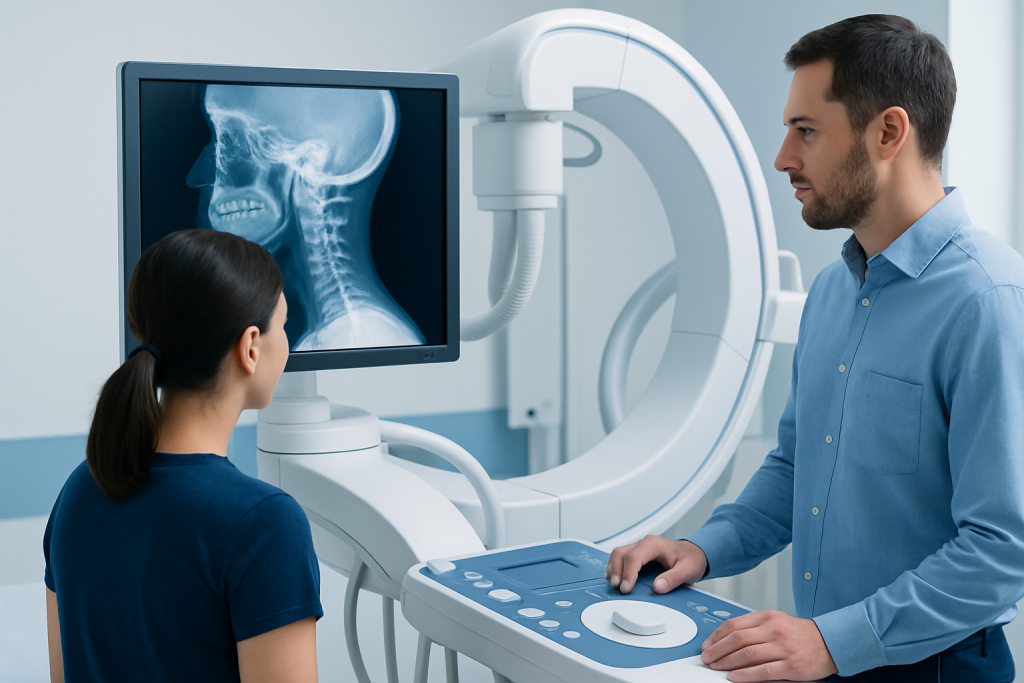
Cervical spine symptoms can feel very different from one person to another. Some people notice a dull ache and stiffness after long computer use or sleep in an awkward position, while others describe sharp pain that worsens with certain movements.
Common symptoms may include:
- Neck pain or tightness
- Reduced range of motion
- Headaches that start near the base of the skull
- Pain spreading to the shoulder or upper back
- Numbness, tingling, or burning in the arm or hand
- Weakness or clumsiness in the arm or fingers
More serious signs can appear when the spinal cord is involved. These may include balance problems, trouble with coordination, or symptoms in both arms or legs. Such changes should be assessed promptly, even if the neck pain itself seems mild.
Causes & Risk Factors
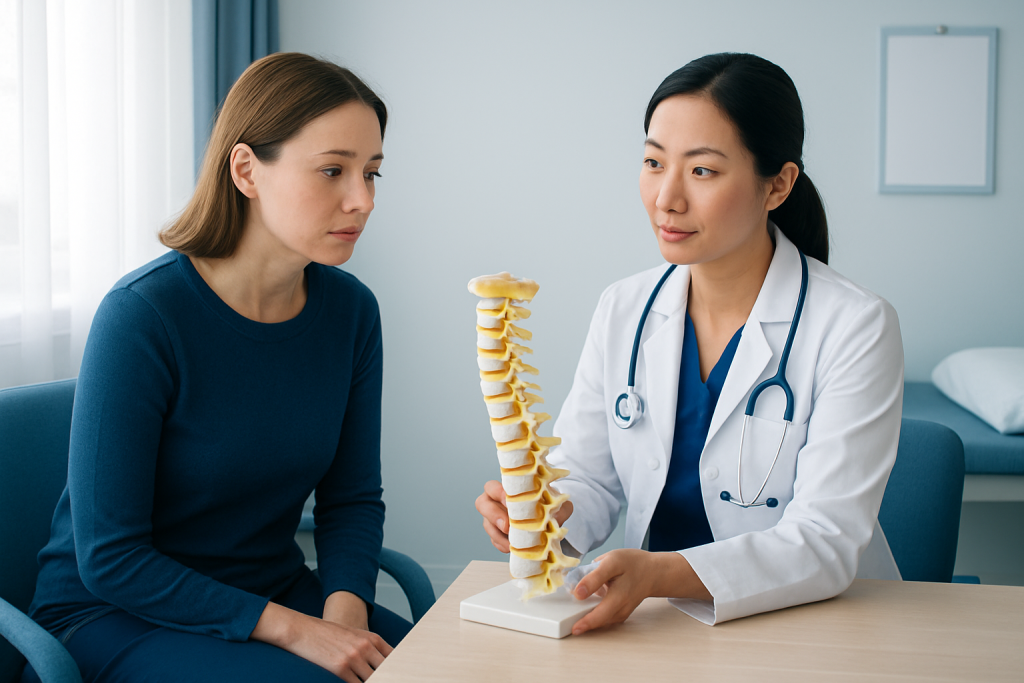
The cervical spine may be affected by a wide range of conditions. In some people, symptoms begin after sudden strain or trauma; in others, they develop slowly over time as the spinal structures wear down.
Common causes include muscle strain, ligament sprain, herniated or bulging discs, osteoarthritis, spinal stenosis, and whiplash-related injury. Less commonly, inflammatory conditions, infections, or tumors can involve the cervical spine as well.
Risk factors often reflect how the neck is used and how the body ages. Poor posture, repetitive lifting, long hours looking down at devices, a history of injury, smoking, and age-related degenerative changes can all increase the chance of neck-related symptoms. In international patients, long flights and carrying heavy luggage may aggravate an already sensitive neck, although they do not usually cause structural disease by themselves.
Diagnosis
Diagnosis begins with a detailed history and a physical examination. A clinician will ask where the pain is located, whether it travels into the arm, what movements make it better or worse, and whether there are any changes in strength, sensation, or balance.
If the exam suggests a nerve or spinal cord problem, imaging may be recommended. X-rays can show alignment and degenerative changes, while MRI is often used to look at discs, nerves, and the spinal cord. CT scanning may help when bone detail is important, and nerve studies may be ordered if the source of arm symptoms is not clear.
The goal is not just to name the condition, but to understand which structure is responsible and whether urgent treatment is needed. This is especially useful for people planning treatment from abroad, because it helps create a practical plan for diagnosis, care, and follow-up before travel arrangements are made.
Treatment Options
Treatment depends on the underlying cause, the severity of symptoms, and whether nerves are involved. Many cervical spine problems improve with conservative care, especially when they are related to muscle strain, posture, or mild degenerative changes.
Common non-surgical approaches include activity modification, guided physical therapy, posture training, pain-relief measures recommended by a clinician, and short-term use of a soft collar in selected situations. Heat or ice may help some people feel more comfortable, and a therapist may teach gentle exercises to improve movement without overloading the neck.
When symptoms are caused by nerve compression, more specific treatment may be needed. This can include targeted injections in some cases, or surgery when there is persistent pain, progressive weakness, spinal cord compression, or structural instability. Surgical options vary widely and may involve decompressing a nerve or stabilizing the spine, depending on the exact problem. The most appropriate choice is based on imaging, neurologic findings, and the person’s overall health.
Prevention & Self-care
Not every cervical spine condition can be prevented, but many flare-ups can be reduced by improving day-to-day habits. The neck usually tolerates gradual, balanced movement better than long periods of strain in one position.
Helpful self-care steps may include:
- Keeping screens at eye level when possible
- Taking brief movement breaks during desk work or travel
- Using a pillow that supports a neutral neck position
- Maintaining regular exercise for shoulder, back, and core strength
- Avoiding sudden heavy lifting or awkward overhead work when the neck is irritated
People recovering after treatment often benefit from a clear home plan. For international patients, that may mean arranging a travel-safe routine, knowing which movements to avoid, and scheduling follow-up before leaving the country so progress can be checked at the right time.
When to See a Doctor
Medical review is appropriate when neck pain lasts more than a short time, keeps returning, or starts interfering with work, sleep, driving, or daily activities. It is especially important to seek assessment if pain spreads into the arm, hand, or shoulder, or if numbness and weakness appear.
Prompt evaluation is recommended if there is trouble walking, loss of balance, bowel or bladder changes, fever with neck pain, or severe pain after an accident or fall. These symptoms do not always mean something serious, but they deserve a careful exam to rule out nerve or spinal cord involvement.
People traveling for care should plan ahead if symptoms are progressive or if prior treatment has not helped. Acibadem Health Point’s multidisciplinary specialists and JCI-accredited hospitals diagnose and treat cervical spine conditions for international patients, with an approach that can support both evaluation and coordinated follow-up.
Living with Cervical Spine Problems
Living with cervical spine symptoms often means learning how to protect the neck without becoming inactive. Gentle, regular movement is usually more helpful than prolonged rest, as long as it matches the condition and a clinician’s advice.
Recovery can take different shapes depending on the cause. A simple strain may settle with conservative care, while disc or nerve-related problems may need a longer rehabilitation period. Tracking triggers, response to therapy, and daily function can help doctors adjust the plan in a practical way.
For patients who received care abroad, aftercare matters just as much as the procedure or visit itself. A written plan for medications, exercise progression, red-flag symptoms, and virtual or local follow-up can make the transition home safer and smoother.
Conclusion
The cervical spine is small in size but central to comfort, motion, and nerve function. When it is irritated or injured, the symptoms can be modest or far-reaching, which is why careful evaluation is so valuable.
With the right diagnosis, many cervical spine problems can be managed effectively and safely. Understanding the cause, following a tailored treatment plan, and watching for warning signs help people protect both neck health and overall mobility.
Frequently asked questions
What is the cervical spine?
The cervical spine is the neck region of the spine and includes seven vertebrae. It supports the head, allows neck movement, and protects the spinal cord and nerve roots.
Can cervical spine problems cause arm pain or numbness?
Yes. If a nerve root is irritated or compressed in the neck, symptoms may travel into the shoulder, arm, hand, or fingers. Tingling, numbness, burning, or weakness can all occur.
Is neck pain always a sign of a serious cervical spine condition?
No. Many cases come from muscle strain or posture-related stress and improve with simple measures. Still, persistent pain or symptoms such as weakness, numbness, or balance changes should be checked by a doctor.
What tests are commonly used to evaluate cervical spine pain?
A doctor usually starts with a physical exam and a discussion of symptoms. Depending on the findings, X-rays, MRI, CT scans, or nerve tests may be used to understand the cause more clearly.
Can cervical spine problems be treated without surgery?
Often, yes. Many people improve with physical therapy, posture changes, activity modification, and other conservative measures, although treatment depends on the exact diagnosis.
When should someone seek urgent care for neck symptoms?
Urgent evaluation is important after major trauma, if there is severe weakness, trouble walking, loss of balance, or bowel or bladder changes. These signs may point to spinal cord involvement and should not be ignored.
References
- American Academy of Orthopaedic Surgeons
- North American Spine Society
- National Institute of Neurological Disorders and Stroke
- Mayo Clinic
- World Health Organization
This article is for general information only and is not a substitute for professional medical advice. Please consult a qualified doctor about your individual situation.
More from the Health Library


Related Specialists

Prof. Dr. Ahmet Alanay
Orthopedic Surgery & Traumatology
Dr. Sinan Aksu
Orthopedic Surgery & Traumatology
Dr. Sirri Baştürk
Orthopedic Surgery & Traumatology
Prof. Dr. Korhan Özkan
Orthopedic Surgery & Traumatology