Knee Pain Relief

Key Takeaways
- Knee pain relief depends on the underlying cause, not just the location of the pain.
- Many cases improve with rest, activity changes, ice or heat, supportive footwear, and guided exercises.
- Swelling, locking, instability, or pain after an injury deserve medical assessment.
- Imaging and physical examination help distinguish strain, meniscus problems, ligament injury, and arthritis.
- Persistent symptoms may need rehabilitation, injections, or surgery depending on the diagnosis.
Knee pain can come from overuse, injury, arthritis, or problems in the muscles and structures around the joint. Relief usually starts with understanding the cause, then matching treatment, activity changes, and rehabilitation to the person’s needs.
Overview
Knee pain is common because the joint carries body weight, bends repeatedly, and depends on a precise balance of bones, cartilage, ligaments, tendons, and muscles. When any of these structures become irritated or injured, everyday movements such as walking, climbing stairs, kneeling, or standing up can start to feel difficult.
For many people, knee pain relief begins with identifying the pattern of discomfort. Pain that appears after a long walk may point to overuse, while pain with swelling after a twist may suggest a sprain or meniscus injury. Discomfort that builds gradually over months often has a different cause than pain that appears suddenly after a fall.
International patients considering care abroad often want a clear plan before traveling: what the likely diagnosis is, which tests are needed, whether the problem can be managed without surgery, and how follow-up will work after they return home. A careful orthopedic evaluation helps answer those questions and avoids unnecessary treatment.
Symptoms
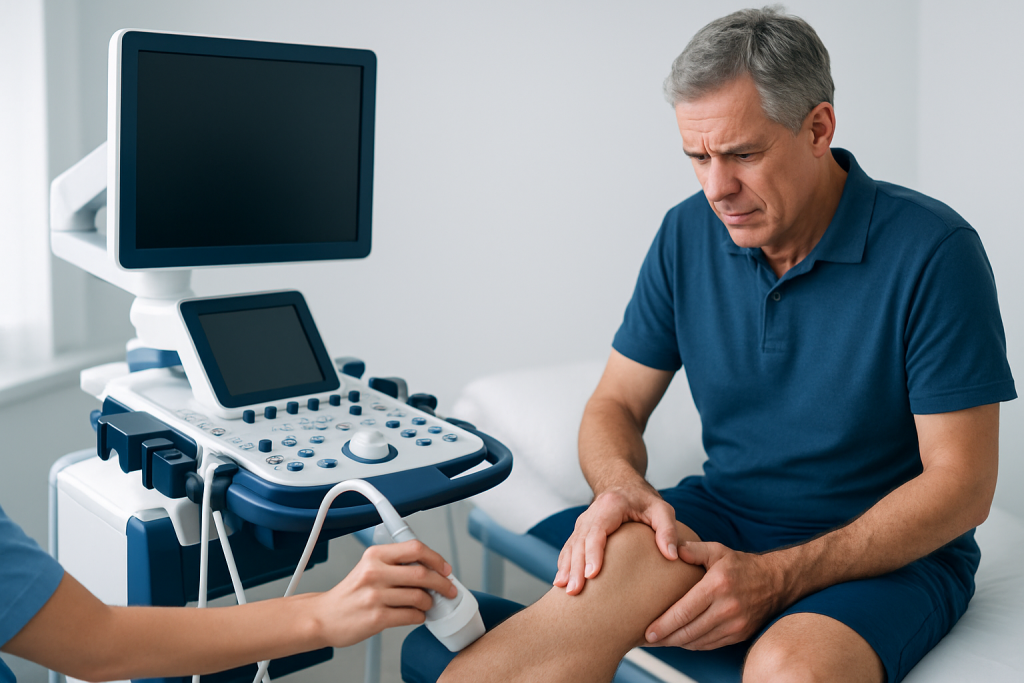
Knee pain does not always feel the same from one condition to another. Some people describe a dull ache deep in the joint, while others notice sharp pain on one side, stiffness after sitting, or a catching sensation during movement. The exact location and timing often give useful clues.
Common accompanying symptoms include swelling, warmth, reduced range of motion, popping sounds, tenderness to touch, and difficulty bearing weight. Pain may be worse when going downstairs, rising from a chair, running, squatting, or twisting the knee.
Certain patterns deserve closer attention. A knee that gives way, locks, or cannot fully straighten may indicate internal joint problems. Sudden swelling after an injury can also suggest a more significant strain or tear that should be evaluated promptly.
- Swelling or stiffness
- Instability or “giving way”
- Locking or catching
- Pain with stairs, squatting, or kneeling
- Redness, warmth, or fever in some cases
Causes & Risk Factors

Knee pain has many possible causes, and they often overlap. Overuse is common in people who increase activity quickly, change training surfaces, return to sport after a break, or spend long hours on their feet. Repetitive stress can irritate tendons, the kneecap area, or the tissues around the joint.
Injuries are another major source of pain. A sudden twist may affect the meniscus, while a direct blow or awkward landing can stretch ligaments. Arthritis, including osteoarthritis and inflammatory forms of arthritis, can also cause pain, swelling, and morning stiffness, especially when cartilage becomes worn or the joint lining is inflamed.
Some factors increase the likelihood of symptoms. These include excess body weight, weak hip or thigh muscles, limited flexibility, older age, previous knee injury, poor footwear, and sports that involve pivoting or jumping. Occupational activities that require kneeling or repeated lifting may also contribute over time.
Risk can also rise when underlying alignment issues change how force moves through the leg. Flat feet, bowed legs, or a history of surgery on the knee or nearby bones may alter joint mechanics and place more stress on certain structures.
Diagnosis
Diagnosis usually starts with a detailed conversation about when the pain began, which movements worsen it, whether there was an injury, and whether the knee swells, locks, or feels unstable. The clinician also asks about exercise habits, work demands, past injuries, and any history of arthritis or other joint symptoms.
A physical examination helps identify tenderness, swelling, range-of-motion limits, ligament stability, and patterns of pain during movement. This step is often very informative, because the knee’s structures can sometimes be narrowed down by how the joint responds to bending, twisting, or weight-bearing.
Tests are selected based on the suspected cause. X-rays may show arthritis, alignment issues, or bone injury. MRI can be useful when soft tissues such as cartilage, menisci, or ligaments are suspected to be involved. Blood tests or joint fluid analysis may be needed if infection, gout, or inflammatory arthritis is considered.
For people traveling for care, it helps when the initial assessment is organized and purposeful. A focused exam and appropriate imaging reduce unnecessary delays and make it easier to discuss whether treatment can begin immediately or should continue in stages after returning home.
Treatment Options
Treatment for knee pain relief depends on the cause, the severity of symptoms, and the person’s activity goals. Mild overuse problems often improve with relative rest, temporary reduction in impact activities, and a return to movement through low-strain exercises rather than complete inactivity.
Conservative care may include ice for recent swelling, heat for stiffness, compression, elevation, supportive shoes, and short-term use of a brace or taping when recommended. Physical therapy is often central to recovery, especially when the problem involves muscle imbalance, poor mechanics, or post-injury weakness. Strengthening the quadriceps, hamstrings, hips, and core can help reduce stress on the knee.
Medications may be considered to ease pain and inflammation, but the choice depends on the person’s medical history and the suspected diagnosis. In some cases, injections or other non-surgical procedures are discussed when symptoms persist despite basic care. Surgery may be appropriate for certain ligament injuries, advanced joint damage, or mechanical problems such as loose fragments or a torn meniscus that does not respond to conservative treatment.
When surgery is considered, patients benefit from understanding the recovery path before treatment begins. That includes how soon they may walk, when rehabilitation starts, what support devices are needed, and what follow-up will be arranged after they return to their home country.
Prevention & Self-care
Many knee problems can be eased or delayed with habits that reduce strain on the joint. A gradual return to exercise, proper warm-up, and avoiding sudden jumps in training intensity can help protect the knee from overload. Cross-training with low-impact activities such as swimming or cycling may also reduce repetitive stress.
Strength and flexibility matter, but they should be built in a balanced way. The most useful programs often focus on the muscles around the hip and thigh, because they influence how the knee tracks during walking and sport. Weight management can also lessen the pressure on painful joints and improve day-to-day comfort.
At home, people are usually advised to pay attention to movement patterns rather than trying to “push through” pain. If stairs, squatting, or kneeling repeatedly triggers symptoms, modifying the task or taking breaks may help while the knee settles. Good footwear, supportive insoles when appropriate, and safe surfaces can also make a difference.
- Increase activity gradually
- Warm up before exercise
- Strengthen hips, thighs, and core
- Choose supportive shoes
- Modify painful movements early
When to See a Doctor
Medical evaluation is a good idea if knee pain lasts more than a short period, keeps returning, or limits walking, work, or sleep. Even when symptoms seem mild, persistent swelling or stiffness can signal a problem that benefits from early treatment.
Prompt care is especially important after an injury if the knee is visibly deformed, cannot bear weight, feels unstable, or locks in place. Fever, marked redness, warmth, or severe swelling should also be assessed quickly, because these signs may indicate infection or another inflammatory condition.
People with arthritis, diabetes, gout, or a history of previous knee surgery should not ignore new symptoms that are different from their usual pattern. A clinician can help determine whether simple self-care is appropriate or whether imaging, rehabilitation, or another intervention is needed.
For international patients, a coordinated review can be especially helpful when travel time is limited. Acibadem Health Point’s multidisciplinary specialists and JCI-accredited hospitals can diagnose and treat knee conditions for international patients, with attention to both the immediate problem and the practical steps needed for recovery after the trip.
Frequently asked questions
What is the fastest safe way to get knee pain relief at home?
Short-term rest from aggravating activity, ice for recent swelling, elevation, and gentle movement often help. The goal is to calm the irritation without fully immobilizing the joint unless a doctor advises it.
When does knee pain mean something more serious?
Pain with major swelling, locking, instability, deformity, fever, or inability to bear weight should be assessed by a doctor. These features can point to injury, infection, or significant joint inflammation.
Can exercise help knee pain?
Yes, the right exercise often helps by improving strength and joint control. Low-impact, guided rehabilitation is usually better than high-impact exercise during a painful flare.
Do all knee pain cases need an MRI?
No. Many cases can be evaluated with a history, exam, and sometimes an X-ray first. MRI is usually reserved for suspected soft-tissue injury or when symptoms do not match the initial findings.
Can weight loss help knee pain?
If excess body weight is contributing, even modest weight reduction may lessen stress on the knee. It also often makes walking, stairs, and exercise more comfortable.
Is surgery common for knee pain?
Not always. Many people improve with rehabilitation and other non-surgical treatments, but surgery may be considered for certain injuries or advanced joint damage when conservative care is not enough.
References
- American Academy of Orthopaedic Surgeons
- Mayo Clinic
- National Institute of Arthritis and Musculoskeletal and Skin Diseases
- NHS
- Arthritis Foundation
This article is for general information only and is not a substitute for professional medical advice. Please consult a qualified doctor about your individual situation.