

Arthroplasty

Key Takeaways
- Arthroplasty may replace all or part of a joint when pain and stiffness no longer respond well to conservative care.
- It is most commonly performed on the hip, knee, shoulder, elbow, and smaller joints in selected cases.
- Diagnosis usually involves a physical exam, imaging, and a review of symptoms, activity limits, and previous treatments.
- Recovery depends on the joint involved, the surgical method, rehabilitation, and a patient’s overall health.
- Good preparation, guided physical therapy, and follow-up care help patients return to daily life more safely.
Arthroplasty is surgery that repairs or replaces a damaged joint to reduce pain and improve movement. It is most often discussed when arthritis, injury, or wear has made everyday activities difficult despite non-surgical treatment.
Overview
Arthroplasty is the medical term for surgery that reshapes, repairs, or replaces a joint. In everyday language, people often mean joint replacement when they hear the word, but the term also includes procedures that preserve part of the joint rather than replacing it completely.
The goal is practical rather than dramatic: reduce pain, restore movement, and make routine tasks more manageable. For someone whose hips, knees, shoulders, or other joints have become unreliable, arthroplasty can be the step that turns walking, dressing, climbing stairs, or sleeping comfortably back into realistic daily goals.
It is usually considered after medications, injections, activity changes, assistive devices, and physiotherapy have not provided enough relief. The decision is based on symptoms, imaging, exam findings, and how much the joint problem is affecting work, travel, family life, and independence.
Symptoms
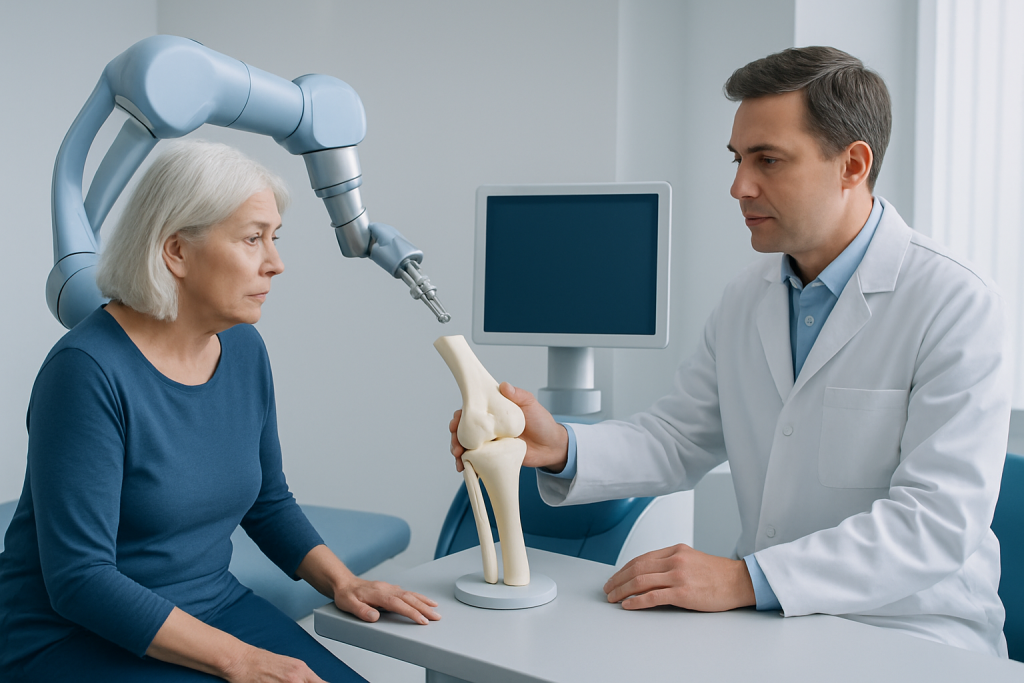
The symptoms that lead a person toward arthroplasty usually build gradually. Pain may appear during movement at first, then begin to linger at rest, disturb sleep, or make ordinary actions such as getting out of a chair feel unexpectedly hard.
Stiffness is another common clue. Some patients notice that the joint no longer bends, straightens, or rotates the way it used to. Others describe swelling, grinding, catching, weakness, or a sense that the joint is “giving way.”
- Persistent pain despite rest or medication
- Reduced range of motion
- Difficulty walking, climbing, reaching, or lifting
- Joint deformity or visible change in alignment
- Loss of confidence in balance or weight-bearing
Symptoms vary depending on the joint involved. A damaged hip may make shoes and socks difficult to manage, while a worn knee may limit stairs or longer walks. Shoulder problems can interfere with reaching overhead, carrying luggage, or sleeping on one side.
Causes & Risk Factors

Arthroplasty is most often linked to osteoarthritis, where the protective cartilage inside a joint wears down over time. Rheumatoid arthritis, previous fractures, sports injuries, avascular necrosis, and other structural problems can also damage the joint surface enough to make surgery reasonable.
Age can play a role, but it is not the only factor. Some younger adults need arthroplasty because of trauma or inflammatory disease, while some older adults manage well for years with non-surgical care. What matters most is the level of pain, function, and joint destruction rather than age alone.
Factors that may increase the chance of joint damage or future surgery include repeated injury, excess body weight, genetic tendency toward arthritis, long-standing inflammation, and occupations or activities that place heavy stress on joints. Smoking, poorly controlled diabetes, and certain medical conditions can also affect healing and surgical planning.
Diagnosis
Before recommending arthroplasty, an orthopedic specialist studies the whole picture. That usually starts with a detailed discussion about symptoms, how long they have been present, which activities are becoming difficult, and what treatments have already been tried.
A physical examination follows, looking at range of motion, tenderness, swelling, alignment, muscle strength, and how the person walks or uses the arm. Imaging studies such as X-rays are commonly used to show joint narrowing, bone changes, deformity, or signs of arthritis. In some situations, MRI, CT, or blood tests may help clarify the cause of pain or rule out infection or inflammatory disease.
For international patients, this stage is also where planning becomes especially important. Doctors may review medical records from home, confirm which tests should be repeated locally, and discuss whether the patient will need postoperative rehabilitation before deciding on travel dates and length of stay.
Treatment Options
Arthroplasty is not a single operation but a family of procedures. In total joint replacement, the damaged surfaces are removed and replaced with artificial components made from durable materials. In partial replacement, only one part of the joint is changed, preserving healthy tissue where possible.
Common examples include hip, knee, shoulder, elbow, and ankle replacement, as well as selected smaller joint procedures in the hands or fingers. The exact method depends on the joint, the pattern of damage, bone quality, age, activity level, and the surgeon’s assessment of what will provide the most reliable long-term function.
Some patients are also candidates for less extensive surgical techniques, such as arthroscopy, osteotomy, or resurfacing procedures, depending on the problem. These options may be discussed when the joint is not yet badly worn or when preserving natural anatomy is still realistic.
Typical treatment planning includes anesthesia review, infection prevention steps, blood-clot risk assessment, and a rehabilitation plan. Pain control after surgery is usually multi-layered and may include medication, ice, elevation, movement guidance, and physical therapy. Early mobilization is often encouraged because it supports circulation and recovery.
Prevention & Self-care
Not every case of joint wear can be prevented, but patients can often protect the joints they still have. Healthy weight management, regular low-impact exercise, and early treatment of injuries may reduce strain and help preserve mobility for longer.
When surgery is being considered, self-care becomes more about preparation and recovery readiness. A patient may be asked to strengthen the body beforehand, stop smoking, review medications, arrange help at home, and plan how to move safely after returning from treatment abroad.
- Follow preoperative instructions exactly, including fasting and medication guidance
- Prepare the home for mobility aids, stairs, and daily tasks
- Build in time for rest, physiotherapy, and follow-up visits
- Use approved walking aids or supports as directed
- Protect the operated joint during the early healing period
For travelers, planning also includes practical recovery logistics: comfortable clothing, support during flights, documents for medical follow-up, and clear contact details for the care team. A well-organized journey often makes the first weeks after surgery calmer and more predictable.
When to See a Doctor
A doctor should be consulted when joint pain or stiffness is persistent, worsening, or limiting daily life. It is especially important to seek evaluation if walking, dressing, climbing stairs, or using the arm has become difficult enough to change routines or reduce independence.
Medical review is also advisable if the joint looks deformed, repeatedly swells, locks, or gives way. Sudden severe pain after an injury, inability to bear weight, fever with a hot swollen joint, or signs of infection after any prior procedure deserve prompt attention.
For patients considering surgery in another country, an early consultation is helpful because it allows time for record review, test planning, and realistic recovery scheduling. Acibadem Health Point’s multidisciplinary specialists and JCI-accredited hospitals diagnose and treat arthroplasty for international patients, with care planning designed to support both the surgery and the return home.
Recovery and Follow-up
Recovery after arthroplasty is gradual and depends on the joint replaced, the extent of surgery, and the patient’s overall health. Some people begin standing and walking with assistance soon after the procedure, while others need a slower start and more structured rehabilitation.
Physical therapy is usually a central part of recovery. It helps restore movement, reduce stiffness, rebuild strength, and teach safe ways to get in and out of bed, use stairs, or resume daily activities. The first phase often focuses on protection and gentle movement, followed by progressively greater exercise and function.
Follow-up appointments are used to check healing, adjust medications, monitor for complications, and confirm that the new joint is working as expected. Patients traveling home after surgery should leave with clear instructions about wound care, activity limits, warning signs, and the timing of further review with their local doctor or the surgical team.
Possible Risks and What to Expect
As with any surgery, arthroplasty has potential risks. These can include infection, blood clots, bleeding, stiffness, implant-related problems, dislocation in some joints, or incomplete Knee Pain Relief: Causes and Treatment" class="ahp-ilk">pain relief. The surgeon discusses these possibilities in the context of the patient’s health, the joint involved, and the expected benefit of surgery.
Most patients want to know what improvement feels like. The usual aim is not a “perfect” joint but a more reliable one: less pain, better motion, and greater confidence with daily activities. The new joint may still have some limits, and certain high-impact movements or sports may need to be adjusted long term.
Careful selection, surgical planning, and rehabilitation reduce many of the known problems. Patients who understand the recovery timeline are often better prepared for short-term discomfort and better able to notice when something seems off and needs review.
Frequently asked questions
What does arthroplasty mean in simple terms?
Arthroplasty is surgery that repairs or replaces a damaged joint. The aim is to ease pain and improve movement when simpler treatments are no longer enough. It can involve a full replacement or a more limited joint-preserving procedure.
Which joints are most commonly treated with arthroplasty?
The hip and knee are the most common, but the shoulder, elbow, ankle, and some smaller joints may also be treated this way. The choice depends on where the damage is and how much function has been lost. A specialist decides which approach is most appropriate.
How does a doctor decide if arthroplasty is needed?
The decision is based on symptoms, physical examination, imaging, and how much the joint problem affects daily life. Doctors also consider previous non-surgical treatments and the patient’s general health. Surgery is usually discussed when pain and disability remain significant despite conservative care.
How long does recovery take after joint replacement?
Recovery varies widely by joint and by the person’s overall condition. Many patients need several weeks to months of rehabilitation before they feel steadier and more functional. The surgeon and physiotherapist usually explain what progress to expect at each stage.
Can someone travel soon after arthroplasty?
Travel timing depends on the operation, healing, and the doctor’s advice. Long journeys are often delayed until the patient can move safely, manage pain well, and reduce risks such as swelling or blood clots. International patients should plan return travel only after clear approval from the care team.
Will the new joint feel completely natural?
A replacement joint can feel much better than a damaged one, but it may not feel exactly like a natural joint. Some stiffness or activity limits may remain, especially early in recovery. The main goal is dependable function and less pain in daily life.
References
- American Academy of Orthopaedic Surgeons
- NHS
- Mayo Clinic
- World Health Organization
- National Institute of Arthritis and Musculoskeletal and Skin Diseases
This article is for general information only and is not a substitute for professional medical advice. Please consult a qualified doctor about your individual situation.
More from the Health Library



Related Specialists

Prof. Dr. Ahmet Alanay
Orthopedic Surgery & Traumatology
Dr. Sinan Aksu
Orthopedic Surgery & Traumatology
Dr. Sirri Baştürk
Orthopedic Surgery & Traumatology
Prof. Dr. Korhan Özkan
Orthopedic Surgery & Traumatology