

Knee Replacement Abroad: When Partial Replacement Is an Option Instead of Total

Key Takeaways
- Partial knee replacement may be suitable when arthritis is limited to one compartment of the knee.
- Total knee replacement is usually considered when damage is more widespread or the joint is badly deformed.
- A careful evaluation with imaging and a hands-on exam helps determine which operation fits best.
- Recovery after partial replacement is often quicker, but long-term success still depends on rehabilitation and follow-up.
- International patients should plan for pre-travel assessment, postoperative therapy, and a clear return-home care plan.
Medically reviewed by the Acıbadem clinical team — June 13, 2026
For some people with knee arthritis, replacing only the damaged part of the joint can preserve more of the natural knee and support a faster recovery than total knee replacement. The best choice depends on the pattern of joint damage, overall knee alignment, stability, and the person’s goals, whether treatment is planned at home or abroad.
Overview
Knee pain can change the way a person walks, works, sleeps, and plans everyday life. When medicines, injections, weight management, activity changes, and physiotherapy no longer provide enough relief, surgery may enter the conversation. For many people, the first question is not simply whether a knee replacement is needed, but whether the whole joint must be replaced.
That is where partial knee replacement comes in. Also called unicompartmental knee replacement, it replaces only the worn section of the knee rather than the entire joint. It is not the right answer for everyone, but for carefully selected patients it can preserve more bone, feel more natural after healing, and sometimes allow a smoother recovery than total knee replacement.
For international patients considering knee Hip Replacement Abroad: What Changes the Plan Beyond the X-Ray" class="ahp-ilk">replacement abroad, the decision often includes more than the operation itself. It also involves understanding the extent of the arthritis, how much support will be available after surgery, and whether the recovery plan can continue safely once the patient returns home. A thorough orthopedic assessment is the best place to start.
Symptoms
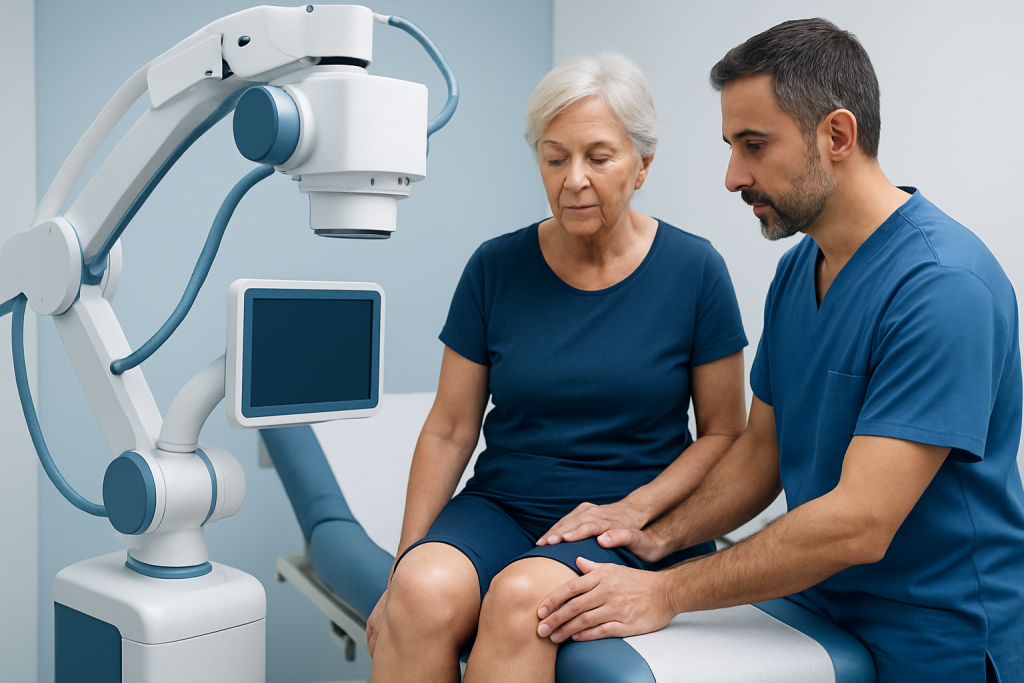
The symptoms that lead to knee replacement usually develop gradually. Pain may begin only during longer walks, then appear when climbing stairs, rising from a chair, or standing for extended periods. Some people notice swelling, stiffness after sitting, or a feeling that the knee is no longer reliable on uneven ground.
In cases where partial knee replacement may be considered, symptoms often come from one side or one section of the knee more than the whole joint. A person may describe pain mainly on the inner side of the knee, while the outer side and kneecap area are less affected. This pattern matters because it may reflect arthritis limited to one compartment.
Typical complaints that are discussed during evaluation include:
- Pain focused in one area of the knee
- Stiffness that is worse after rest
- Swelling that comes and goes
- Reduced walking tolerance
- Difficulty with stairs, squatting, or kneeling
- A sense of catching, grinding, or instability
Symptoms alone do not determine the surgical option. Imaging, examination, and the knee’s mechanical alignment all help define whether the damage is truly limited enough for a partial replacement.
Causes & Risk Factors
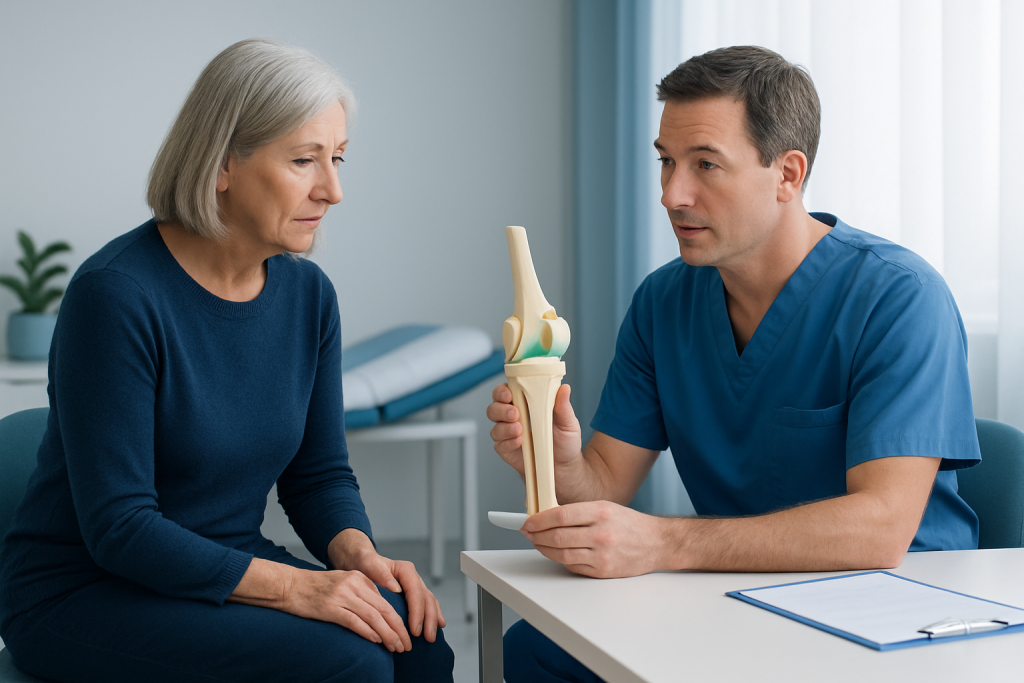
The most common reason for either partial or total knee replacement is osteoarthritis, a wear-and-tear condition in which the protective cartilage becomes thinner and the joint surfaces begin to rub more painfully. Over time, this can lead to swelling, stiffness, and loss of function. Some people also develop knee damage after an old injury, ligament problems, or previous surgery.
Partial knee replacement becomes a possibility when arthritis is confined to one compartment of the knee. The knee has three main compartments: the inner side, outer side, and the area behind the kneecap. If one compartment is damaged while the others remain relatively healthy, replacing only the affected area may make sense.
Factors that can influence candidacy include:
- Arthritis limited to one knee compartment
- Intact or functional ligaments, especially the anterior cruciate ligament in many cases
- Reasonable knee alignment
- Good range of motion before surgery
- Absence of major inflammatory arthritis or widespread cartilage loss
Age by itself does not decide the procedure. Some younger patients may benefit from partial replacement if the joint damage is localized, while some older patients are better served by total knee replacement if the wear pattern is more extensive. The overall shape and stability of the knee matter more than the number on a chart.
Diagnosis
Choosing between partial and total knee replacement usually begins with a detailed orthopedic consultation. The surgeon will ask where the pain is located, how long it has been present, what treatments have already been tried, and which activities are now limited. The description of symptoms often provides clues about whether one compartment is most affected.
A physical examination is equally important. The doctor checks range of motion, ligament stability, alignment, swelling, tenderness, and how the knee behaves when the person walks or changes direction. In many cases, the knee may need to be examined while standing, because weight-bearing alignment can reveal problems that are not obvious when the patient is lying down.
Imaging commonly includes X-rays, and sometimes standing views to show how the joint spaces narrow under load. In some cases, MRI or other imaging is used to study soft tissues and confirm that the rest of the knee is healthy enough for a partial replacement. The goal is not to find the smallest operation possible, but the most suitable one for long-term function.
International patients planning Herniated Disc Treatment Abroad: Injection, Rehab, or Surgery?" class="ahp-ilk">treatment abroad may also need pre-travel review of prior records, scans, and reports. This helps the orthopedic team confirm whether the current data is enough or whether repeat imaging is needed before surgery is scheduled.
Treatment Options
Partial knee replacement is designed to replace only the damaged compartment of the knee. Because more of the patient’s own knee is preserved, the procedure may feel more natural for some people and can sometimes support quicker early movement. However, it is only appropriate when disease is genuinely limited and the rest of the knee can continue to function well.
Total knee replacement is the more familiar option. It resurfaces the full joint and is generally recommended when arthritis affects multiple compartments, when deformity is significant, or when the knee is unstable. Although recovery may take longer, total replacement is often the more reliable choice when damage is widespread.
Other treatment measures may be discussed before surgery, especially if symptoms are not yet severe enough to justify an operation. These can include anti-inflammatory measures, strengthening exercises, activity modification, assistive devices, and sometimes injections. Once those options no longer provide meaningful relief, surgery becomes a more reasonable discussion.
Benefits and trade-offs are different for each operation:
- Partial replacement: preserves more bone and ligament structure; may allow faster early recovery; not suitable for diffuse arthritis
- Total replacement: addresses the whole joint; more appropriate for advanced or multi-compartment disease; recovery may require more rehabilitation time
For patients traveling abroad, the right procedure is often the one that balances surgical suitability with practical recovery planning. A shorter hospital stay is helpful, but only if the homeward journey, physiotherapy access, and follow-up schedule are all realistic.
Prevention & Self-care
Not every person can prevent arthritis from progressing, but thoughtful self-care may delay surgery or improve the outcome when surgery is eventually needed. Maintaining a healthy body weight reduces stress on the knee joint, while regular low-impact exercise helps preserve muscle support and joint mobility. Activities such as walking on flat ground, cycling, and swimming are often easier on the knee than high-impact sports.
Strengthening the muscles around the knee and hip can improve stability and reduce strain. A physiotherapist can recommend exercises that match the person’s current pain level and movement limits. Good footwear, sensible pacing of activity, and avoiding repeated deep squatting or twisting may also help reduce flare-ups.
For people considering knee replacement abroad, preparation is part of self-care. Useful steps may include:
- Gathering previous X-rays, MRI reports, and clinic notes
- Listing medications, allergies, and past surgeries
- Arranging help at home for the first days after return
- Planning how physiotherapy will continue after travel
- Asking the surgical team what activities are permitted during each stage of recovery
Recovery is not finished when the flight home begins. A safe plan includes wound care instructions, mobility goals, and clear contact information in case questions arise after discharge.
When to See a Doctor
A specialist evaluation is appropriate when knee pain is no longer responding well to non-surgical treatment and daily life is being affected. If the person avoids walking, curtails social plans, or changes the way they move to protect the knee, it may be time to discuss surgical options.
Prompt medical review is especially important if the knee is becoming more unstable, the range of motion is shrinking, or pain is affecting sleep and basic mobility. These changes do not automatically mean surgery is necessary, but they do suggest that the joint needs a fresh assessment.
People who are considering treatment abroad should seek review early enough to compare options carefully, rather than trying to organize travel at the last moment. This allows time to review imaging, confirm whether partial replacement is realistic, and make sure postoperative care can continue smoothly once the patient is back home. Acibadem Health Point’s multidisciplinary specialists and JCI-accredited hospitals can diagnose and treat knee conditions for international patients as part of a coordinated plan.
Frequently asked questions
What makes someone a candidate for partial knee replacement?
The main requirement is arthritis that is limited to one compartment of the knee. The surgeon also looks for good ligament function, acceptable alignment, and enough preserved motion for the joint to work well after surgery. A partial replacement is only chosen when the rest of the knee is healthy enough to support it.
How is partial knee replacement different from total knee replacement?
Partial replacement resurfaces only the damaged section of the knee, while total replacement addresses the full joint. Because more of the natural knee remains in place with a partial procedure, some people experience a more natural feel and a faster early recovery. Total replacement is usually better when damage is widespread or the joint is significantly deformed.
Is partial knee replacement always a better option because it is smaller surgery?
Not necessarily. The smallest operation is not always the best operation for long-term comfort and function. If arthritis affects more than one compartment or the knee is unstable, a total replacement may provide a more dependable result.
How long does recovery usually take?
Recovery varies by person and by the specific surgical plan. Partial replacement often allows earlier movement, but physiotherapy, walking practice, and gradual strengthening are still essential. The surgeon and rehabilitation team should give a staged plan that matches the patient’s travel schedule and home support.
Can someone travel home soon after knee replacement abroad?
Many patients can travel after a surgeon confirms that healing is on track and the journey is safe. The timing depends on the operation, mobility, clot-prevention advice, and the length of the flight or trip. It is important to have a clear follow-up plan before leaving the treatment center.
What happens if a partial knee replacement no longer works later on?
Some patients may eventually need revision surgery or conversion to total knee replacement if arthritis spreads or the implant wears out. That possibility is one reason careful patient selection matters from the start. Regular follow-up helps the doctor monitor the joint and address problems early.
References
- American Academy of Orthopaedic Surgeons
- NHS
- Mayo Clinic
- Arthritis Foundation
- National Institute of Arthritis and Musculoskeletal and Skin Diseases
This article is for general information only and is not a substitute for professional medical advice. Please consult a qualified doctor about your individual situation.
More from the Health Library



Related Specialists

Prof. Dr. Ahmet Alanay
Orthopedic Surgery & Traumatology
Dr. Sinan Aksu
Orthopedic Surgery & Traumatology
Dr. Sirri Baştürk
Orthopedic Surgery & Traumatology
Prof. Dr. Korhan Özkan
Orthopedic Surgery & Traumatology