

Plantar Fasciitis Stretches

Key Takeaways
- Plantar fasciitis usually causes sharp or aching pain under the heel, especially after rest.
- Targeted stretches for the plantar fascia, calf, and Achilles tendon can reduce strain on the foot.
- Supportive shoes, activity adjustments, and home care often work best together.
- Recovery is usually gradual, so consistency matters more than intensity.
- Persistent pain, swelling, or difficulty walking should be assessed by a doctor.
Plantar fasciitis is a common cause of heel pain, often felt most strongly with the first steps in the morning or after rest. Gentle, consistent stretching can support recovery by easing tension in the foot and calf, while other treatments and proper footwear help protect healing tissue.
Overview
Plantar fasciitis is one of the most common reasons people develop pain in the heel or the arch of the foot. It happens when the plantar fascia, a thick band of tissue that supports the bottom of the foot, becomes irritated from repeated strain. Many people notice the pain most clearly when they first stand up in the morning or after sitting for a while.
For international patients considering care, the practical question is often not only what is it? but what can be done today? In many cases, treatment starts with simple measures that can be done at home, including carefully chosen stretches, footwear changes, and activity modification. These steps are usually part of a wider recovery plan rather than a stand-alone fix.
The good news is that plantar fasciitis often improves with time and the right support. The condition tends to respond best to steady, low-force care that reduces tension in the foot and calf, allowing the irritated tissue to settle.
Symptoms
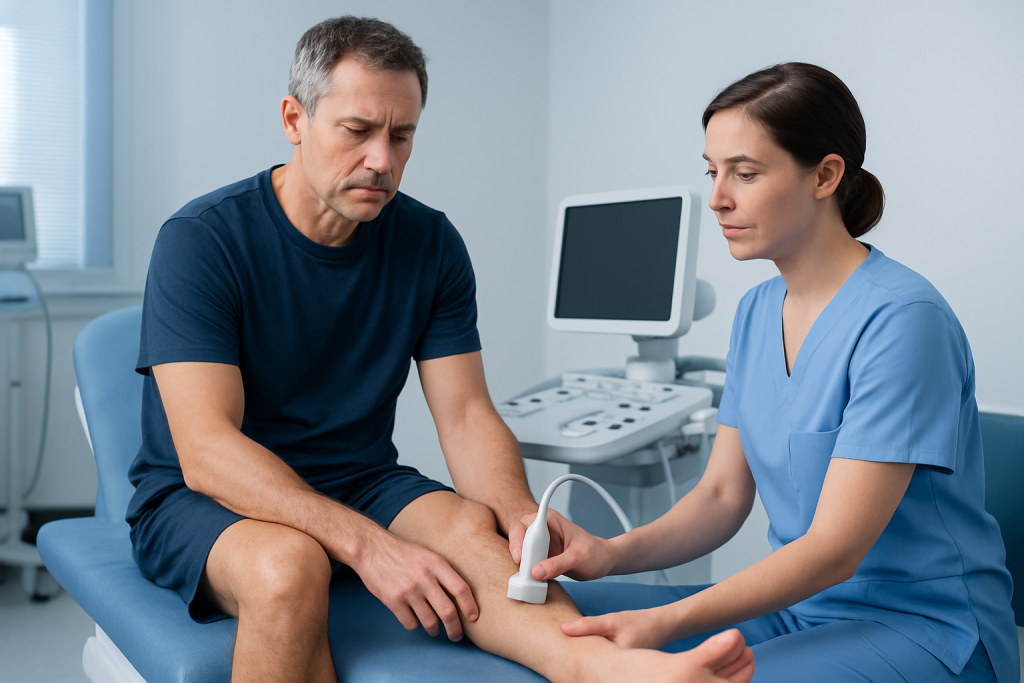
The hallmark symptom is pain at the bottom of the heel, although some people feel it along the arch instead. The pain is often sharp with the first steps after waking, then may ease a little as the foot warms up. It can return after standing for long periods, walking more than usual, or getting up after rest.
Symptoms are not always identical from person to person. Some describe a dull ache that builds through the day, while others notice tenderness when pressing on the inner side of the heel. If the discomfort changes how a person walks, secondary pain may appear in the ankle, knee, or opposite foot because of compensation.
Common features include:
- Pain under the heel, especially on first steps
- Stiffness after inactivity
- Worsening pain after prolonged standing or walking
- Tenderness when touching the heel or arch
Causes & Risk Factors
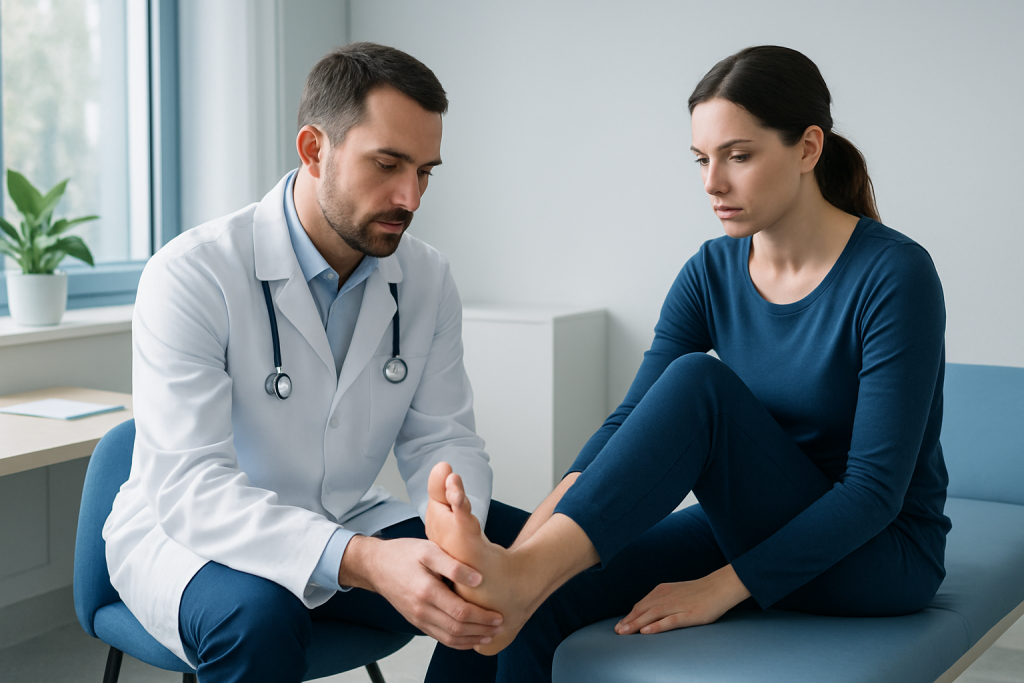
Plantar fasciitis usually develops when the plantar fascia is repeatedly overloaded. The tissue acts like a supportive spring, but when the load is too high or recovery time is too short, small tears and inflammation-like irritation can develop. Tight calf muscles, poor foot mechanics, and sudden increases in activity often contribute.
Several factors may raise the chance of symptoms. These include jobs that require long hours on the feet, running or jumping sports, walking on hard surfaces, and footwear with little support. Age can also play a role, since the tissue may become less flexible over time. People with high arches, flat feet, or changes in walking pattern may be more vulnerable as well.
Risk is often a combination of factors rather than one single cause. A long flight, for example, may not cause plantar fasciitis on its own, but it can leave the calf and foot stiffer, making pain more noticeable when normal activity resumes.
Diagnosis
Diagnosis is usually based on the medical history and a physical examination. A doctor will ask where the pain is located, when it is worst, how long it has been present, and what activities make it better or worse. Pressing on the heel and checking foot motion can help confirm the likely source of discomfort.
In many cases, imaging is not needed at the first visit. However, if symptoms are unusual, severe, or not improving as expected, a doctor may order an X-ray, ultrasound, or MRI to look for other causes of heel pain. This helps distinguish plantar fasciitis from stress fracture, nerve irritation, or other foot conditions.
For patients who are traveling for care, clear diagnosis matters because it guides a realistic recovery plan before returning home. The safest approach is to avoid assuming that all heel pain is the same, especially if swelling, numbness, redness, or sudden injury is involved.
Treatment Options
Most treatment plans begin conservatively. Stretching is usually one of the first recommendations because it can reduce tension through the plantar fascia and the calf muscle group. The goal is not to force the tissue, but to gently improve flexibility and decrease the pull on the heel during walking.
Common plantar fasciitis stretches include a plantar fascia stretch, calf stretch, and Achilles tendon stretch. These are often done in short sessions, especially before standing in the morning and after activity. A doctor or physical therapist can show the safest technique, particularly if there is a history of other foot, ankle, or tendon problems.
Other treatments may include:
- Supportive shoes or orthotic inserts
- Activity changes to reduce repetitive impact
- Ice after activity
- Physical therapy for foot and leg mechanics
- Night splints in selected cases
- Anti-inflammatory medicines when appropriate and advised by a clinician
When pain persists despite these measures, additional options may be considered by an orthopedic or rehabilitation specialist. These can include targeted therapies and, in carefully selected cases, procedures aimed at reducing ongoing irritation. Surgery is uncommon and usually reserved for cases that do not improve with prolonged conservative treatment.
Prevention & Self-care
Prevention and recovery often overlap in plantar fasciitis. Daily habits that reduce strain on the foot can make stretches more effective and help symptoms settle more gradually. The most helpful routine is usually the one a person can keep up consistently rather than intensely for a short time.
Useful self-care steps often include choosing shoes with good arch support, avoiding sudden jumps in walking or running distance, and stretching after periods of rest. People who sit for long stretches, including while traveling, may benefit from standing up periodically and gently moving the ankles and calves before taking the first few steps.
Simple home-care habits may include:
- Stretching the calf and plantar fascia before getting out of bed
- Avoiding walking barefoot on hard floors when pain is active
- Using ice after prolonged standing or exercise
- Replacing worn shoes that no longer support the foot well
- Gradually returning to sport or longer walks instead of all at once
It can also help to think about the whole movement chain. Tight calves, limited ankle motion, or footwear that changes foot posture can all affect the plantar fascia. That is why recovery often works better when stretching is paired with better support and smarter load management.
When to See a Doctor
Heel pain that lasts more than a short period, keeps returning, or interferes with daily walking deserves medical evaluation. A doctor can confirm whether plantar fasciitis is the likely cause and help rule out other problems that need different care. Early assessment is especially useful when pain is changing a person’s gait or activity level.
Medical attention is also important if the pain began after a clear injury, if there is marked swelling or redness, if numbness is present, or if the foot feels unstable. These features do not automatically mean something serious is happening, but they do call for a closer look.
For people seeking Herniated Disc Treatment Abroad: Injection, Rehab, or Surgery?" class="ahp-ilk">treatment abroad, a coordinated evaluation can be helpful because it brings diagnosis, therapy guidance, and follow-up planning into one pathway. Acibadem Health Point’s multidisciplinary specialists and JCI-accredited hospitals diagnose and treat plantar fasciitis for international patients, with care plans that can be aligned to travel needs and recovery timelines.
Frequently asked questions
Do plantar fasciitis stretches cure heel pain?
Stretches do not usually act as a single cure, but they are an important part of recovery for many people. They help reduce tension in the plantar fascia and calf, which can make walking less painful over time. They work best when combined with supportive shoes, activity changes, and other care recommended by a clinician.
When is the best time to do plantar fasciitis stretches?
Many people benefit from stretching first thing in the morning before putting full weight on the foot. It can also help to stretch after periods of sitting and after physical activity. The key is to keep the movement gentle and regular rather than forcing the foot.
Can walking make plantar fasciitis worse?
Walking does not have to be avoided completely, but too much too soon can aggravate symptoms. Shorter, more comfortable walks in supportive shoes are often better than long sessions on hard surfaces. If pain increases during or after walking, the activity level may need to be adjusted.
How long does it take plantar fasciitis to improve?
Recovery time varies, depending on how long symptoms have been present and how much strain continues on the foot. Some people improve with several weeks of consistent care, while others need a longer plan. If symptoms are not improving, a doctor may recommend a different approach.
Are plantar fasciitis stretches safe for everyone?
They are usually safe when done gently, but not every foot pain problem should be treated the same way. If there is sudden injury, severe swelling, numbness, or pain that feels unusual, medical assessment is the better first step. A doctor or physical therapist can recommend the right exercises for the specific situation.
Can orthotics replace stretching?
Orthotics and stretching serve different purposes. Supportive inserts may reduce strain on the foot, while stretches address tightness in the plantar fascia, calf, and Achilles tendon. Many treatment plans use both together because they address different parts of the problem.
References
- Mayo Clinic
- American Academy of Orthopaedic Surgeons
- American Podiatric Medical Association
- National Health Service
- Cleveland Clinic
This article is for general information only and is not a substitute for professional medical advice. Please consult a qualified doctor about your individual situation.
More from the Health Library



Related Specialists

Prof. Dr. Ahmet Alanay
Orthopedic Surgery & Traumatology
Dr. Sinan Aksu
Orthopedic Surgery & Traumatology
Dr. Sirri Baştürk
Orthopedic Surgery & Traumatology
Prof. Dr. Korhan Özkan
Orthopedic Surgery & Traumatology