Brain Bleed

Key Takeaways
- A brain bleed is a medical emergency that needs prompt evaluation, especially if symptoms begin suddenly.
- Symptoms may include a severe headache, weakness, confusion, speech changes, seizures, or loss of consciousness.
- Common causes include high blood pressure, head injury, aneurysm, blood-thinning medicines, and certain blood vessel conditions.
- Diagnosis usually relies on urgent brain imaging such as a CT scan or MRI, along with a neurological examination.
- Treatment depends on the type, size, and location of bleeding and may include monitoring, medicines, procedures, or surgery.
- Recovery often continues after the hospital phase with rehabilitation, follow-up imaging, and long-term management of risk factors.
A brain bleed is bleeding inside or around the brain that can disrupt normal brain function and may become serious quickly. Understanding the warning signs, common causes, and treatment steps can help patients and families seek the right care without delay.
Overview
A brain bleed happens when blood escapes from a blood vessel inside the skull. That bleeding can collect within the brain tissue, around the brain, or in the spaces surrounding it, and even a small amount can interfere with how the brain works.
People sometimes hear different terms used for the same broad problem, including brain hemorrhage, intracranial hemorrhage, and cerebral bleeding. The exact term depends on where the bleeding is located, but the practical message is the same: this is a condition that needs rapid medical attention.
For families and international patients, the first challenge is often recognizing that the symptom is not “just a headache” or simple fatigue. A sudden neurological change deserves a same-day emergency assessment, especially if travel, language barriers, or a history of blood pressure problems, falls, or blood thinner use are part of the picture.
Not every brain bleed is identical. Some develop suddenly after an injury, while others arise from a weakened vessel or a medical condition that makes bleeding more likely. Care teams look closely at the cause because treatment and recovery plans depend on it.
Symptoms
Symptoms can appear all at once or progress over minutes to hours. The most common pattern is a sudden change from a person’s usual state: a headache that feels unusual, a new weakness, or difficulty speaking, thinking, or staying awake.
Signs may vary based on the bleeding site and size. Bleeding in one area of the brain may affect movement on one side of the body, while bleeding in another region may cause vision changes, balance problems, or confusion.
- Sudden, severe headache or a headache that feels different from usual
- Weakness, numbness, or facial drooping, often on one side
- Slurred speech, trouble finding words, or confusion
- Loss of balance, dizziness, or trouble walking
- Nausea, vomiting, or increasing sleepiness
- Seizures or loss of consciousness
- Vision changes, including double vision or blurred vision
Symptoms can be subtle in the early stage, especially in older adults or people taking blood-thinning medicines. Even if the person improves briefly, that does not rule out a serious bleed and should not delay care.
Causes & Risk Factors

Brain bleeds can have several causes. Long-standing high blood pressure is one of the most important because it can weaken small vessels over time, making them more vulnerable to rupture. Head trauma from falls, vehicle accidents, or sports injuries is another major cause.
Some bleeds happen when a blood vessel has an underlying weakness, such as an aneurysm or an arteriovenous malformation. Others are linked to medical treatment or health conditions that affect clotting, including blood-thinning medications, liver disease, low platelet counts, or inherited bleeding disorders.
Risk tends to rise when several factors overlap. A person with high blood pressure who also takes an anticoagulant and has a recent fall, for example, may need rapid evaluation even if symptoms seem mild at first.
- High blood pressure
- Head injury or trauma
- Use of anticoagulants or other blood-thinning drugs
- Aneurysm or vascular malformation
- Bleeding disorders or clotting problems
- Older age
- Heavy alcohol use
- Illegal stimulant use, which can sharply raise blood pressure
Understanding the cause matters because prevention is not the same for everyone. Some patients need better blood pressure control, others need medication review, and some require treatment for an underlying vessel abnormality.
Diagnosis
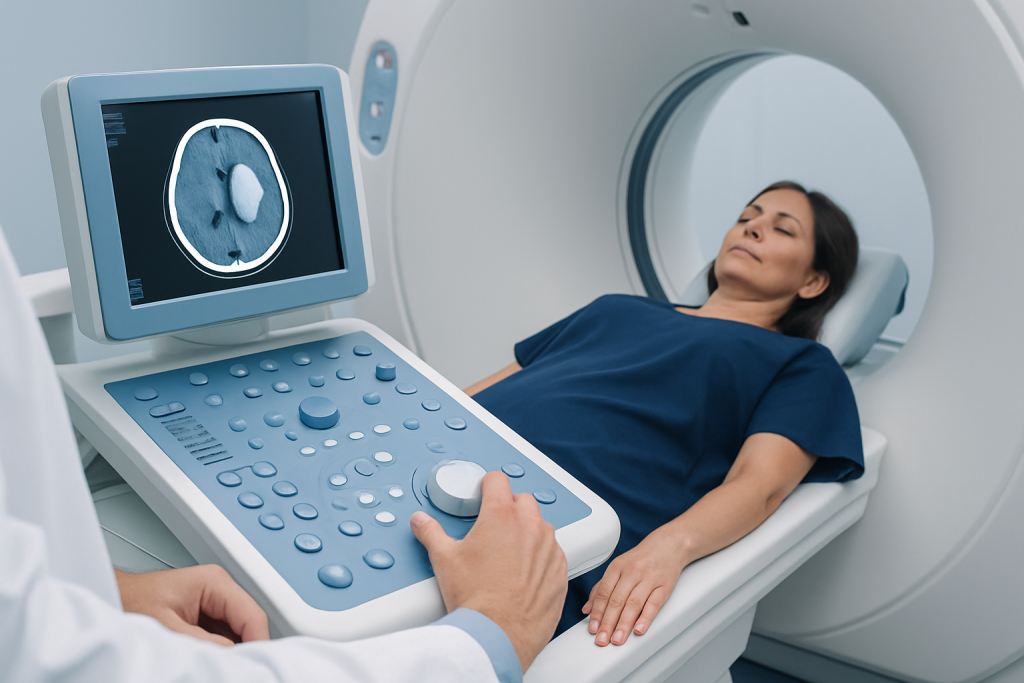
Diagnosis begins with a neurological examination. Clinicians assess alertness, speech, strength, pupils, balance, and other functions to estimate how the brain is being affected. This is followed quickly by imaging, because time matters when bleeding is suspected.
A non-contrast CT scan is often the first test because it can detect many brain bleeds rapidly and is widely available in emergency settings. MRI may be used later or in specific situations when more detail is needed about the bleed’s age, location, or cause.
Blood tests are commonly ordered as well. They help evaluate clotting, platelet levels, medication effects, and general medical status, which can all influence treatment choices.
If the team suspects a vessel problem such as an aneurysm or arteriovenous malformation, they may recommend vascular imaging such as CT angiography, MR angiography, or catheter-based angiography. These tests help define whether a procedure or surgery is needed.
In many international-patient cases, diagnosis also includes practical planning: confirming imaging access, reviewing prior scans brought from home, and coordinating interpreters or record transfers so decisions can be made efficiently and safely.
Treatment Options
Treatment depends on where the bleeding is, how large it is, what caused it, and whether the person’s condition is stable. Some patients are managed in an intensive care or stroke unit for close observation, while others need an urgent procedure.
Doctors may use medicines to control blood pressure, reduce swelling, treat seizures, or reverse the effect of blood thinners when appropriate. Supportive care can include oxygen, careful fluid management, and monitoring for changes in consciousness or neurological function.
When bleeding is causing pressure on the brain or is linked to a structural problem, surgery may be considered. The goal can be to remove a clot, relieve pressure, drain fluid, or treat the source of bleeding, such as a vessel abnormality.
- Observation and close neurological monitoring
- Medication adjustment or reversal of anticoagulation when indicated
- Blood pressure management
- Seizure treatment or prevention in selected cases
- Neurosurgical procedures to relieve pressure or control the bleeding source
After the emergency phase, rehabilitation often becomes a major part of treatment. Physical therapy, occupational therapy, speech therapy, and cognitive support may all help a patient regain independence. For someone receiving care away from home, discharge planning should include clear instructions about medications, activity limits, follow-up imaging, and when it is safe to travel.
Prevention & Self-care
Not every brain bleed can be prevented, but risk can often be lowered. The most effective steps usually involve controlling the conditions that make vessels fragile or bleeding more likely, especially blood pressure and medication-related risks.
Self-care is most useful when it is specific and sustainable. That means taking prescribed medicines consistently, attending follow-up visits, and keeping a simple record of blood pressure readings, symptoms, and medication changes if recommended by the care team.
- Manage high blood pressure with regular medical follow-up
- Take blood thinners only as prescribed and review all medicines with a doctor
- Use seat belts, helmets, and fall-prevention measures
- Limit heavy alcohol use and avoid stimulant drugs
- Follow advice about restarting exercise, work, or travel after treatment
- Seek rehabilitation early if weakness, speech changes, or balance issues remain
After treatment, recovery may continue for weeks or months. Good rest, gradual activity, nutrition, and follow-up scans or appointments are part of the healing process, and they are especially important when a patient returns to another country and needs a coordinated handoff of care.
When to See a Doctor
A brain bleed should be treated as an emergency. If a person develops a sudden severe headache, weakness, confusion, difficulty speaking, seizures, or loss of consciousness, emergency care is needed right away.
Even symptoms that seem to improve should be taken seriously, particularly after a fall, in someone with high blood pressure, or in anyone taking anticoagulant medication. A quick evaluation can prevent a dangerous delay in treatment.
People who have already had a brain bleed should contact their doctor promptly for new symptoms, medication side effects, worsening headaches, repeated vomiting, or any new change in walking, speech, or alertness. Follow-up is also important after discharge so that risk factors can be managed and recovery can be monitored.
For international patients, it can help to seek care in a center that can coordinate urgent neurology, neurosurgery, imaging, rehabilitation, and discharge planning in one pathway. Acibadem Health Point’s multidisciplinary specialists and JCI-accredited hospitals diagnose and treat this condition for international patients.
Recovery and Long-Term Outlook
Recovery after a brain bleed is highly individual. Some people improve quickly after the bleeding is controlled, while others need longer rehabilitation because the brain was affected in ways that limit movement, speech, memory, or coordination.
Follow-up usually focuses on three questions: Has the bleeding stopped? What caused it? And how can the chance of another bleed be reduced? Answering those questions may involve repeat imaging, medication adjustments, and ongoing neurologic review.
Emotional recovery matters as well. Many patients and families feel uncertain after a sudden brain event, especially if treatment took place in another country. Clear written instructions, an organized medication list, and a realistic plan for follow-up can make the transition home far safer and less stressful.
With timely treatment, rehabilitation, and control of underlying risk factors, many patients make meaningful progress. The key is to stay connected to the care team and report any new or recurring neurological symptoms without waiting.
Living With the Condition After Discharge
Daily life after a brain bleed often begins with small, practical steps. That may include pacing activities, avoiding heavy lifting until a doctor approves it, and watching for changes in speech, strength, balance, or alertness.
Medication safety deserves special attention. Patients should understand which medicines were stopped, which must be continued, and which should not be restarted without medical advice. If blood thinners are part of the long-term plan, the reason for their use and the balance of bleeding risk should be reviewed clearly with the treating doctor.
Family members can help by observing for warning signs, supporting rehabilitation exercises, and making sure follow-up visits are not missed. When care continues across borders, keeping copies of scan reports, discharge summaries, and medication lists can be especially helpful for the next clinician involved.
A calm, structured recovery plan is often the best support tool. It reduces confusion, improves adherence, and gives the patient and family a clearer sense of what to expect in the weeks ahead.
Frequently asked questions
Is a brain bleed the same as a stroke?
A brain bleed is one type of stroke, often called a hemorrhagic stroke. Stroke is the broader term for a sudden problem affecting blood flow or bleeding in the brain. Both require urgent medical attention, but the treatment approach depends on which type is present.
Can a brain bleed happen without a head injury?
Yes. Some brain bleeds occur without trauma, especially when blood pressure is high, a vessel is weak, or a person takes a blood thinner. Because the cause may not be obvious, sudden neurological symptoms should still be evaluated urgently.
What is the first test for a suspected brain bleed?
A non-contrast CT scan is often the first imaging test because it can quickly detect many brain bleeds. Doctors may also order blood tests and, in some cases, MRI or vascular imaging to understand the cause and plan treatment.
Can someone recover fully from a brain bleed?
Recovery varies widely. Some people recover very well, while others have lasting effects such as weakness, speech difficulty, or memory changes. Early treatment and rehabilitation can improve the chances of meaningful recovery.
Should blood thinners be stopped if a brain bleed is suspected?
Do not make medication changes on your own. In an emergency, the medical team will decide whether a blood thinner should be held or reversed and will weigh the risks carefully. Immediate evaluation is more important than trying to manage the situation at home.
What should international patients bring to a brain bleed evaluation?
If possible, bring a medication list, previous scan reports, discharge summaries, and any known history of high blood pressure, seizures, or blood clotting problems. These details can speed up diagnosis and help the team make safer treatment decisions.
References
- World Health Organization
- American Heart Association
- National Institute of Neurological Disorders and Stroke
- Mayo Clinic
- NHS
This article is for general information only and is not a substitute for professional medical advice. Please consult a qualified doctor about your individual situation.