

Axial Bones In The Skeleton
Key Takeaways
- The axial skeleton includes the skull, vertebral column, ribs, and sternum.
- Its main roles are support, protection, movement, and attachment for muscles.
- Pain, injury, and deformity in axial bones can affect breathing, posture, and mobility.
- Many axial bone problems are evaluated with physical examination and imaging tests.
- Early medical assessment helps guide safe treatment and recovery planning.
The axial bones in the skeleton form the body’s central framework, protecting vital organs and helping maintain posture. Understanding this part of anatomy can make it easier to follow discussions about back pain, fractures, scoliosis, and other musculoskeletal conditions.
Overview
The axial bones in the skeleton are the body’s central support structure. They run along the midline and form a protective frame around the brain, spinal cord, heart, and lungs.
This part of the skeleton is often discussed when people hear terms such as “spine,” “rib cage,” “skull,” or “sacrum.” Together, these bones help the body stay upright, absorb daily stress, and provide stable points for muscles to work against during breathing, turning, lifting, and walking.
For patients who are traveling for care, axial bone problems may come up during evaluation for long-standing back pain, trauma, curvature of the spine, or age-related bone loss. A clear explanation of the anatomy often helps people understand why a doctor recommends imaging, bracing, rehabilitation, or sometimes surgery.
What Bones Make Up The Axial Skeleton?
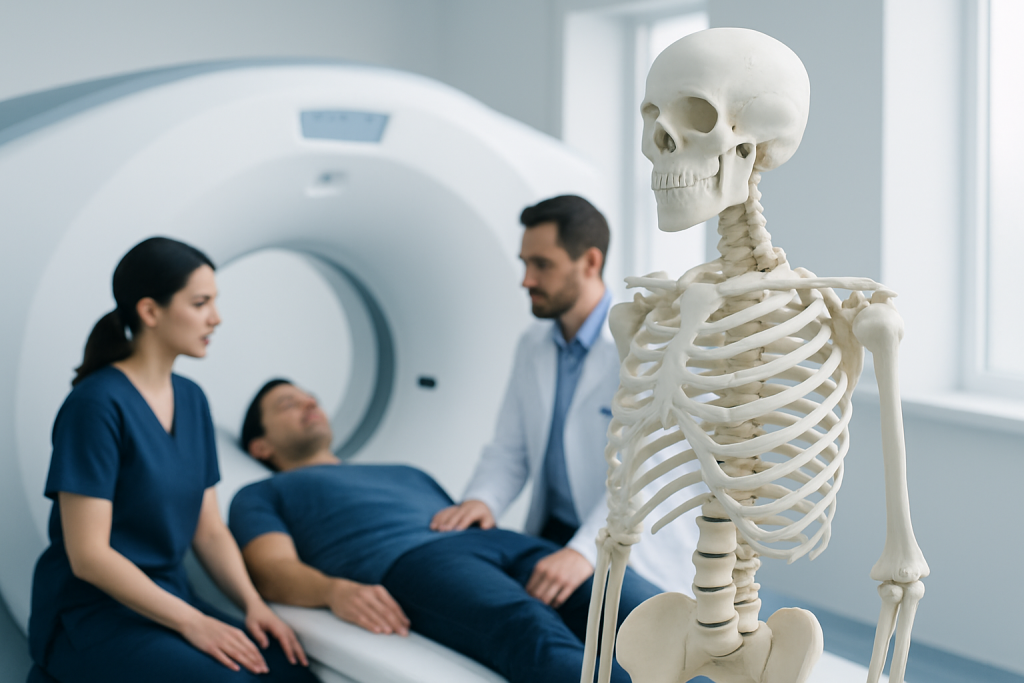
The axial skeleton is usually described as the set of bones that forms the central axis of the body. It is different from the appendicular skeleton, which includes the arms, legs, shoulders, and pelvis.
The main parts of the axial skeleton are the skull, the vertebral column, the ribs, and the sternum. Some anatomy texts also include the small bones of the ear and the hyoid bone in the neck, because they belong to the body’s central framework and assist with key functions such as hearing and swallowing.
- Skull: protects the brain and supports facial structure
- Vertebral column: includes cervical, thoracic, lumbar, sacral, and coccygeal regions
- Ribs: protect the chest organs and assist breathing
- Sternum: anchors the ribs in front of the chest
Although these bones are grouped together for teaching purposes, they also function as an interconnected system. A problem in one area, such as the cervical spine, may affect posture, balance, arm use, or pain patterns elsewhere in the body.
Symptoms Of Axial Bone Problems
Problems involving axial bones do not always cause obvious symptoms at first. Some people notice only stiffness or mild discomfort, while others develop clear pain, deformity, or difficulty moving.
Symptoms depend on the specific bone involved and the underlying cause. For example, a rib injury may hurt with breathing or coughing, while a spinal condition may lead to back pain, numbness, weakness, or reduced range of motion.
- Neck, back, chest, or skull pain
- Stiffness or reduced flexibility
- Tenderness after injury or strain
- Curved posture or visible spinal deformity
- Pain with breathing, twisting, or lifting
- Numbness, tingling, or weakness if nerves are affected
Some symptoms deserve careful attention, especially if they appear after a fall, vehicle accident, or Knee Pain Relief: Causes and Treatment" class="ahp-ilk">Pain Relief" class="ahp-ilk">sports injury. Sudden severe pain, trouble breathing, or new weakness should be evaluated promptly.
Causes And Risk Factors
Axial bone conditions can arise from injury, wear and tear, developmental differences, infection, inflammation, or bone weakness. In some cases, the bones themselves are affected; in others, nearby joints, discs, or muscles contribute to the problem.
Common causes include fractures, herniated discs, scoliosis, osteoporosis, spinal arthritis, and posture-related strain. Chest wall pain may also come from rib injury or inflammation where the ribs meet the breastbone.
- Trauma: falls, traffic accidents, contact sports
- Bone fragility: osteoporosis or low bone density
- Age-related changes: disc degeneration and joint wear
- Abnormal spinal alignment: scoliosis, kyphosis, or lordosis
- Inflammatory or infectious disease: less common but important
- Repeated strain: heavy lifting, poor ergonomics, prolonged sitting
Risk is influenced by age, family history, lifestyle, previous fractures, and certain medical conditions. People who travel internationally for assessment may already have imaging or past diagnoses from another country; reviewing those records carefully helps the specialist avoid duplicate testing and build a more precise plan.
Diagnosis
Diagnosis starts with a medical history and physical examination. A doctor will ask about where the pain is located, how it began, what makes it better or worse, and whether there are symptoms such as numbness, fever, or breathing changes.
Imaging studies are often used when a bone injury or structural problem is suspected. X-rays may show fractures, alignment issues, or arthritis, while CT scans and MRI can provide more detail about bone, discs, nerves, and soft tissues. Bone density testing may be recommended when bone weakness is a concern.
Blood tests are sometimes ordered if infection, inflammation, or another systemic condition needs to be ruled out. In international patient care, doctors may also compare prior scans and reports from the patient’s home country to see how the condition has changed over time.
Treatment Options
Treatment depends on the cause, the severity of symptoms, and whether nerves or vital organs are affected. Some axial bone problems improve with rest, medication, activity modification, and physiotherapy, while others require bracing or surgery.
For fractures, treatment may involve immobilization, pain management, and careful follow-up. Spinal alignment problems may be managed with observation, exercises, braces, or surgery in selected cases. Bone loss may be treated with medicines and lifestyle changes designed to protect bone strength.
- Conservative care: rest, gradual return to activity, and symptom control
- Rehabilitation: physical therapy to restore motion, strength, and posture
- Bracing: used in some spinal conditions or after certain fractures
- Medication: prescribed when pain, inflammation, or osteoporosis needs treatment
- Surgery: considered for unstable fractures, nerve compression, or severe deformity
Recovery is often individual. A patient traveling for treatment may need a staged plan that includes pre-operative evaluation, the procedure if needed, early rehabilitation, and follow-up coordination after returning home.
Prevention And Self-Care
Not every axial bone condition can be prevented, but many risks can be reduced through daily habits that support bone and spine health. Small, consistent choices often matter more than dramatic short-term changes.
Good posture, regular movement, balanced nutrition, and safe lifting techniques all help reduce strain on the central skeleton. People at higher risk for bone loss may also benefit from bone-health counseling and screening guided by a doctor.
- Maintain an active routine with weight-bearing and strengthening exercise as advised
- Use ergonomic seating and take breaks from prolonged sitting
- Keep home and work areas safe to reduce falls
- Eat a balanced diet that supports bone health
- Avoid smoking and limit alcohol, as recommended by a clinician
- Follow medical advice after an injury or surgery, including rehabilitation plans
For people recovering away from home, self-care also includes planning ahead: carrying copies of imaging reports, understanding activity restrictions, and knowing which symptoms require a call to the treating team.
When To See A Doctor
Medical assessment is appropriate when pain lasts more than a short time, keeps returning, or interferes with work, sleep, breathing, or daily movement. A doctor should also evaluate pain after a fall, collision, or sports injury, even if the symptoms seem manageable at first.
Prompt care is especially important if there is numbness, weakness, fever, unexplained weight loss, trouble breathing, loss of bladder or bowel control, or visible deformity. These symptoms do not always mean something serious is happening, but they do deserve timely review.
People seeking care from another country may benefit from a coordinated orthopedic or spine assessment that includes imaging review, treatment planning, and clear follow-up instructions. Acibadem Health Point’s multidisciplinary specialists and JCI-accredited hospitals diagnose and treat axial bone conditions for international patients in a structured, patient-centered way.
Frequently asked questions
What are the axial bones in the skeleton?
The axial bones are the bones that form the body’s central framework. They include the skull, spine, ribs, and sternum, and sometimes the small ear bones and hyoid bone are included in anatomy teaching.
How is the axial skeleton different from the appendicular skeleton?
The axial skeleton makes up the body’s central axis, while the appendicular skeleton includes the limbs and the bones that attach them to the trunk. Together, they allow support, movement, and protection of organs.
Can axial bone problems cause back pain?
Yes. Conditions affecting the spine, ribs, or surrounding structures can cause neck, mid-back, or low-back pain. Some problems may also lead to stiffness, posture changes, or nerve-related symptoms such as tingling or weakness.
What tests are used to check axial bone problems?
Doctors often start with a physical examination and then choose imaging such as X-rays, CT scans, or MRI based on the concern. If bone weakness or another systemic issue is suspected, blood tests or bone density testing may also be useful.
Do all axial bone problems need surgery?
No. Many are treated without surgery using rest, medication, bracing, or physical therapy. Surgery is usually reserved for unstable fractures, significant nerve compression, or severe structural problems.
How can someone protect the axial skeleton as they age?
Regular exercise, fall prevention, good posture, and bone-health screening when recommended by a doctor can help. Managing osteoporosis risk and seeking early care for persistent pain also support long-term spine and bone health.
References
- MedlinePlus
- Mayo Clinic
- Cleveland Clinic
- National Institute of Arthritis and Musculoskeletal and Skin Diseases
- World Health Organization
This article is for general information only and is not a substitute for professional medical advice. Please consult a qualified doctor about your individual situation.
More from the Health Library



Related Specialists

Prof. Dr. Ahmet Alanay
Orthopedic Surgery & Traumatology
Dr. Sinan Aksu
Orthopedic Surgery & Traumatology
Dr. Sirri Baştürk
Orthopedic Surgery & Traumatology
Prof. Dr. Korhan Özkan
Orthopedic Surgery & Traumatology