Meniscus Tear: Repair or Trim? How Age, Tear Pattern, and Travel Time Change the Choice

Key Takeaways
- Some meniscus tears can heal better with repair, while others are better managed by trimming the damaged tissue.
- The tear pattern, blood supply, and stability of the knee matter more than the diagnosis alone.
- Age can influence healing potential, but it is only one part of the decision.
- Travel plans matter because repair usually requires a longer, more structured recovery than trimming.
- A careful orthopedic assessment helps match the treatment plan to daily life, work, sports, and follow-up needs.
A meniscus tear is not treated the same way in every patient. The decision between repair and trimming depends on tear shape, location, age, activity level, symptoms, and how soon surgery and rehabilitation can be arranged.
Overview
A meniscus tear often sounds like a simple injury, but the treatment decision is usually more nuanced than “fix it” or “remove it.” The meniscus is a C-shaped cushion inside the knee that helps absorb load, guide motion, and support joint stability. When it tears, the orthopedic team looks at more than the MRI image; it also considers how the knee behaves, where the tear sits, and how the patient lives day to day.
For some people, the best option is meniscus repair, which aims to preserve as much natural tissue as possible. For others, a partial meniscectomy, often described as trimming the torn portion, is more practical and may relieve symptoms more quickly. The right choice depends on the tear’s pattern, whether the tissue has a good blood supply, the condition of the surrounding cartilage, and the patient’s ability to complete recovery and follow-up care.
This decision is especially important for international patients. Travel time, return flights, post-operative support at home, and access to physical therapy can all influence whether repair or trimming is the safer and more realistic route. A well-planned treatment pathway can make the knee easier to manage after surgery, not just in the operating room.
Symptoms

Meniscus tears do not always feel dramatic at first. Some begin after a twist, a squat, or a sports movement, while others develop gradually in knees that already show wear. Typical symptoms include pain along the joint line, swelling that appears later in the day or after activity, and a sense that the knee catches, clicks, or does not move smoothly.
Not every click means surgery is needed. Orthopedic specialists pay closer attention when the knee locks, gives way, or becomes difficult to fully straighten. These features can suggest that the torn fragment is interfering with motion, although similar symptoms may also come from arthritis, loose cartilage, or ligament injury.
People often notice that stairs, kneeling, pivoting, or getting up from a low chair become harder. The pattern of symptoms, along with the physical exam, helps distinguish a tear that may settle with conservative care from one that is likely to keep causing mechanical problems.
Causes & Risk Factors
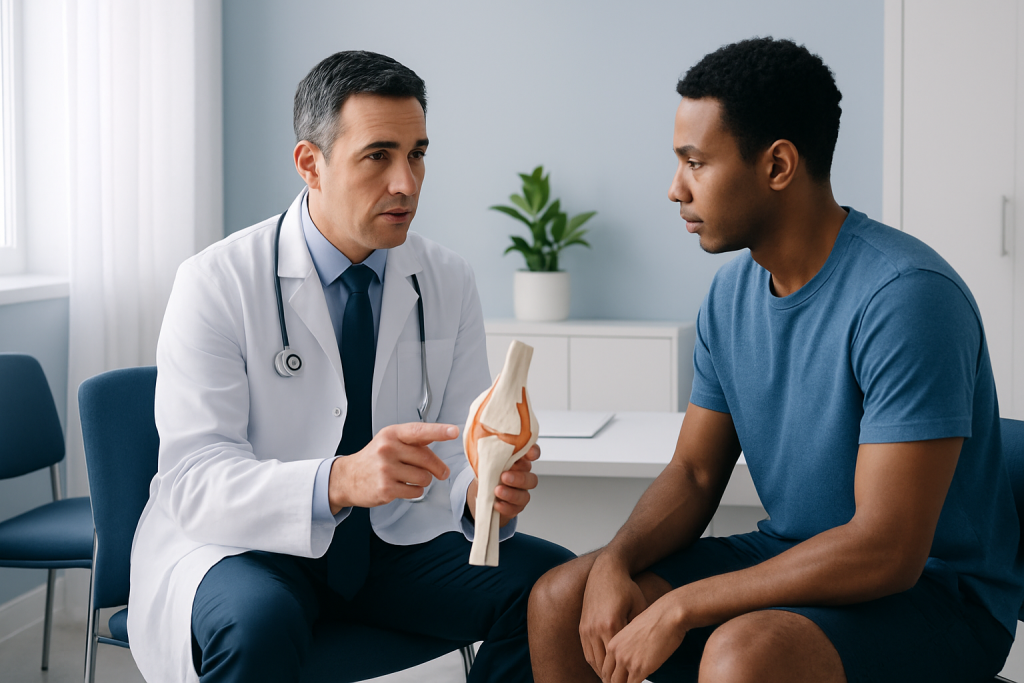
Meniscus tears can happen in two broad ways. A sudden twist on a bent knee is common in younger or more active people, especially during football, skiing, basketball, or similar sports. In these cases, the tear may be longer, cleaner, and sometimes positioned in a zone where repair has a better chance of healing.
In older adults, the meniscus may tear as part of gradual wear and tear rather than a single injury. The tissue can become thinner and less resilient, and a small movement may be enough to trigger pain. These degenerative tears are often linked with cartilage changes and early osteoarthritis, which can influence whether repair will be successful.
Factors that may affect treatment choice include:
- tear location, especially whether it is in the outer, better-perfused edge or the inner, less vascular area
- tear shape, such as vertical, radial, complex, flap, or root tear patterns
- knee stability and whether ligaments are also injured
- age and overall tissue quality
- activity goals, occupation, and sport demands
- the presence of arthritis or cartilage damage
A patient’s travel schedule is also part of the picture. Someone who will return home soon after treatment may need a plan that is realistic for wound care, follow-up imaging if needed, and staged rehabilitation.
Diagnosis
Diagnosis begins with a detailed history. The orthopedic doctor will ask how the injury happened, what motions trigger pain, whether there is locking or swelling, and how the knee has responded to rest or bracing. This conversation is important because the story often points toward the most likely tear pattern before the scan is even reviewed.
The physical examination checks joint-line tenderness, range of motion, swelling, and signs of instability. Specific movement tests can suggest a meniscus injury, but they do not always show whether the tear is repairable. MRI is commonly used to map the tear and look for associated injuries such as ligament damage or cartilage wear.
For some patients, the decision is not made solely from imaging. A tear that looks large on MRI may still be treated without surgery if symptoms are mild, while a smaller tear may need intervention if it causes persistent catching or blocks full extension. The best results usually come from combining the scan, the exam, and the patient’s real-life needs.
Treatment Options
Treatment is often grouped into three paths: non-surgical care, meniscus repair, or partial meniscectomy. Non-surgical care may include activity adjustment, short-term symptom control, physical therapy, and time. This approach can be appropriate for stable tears, certain degenerative tears, or situations where surgery is unlikely to add meaningful benefit.
Meniscus repair aims to preserve tissue by stitching the tear together so it can heal. It is generally more attractive when the tear is near the outer edge of the meniscus, has a favorable pattern, and the knee environment is suitable for healing. Repair often preserves long-term knee mechanics better than removal, but it usually comes with a slower recovery and more restrictions early on.
Partial meniscectomy, or trimming, removes only the unstable torn portion. This can relieve catching and pain more quickly and may be preferred when the tear is in a poor-healing zone, is complex or frayed, or is not technically repairable. The tradeoff is that less meniscus tissue remains, which can increase stress on the joint over time.
How age influences the choice is more subtle than a simple cutoff. Younger patients are more often considered for repair because their tissue may heal better, but older patients can still be candidates if the tear pattern and knee condition are favorable. Likewise, being active does not automatically mean repair is best; the knee has to be able to support that plan.
Travel time matters in a very practical way. Repair usually demands more protection, closer follow-up, and a longer rehabilitation timeline than trimming. International patients should discuss whether they can remain long enough for early review, whether sutures or dressings need monitoring, and how physical therapy will continue after leaving the treating center.
Prevention & Self-care
Not every meniscus tear can be prevented, especially those caused by degeneration or an awkward twist. Still, the knee often does better when surrounding muscles are strong and movement patterns are balanced. Quadriceps and hip strength, good warm-up habits, and careful technique during sports may reduce strain on the joint.
For people recovering before or after treatment, self-care should stay simple and safe. Rest the knee from movements that trigger sharp pain, use walking aids if recommended, and follow the rehabilitation plan rather than testing the knee too early. Swelling, stiffness, and muscle loss are common after injury, so guided exercises usually matter more than complete inactivity.
International patients may also benefit from planning ahead. It helps to know where follow-up will happen after returning home, who will review imaging if symptoms change, and how to continue rehabilitation across borders. A clear plan reduces uncertainty and supports steadier recovery.
When to See a Doctor
Medical assessment is advisable if knee pain lasts more than a few days after twisting injury, if swelling keeps returning, or if the knee feels unstable during normal walking. Locking, inability to fully straighten the knee, or a sudden drop in mobility should be reviewed by an orthopedic specialist rather than watched indefinitely.
Prompt care is also sensible when the knee injury follows a sports accident, a fall, or a movement that caused a clear pop or immediate swelling. Even when pain is moderate, a meniscus tear can coexist with ligament injury or cartilage damage, and those findings change the treatment plan.
People considering treatment while traveling should arrange the consultation early enough to allow diagnosis, discussion, and recovery planning before departure. Acibadem Health Point’s multidisciplinary specialists and JCI-accredited hospitals diagnose and treat meniscus tears for international patients, helping align surgical choice with rehabilitation and travel realities.
Recovery and Decision-Making Across Borders
Recovery is often the part patients underestimate. A repair may protect the long-term knee, but it usually asks for more patience, more protected weight-bearing, and a more structured return to activity. A trim may feel simpler in the short term, yet it still needs careful rehabilitation so that strength, balance, and motion return in an organized way.
Because international patients are balancing flights, lodging, and time away from home, the “best” operation is not only the one that is technically possible. It is the one that matches healing potential with the patient’s ability to complete the aftercare that the knee truly needs. That is why the conversation should include the tear pattern, the age-related tissue context, and the logistics of follow-up before any final decision is made.
When the plan is clear, patients usually feel more confident. Whether the path is repair, trimming, or non-surgical care, the goal is the same: a knee that moves with less pain and supports everyday life as safely as possible.
Frequently asked questions
What is the main difference between meniscus repair and trimming?
Repair stitches the torn meniscus so the tissue can heal, while trimming removes only the damaged part. Repair tries to preserve more of the knee’s natural shock absorber, but trimming may be better when the tear cannot heal reliably.
Does age decide whether a meniscus tear should be repaired?
Age matters, but it does not decide the issue by itself. Doctors also look at tear location, tissue quality, arthritis, knee stability, and the patient’s activity level.
Which meniscus tears are more likely to be repaired?
Tears closer to the outer edge of the meniscus, where blood supply is better, are more likely to be repaired. Certain vertical or peripheral tears may heal well, while complex or frayed tears are often less suitable for repair.
Is trimming always a faster recovery than repair?
Usually yes, because trimming often has fewer restrictions early on. However, the exact recovery depends on the knee’s overall condition, other injuries, and how well rehabilitation is followed.
Can a meniscus tear heal without surgery?
Some tears improve with rest, physical therapy, and symptom control, especially if they are stable and not causing locking. A doctor can help decide whether non-surgical care is reasonable or whether surgery is more likely to help.
Why does travel time matter after meniscus surgery?
Travel affects follow-up, wound checks, therapy access, and the ability to respond quickly if swelling or stiffness develops. Repair usually needs a longer and more closely supervised recovery, so travel plans should be discussed before treatment.
References
- American Academy of Orthopaedic Surgeons
- Mayo Clinic
- National Institute of Arthritis and Musculoskeletal and Skin Diseases
- Arthroscopy Association of North America
- American Orthopaedic Society for Sports Medicine
This article is for general information only and is not a substitute for professional medical advice. Please consult a qualified doctor about your individual situation.