Ankle Surgery After Sports Injury: When Fixing Stability Matters More Than Pain Relief

Key Takeaways
- Persistent giving-way or repeated sprains may signal ligament injury that has not healed well.
- Surgery is usually considered when the ankle remains unstable despite rest, bracing, or rehabilitation.
- Imaging and a careful physical exam help determine whether ligaments, cartilage, or bone are involved.
- Recovery often includes protected weight-bearing, physical therapy, and a gradual return to sport.
- A specialist can help match treatment to the injury pattern, activity goals, and overall health.
After a sports injury, ankle pain can improve while instability quietly remains. In some cases, ankle surgery is considered not to chase pain relief, but to restore dependable support for walking, training, and daily movement.
Overview
An ankle injury can begin with a single awkward landing, a fast change of direction, or a tackle that twists the joint beyond its normal range. For many athletes, the first concern is pain. Yet the more important issue is sometimes stability: whether the ankle can reliably hold the body during walking, cutting, jumping, and turning.
When a ligament is torn or stretched too far, the ankle may heal in a loose position. That can leave a person with repeated sprains, a hesitant gait, or a feeling that the joint is about to roll again. In those situations, ankle surgery is not simply about easing discomfort. It may be recommended to rebuild support and reduce the chance of repeated injury.
Orthopedic care for sports-related ankle problems usually begins with a clear question: is the ankle structurally stable enough for the patient’s life and sport? If the answer is no, and non-surgical care has not restored confidence and control, surgery may become the most practical next step.
Symptoms

Sports injuries to the ankle do not always look dramatic from the outside. A person may finish a game, walk on the ankle, and still have a significant ligament injury underneath. Over time, the signs of instability often become more revealing than the initial swelling.
Common symptoms that may raise concern include repeated sprains, the ankle “giving way,” difficulty trusting the joint on uneven ground, and a sense of looseness during pivoting or side-to-side movement. Some people also notice swelling that returns after activity, tenderness along the outer ankle, or stiffness after periods of rest.
Pain can be present, but it is not always the main issue. In some cases the ankle hurts less over time while instability remains. That pattern is important, because a calmer pain level does not necessarily mean the joint has fully recovered.
- Recurrent sprains or near-sprains
- Unsteady feeling when running or turning
- Swelling after exercise
- Reduced confidence on stairs or uneven surfaces
- Loss of sport performance due to hesitation or guarding
Causes & Risk Factors
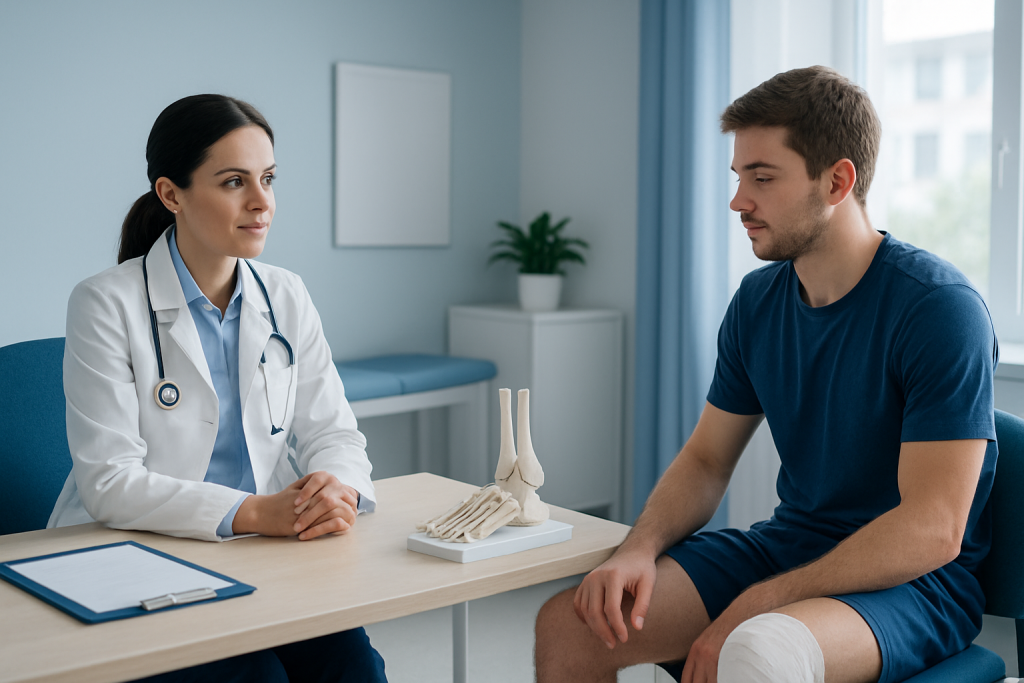
The most common cause is a ligament injury, especially to the outside of the ankle. These ligaments help keep the joint aligned during motion. If they do not heal tightly, the ankle can remain mechanically loose and more likely to roll again.
High-risk sports include basketball, soccer, tennis, trail running, gymnastics, and any activity that involves sudden stops, jumps, or directional changes. A previous ankle sprain is also a major risk factor for another one. Once the ankle has been injured, the surrounding muscles, balance systems, and protective reflexes may not perform as quickly as before.
Other factors can make instability more likely or harder to settle. These include inadequate rehabilitation, returning to sport too early, repeated injuries on the same side, and certain foot shapes or alignment patterns. In some people, cartilage damage, small bone injuries, or impingement can accompany the ligament problem and complicate recovery.
Diagnosis
Diagnosis usually starts with a detailed history of how the injury happened, what symptoms have persisted, and how the ankle behaves during sports and daily life. A clinician will often ask whether the joint gives way, how often symptoms recur, and which movements cause the most concern.
The physical examination looks for looseness, swelling, tenderness, and signs of associated problems such as limited motion or pain deep inside the joint. Stress maneuvers may help assess ligament stability. Because the ankle can be painful or guarded after injury, the exam is often interpreted together with the story of repeated sprains and functional difficulty.
Imaging may be used to clarify the picture. X-rays can rule out fractures or alignment issues. MRI is often helpful when ligament tears, cartilage injury, or other soft tissue damage are suspected. In some cases, ultrasound or other studies may be recommended, depending on the injury pattern and the specialist’s assessment.
Treatment Options
Not every unstable-feeling ankle needs surgery. Many patients improve with a structured plan that includes rest from aggravating activity, bracing, targeted physical therapy, balance work, and a careful return-to-sport progression. The goal is to rebuild strength and neuromuscular control so the ankle can respond better under pressure.
Surgery is generally considered when instability continues despite appropriate non-surgical treatment, especially if the patient keeps spraining the ankle or cannot return to desired activity safely. The operation depends on the problem being treated. For torn ligaments, repair or reconstruction may be performed to tighten and support the joint. If there is associated cartilage damage or loose tissue inside the joint, arthroscopy may be used to address those findings at the same time.
Recovery after ankle surgery is a staged process. Early treatment may focus on protecting the repair, controlling swelling, and restoring gentle movement. Later phases usually include progressive weight-bearing, strengthening, proprioception training, and sport-specific rehabilitation. The timeline varies widely, so follow-up guidance from the surgical team matters more than comparing one recovery to another.
For international patients planning treatment abroad, it is especially useful to understand the likely sequence before travel: consultation, imaging review, possible surgery, early rehabilitation, and remote follow-up once home. That planning helps reduce surprises and supports a smoother return to daily routines.
Prevention & Self-care
After a sports ankle injury, the best self-care is often the simplest: protect the joint while it heals, then rebuild it patiently. Skipping rehabilitation or returning to play too quickly can leave the ankle vulnerable to another sprain, even if the pain feels manageable.
Bracing or taping may help during the recovery phase and sometimes after return to sport, especially for people with a history of sprains. Physical therapy usually plays a central role, with exercises that improve calf strength, balance, joint position sense, and landing control. These elements help the ankle react more effectively during fast movement.
Day-to-day habits can also matter. Supportive footwear, careful warm-ups, attention to playing surfaces, and avoiding sudden increases in training load can all reduce stress on the joint. If the ankle repeatedly feels unstable, that is a sign to pause and seek reassessment rather than simply pushing through.
- Follow the prescribed rehab program consistently
- Use support devices if advised by a clinician
- Return to sport in stages, not all at once
- Address balance and strength deficits on both sides
- Report recurring giving-way episodes early
When to See a Doctor
A sports-related ankle injury deserves medical review when the joint remains swollen, painful, or weak after the expected healing period, or when it keeps twisting again. Repeated episodes of giving way are especially important, because they can point to ongoing mechanical instability rather than a simple slow recovery.
Prompt assessment is also wise if there is marked deformity, inability to bear weight, numbness, severe bruising, or pain that suggests a fracture or more complex injury. People who plan to return to competitive sport may benefit from specialist evaluation even if everyday walking seems acceptable, because sport places much greater demands on the ankle than routine activity.
A qualified orthopedic specialist can help decide whether continued rehabilitation is enough or whether surgery would better restore long-term function. In a coordinated setting, Acibadem Health Point’s multidisciplinary specialists and JCI-accredited hospitals evaluate and treat ankle injuries for international patients, with care plans designed around both surgery and recovery needs.
Living With the Recovery Process
The period after ankle surgery can be frustrating for active people, especially when the pain is improving but the function is still limited. It helps to think of recovery as a rebuild rather than a simple healing interval. The ligament or structure being repaired needs time, protection, and repeated training to become dependable again.
Patients often do best when they stay closely connected with their care team, keep rehabilitation appointments, and ask practical questions about travel, work, stair use, driving, and return-to-sport milestones. For those returning from another country, clear instructions about wound care, activity limits, and follow-up imaging can make the transition home much easier.
Progress is usually judged by stability, control, and confidence, not by pain alone. When those elements come back in step with the surgeon’s guidance, the ankle is more likely to support daily life and sport safely.
Frequently asked questions
How do doctors decide if ankle surgery is needed after a sports injury?
They look at the pattern of injury, how often the ankle gives way, and whether rehabilitation has restored stability. Imaging and physical examination help show if ligaments, cartilage, or bone are involved. Surgery is more likely when the ankle remains functionally unstable despite appropriate non-surgical treatment.
Can an ankle feel better in pain but still need surgery?
Yes. Pain may settle before stability returns, especially after a ligament injury. If the ankle still rolls easily or feels unreliable during sport or daily activity, further evaluation is important.
What is the difference between ankle repair and ankle reconstruction?
Repair usually means tightening or reattaching damaged ligament tissue when it still has usable structure. Reconstruction may be chosen when the ligament is too damaged to repair directly and a stronger new support is needed. The best option depends on the injury pattern and the surgeon’s assessment.
How long does recovery usually take after ankle surgery?
Recovery varies with the procedure, the tissue involved, and the person’s rehabilitation progress. Many patients need a period of protection followed by gradual strengthening and balance training. A return to sport is usually based on function and specialist guidance, not a fixed calendar alone.
Will physical therapy still be needed after surgery?
Yes, in most cases it is a key part of recovery. Surgery can restore structure, but therapy helps the ankle regain strength, motion, balance, and control. Without rehabilitation, the ankle may not perform well even if the repair is healing normally.
Is repeated ankle sprain a reason to get checked even if I can walk normally?
Yes. Walking comfortably does not always mean the ankle is stable enough for higher-level activity. Repeated sprains can gradually damage ligaments and cartilage, so an orthopedic review is a sensible next step.
References
- American Academy of Orthopaedic Surgeons
- American Orthopaedic Foot & Ankle Society
- Mayo Clinic
- National Institute of Arthritis and Musculoskeletal and Skin Diseases
- NHS
This article is for general information only and is not a substitute for professional medical advice. Please consult a qualified doctor about your individual situation.