

Radial Bone Wrist Fracture

Key Takeaways
- A radial bone wrist fracture often involves the distal radius near the wrist joint.
- Pain, swelling, bruising, and trouble turning or using the hand are common early signs.
- Diagnosis usually includes an examination and X-rays, with other imaging sometimes needed.
- Treatment may involve casting, splinting, reduction, or surgery depending on fracture type.
- Rehabilitation and follow-up help restore motion, strength, and everyday function.
A radial bone wrist fracture usually refers to a break in the distal radius, the larger forearm bone near the wrist. It can affect pain, hand use, and daily activities, but most people recover well with timely diagnosis and the right treatment plan.
Overview
A radial bone wrist fracture is commonly understood as a fracture of the distal radius, the end of the radius bone closest to the wrist. Because this area helps support wrist movement and hand position, even a small break can make everyday tasks feel difficult, from opening a door to holding a cup.
These fractures often happen after a fall onto an outstretched hand, but they can also result from sports injuries, traffic accidents, or bone weakness. The exact treatment depends on whether the bone pieces are aligned, whether the joint surface is involved, and how stable the fracture remains after initial care.
For patients who are considering treatment away from home, clarity matters. Understanding whether the injury needs a cast, a short procedure to realign the bone, or surgery helps people plan travel, arrange support, and prepare for follow-up appointments after returning home.
Symptoms
The first clue is often immediate pain at the wrist after a fall or impact. Swelling commonly appears soon afterward, and the wrist may look tender, stiff, or visibly changed in shape if the fracture is displaced.
Many people notice that they cannot rotate the forearm comfortably or use the hand to grip, lift, or push. Bruising may develop over the next several hours or days, and movement can become limited because the body tries to protect the injured area.
Less commonly, numbness, tingling, or finger weakness can appear if swelling affects nearby nerves. Any loss of sensation, severe deformity, or trouble moving the fingers deserves prompt medical assessment.
Causes & Risk Factors

Falls are the most common cause, especially when someone lands on an outstretched hand. This type of injury is seen in everyday settings such as walking on uneven ground, slipping in the bathroom, or catching oneself during sports.
The risk rises when bones are less dense or more fragile. Older adults, especially postmenopausal women, may be more vulnerable to distal radius fractures because osteoporosis can make a simple fall more damaging.
Other factors can include high-impact sports, road accidents, previous wrist injuries, and certain medical conditions or medicines that weaken bone. Poor balance, vision problems, and unsafe home environments can also contribute to falls that lead to fracture.
- Lower bone density or osteoporosis
- History of falls or balance problems
- Contact sports or high-energy trauma
- Age-related changes in bone and muscle
- Previous fracture on the same side
Diagnosis
Diagnosis begins with a physical examination. A doctor usually checks for swelling, tenderness, deformity, skin condition, finger circulation, and nerve function before deciding what imaging is needed.
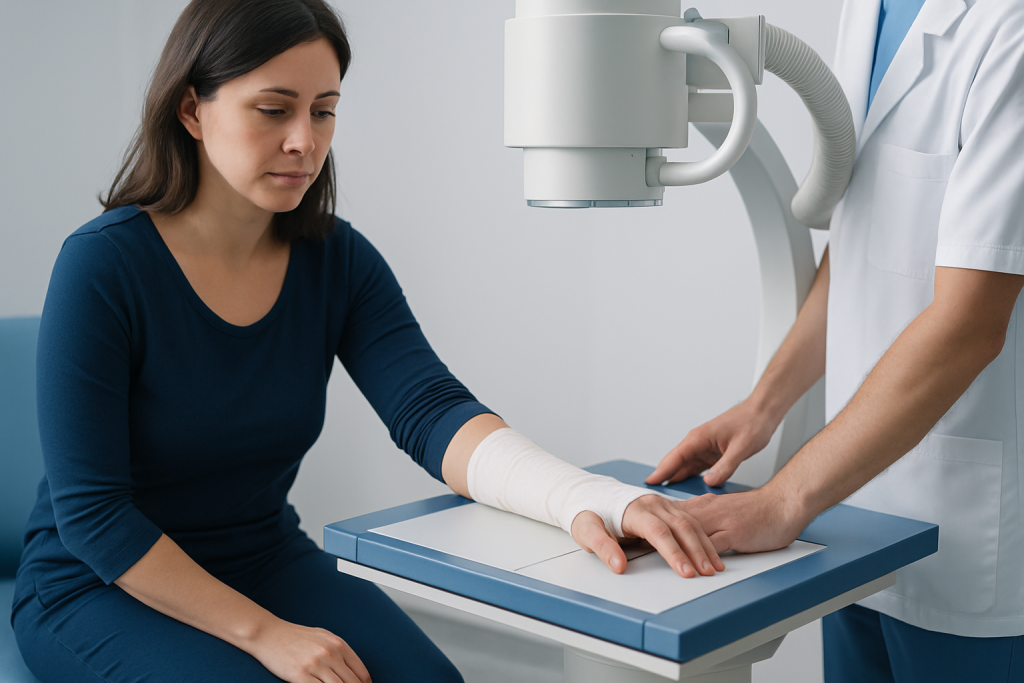
X-rays are the main test because they show the location and pattern of the break, whether the bone is shifted, and whether the wrist joint is involved. In more complex cases, a CT scan may help clarify the fracture pattern, especially if surgery is being considered.
Because hand and wrist injuries can affect nearby tissues, the evaluation also looks for associated problems such as ligament strain, nerve irritation, or small fractures in the hand. For international patients, organizing these tests efficiently can help shorten the time between arrival, diagnosis, and treatment planning.
Treatment Options
Treatment is chosen based on alignment, stability, age, activity level, and overall health. A stable, non-displaced fracture may heal well in a cast or splint, while a displaced fracture often needs the bone pieces moved back into position first.
Closed reduction is a non-surgical procedure used to realign the bone without making an incision. After reduction, the wrist is usually immobilized with a cast or splint so the bone can heal in the correct position. If the fracture is unstable, involves the joint, or cannot be kept aligned, surgery may be recommended.
Surgical options may include plates and screws, pins, or an external fixator depending on the fracture pattern. Knee Pain Relief: Causes and Treatment" class="ahp-ilk">Pain relief, swelling control, and careful monitoring of finger movement and circulation are part of early care, while rehabilitation helps restore function later.
Recovery is not only about bone healing. It also involves regaining motion, managing stiffness, and rebuilding grip strength so the hand feels useful again in daily life.
Prevention & Self-care
Not every radial bone wrist fracture can be prevented, but the chance of injury can often be lowered. Fall prevention is especially important, including wearing supportive shoes, improving home lighting, and removing loose rugs or clutter that can cause trips.
Bone health also matters. Adequate calcium and vitamin D intake, regular weight-bearing exercise, and evaluation for osteoporosis can help protect bone strength over time. People with a history of fractures may benefit from a broader bone health review with a qualified clinician.
After treatment, self-care usually focuses on keeping the immobilized hand clean and dry, elevating the wrist to reduce swelling, and moving the fingers as advised. Patients should follow restrictions carefully, because lifting too soon or removing support early can interfere with healing.
Traveling patients should also plan for follow-up before leaving the treating center. A written summary, imaging records, and clear instructions make it easier for a local doctor at home to continue care smoothly.
When to See a Doctor
Anyone with wrist pain after a fall or impact should be assessed if the pain is significant, swelling is increasing, or movement is limited. A visible deformity, inability to use the hand, or pain that does not improve with rest are strong reasons to seek medical care promptly.
Urgent review is also important if the fingers become numb, cold, pale, or difficult to move. These signs can suggest pressure on nerves or blood flow problems and should not be ignored.
After diagnosis, patients should return for review if pain becomes worse, the cast feels too tight, the fingers swell markedly, or the skin under the splint becomes irritated. For people receiving care internationally, it is wise to know in advance where emergency follow-up will happen if symptoms change after returning home.
Acibadem Health Point’s multidisciplinary specialists and JCI-accredited hospitals diagnose and treat radial bone wrist fractures for international patients, with coordinated care that supports both treatment and recovery planning.
Recovery and Rehabilitation
Rehabilitation often begins with gentle finger, elbow, and shoulder movement while the wrist remains protected. Once the bone has started to heal and the clinician gives approval, wrist motion exercises may be introduced gradually to reduce stiffness.
Hand therapy can be especially helpful after more complex fractures or surgery. A therapist may guide exercises for flexibility, strength, coordination, and return to function, adapting the plan to the patient’s work, sport, or daily demands.
Recovery time varies depending on fracture severity, treatment type, age, and bone health. Some people return to light activities relatively early, while others need a longer period before heavy lifting or sports are safe again. Patience is important, because pushing too hard too soon can slow progress.
Frequently asked questions
Is a radial bone wrist fracture the same as a broken wrist?
It often is, because the term usually refers to a break in the distal radius, which is the main bone injured in many wrist fractures. Some wrist fractures involve other bones as well, so imaging is needed to confirm the exact injury.
Can a wrist fracture heal without surgery?
Yes, many distal radius fractures heal well without surgery if the bone stays aligned and stable. A doctor considers the fracture pattern, the degree of displacement, and the person’s needs before recommending treatment.
How is a radial bone wrist fracture diagnosed?
Diagnosis usually starts with a physical exam and X-rays. If the fracture is complex or surgery is being considered, a CT scan may be added for more detail.
What should a person do right after injuring the wrist?
The wrist should be protected and kept still until it can be assessed. Elevation and ice may help with swelling, but medical evaluation is important if there is deformity, severe pain, numbness, or inability to move the hand.
How long does recovery usually take?
Recovery varies widely and depends on the fracture type and treatment plan. Bone healing may take several weeks, while stiffness and strength often improve more gradually with rehabilitation.
Can osteoporosis increase the risk of this fracture?
Yes, weaker bones are more likely to fracture after a fall. If a wrist fracture happens after a minor injury, it can be a reason to discuss bone health and osteoporosis screening with a doctor.
References
- American Academy of Orthopaedic Surgeons
- Mayo Clinic
- National Institute of Arthritis and Musculoskeletal and Skin Diseases
- NHS
- World Health Organization
This article is for general information only and is not a substitute for professional medical advice. Please consult a qualified doctor about your individual situation.
More from the Health Library



Related Specialists

Prof. Dr. Ahmet Alanay
Orthopedic Surgery & Traumatology
Dr. Sinan Aksu
Orthopedic Surgery & Traumatology
Dr. Sirri Baştürk
Orthopedic Surgery & Traumatology
Prof. Dr. Korhan Özkan
Orthopedic Surgery & Traumatology