Arthroscopy for Joint Pain: When a Keyhole Procedure Is Useful and When It Is Not

Key Takeaways
- Arthroscopy is most helpful when joint pain comes from a specific, treatable problem inside the joint.
- It is less useful for pain driven mainly by widespread arthritis, inflammation, or poor movement patterns.
- Recovery is usually shorter than with open surgery, but rest, rehabilitation, and follow-up still matter.
- A careful diagnosis before surgery helps avoid procedures that are unlikely to improve symptoms.
- Second opinions can be valuable when symptoms and imaging do not clearly match.
Arthroscopy is a minimally invasive way for doctors to look inside a joint, confirm a diagnosis, and sometimes treat the problem during the same procedure. It can be very useful for certain mechanical joint problems, but it is not a universal solution for all joint pain.
Overview
Arthroscopy is often described as keyhole surgery because the surgeon works through very small incisions using a camera and fine instruments. The camera sends images to a monitor, allowing the joint to be examined from the inside without opening it widely. In many cases, the same procedure can be used both to diagnose a problem and to treat it.
For people living with joint pain, arthroscopy can sound like an appealing fix. The reality is more specific. It tends to help when pain is linked to a clear mechanical issue such as a torn meniscus, a loose fragment, a damaged piece of cartilage, or certain tendon and ligament problems. It is much less helpful when the main source of pain is advanced arthritis or a diffuse inflammatory condition.
The decision is not just about the joint itself; it is also about the person and the pattern of symptoms. Doctors consider how long the pain has been present, whether the joint locks or catches, how imaging fits the story, and whether non-surgical treatment has already been tried. For international patients, that assessment is especially important because travel, scheduling, and recovery plans need to be realistic from the start.
Symptoms That May Point to a Joint Problem Inside the Joint
Arthroscopy is usually considered when symptoms suggest something is physically interfering with the joint’s movement. People may describe clicking, catching, locking, a feeling that the joint gives way, or swelling that returns again and again. Pain may be worse with twisting, bending, climbing stairs, overhead movement, or sports activity, depending on the joint involved.
These symptoms do not automatically mean arthroscopy is needed. A similar pattern can appear with muscle strain, tendon irritation, nerve-related pain, or degenerative joint disease. What matters is whether the symptoms match a problem that can reasonably be corrected by a procedure inside the joint.
Some examples include a knee that locks because of a torn meniscus, a shoulder that is painful because of a labral tear, or a joint that keeps swelling because of a loose body. In those settings, the surgeon may be able to confirm the diagnosis directly and address the source of irritation during the same operation.
Causes & Risk Factors
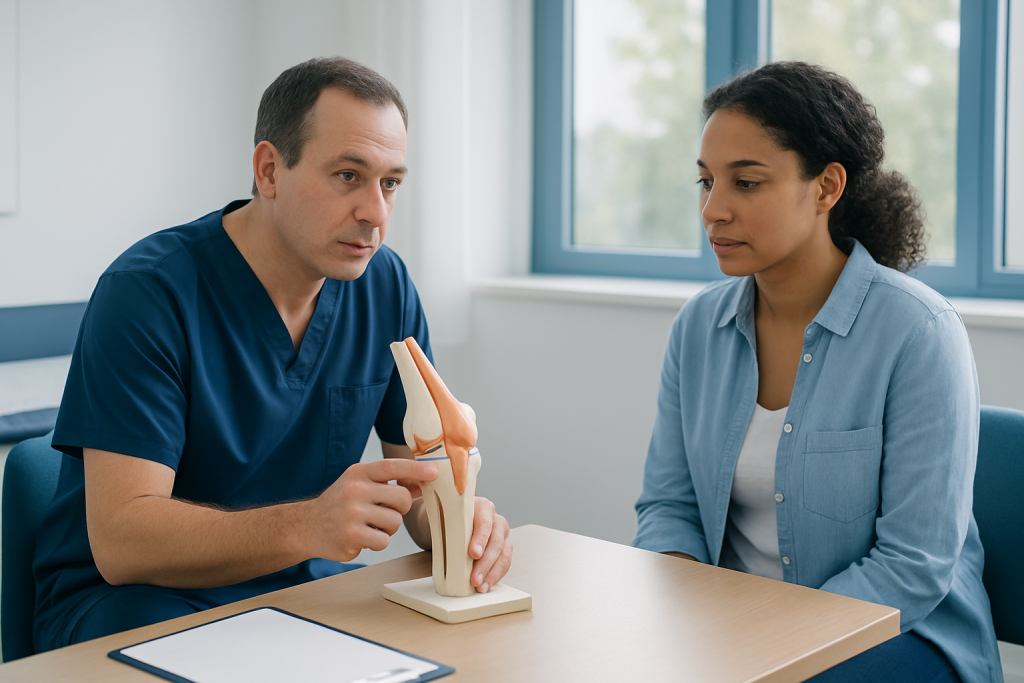
Joint pain is a broad symptom, and arthroscopy is only helpful for some causes. Problems that may respond well include meniscal tears, certain cartilage injuries, ligament or labral tears, loose bone or cartilage fragments, and some forms of synovitis. In younger and active patients, these issues may follow a sports injury, a fall, or repeated strain. In older adults, wear-and-tear changes can also create mechanical symptoms, although not every degenerative finding benefits from surgery.
Risk factors depend on the joint and the activity involved. Repetitive kneeling, pivoting, throwing, overhead work, or high-impact sports may increase the chance of internal joint injury. Previous surgery, joint instability, and occupations that place long-term stress on a joint can also contribute. Weight, overall conditioning, and the presence of arthritis can influence both symptoms and recovery.
It is equally important to understand when arthroscopy is not likely to help. Pain caused mainly by widespread cartilage loss, inflammatory arthritis, generalized stiffness, or referred pain from the back or neck usually needs a different approach. In those cases, the key question is not whether a problem exists, but whether a small-camera procedure can meaningfully improve function or comfort.
Diagnosis: How Doctors Decide Whether Arthroscopy Makes Sense
The path to arthroscopy usually begins with a careful history and physical examination. A doctor will want to know what movements trigger pain, whether the joint swells, whether there are locking episodes, and what treatments have already been tried. The pattern of symptoms often reveals more than a scan by itself.
Imaging may include X-rays to look for arthritis, alignment changes, or bone abnormalities, and MRI to evaluate soft tissues such as cartilage, ligaments, and menisci. Even so, imaging results must be interpreted in context. Some people have tears or degenerative changes on scans that do not explain their symptoms, while others may have significant pain with only modest findings.
For that reason, arthroscopy is usually considered only when there is a reasonable chance that the procedure will clarify the diagnosis and lead to a treatment that matters. This is where a thoughtful orthopedic review is valuable, especially for patients traveling from another country who need a clear plan before committing to surgery and recovery abroad.
Treatment Options: What Arthroscopy Can and Cannot Do
During arthroscopy, the surgeon can inspect the joint, remove irritated tissue, trim or repair damaged structures, remove loose fragments, and sometimes smooth inflamed areas. The exact procedure depends on the joint and the underlying issue. In a knee, for example, the surgeon may address a meniscal tear or remove a loose body; in a shoulder, the focus may be a labral or rotator cuff-related problem.
What arthroscopy cannot do is reverse advanced joint degeneration. If the cartilage is broadly worn away, the joint surface is badly deformed, or pain comes from a condition that affects the whole joint environment, the improvement may be limited. In such cases, doctors may recommend physical therapy, activity changes, injections, medication, bracing, or a different surgery altogether, depending on the diagnosis.
A practical way to think about arthroscopy is that it is best for problems with a specific target. When the target is clear, it can be an efficient and precise option. When the target is diffuse or unclear, the same procedure may add recovery time without delivering much relief. Honest preoperative discussion helps patients avoid disappointment and choose the option that fits their goals.
Prevention & Self-care
Not every joint problem can be prevented, but many can be managed more safely with good habits. Strengthening the muscles around a joint, maintaining flexibility, warming up before sports, and using proper technique can reduce strain. For many people, a well-designed physiotherapy program is a meaningful part of both prevention and treatment.
Self-care also includes giving the joint a realistic workload. Repeated impact, deep squatting, overhead stress, or prolonged kneeling may need to be modified, at least temporarily. Supportive footwear, sensible pacing, and attention to body weight can all reduce pressure on a painful joint, particularly when arthritis is part of the picture.
If arthroscopy has already been recommended, preparation matters. Patients should ask what the procedure is expected to fix, how long they will need to limit activity, whether they will need crutches or a sling, and how rehabilitation will work once they return home. International patients should also plan in advance for follow-up care, flight timing, and access to physical therapy after travel.
When to See a Doctor
Medical review is sensible when joint pain lasts more than a short period, keeps returning, or begins to limit normal activities. It is especially important if the joint locks, gives way, swells repeatedly, or becomes difficult to fully bend or straighten. These features can point to an internal problem that deserves an orthopedic assessment.
Prompt evaluation is also wise after a clear injury, particularly if there was a twist, pop, or rapid swelling. Even when symptoms seem manageable, a doctor can help distinguish problems that may improve with non-surgical care from those that are more likely to benefit from a procedure. That distinction is often the key to choosing arthroscopy well.
In some cases, a second opinion is helpful before surgery, especially if the plan is not fully clear or the symptoms do not match the scan. A careful consultation can prevent unnecessary procedures and ensure that the chosen treatment aligns with the person’s goals, work demands, and travel timeline. Acibadem Health Point’s multidisciplinary specialists and JCI-accredited hospitals diagnose and treat this condition for international patients with coordinated care across the surgical journey.
Frequently asked questions
Is arthroscopy always better than open surgery?
Not always. Arthroscopy is less invasive and often involves a smaller incision and faster early recovery, but the right approach depends on the condition being treated. For some complex injuries or advanced joint damage, open surgery or another procedure may be more appropriate.
Can arthroscopy cure arthritis pain?
Arthroscopy is usually not a cure for arthritis. If pain is mainly caused by widespread cartilage wear, the benefit is often limited. Doctors may recommend exercise therapy, medication, injections, weight management, or joint replacement depending on severity.
How do doctors decide whether I am a good candidate?
They look for symptoms that suggest a correctable internal problem, such as locking, catching, recurrent swelling, or a clear injury. They also review imaging and response to non-surgical treatment. The best candidates usually have a specific target that arthroscopy can address.
What is recovery like after arthroscopy?
Recovery is often quicker than after larger surgery, but it still varies by joint and by what was done during the procedure. Some people need crutches, a sling, or temporary activity limits, along with physiotherapy. The surgeon’s instructions are important for a safe return to work, sports, and travel.
Are there risks with arthroscopy?
Yes, as with any surgery, there are risks such as infection, bleeding, stiffness, blood clots, anesthesia-related issues, and persistent symptoms. Serious complications are uncommon, but they should be discussed before surgery. A careful preoperative assessment helps lower risk and set realistic expectations.
When should I get a second opinion before surgery?
A second opinion is reasonable if the diagnosis is uncertain, the symptoms do not match the scan, or the suggested procedure seems more invasive than expected. It is also useful when someone is deciding on surgery from another country and needs confidence in the plan. Clear agreement about the goal of surgery is often the most valuable part of the consultation.
References
- American Academy of Orthopaedic Surgeons
- Mayo Clinic
- National Institute of Arthritis and Musculoskeletal and Skin Diseases
- NHS
- American College of Rheumatology
This article is for general information only and is not a substitute for professional medical advice. Please consult a qualified doctor about your individual situation.