Herniated Disc Treatment Abroad: Injection, Rehab, or Surgery?

Key Takeaways
- Many herniated discs improve with time, targeted rehabilitation, and symptom control.
- Injections may help reduce nerve inflammation and create a window for movement-based recovery.
- Surgery is usually considered when pain persists, weakness progresses, or nerve compression is significant.
- Treatment abroad can be practical when patients want coordinated imaging, specialist review, and follow-up planning in one place.
- A clear diagnosis matters because not every disc bulge is the real source of pain.
A herniated disc can cause back or neck pain, numbness, and sometimes nerve irritation that changes daily movement. For patients considering treatment abroad, the right choice between injection, rehabilitation, or surgery depends on symptoms, imaging, nerve findings, and how much the problem affects function.
Overview
A herniated disc happens when the soft center of a spinal disc pushes through its outer layer and may irritate nearby nerves. It can occur in the neck, mid-back, or lower back, and the symptoms often depend on which nerve structures are affected. Some people notice only local pain, while others develop pain that travels into the arm or leg, along with tingling, numbness, or weakness.
When patients look for herniated disc treatment abroad, they are often trying to answer a practical question: should care start with an injection, a structured rehabilitation plan, or surgery? The most appropriate option is usually guided by the severity of symptoms, the length of time they have been present, and whether there are signs of nerve damage. In many cases, treatment is stepwise rather than immediate, and the least invasive effective option is often tried first.
International patients may also need a care plan that fits travel, time away from work, and follow-up once they return home. That makes it especially important to understand the role of each treatment path before making decisions. A good spine team can explain what the MRI shows, whether the symptoms match the imaging, and how each option is expected to help.
Symptoms
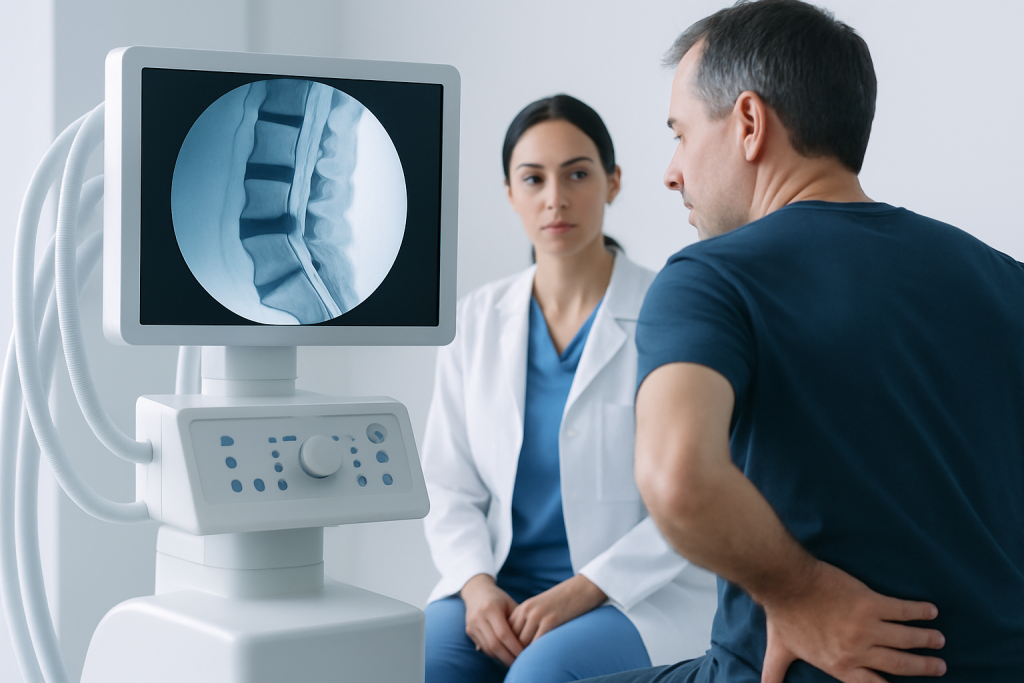
Herniated disc symptoms vary widely, which is one reason the condition can be confusing. A person may have a dramatic scan but only mild discomfort, or they may have strong nerve pain even when the visible disc change seems modest. Common complaints include aching in the lower back or neck, sharp pain that worsens with sitting, bending, coughing, or lifting, and radiating pain into the arm, buttock, or leg.
Nerve-related symptoms deserve special attention. These may include numbness, pins-and-needles sensations, muscle weakness, or a feeling that one leg or arm is not cooperating normally. In the lower back, pain may travel along the sciatic nerve path, sometimes reaching the calf or foot. In the neck, symptoms may extend into the shoulder, forearm, or hand.
Some people also notice stiffness, reduced mobility, or trouble finding comfortable positions for sleep. Severe symptoms are not the same as emergency symptoms, but sudden or progressive weakness, loss of balance, or changes in bladder or bowel control need urgent medical assessment. The key is not to guess based on pain alone; neurological examination helps clarify whether a disc is pressing on a nerve and how much function is affected.
Causes & Risk Factors

Discs act as cushions between the spinal bones, and they naturally lose some flexibility with age. A herniation may develop when wear, repeated strain, or a sudden load causes the disc material to protrude. Sometimes this follows a specific lifting injury, but often it develops gradually without one dramatic event.
Several factors can raise the likelihood of a herniated disc or make symptoms more noticeable. These include heavy manual work, repetitive bending or twisting, prolonged sitting, smoking, excess body weight, and weaker core or back muscles. Genetics and general disc degeneration also play a role, which helps explain why some people develop symptoms earlier than others.
For patients traveling abroad for care, it is helpful to know that the same MRI findings can mean different things in different people. A small herniation can be painful if it irritates a sensitive nerve root, while a larger one may be handled without surgery if symptoms are improving. That is why expert review of the history, examination, and imaging together is more important than the scan alone.
Diagnosis
Diagnosis usually begins with a careful conversation about symptom pattern, triggers, previous injuries, work demands, and what has already been tried. A physician then performs a physical and neurological examination to look for pain reproduction, reflex changes, muscle weakness, and sensory differences. These findings help determine whether the problem is likely to be coming from a specific nerve root.
Imaging is often used when symptoms persist, are severe, or suggest nerve compression. Magnetic resonance imaging, or MRI, is the most useful study for soft tissues such as discs and nerves. In selected cases, additional tests may be recommended to rule out other causes of pain or to clarify nerve function.
For international patients, diagnosis can be especially efficient when consultation, imaging, and specialist review are coordinated in one center. That can reduce delays and help avoid unnecessary procedures. The goal is not simply to identify a herniation, but to decide whether it truly explains the symptoms and whether injection, rehabilitation, or surgery best fits the situation.
Treatment Options
Most herniated disc treatment plans begin without surgery. The first question is usually whether symptoms can settle enough with rest from aggravating activities, anti-inflammatory or pain-relief strategies as advised by a doctor, and guided movement. If pain is limiting function, a spine specialist may recommend a more active intervention sooner, especially when nerve irritation is pronounced.
Injections are often used when inflammation around a nerve is a major source of pain. Epidural steroid injections or selective nerve root injections may reduce irritation and make it easier to participate in rehabilitation. They do not remove the disc herniation, but they can help calm symptoms so that walking, stretching, and strengthening become possible again. In the right patient, this can be a useful bridge between acute pain and recovery.
Rehabilitation focuses on restoring movement, reducing fear of activity, and improving the support muscles around the spine. A physiotherapist may work on posture, flexibility, nerve gliding, core control, hip strength, and safe lifting habits. Rehab is often the core treatment when pain is improving, when neurologic findings are stable, or after an injection has reduced the pain enough for exercise to be tolerable.
Surgery is generally considered when pain remains severe despite conservative care, when weakness progresses, or when there is significant compression affecting nerve function. Common procedures include discectomy or microdiscectomy, in which the part of the disc pressing on the nerve is removed. Surgery is not the first choice for every patient, but in the right setting it can relieve pressure directly and help recovery when non-surgical measures are not enough.
The best option often depends on three practical questions: Is the pain mainly inflammatory, mechanical, or due to clear nerve compression? Is function improving or declining? And can the patient safely recover with a treatment plan that may need follow-up after returning home? A thoughtful specialist will use these questions to recommend a path that matches both the spine findings and the patient’s life circumstances.
Prevention & Self-care
Self-care does not replace medical treatment, but it can support recovery and reduce flare-ups. Many patients do better when they keep gently active rather than staying in bed for long periods. Short walks, position changes, and movement within comfortable limits may help the back or neck stay less stiff.
Body mechanics also matter. Lifting with the legs, avoiding repeated twisting under load, supporting the lower back during long sitting periods, and adjusting desk or travel posture can all reduce strain. Smoking cessation and weight management may also help lower long-term stress on the spine.
For people receiving herniated disc treatment abroad, planning is part of self-care. It is helpful to ask what movements should be avoided during travel, whether a brace is needed, when physiotherapy can begin, and how follow-up will happen after departure. Clear written instructions can make recovery much smoother once the patient is back home.
Patients should also remember that pain relief is only one part of the picture. The real goal is functional recovery: being able to sit, stand, walk, sleep, and return to normal daily life with less nerve irritation and better confidence in movement.
When to See a Doctor
Medical review is advisable when back or neck pain lasts more than a few weeks, spreads into an arm or leg, or interferes with daily life. A doctor should also assess symptoms that do not improve with basic self-care or that keep coming back in the same pattern. Early evaluation can help prevent prolonged nerve irritation and unnecessary uncertainty.
Some situations need faster attention. These include progressive weakness, worsening numbness, trouble walking, or new bladder or bowel changes. Even when symptoms are not urgent, a specialist evaluation is useful if a patient is weighing injection, rehabilitation, or surgery and wants to understand which option is most appropriate.
For international patients, an experienced multidisciplinary spine team can be especially helpful because it can combine imaging, examination, rehabilitation planning, and surgical opinion when needed. At Acibadem Health Point, multidisciplinary specialists and JCI-accredited hospitals diagnose and treat herniated disc cases for international patients in a coordinated setting. That can make the decision process clearer before travel and the follow-up plan more manageable after treatment.
Recovery and Long-Term Outlook
Recovery depends on the treatment chosen and the degree of nerve irritation at the start. Some patients improve steadily with rehabilitation and time, while others need an injection to reduce pain enough to become active again. After surgery, many people notice relief from the nerve pain that was caused by compression, although full recovery may still require rehabilitation and patience.
It is common for improvement to happen gradually rather than all at once. Sleep, sitting tolerance, walking distance, and confidence in movement often return in stages. A patient’s long-term outlook is usually better when the diagnosis is accurate, treatment is matched to symptoms, and exercises or habits are continued after the initial pain settles.
Follow-up matters even after travel ends. Patients should know who will review progress, what symptoms should prompt reassessment, and how to protect the spine during work or exercise when they return home. A well-planned recovery is not just about easing pain in the clinic; it is about helping the person live comfortably and safely afterward.
Frequently asked questions
Is surgery always needed for a herniated disc?
No. Many herniated discs improve with time, activity modification, and rehabilitation. Surgery is usually reserved for persistent pain, progressive weakness, or significant nerve compression that does not respond well to non-surgical care.
What does a disc injection do?
A spinal injection does not remove the herniated disc. It is used to reduce inflammation around an irritated nerve, which may lower pain and make rehabilitation easier to do.
How long does rehabilitation take?
There is no single timeline because recovery depends on the location of the disc, symptom severity, and overall health. Some people improve within weeks, while others need a longer, step-by-step program to regain strength and movement.
Can a herniated disc heal without treatment?
Some disc herniations become less symptomatic over time, especially when the nerve irritation settles. Even so, evaluation is wise if pain is persistent, severe, or linked to numbness or weakness.
Why do people travel abroad for herniated disc treatment?
Patients may seek coordinated imaging, specialist review, and a clear treatment plan in one place. For some, the appeal is access to multidisciplinary care that helps them choose between injection, rehabilitation, and surgery with more confidence.
What symptoms mean a doctor should be seen urgently?
Progressive weakness, difficulty walking, loss of balance, or changes in bladder or bowel control should be assessed promptly. These symptoms can suggest more serious nerve involvement and should not be ignored.
References
- National Institute of Neurological Disorders and Stroke
- American Academy of Orthopaedic Surgeons
- Mayo Clinic
- World Health Organization
- NICE
This article is for general information only and is not a substitute for professional medical advice. Please consult a qualified doctor about your individual situation.