Achilles Tendonitis

Key Takeaways
- Achilles tendonitis usually develops gradually after repetitive stress rather than from one single event.
- Pain is often felt at the back of the heel or lower calf, especially with walking, running, or climbing stairs.
- Diagnosis is mainly clinical, but imaging may be used to assess tendon damage or rule out other problems.
- Treatment often includes activity modification, physical therapy, supportive footwear, and a gradual return to movement.
- Early care can help reduce the chance of long-term tendon thickening or recurrent symptoms.
Achilles tendonitis is an overuse injury that irritates the tendon linking the calf muscles to the heel. With the right diagnosis and a structured recovery plan, many people improve without surgery.
Overview
Achilles tendonitis describes irritation and inflammation around the Achilles tendon, the strong cord-like structure that connects the calf muscles to the heel bone. It is commonly linked to repetitive loading, such as running, jumping, brisk walking, or sudden changes in training volume.
The condition is often discussed alongside Achilles tendinopathy, a broader term that includes both inflammation and degenerative changes in the tendon. In everyday patient conversations, the two labels are sometimes used interchangeably, but the practical message is the same: the tendon has been stressed beyond what it can comfortably tolerate for a period of time.
For many people, the first clue is a dull ache or stiffness near the heel after exercise, especially in the morning or after sitting for a while. Because the tendon is essential for walking, stair climbing, and pushing off the ground, even mild irritation can affect daily routines and travel plans.
Symptoms
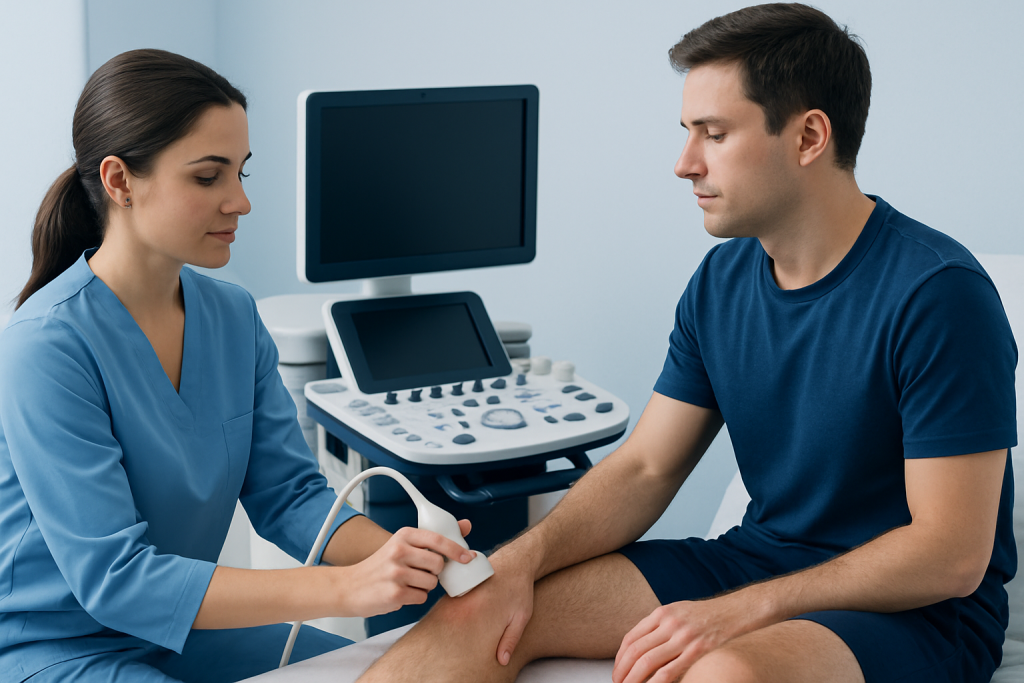
Symptoms usually build gradually. A person may notice tenderness a few centimeters above the heel, stiffness when taking the first steps out of bed, or pain that worsens with activity and eases with rest. Some people also describe swelling, warmth, or a creaking sensation when moving the ankle.
The discomfort may appear only during exercise at first, then begin to show up during normal activities such as walking longer distances or standing for extended periods. In more persistent cases, the tendon can feel thickened or sensitive to touch.
Typical warning signs include:
- Pain or stiffness along the back of the ankle
- Swelling near the Achilles tendon
- Difficulty rising onto the toes
- Stiffness after rest, especially in the morning
- Pain that increases with hills, stairs, or faster walking
Sudden severe pain, a popping sensation, or an inability to push off the foot may suggest a tendon tear or rupture rather than simple tendonitis and should be assessed promptly.
Causes & Risk Factors
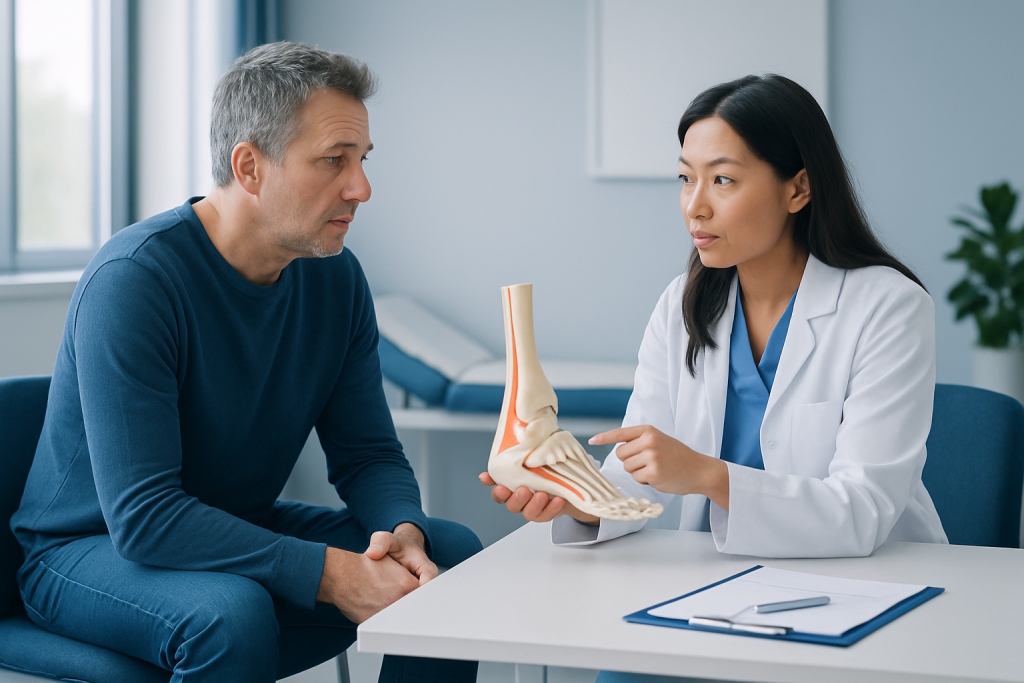
Achilles tendonitis usually develops when the tendon is exposed to repeated stress without enough recovery time. This can happen after increasing running intensity too quickly, changing shoes or terrain, adding hills, or returning to sport after a break. Even well-conditioned athletes can be affected if the load changes faster than the tendon can adapt.
Certain body mechanics can raise strain on the tendon. Tight calf muscles, limited ankle flexibility, flat feet or high arches, and poor lower-limb alignment may all contribute. Age-related changes in tendon elasticity can also make the Achilles more vulnerable to overuse.
Other factors may increase risk:
- Sudden increase in training or walking distance
- Inadequate warm-up before exercise
- Footwear that does not support the activity well
- Occupations involving prolonged standing or repetitive stepping
- Previous tendon injury or reduced calf strength
- Some medical conditions and medicines that affect tendon health
Travel can sometimes be a trigger as well. Long sightseeing days, unfamiliar shoes, extra stairs, and carrying luggage may place added load on the tendon, especially when the body is already deconditioned or recovering from a prior injury.
Diagnosis
Diagnosis begins with a careful history and physical examination. A clinician will usually ask when the pain started, what activities make it worse, and whether there has been any recent change in exercise or footwear. The tendon is then examined for tenderness, swelling, thickening, and ankle movement.
Most cases can be identified clinically, but imaging may help when the symptoms are unusual, severe, or not improving. Ultrasound can show tendon thickening or areas of irritation, while magnetic resonance imaging (MRI) may be used if a more detailed look is needed or if another condition must be ruled out.
Because heel pain can come from several sources, the doctor may also consider other possibilities such as bursitis, plantar fascia problems, or a partial tendon tear. Clear diagnosis matters because the best treatment depends on whether the problem is mainly irritation, degeneration, or a more significant structural injury.
Treatment Options
Treatment usually starts with reducing the stress that is provoking pain, rather than complete immobilization in every case. Short-term activity modification can mean pausing running or jumping, switching to lower-impact exercise, and avoiding hills or speed work while symptoms settle.
Physical therapy is central to recovery. A structured program often focuses on calf strengthening, eccentric or heavy-slow resistance exercises, ankle mobility, and gradual reloading of the tendon. These exercises are typically adjusted over time, because the tendon needs progressive challenge to heal well.
Other common treatment components include:
- Ice or short-term pain-relief strategies as advised by a clinician
- Supportive shoes or temporary heel lifts in selected cases
- Stretching when appropriate, especially if the calf is tight
- Training review to correct sudden spikes in load
- Treatment of contributing foot or movement issues
Most people do not need surgery. However, if symptoms persist despite a well-followed rehabilitation plan, an orthopedics specialist may discuss additional options. For international patients, coordinated assessment can be especially helpful when follow-up time is limited and a clear return-to-activity plan is needed before traveling home.
Prevention & Self-care
Prevention is largely about respecting the tendon’s capacity. A gradual return to activity is more effective than trying to “push through” pain, especially after a period of rest, illness, or travel. The tendon generally responds better to steady progression than to sudden bursts of intensity.
Practical self-care steps can make a meaningful difference. Choosing well-fitting footwear, warming up before exercise, and alternating higher-impact days with easier sessions can reduce strain. People who spend long hours walking during travel may also benefit from planning rest breaks and avoiding an abrupt jump in daily step count.
Helpful habits include:
- Increase running or walking volume gradually
- Strengthen the calves and surrounding muscles regularly
- Pay attention to early morning stiffness or recurring soreness
- Avoid repeated uphill or sprint sessions during recovery
- Replace worn-out shoes when support has declined
If the tendon has already become irritated, it is reasonable to reduce the activities that provoke pain while continuing safe movement. The aim is not permanent rest, but a controlled return that lets the tendon adapt without repeated setbacks.
When to See a Doctor
Medical evaluation is advisable if heel pain lasts more than a short period, keeps returning, or interferes with walking, exercise, or sleep. A doctor’s assessment is also important if swelling increases, the area feels very tender, or self-care measures are not helping.
Prompt review is especially important if there was a sudden snap or pop, marked weakness, bruising, or difficulty standing on the toes. These features can indicate a tendon tear or rupture, which needs timely care.
People who are planning surgery, sports travel, or a long trip abroad may benefit from an earlier orthopedic consultation so that treatment and rehabilitation can be organized around their schedule. Acibadem Health Point’s multidisciplinary specialists and JCI-accredited hospitals diagnose and treat Achilles tendon problems for international patients, with coordinated care that supports both treatment and follow-up planning.
Living With Recovery
Recovery from Achilles tendonitis is often gradual, and progress may come in small steps rather than a straight line. Some days feel better than others, especially when activity levels change, so it helps to judge improvement over weeks instead of from one workout to the next.
A sensible return to sport or full activity usually depends on pain, strength, and function rather than the calendar alone. A clinician or physical therapist may ask the person to demonstrate calf strength, walk briskly, or perform sport-specific movements before increasing load. This approach lowers the chance of an early flare-up.
For patients managing care across borders, written exercise instructions, imaging reports, and a clear follow-up plan can make recovery smoother after returning home. Good communication between the treating team and the patient’s local clinician can help maintain consistency and confidence during rehabilitation.
Frequently asked questions
Is Achilles tendonitis the same as Achilles tendinopathy?
The terms are related, but not identical. Achilles tendonitis suggests inflammation, while tendinopathy is a broader term that includes inflammation as well as longer-term tendon changes. In everyday use, both usually refer to pain and irritation in the Achilles tendon.
Can Achilles tendonitis heal without surgery?
Yes, most cases improve with non-surgical care such as activity modification, physical therapy, and gradual strengthening. Surgery is usually considered only when symptoms persist despite proper rehabilitation or if there is a more serious tendon injury.
Should a person keep exercising with Achilles tendon pain?
It depends on the severity of symptoms. Mild pain may sometimes be managed with reduced-impact activity, but exercises that worsen the pain should usually be scaled back until the tendon calms down. A clinician or physical therapist can help choose safer options.
Can footwear make a difference?
Supportive, well-fitting shoes can reduce stress on the Achilles tendon, especially during walking or exercise. Footwear changes alone are not usually enough to treat the problem, but they can be a helpful part of recovery and prevention.
When is imaging needed?
Imaging is not always necessary, because many cases can be diagnosed by examination. It may be recommended if the symptoms are severe, if a tear is suspected, or if the pain is not improving as expected.
References
- American Academy of Orthopaedic Surgeons
- Mayo Clinic
- National Health Service
- American Orthopaedic Foot & Ankle Society
- Cleveland Clinic
This article is for general information only and is not a substitute for professional medical advice. Please consult a qualified doctor about your individual situation.
Joint and spine care in Turkey — expert assessment & treatment
JCI-accredited · board-certified surgeons · reply within 24h
Add us as a Preferred Source to see more of our trusted health content across Google Search, AI Overviews and Discover.
More from the Health Library



Related Specialists

Assoc. Prof. Dr. Ali Şahin
Orthopedic Surgery & Traumatology
Prof. Dr. Ahmet Alanay
Orthopedic Surgery & Traumatology
Dr. Sinan Aksu
Orthopedic Surgery & Traumatology
Dr. Sirri Baştürk
Orthopedic Surgery & Traumatology