

Back Of Knee Pain

Key Takeaways
- Pain behind the knee has several possible causes, and the location alone does not point to one single diagnosis.
- Common sources include muscle or tendon strain, Baker’s cyst, meniscus injury, arthritis, and less commonly blood clots or vascular problems.
- Diagnosis usually starts with a history and physical exam, with imaging or other tests used when needed.
- Many cases improve with rest, targeted rehabilitation, activity changes, and treatment of the underlying issue.
- Sudden swelling, calf pain, redness, fever, numbness, or shortness of breath need prompt medical attention.
Back of knee pain can develop for many reasons, from overuse and tendon strain to a Baker’s cyst or an injury inside the joint. A careful assessment helps identify the cause and guide treatment, especially when symptoms linger, limit walking, or appear after trauma.
Overview
Back of knee pain can feel sharp, tight, dull, or achy, and the discomfort may appear only during movement or remain present even at rest. Because the back of the knee contains tendons, ligaments, blood vessels, nerves, and a small fluid-filled space called the popliteal region, many different structures can be involved.
For some people, the pain starts after sports, a long hike, squatting, or repeated bending. For others, it develops more gradually alongside stiffness, swelling, or a sense that the knee is “full” behind the joint. The next step is not to guess the cause, but to match the pattern of symptoms with the right examination and, if necessary, imaging.
In international-patient care, this is especially important because a person may be planning travel, choosing the right time for treatment, or arranging follow-up away from home. A clear diagnosis helps avoid unnecessary delay and makes recovery planning more practical.
Symptoms
Back of knee pain rarely appears by itself. Many people notice that certain motions bring it on, such as climbing stairs, running downhill, kneeling, or fully straightening the leg. Others describe a pulling sensation, clicking, catching, or a feeling of pressure behind the knee.
Depending on the cause, symptoms may also include swelling, warmth, stiffness after sitting, or reduced range of motion. If a Baker’s cyst is present, the back of the knee may feel firm or swollen, especially after activity.
Some warning signs suggest the problem may be more than a simple strain:
- Sudden swelling of the knee or calf
- Redness, warmth, or tenderness extending into the leg
- Difficulty bearing weight
- Locking, giving way, or instability
- Numbness, tingling, or pain that travels into the calf or foot
These symptoms do not always mean a serious condition, but they do deserve timely medical evaluation.
Causes & Risk Factors

Several conditions can lead to pain behind the knee. One of the most common is muscle or tendon strain, especially involving the hamstrings or calf muscles where they attach near the knee. This often follows exercise, sudden acceleration, or repetitive movement.
Another frequent cause is a Baker’s cyst, also called a popliteal cyst. This happens when extra joint fluid collects behind the knee, often because something inside the knee is causing irritation, such as arthritis, a ACL Tear or Meniscus Tear: How Orthopedic Surgeons Tell Which One Matters More" class="ahp-ilk">meniscus tear, or inflammation. The cyst itself may cause pressure, tightness, or pain when bending or extending the knee.
Other possible causes include meniscus injuries, osteoarthritis, ligament problems, tendon inflammation, and less commonly blood clots in the leg or popliteal artery issues. Risk can be higher in people who are physically active, have a history of knee injury, live with inflammatory joint disease, or spend long periods sitting or traveling without moving regularly.
Diagnosis
Diagnosis begins with a detailed discussion of when the pain started, what makes it worse, whether there was an injury, and whether the knee is swollen, unstable, or locked. A clinician will usually examine the knee, calf, and surrounding muscles, checking tenderness, movement, strength, and circulation.
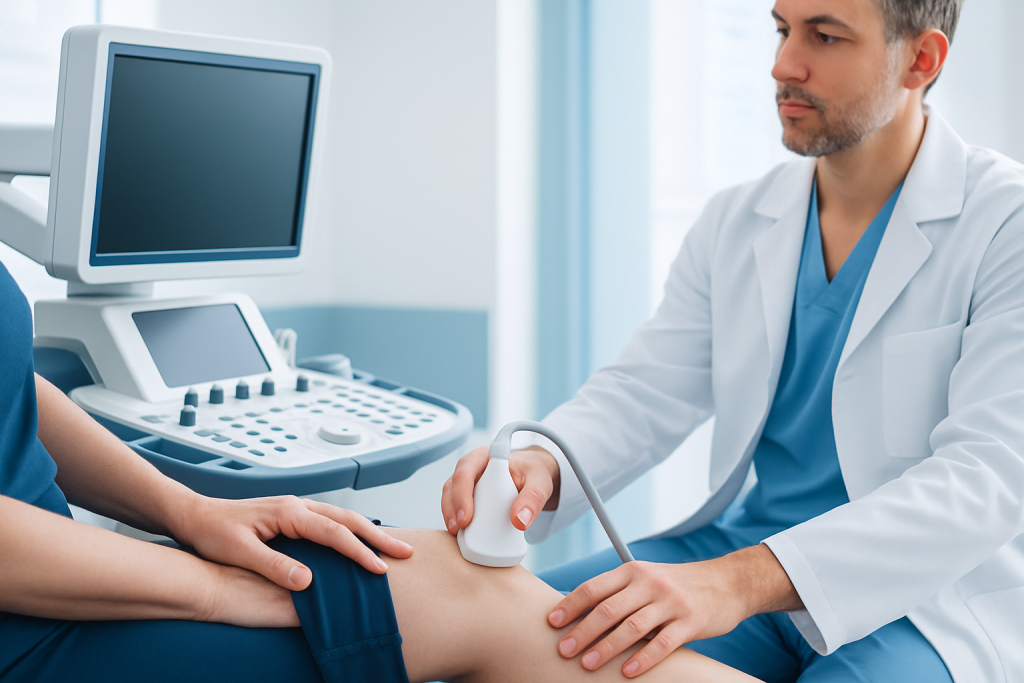
If the cause is not clear, imaging may be recommended. Ultrasound can help identify a Baker’s cyst or assess soft tissues and blood flow. X-rays can show arthritis or bony changes, while MRI may be used when a meniscus tear, ligament injury, or another internal knee problem is suspected.
When blood clot is a concern, urgent testing may be needed. This is one reason back of knee pain should not be dismissed if it appears with calf swelling, redness, or shortness of breath, particularly after a long flight, recent surgery, or prolonged immobility.
Treatment Options
Treatment depends on the cause rather than the symptom alone. For a mild muscle strain or tendon irritation, the first steps often include relative rest, ice, gentle compression if advised, and gradual return to activity. A physiotherapy plan may help restore strength and flexibility without aggravating the tissue.
If the problem comes from inside the knee, such as arthritis or a meniscus tear, treatment often focuses on reducing inflammation and improving mechanics. This may include rehabilitation exercises, temporary activity modification, supportive bracing in selected cases, or treatment of the underlying knee condition.
Baker’s cysts are commonly managed by addressing the cause of the extra joint fluid. Some cysts settle once the underlying inflammation is controlled, while larger or persistent cysts may need procedural treatment. Surgery is not the first step for most people, but it may be considered if a structural problem needs correction or if symptoms continue despite conservative care.
Because every knee problem has its own pattern, it is best to avoid copying someone else’s treatment plan. The right approach depends on the diagnosis, the person’s activity level, and whether travel or rehabilitation will be part of the recovery process.
Prevention & Self-care
Many cases of back of knee pain can be reduced with practical habits that lower strain on the joint. Warming up before sport, increasing training loads gradually, and keeping the hamstrings, calves, and quadriceps flexible can make a real difference.
For people who sit for long periods or travel often, regular movement matters. Standing up, stretching, and walking at intervals helps circulation and reduces stiffness. Good footwear, sensible pacing during exercise, and maintaining general fitness also support knee health.
At home, it can help to notice what triggers the pain. A simple symptom log — such as which movements provoke discomfort, whether swelling appears later in the day, and how far the knee bends comfortably — can be useful when discussing care with a doctor, especially if the patient is coordinating assessment across countries.
When to See a Doctor
Medical advice should be sought if pain behind the knee lasts more than a short period, keeps returning, or limits daily activities such as walking, climbing stairs, or exercise. An evaluation is also important if the knee feels unstable, locks, or swells repeatedly.
Prompt care is especially important after trauma, if there is significant calf swelling, redness, warmth, fever, or if the leg becomes numb or weak. Shortness of breath, chest pain, or sudden worsening swelling should be treated as urgent and assessed immediately.
People who are planning treatment while traveling may benefit from seeing an orthopedic specialist early, before symptoms become harder to manage. Acibadem Health Point’s multidisciplinary specialists and JCI-accredited hospitals diagnose and treat this condition for international patients, with follow-up planning designed to support recovery after discharge.
Frequently asked questions
What is the most common cause of pain behind the knee?
There is no single most common cause for every person, but muscle or tendon strain and Baker’s cysts are frequent explanations. The pattern of symptoms, recent activity, and examination findings help narrow the cause.
Can a Baker’s cyst go away on its own?
Yes, some Baker’s cysts improve when the underlying knee irritation settles. If the cyst is large, painful, or recurring, a doctor may recommend treatment aimed at the source of the fluid buildup.
Is back of knee pain always related to injury?
No. While injury and overuse are common reasons, arthritis, inflammation, cysts, and circulation problems can also cause pain behind the knee. That is why a proper assessment matters when symptoms persist.
Should pain behind the knee be worried about blood clots?
Not every case points to a clot, but calf swelling, warmth, redness, or sudden pain after long travel, surgery, or immobility should be checked promptly. A clinician can decide whether testing is needed.
What can someone do at home before seeing a doctor?
Resting the knee from aggravating activities, using ice if swelling is present, and avoiding deep squats or heavy impact may help temporarily. If the pain is severe, worsening, or associated with swelling or shortness of breath, medical care should not be delayed.
When is MRI needed for back of knee pain?
MRI is often used when a doctor suspects a meniscus tear, ligament injury, or another internal problem that cannot be fully seen on exam or X-ray. It is usually ordered after a clinical assessment rather than as the first test for every case.
References
- American Academy of Orthopaedic Surgeons
- Mayo Clinic
- National Institute of Arthritis and Musculoskeletal and Skin Diseases
- NHS
- Cleveland Clinic
This article is for general information only and is not a substitute for professional medical advice. Please consult a qualified doctor about your individual situation.
More from the Health Library



Related Specialists

Prof. Dr. Ahmet Alanay
Orthopedic Surgery & Traumatology
Dr. Sinan Aksu
Orthopedic Surgery & Traumatology
Dr. Sirri Baştürk
Orthopedic Surgery & Traumatology
Prof. Dr. Korhan Özkan
Orthopedic Surgery & Traumatology