

Transverse Abdominis

Key Takeaways
- The transverse abdominis acts like a natural support belt for the trunk and spine.
- Weakness, poor coordination, or poor breathing patterns can affect core stability.
- Targeted rehabilitation often focuses on gentle activation before heavier strengthening.
- Pain, bulging, or loss of function should be assessed by a qualified clinician.
- Safe progress and correct technique matter more than force or speed.
The transverse abdominis is the deepest of the abdominal muscles and plays an important role in core stability, posture, and controlled movement. Understanding how it works can help patients protect the back, improve exercise form, and support recovery after injury or surgery.
Overview
The transverse abdominis, often shortened to TA, is the deepest layer of the abdominal wall. It wraps around the trunk like a corset and helps create pressure and stability around the spine, pelvis, and lower ribs. Although it is not the muscle most people notice in the mirror, it is central to how the body supports movement.
When this muscle is working well, everyday actions such as standing up, lifting luggage, coughing, reaching overhead, or walking on uneven ground tend to feel more controlled. In rehabilitation settings, therapists often pay close attention to the transverse abdominis because it can influence back comfort, movement efficiency, and post-injury recovery.
For international patients seeking care, the muscle may come up during assessment for low back pain, abdominal surgery recovery, postpartum rehabilitation, pelvic floor issues, or sports injuries. The question is usually not whether the TA should be trained in isolation forever, but whether it is activating at the right time and in the right way as part of the whole core system.
Symptoms and Signs of Dysfunction
A problem with the transverse abdominis does not usually announce itself with a single dramatic symptom. More often, people notice a sense of poor support through the trunk, a back that tires easily, or movement that feels less stable than before. Some describe difficulty bracing during exercise or a feeling that the abdomen “lets go” during effort.
Visible changes can also provide clues. The lower abdomen may push outward during a movement that should feel controlled, or there may be doming along the midline when the person tries to sit up, lift, or get out of bed. After pregnancy or abdominal surgery, people sometimes notice that the abdomen does not respond as expected when they try to engage the core.
- Low back discomfort that worsens with repeated bending or lifting
- A feeling of trunk instability during walking, carrying, or sport
- Difficulty coordinating breathing with abdominal control
- Bulging or doming in the midline during exertion
- Reduced confidence with exercise after injury or surgery
These signs are not specific to the transverse abdominis alone, which is why a proper assessment matters. Other muscles, the pelvis, the hips, and the breathing pattern all influence how the core behaves.
Causes and Risk Factors

The transverse abdominis can become underactive, poorly coordinated, or weak for several reasons. Pain is a common contributor, because the body often changes how it recruits muscles when it is trying to protect an irritated area. Over time, this protective pattern may become less efficient and can leave the core feeling unsteady.
Pregnancy and the postpartum period are important considerations. The abdominal wall stretches to accommodate growth, and some people also experience separation of the midline tissues, known as diastasis recti. In that setting, the transverse abdominis may need to be retrained carefully rather than aggressively loaded.
Other factors include abdominal or pelvic surgery, prolonged inactivity, repeated heavy lifting with poor technique, sports that demand sudden rotation, and chronic respiratory patterns that favor shallow chest breathing. Back pain, hip weakness, and pelvic floor dysfunction may also go hand in hand with TA problems because these systems work together.
For some patients, the issue is not a true weakness but a coordination problem. The muscle may be present and healthy, yet it does not switch on at the right moment or in the right sequence. Rehabilitation often focuses on teaching timing and control before building intensity.
Diagnosis
Diagnosis usually begins with a conversation about symptoms, activity level, surgery history, pregnancy history, and the kinds of movements that feel difficult. A clinician may ask when the problem started, what makes it better or worse, and whether pain, numbness, or bulging is present. These details help narrow whether the issue is muscular, postural, surgical, or related to another condition.
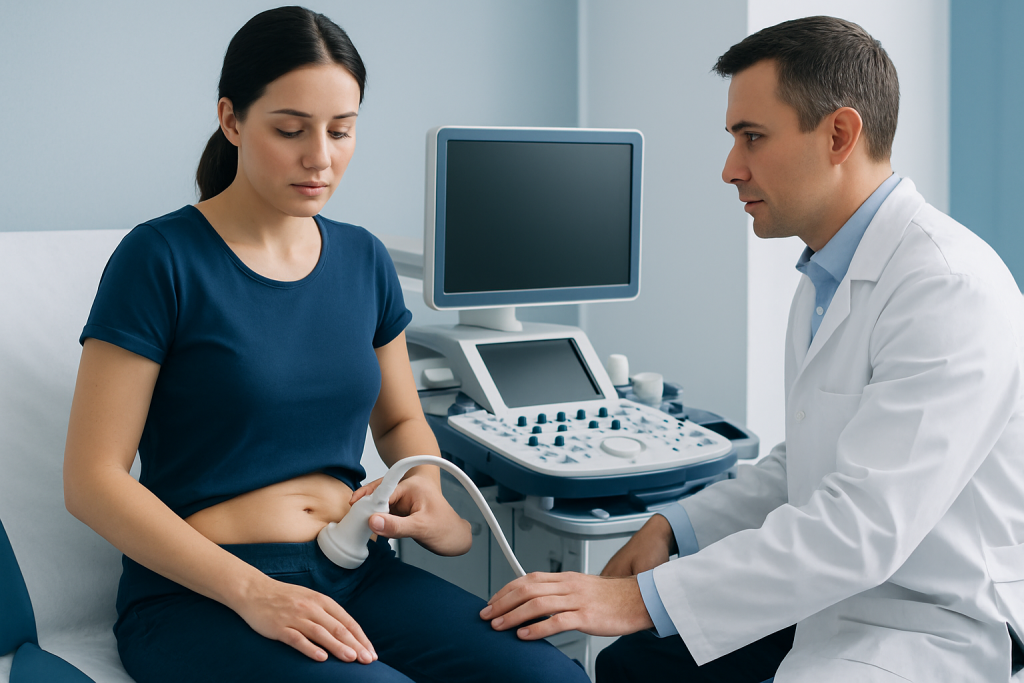
Physical examination is important. A physiotherapist, rehabilitation specialist, or physician may observe breathing, posture, pelvic control, abdominal tension, and how the trunk responds during simple tasks such as rolling, bridging, or lifting a limb. In some settings, ultrasound imaging is used to observe abdominal muscle activation and confirm coordination patterns in a noninvasive way.
When symptoms suggest a broader concern, additional evaluation may be needed to rule out hernia, nerve issues, spinal problems, or postoperative complications. The goal is not to label the transverse abdominis in isolation, but to understand why the core is behaving the way it is and what approach is safest.
Treatment Options
Treatment depends on the reason the muscle is not functioning well. For many people, first-line care is rehabilitation rather than aggressive strengthening. The early phase often emphasizes gentle activation, breathing coordination, and awareness of the lower abdomen without straining the neck, back, or pelvic floor.
Common strategies include guided exercises in lying, sitting, standing, and eventually during walking or functional tasks. A therapist may use cues to help the person draw the lower abdomen inward lightly while keeping the ribs relaxed and the breath fluid. As control improves, the work is gradually integrated into everyday movements such as squatting, carrying, or reaching.
If the concern follows pregnancy or abdominal surgery, treatment may be adjusted to protect healing tissues. Progression should be paced, since too much effort too early can increase discomfort or encourage compensatory patterns. In some cases, pain management, scar mobility work, treatment for diastasis recti, or broader core and pelvic floor rehabilitation may be part of the plan.
For patients traveling from another country, continuity matters. It is helpful to leave with written exercise guidance, a realistic progression plan, and a way to coordinate follow-up care with local rehabilitation professionals after returning home.
- Breathing retraining to reduce bracing and over-tension
- Gentle core activation with attention to timing
- Functional strengthening that connects the TA to hips and back
- Postural and movement retraining for lifting, reaching, and transfers
- Rehabilitation after pregnancy, surgery, or injury when indicated
Prevention and Self-Care
There is no single exercise that guarantees a healthy transverse abdominis, but good movement habits can support its function. The most useful approach is usually balanced: regular activity, sensible strengthening, and attention to breathing and posture during effort. A stable core is built through repeated everyday practice, not through forceful contraction alone.
Self-care also means respecting warning signs. If the abdomen domes during exercise, if the back repeatedly takes over, or if breath-holding becomes the default, the task may be too hard or the technique may need adjustment. People returning to exercise after pregnancy or surgery often do better when they progress gradually rather than testing their limits early.
Practical habits can make a difference:
- Exhale during exertion instead of holding the breath
- Choose movements that can be done with steady control
- Build core work into walking, lifting, and daily tasks
- Pair abdominal training with hip and glute strengthening
- Stop and reassess if pain, doming, or instability appears
Good self-care is not about keeping the abdomen tight all day. The target is an adaptable core that can switch on when needed and relax when it is not.
When to See a Doctor
Medical evaluation is a good idea when abdominal weakness is accompanied by pain, a new bulge, a sense of tissue separation, or trouble performing normal activities. Sudden changes after surgery, childbirth, or a fall should also be assessed. A clinician can determine whether the issue is muscular or whether another condition needs attention.
Seek prompt care if the abdominal wall bulges with coughing or straining, if there is severe or worsening pain, if the person develops fever or vomiting after surgery, or if numbness, leg weakness, or bladder or bowel changes occur. These symptoms do not necessarily mean something serious, but they deserve timely review.
In many cases, the first step is a consultation with a physician or physiotherapist experienced in rehabilitation and core disorders. Acibadem Health Point’s multidisciplinary specialists and JCI-accredited hospitals can diagnose and treat this condition for international patients, while also helping coordinate follow-up after the visit.
Frequently asked questions
What does the transverse abdominis do?
The transverse abdominis helps stabilize the trunk and spine, almost like an internal support belt. It works with the diaphragm, back muscles, and pelvic floor to control pressure and movement. This makes it important for posture, lifting, and protecting the lower back.
Can the transverse abdominis be weak without causing pain?
Yes. Some people have poor activation or coordination without obvious pain, while others notice back discomfort, fatigue, or instability. A clinician can assess how the muscle is working during movement rather than relying on symptoms alone.
How is transverse abdominis training different from regular abdominal exercises?
TA training often starts with gentle control and breathing rather than strong crunches or heavy resistance. The goal is to improve timing and coordination before increasing load. Later, the muscle is usually trained as part of larger movement patterns.
Is doming in the abdomen always serious?
A qualified clinician can help determine the cause and advise whether the muscle is simply deconditioned, poorly coordinated, or affected by another problem. Assessment is especially important if there is pain, a bulge, or a recent operation.
Can breathing affect the transverse abdominis?
Yes. Breathing and core control are closely linked, and breath-holding can make the abdominal wall work harder in an inefficient way. Coordinated exhalation during effort often supports better activation and less strain.
When should someone start core rehabilitation after pregnancy or surgery?
Timing depends on the individual situation and the advice of the treating clinician. In general, rehabilitation should begin only when healing is adequate and movements can be performed safely. A personalized plan is the safest way to return to activity.
References
- American Physical Therapy Association
- Mayo Clinic
- Cleveland Clinic
- National Institutes of Health
This article is for general information only and is not a substitute for professional medical advice. Please consult a qualified doctor about your individual situation.
More from the Health Library



Related Specialists

Prof. Dr. Ahmet Alanay
Orthopedic Surgery & Traumatology
Dr. Sinan Aksu
Orthopedic Surgery & Traumatology
Dr. Sirri Baştürk
Orthopedic Surgery & Traumatology
Prof. Dr. Korhan Özkan
Orthopedic Surgery & Traumatology