Gastrocnemius Muscle
Key Takeaways
- The gastrocnemius is a major calf muscle that helps with push-off, standing, and knee flexion.
- Sudden calf pain during sport often points to a strain, while gradual pain may reflect overuse or another condition.
- Diagnosis usually begins with a physical examination and may include imaging when the cause is unclear.
- Rest, activity modification, rehabilitation, and a gradual return to movement are common parts of treatment.
- Swelling, warmth, sudden shortness of breath, or severe pain should be assessed promptly because not all calf pain is muscular.
The gastrocnemius muscle is the large, visible muscle that forms much of the calf and helps the ankle move and the knee bend. When it is strained or irritated, walking, running, or even climbing stairs can become uncomfortable, but most issues improve with the right assessment and care.
Overview
The gastrocnemius muscle is the most prominent muscle in the back of the lower leg, creating the rounded shape many people associate with the calf. It crosses both the knee and the ankle, which means it helps with two important actions: bending the knee and pointing the foot downward.
Because it is used in walking, running, jumping, and rising onto the toes, the gastrocnemius is under constant demand. That repeated workload makes it especially relevant for athletes, active travelers, and anyone who has a sudden increase in physical activity after a period of sitting or reduced movement.
In everyday life, this muscle works quietly in the background. It stabilizes each step, supports balance, and contributes to the push-off phase of walking. When it is strained or overloaded, the impact can be felt quickly in ordinary tasks such as standing from a chair, climbing stairs, or walking through an airport terminal.
Symptoms
Problems involving the gastrocnemius muscle are often felt as pain high in the calf, usually toward the inner side, though the exact location can vary. The discomfort may appear suddenly during a sprint, jump, or quick change of direction, or it may build more gradually after repetitive use.
People commonly describe a tight, pulling, or cramping sensation. If the muscle is strained, swelling, tenderness to touch, or weakness when pushing off the foot may be present. Some people notice that walking uphill, going downstairs, or rising onto the toes becomes more difficult than usual.
Other signs can include:
- Stiffness after rest
- Pain when the ankle is flexed upward
- A feeling that the calf has “given way”
- Bruising in more noticeable strains
Calf pain is not always caused by the muscle itself. Pain with significant swelling, redness, warmth, or unexplained shortness of breath needs urgent medical assessment because it may point to a different condition.
Causes & Risk Factors
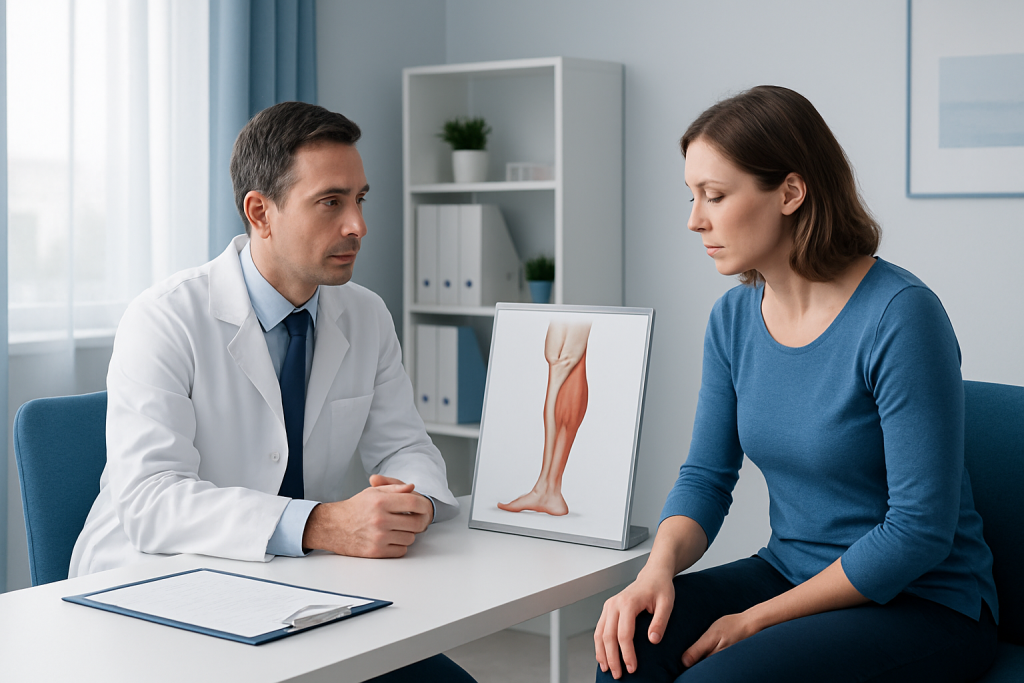
The gastrocnemius is most often injured when it is asked to work beyond its current capacity. Sudden acceleration, jumping, tennis-style lunges, hill running, and rapid starts and stops can all place a sharp load on the muscle. This is why the injury is sometimes called a “tennis leg,” even though it can happen in many sports and daily situations.
Risk tends to rise when the calf has not been properly warmed up or conditioned. Tight calf muscles, limited ankle flexibility, prior calf injury, and weak supporting muscles in the hip or lower leg can increase strain on the gastrocnemius during movement.
Additional factors may include:
- A recent increase in exercise intensity
- Long periods of sitting followed by sudden activity
- Footwear that changes walking mechanics
- Running on uneven surfaces or hills
- Older age, when muscle elasticity may be reduced
Sometimes a calf muscle problem develops alongside tendon irritation, knee issues, or ankle stiffness. In a patient traveling for treatment, it is especially useful to share the full story of when symptoms began, how the leg feels during daily movement, and whether the discomfort changes during long flights or after extended walking.
Diagnosis
Diagnosis usually starts with a careful history and a physical examination. A clinician will ask when the pain began, what activity was being done, whether there was a sudden pop or pull, and how the leg behaves during walking, standing on tiptoe, and ankle movement.
The examination helps distinguish a gastrocnemius strain from Achilles tendon problems, deep vein thrombosis, Baker’s cyst irritation, or other causes of calf pain. This distinction matters because some conditions need very different treatment and follow-up.
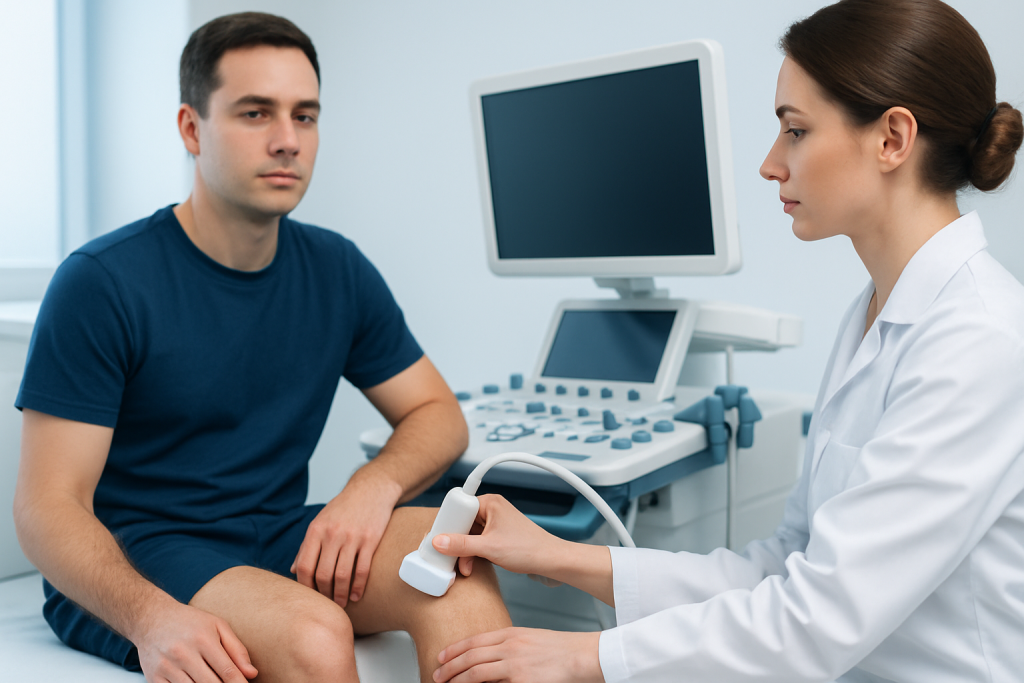
Imaging is not always necessary, but it can be helpful when the diagnosis is uncertain or symptoms are more severe than expected. Ultrasound may be used to look for muscle tears or fluid collection, and MRI can show soft tissue injury in more detail. When swelling is unusual or a clot is a concern, a doctor may order tests to check the blood vessels instead of, or in addition to, musculoskeletal imaging.
For international patients, the evaluation may be organized so that examination, imaging, and specialist review happen in a coordinated way. That can make it easier to move from uncertainty to a clear plan, especially when time away from home is limited.
Treatment Options
Treatment depends on the severity of the injury, but many gastrocnemius problems improve with conservative care. Early treatment usually focuses on easing pain, protecting the muscle, and allowing the tissue to settle before activity is restarted.
Common approaches include temporary activity modification, relative rest, and guided return to movement. A clinician may suggest reducing running, jumping, or long walks for a period of time while keeping the leg gently active within comfortable limits. Rehabilitation exercises are often introduced gradually to restore strength, flexibility, and coordination.
Physical therapy may include:
- Gentle range-of-motion work
- Progressive calf strengthening
- Balance and gait retraining
- Stretching when appropriate
- Sport-specific or activity-specific reconditioning
Supportive measures such as ice in the early phase, compression, and elevation may be recommended depending on the situation. Pain relief options should be discussed with a qualified clinician, especially for people with other medical conditions or those already taking medication.
Surgery is rarely needed for an isolated gastrocnemius strain. It may be considered only when there is a more complex injury or another diagnosis that requires operative care. Most patients recover well when they follow a measured rehabilitation plan rather than rushing back too soon.
Prevention & Self-care
The most practical way to protect the gastrocnemius is to build calf tolerance gradually. Muscles that are prepared for the work asked of them are less likely to be injured by a sudden sprint, a steep hill, or a busy day of walking.
A few habits can make a meaningful difference:
- Warm up before exercise or long walks
- Increase training volume step by step, not all at once
- Keep calf and ankle mobility in a healthy range
- Wear supportive footwear suited to the activity
- Mix intense sessions with recovery time
At home, self-care should stay gentle and symptom-guided. Short walks or light movement may be better than complete inactivity for mild strain, as long as they do not worsen pain. People recovering after travel should plan for frequent movement breaks, avoid a sudden jump from inactivity to high-impact exercise, and pay attention to how the calf feels the next day.
Stretching can be helpful in some cases, but it should not be forced during the painful early phase of a strain. A rehabilitation plan works best when it is tailored to the person’s activity level, age, and recovery goals rather than borrowed from a one-size-fits-all routine.
When to See a Doctor
Medical review is wise when calf pain is severe, keeps returning, or limits normal walking. It is also important to seek assessment if the pain followed a clear injury, such as a sudden push-off, a pop, or a visible change in the calf shape.
Prompt evaluation is especially important if the leg is swollen, hot, red, or tender in a way that feels different from a simple muscle pull. These features do not automatically mean something serious, but they should be checked so that the correct cause is identified early.
Urgent attention is needed if calf pain comes with shortness of breath, chest pain, fainting, or marked swelling of one leg. These symptoms require immediate medical care and should not be watched at home. For travelers, it is sensible to arrange assessment sooner rather than later if the discomfort began after a long flight or extended period of immobility.
Acibadem Health Point’s multidisciplinary specialists and JCI-accredited hospitals can diagnose and treat gastrocnemius-related problems for international patients, helping coordinate imaging, rehabilitation, and follow-up in one connected pathway.
Living With a Gastrocnemius Injury
Recovering from a gastrocnemius injury is often less about dramatic treatment and more about steady, informed progress. The calf usually responds well when load is increased in a controlled way, with enough time between steps to judge how the tissue is healing.
Many people return to their usual routine once pain has settled and strength has come back, but the pace differs from person to person. Athletes may need a more structured return to sport, while non-athletes may focus on comfortable walking, stairs, and daily mobility. In both cases, the main goal is to avoid turning a short-term strain into a recurring problem.
If symptoms linger, or if the cause of calf discomfort is not clear, a clinician can help separate muscle injury from other orthopedic or vascular conditions. That clarity is often the most reassuring part of the process, particularly when care is being organized from another country.
Frequently asked questions
What does the gastrocnemius muscle do?
The gastrocnemius helps point the foot downward and bend the knee. It is one of the main muscles used for walking, running, jumping, and standing on tiptoe.
How can someone tell a calf strain from simple soreness?
A strain often starts suddenly during activity and may feel sharp, tight, or pulling. Normal soreness usually develops more gradually after exercise and improves with gentle movement and rest.
How long does a gastrocnemius strain take to heal?
Recovery time depends on how severe the injury is and how quickly treatment begins. Mild strains may settle in a few weeks, while more significant injuries can take longer and benefit from guided rehabilitation.
Should stretching be done right after a calf injury?
Not always. Early on, forcing a stretch can irritate the muscle, so it is better to follow a clinician’s advice and begin stretching only when it is appropriate for the stage of healing.
Can calf pain be a sign of something other than a muscle injury?
Yes. Calf pain can also come from tendon issues, blood clots, cysts behind the knee, or other conditions. That is why swelling, redness, warmth, or sudden shortness of breath should be checked promptly.
When is imaging needed for gastrocnemius problems?
Imaging is usually considered when the diagnosis is unclear, symptoms are severe, or another condition needs to be ruled out. Ultrasound and MRI are commonly used to look at soft tissues and nearby structures.
References
- Merck Manual Professional Edition
- American Academy of Orthopaedic Surgeons
- Mayo Clinic
- Cleveland Clinic
- National Health Service
This article is for general information only and is not a substitute for professional medical advice. Please consult a qualified doctor about your individual situation.