Dumbbell Row

Key Takeaways
- The dumbbell row primarily trains the upper back, lats, rear shoulders, and arm muscles.
- Good form matters more than heavy weight, especially for people returning to exercise after pain or injury.
- Common technique errors include twisting the torso, rounding the back, and pulling with momentum.
- The exercise can be adapted with lighter weights, bench support, or professional supervision when needed.
- Persistent back, shoulder, or elbow pain during rowing should be evaluated by a qualified clinician.
The dumbbell row is a strength-training movement that helps build the muscles of the back, shoulders, and arms while supporting better posture and pulling strength. When performed with steady form and appropriate load, it can be a useful part of a fitness or rehabilitation plan, but pain, injury history, and technique should always guide how it is used.
Overview
The dumbbell row is a pulling exercise that asks the back to do what it is designed to do: stabilize the trunk while the arms guide resistance toward the body. In practical terms, it is one of the most useful movements for building strength in the upper back, the sides of the torso, and the muscles that help the shoulders move smoothly.
For many people, the appeal is simple. A dumbbell row does not require a large machine, can be adjusted to different fitness levels, and can be practiced in a gym, at home, or during a supervised rehabilitation program. That flexibility makes it relevant for someone training for sport, someone recovering general strength after a period of inactivity, and someone trying to support better posture during long hours of sitting.
It is also a movement that rewards careful attention. The exercise can look straightforward, yet small changes in body position can shift the load to the lower back or neck. For that reason, people with a history of spinal pain, shoulder injuries, or balance concerns often benefit from learning the movement with a trainer, physical therapist, or doctor’s guidance before progressing on their own.
How the dumbbell row works the body
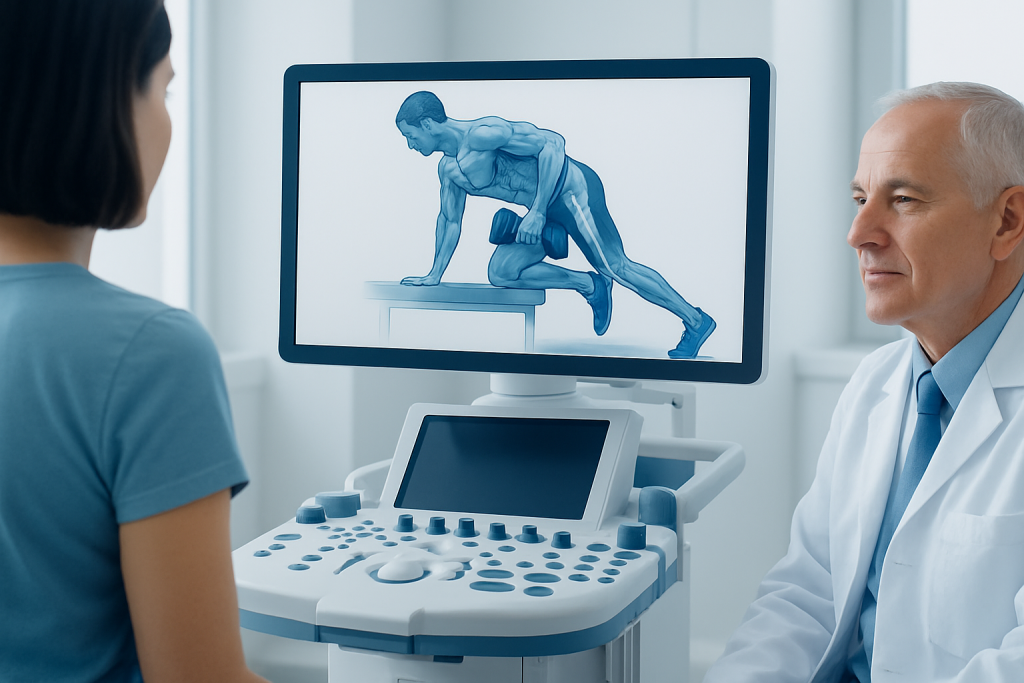
At its core, the dumbbell row is a controlled pull. As one arm draws the weight upward, the muscles between the shoulder blades, along the side of the back, and around the shoulder joint work together to keep the movement smooth. The abdomen and lower back also contribute by resisting rotation and helping the trunk stay steady.
Several muscle groups are involved at once. The latissimus dorsi helps with the pulling motion, the rhomboids and middle trapezius assist with scapular control, the rear deltoid supports the shoulder, and the biceps help bend the elbow. Because many structures cooperate, the exercise can be useful for balanced upper-body development rather than isolated arm work alone.
That shared workload is one reason the dumbbell row can be valuable in rehabilitation and prevention plans. When the back and shoulder stabilizers become stronger and more coordinated, everyday tasks such as carrying groceries, lifting luggage, reaching overhead, or rowing in sport can feel easier and more controlled.
Symptoms and signs that technique may need attention

A well-performed dumbbell row should feel challenging in the muscles, not sharp in the joints. Typical effort is a sense of work in the upper back, rear shoulder, and arm, with the trunk remaining stable throughout the repetition. Mild muscle fatigue after training can be expected, especially when someone is new to the movement.
Some sensations suggest the form or load needs to be reconsidered. These include pinching at the front of the shoulder, pain in the lower back when the weight is lifted, neck tension, or a feeling that the body must swing to move the dumbbell. Those signs often mean the load is too heavy, the range of motion is too large, or the torso is not sufficiently supported.
People should also pay attention to asymmetry. If one side always feels markedly weaker, if one shoulder blade moves differently, or if a person cannot keep the spine neutral without strain, a clinician or rehabilitation specialist can help determine whether the issue is technique, mobility, weakness, or a separate medical problem.
Causes and risk factors for poor tolerance
The dumbbell row is not inherently risky, but several factors can make it harder to tolerate safely. A previous shoulder strain, rotator cuff problem, neck pain, or lower back condition can all reduce a person’s ability to keep the torso still while pulling. In those situations, the exercise may need to be modified rather than avoided entirely.
Technique-related risk is common. Rounding the back, jerking the weight, rotating the trunk, or shrugging the shoulder toward the ear can place unnecessary stress on supporting structures. Excessive training volume or an abrupt jump in resistance can also irritate tendons and muscles that are still adapting.
General factors matter too. Limited hip mobility, poor core endurance, fatigue, and lack of familiarity with resistance training can all affect control. International patients who are traveling for treatment or rehabilitation may find it especially helpful to start with simplified variations so that exercise can continue safely between appointments and during recovery at home.
Diagnosis and assessment before training or rehabilitation
People do not usually need a medical test just to begin a dumbbell row, but those with pain or prior injury may benefit from a clinical assessment first. A doctor, physical therapist, or sports medicine specialist can review symptoms, examine posture and shoulder motion, and check whether any nerve, joint, or soft-tissue issue should be addressed before progression.
Assessment often includes observing how the person bends, stabilizes the trunk, and controls the shoulder blade. If needed, the clinician may also check range of motion, strength, and specific pain triggers. Imaging is not routinely required for exercise instruction, but it may be considered if symptoms suggest a more significant injury or if pain does not improve with appropriate care.
For patients planning treatment away from home, a clear evaluation can be especially useful. It helps create a practical exercise plan that can be followed after travel, during rehabilitation, or between follow-up visits, reducing guesswork and helping the person understand which movements are appropriate at each stage.
Treatment options and safe exercise variations
When the dumbbell row is being used as part of a training or rehabilitation plan, the main “treatment” is often adjustment rather than elimination. Reducing weight, shortening the range of motion, slowing the tempo, or supporting one hand and knee on a bench can make the movement more controlled and comfortable.
Common variations include the one-arm supported row, the chest-supported row, and the bent-over row with both arms. Each version changes how much the lower back must stabilize. A supported option is often helpful for people returning after back strain, while a standing unsupported row may suit those who already have good trunk control and are looking for a more demanding strength exercise.
If pain appears, the response should be thoughtful rather than forceful. Rest alone may not be enough if the underlying problem is poor mechanics or an irritated joint. A clinician may recommend temporary activity changes, corrective exercises, mobility work, or broader strengthening of the shoulder blade and core muscles before the row is reintroduced.
In some care plans, especially after injury, the dumbbell row becomes one piece of a larger strategy that includes posture training, manual therapy, or a progressive strengthening program. That approach is often more effective than trying to “push through” discomfort.
Prevention and self-care
Good preparation makes the dumbbell row safer and more productive. A brief warm-up that increases blood flow and includes shoulder and thoracic mobility can help the body move more smoothly. During the exercise, a stable spine, relaxed neck, and controlled breathing usually matter more than speed or heavy load.
Several habits can reduce strain:
- Choose a weight that allows clean repetitions without twisting.
- Keep the chest long and the shoulder away from the ear.
- Let the elbow travel naturally rather than forcing it too high.
- Pause briefly at the top instead of swinging the weight.
- Stop if pain feels sharp, catching, or unusually persistent.
Outside the gym, recovery also matters. Adequate sleep, hydration, and spacing training sessions so muscles can recover support better tolerance. People who sit for long periods may benefit from regular movement breaks and gentle mobility work, especially if the row is part of a plan to improve posture and reduce stiffness.
When to see a doctor
A medical review is sensible if shoulder, neck, or back pain appears during rowing and does not settle with rest or lighter loads. People should also seek assessment if they notice numbness, tingling, weakness, swelling, a sudden loss of movement, or pain that is waking them at night.
It is wise to consult a doctor or physical therapist if the exercise repeatedly causes discomfort despite careful technique, or if there is a known history of disc disease, rotator cuff injury, joint instability, or recent surgery. The goal is not to discourage exercise, but to match the movement to the person’s current capacity.
For international patients, coordinated care can make this process simpler. Acibadem Health Point’s multidisciplinary specialists and JCI-accredited hospitals diagnose and treat musculoskeletal conditions for international patients, helping them plan appropriate exercise and rehabilitation with professional supervision when needed.
Frequently asked questions
What muscles does the dumbbell row work most?
The dumbbell row mainly works the upper back, including the lats, rhomboids, and middle trapezius. It also trains the rear shoulder, biceps, and the core muscles that keep the torso steady.
Is the dumbbell row good for posture?
It can support better posture by strengthening the muscles that help hold the shoulders and upper back in a more balanced position. It is not a cure for posture problems, but it can be a useful part of a wider exercise plan.
Should the lower back hurt during a dumbbell row?
No, the lower back should not be the main source of pain. Mild muscle effort is normal, but sharp or persistent discomfort suggests the weight may be too heavy or the position may need correction.
Is one-arm or two-arm rowing better?
Neither version is universally better. One-arm supported rows often make it easier to control form, while two-arm variations may be useful once a person has good stability and wants to train both sides together.
Can beginners do dumbbell rows safely?
Yes, beginners can usually learn the movement safely with light weights and clear instruction. Starting with support and controlled repetitions helps reduce strain and makes it easier to build good habits.
When should someone stop the exercise and get checked?
The exercise should be stopped if it causes sharp pain, numbness, tingling, or a sense of joint catching. If symptoms continue or return with each session, a doctor or physical therapist should evaluate the cause.
References
- American Academy of Orthopaedic Surgeons
- National Institute of Arthritis and Musculoskeletal and Skin Diseases
- American College of Sports Medicine
- Mayo Clinic
- NHS
This article is for general information only and is not a substitute for professional medical advice. Please consult a qualified doctor about your individual situation.
More from the Health Library



Related Specialists

Prof. Dr. Meral Bayramoğlu
Physical Medicine & Rehabilitation
Prof. Dr. Mustafa Herdem
Orthopedic Surgery & Traumatology
Prof. Dr. Özlem Er
Medical Oncology
Prof. Dr. Şahin Şenay
Cardiovascular Surgery