Rectus Abdominis

Key Takeaways
- The rectus abdominis is a major front-abdominal muscle that supports trunk movement and core stability.
- Pain, tenderness, bulging, or weakness can point to strain, hernia, or abdominal wall separation rather than a simple muscle “pull.”
- Diagnosis is usually based on physical examination, with imaging used when needed to rule out more serious causes.
- Most cases improve with rest, guided rehabilitation, and gradual return to activity rather than complete inactivity.
- Persistent swelling, a new lump, severe pain, or symptoms after surgery or pregnancy deserve medical assessment.
The rectus abdominis is the paired muscle running vertically along the front of the abdomen, commonly known as the “six-pack” muscle. It helps support posture, breathing, and movement, and can be affected by strain, separation, or weakness after pregnancy, surgery, or heavy exertion.
Overview
The rectus abdominis is the long, paired muscle that runs up the front of the abdomen from the lower ribs and breastbone area to the pubic bone. It is the muscle many people associate with a defined abdominal outline, but its job is far more practical than cosmetic: it helps bend the trunk forward, stabilise the torso, and assist with everyday actions such as coughing, lifting, and getting up from a lying position.
Because it sits in the centre of the abdominal wall, the rectus abdominis is also part of the body’s support system for the trunk and pelvis. When it is healthy, it works with the diaphragm, back muscles, and deeper core muscles to create controlled movement and pressure. When it is strained, separated, or weakened, people may notice discomfort, a visible bulge, or a sense that the abdomen is not supporting movement as well as before.
For international patients planning treatment abroad, this muscle may be discussed in several different contexts: sports injury, post-pregnancy abdominal separation, hernia evaluation, or rehabilitation after abdominal surgery. In each case, the exact cause matters more than the name of the muscle itself, because treatment is guided by what is happening to the abdominal wall as a whole.
Symptoms
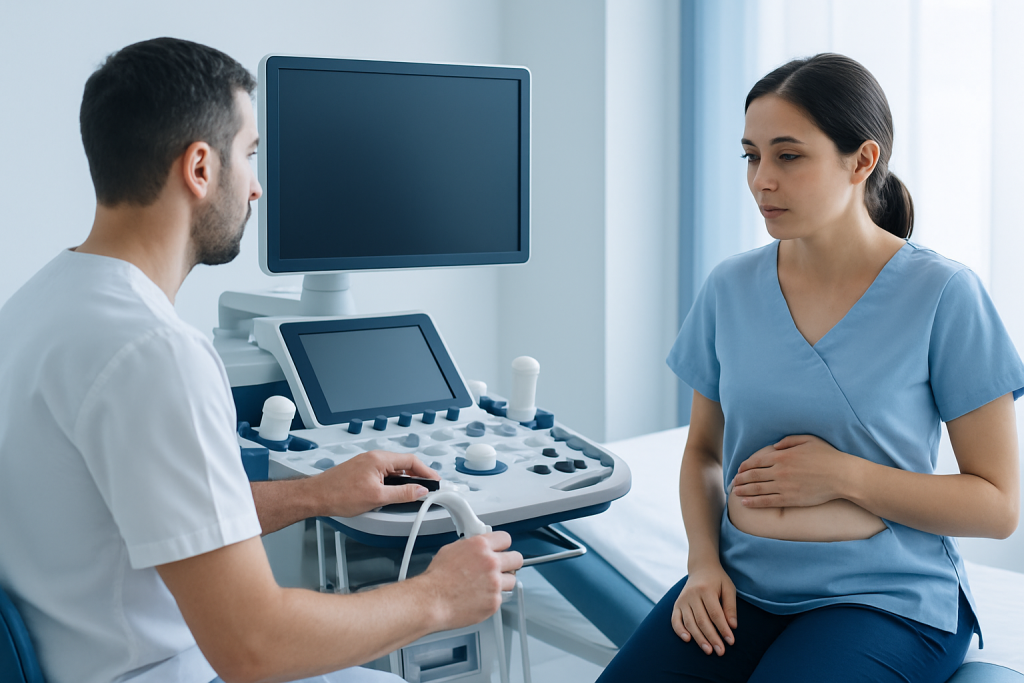
Rectus abdominis problems do not always feel dramatic. Some people notice a dull ache after exercise or lifting, while others describe a sharp twinge when sitting up, coughing, or twisting. Tenderness along the midline of the abdomen can suggest a muscle strain, especially if the discomfort began after a sudden movement or a period of intense core training.
Another common sign is a change in the shape of the abdominal wall. A soft bulge, a ridge that appears when the person rises from lying down, or a feeling of “doming” in the centre of the abdomen may indicate separation of the rectus muscles or an underlying hernia. These findings are not the same as excess body fat, and they are worth medical review if they are new or worsening.
Possible symptoms include:
- Pain or soreness in the front of the abdomen
- Discomfort with coughing, sneezing, or laughing
- Weakness when sitting up, lifting, or holding posture
- A visible gap, bulge, or doming in the midline
- Reduced core stability during movement or exercise
Severe pain, vomiting, fever, or a bulge that becomes hard or very tender requires prompt assessment, because those features may point to a problem beyond a simple muscle issue.
Causes & Risk Factors
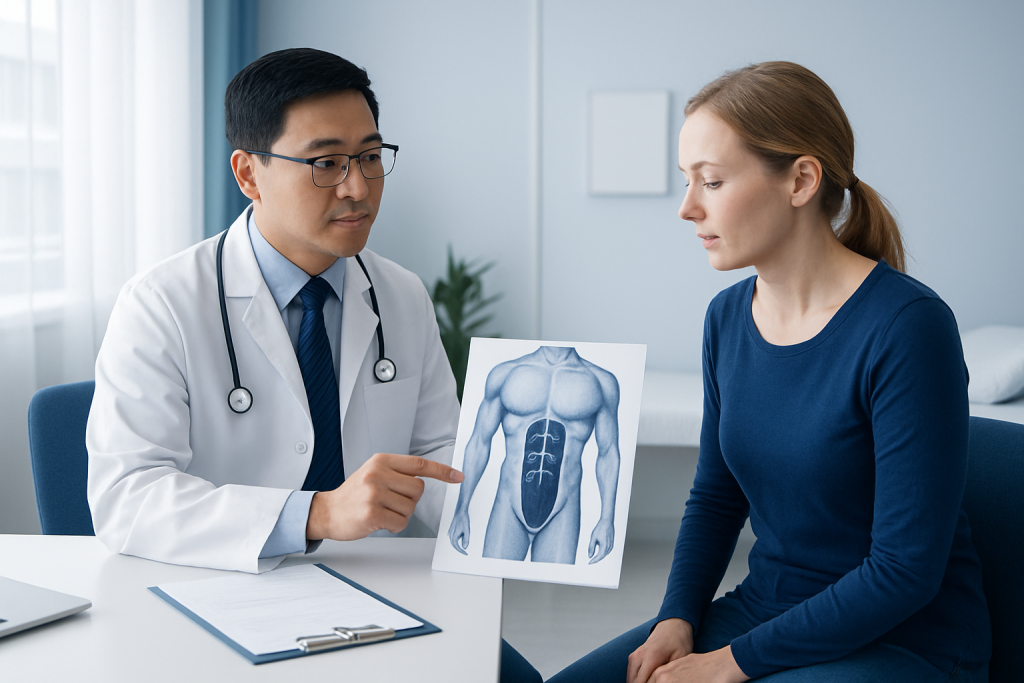
The rectus abdominis may be affected by overuse, sudden overload, or stretching beyond what the tissue can comfortably tolerate. Sports that involve repeated sprinting, twisting, sit-ups, heavy lifting, or forceful trunk rotation can place stress on the muscle. A strain can also happen after an awkward movement in daily life, particularly if the core is fatigued.
Pregnancy is a well-known reason the abdominal wall changes shape, and it may lead to diastasis recti, a separation between the right and left rectus muscles. This is not caused by weakness alone; it is influenced by stretching, pressure within the abdomen, connective tissue changes, and recovery patterns after delivery. Abdominal surgery, older age, obesity, and repeated strain from chronic coughing or constipation can also contribute to weakness or separation.
Risk is often higher when the core is being challenged faster than it is being conditioned. Common contributors include:
- Sudden increases in training intensity
- Improper lifting technique
- Postpartum abdominal wall changes
- Previous abdominal surgery or scars
- Chronic cough or repeated straining
- Weakness of the deeper core muscles
In some cases, what seems like a muscle issue is actually a hernia, which occurs when tissue pushes through a weakened area of the abdominal wall. That is why new bulges should be examined rather than assumed to be a simple strain.
Diagnosis
Diagnosis begins with a careful history and a physical examination. A clinician will usually ask when the discomfort started, what movements make it worse, whether there was a pregnancy or surgery, and whether the person has noticed any bulging or separation in the middle of the abdomen. The pattern of symptoms often gives strong clues about whether the issue is a strain, diastasis recti, or another abdominal wall condition.
During the exam, the doctor may ask the patient to lift the head slightly while lying down, tighten the abdomen, or cough gently so the abdominal wall can be observed in motion. This helps assess muscle function, the width of any separation, and whether a hernia may be present. In many cases, the physical examination is enough to guide treatment.
Imaging may be recommended if the diagnosis is unclear or if a hernia, tear, or other abdominal problem needs to be ruled out. Ultrasound is often useful for checking the abdominal wall in real time, while CT or MRI may be considered in selected situations. For patients travelling internationally for care, bringing previous scans, surgery notes, or postpartum reports can help the medical team compare findings and plan the next steps efficiently.
Treatment Options
Treatment depends on the underlying cause. A mild rectus abdominis strain is often managed with relative rest, activity modification, and a gradual return to movement. The goal is not to stop all activity indefinitely, but to avoid loading the muscle in a way that repeatedly aggravates the injury while tissue recovery is taking place.
Rehabilitation is commonly centred on guided exercises that restore control, breathing coordination, and core support. In the right setting, a physiotherapist may introduce gentle activation of the deeper abdominal muscles before progressing to more demanding strengthening. This stepwise approach is especially important after pregnancy, surgery, or a long period of reduced activity.
When the problem is diastasis recti, treatment usually focuses on core retraining, posture, and strategies for managing pressure in the abdomen during lifting or daily tasks. Surgery is not needed for most people, but it may be discussed if there is a significant hernia, persistent functional limitation, or another abdominal wall problem that does not improve with conservative care.
Typical treatment tools may include:
- Relative rest and temporary reduction of aggravating activity
- Physiotherapy or supervised rehabilitation
- Breathing and core-control exercises
- Postural and lifting education
- Supportive garments in selected postpartum or postoperative cases
- Surgical assessment if a hernia or major abdominal wall defect is suspected
Medication may sometimes be used for pain relief, but it does not repair the muscle itself. Treatment plans should always be individualised, especially for international patients who may need follow-up arranged after returning home.
Prevention & Self-care
Many rectus abdominis problems are manageable with attention to load, technique, and recovery. People who train regularly often benefit from a gradual build-up of abdominal work rather than abrupt increases in sit-ups, planks, or lifting demands. A balanced programme that includes glutes, back, and deep core muscles can reduce stress on the front abdominal wall.
Daily habits matter too. Exhaling during effort, using the legs to lift when possible, and avoiding repeated straining can help protect the abdominal wall. After pregnancy or abdominal surgery, returning to exercise in stages is usually safer than aiming quickly for pre-pregnancy or pre-surgery performance.
Helpful self-care habits include:
- Warm up before exercise and progress slowly
- Use good lifting mechanics at home and at work
- Manage constipation and chronic cough promptly
- Choose exercises recommended for the current recovery stage
- Stop and reassess if doming, pain, or pressure develops
For patients recovering abroad, written home-exercise instructions and a clear follow-up plan are especially valuable. They make it easier to continue rehabilitation consistently after the journey home and to know which changes are normal and which should be reviewed.
When to See a Doctor
Medical evaluation is advisable when abdominal pain does not improve, when symptoms interfere with movement, or when a visible change in the abdomen appears. A new bulge, a widening midline gap, or discomfort that keeps returning with exercise should not be dismissed as ordinary soreness. These signs often need a physical examination to distinguish muscle injury from hernia or another abdominal wall issue.
Urgent assessment is appropriate if pain is severe, the abdomen becomes hard or swollen, vomiting develops, or a bulge turns very tender or cannot be gently reduced. Fever, faintness, or rapidly worsening symptoms also warrant prompt care. Even though many rectus abdominis problems are not dangerous, some abdominal conditions require timely treatment, so it is best not to guess.
Patients considering care in another country should seek a centre that can coordinate diagnosis, rehabilitation, and follow-up clearly. Acibadem Health Point’s multidisciplinary specialists and JCI-accredited hospitals diagnose and treat abdominal wall conditions for international patients, with an emphasis on coordinated care and continuity after travel.
Living Well With Rectus Abdominis Problems
Recovery is often a matter of restoring trust in the abdominal wall. People may feel cautious after pain, pregnancy, or surgery, especially when trying to return to exercise or routine lifting. A measured plan that respects symptoms, strengthens progressively, and avoids unnecessary strain usually leads to better long-term function than trying to “push through.”
It can also help to think of the rectus abdominis as part of a team rather than a standalone muscle. Breathing mechanics, pelvic control, lower back strength, and overall conditioning all influence how comfortably it works. That perspective is useful for patients who want lasting improvement, not just symptom relief during a single episode.
With a clear diagnosis and an appropriate rehabilitation plan, many people resume normal activity successfully. The key is matching treatment to the real cause of the problem and allowing enough time for the abdominal wall to regain strength and coordination.
Frequently asked questions
What does the rectus abdominis do?
The rectus abdominis helps bend the trunk forward and supports the abdomen during movements such as coughing, lifting, and sitting up. It also contributes to core stability and coordinated breathing. Although it is often called the “six-pack” muscle, its function is primarily about support and movement.
How is rectus abdominis strain different from diastasis recti?
A strain is an injury to the muscle tissue itself, usually causing pain and tenderness after overuse or sudden effort. Diastasis recti is a separation between the left and right rectus muscles, often noticed as doming or a midline gap. They can feel similar, so an examination is useful for distinguishing them.
Can rectus abdominis problems heal without surgery?
Many do, especially simple strains and mild to moderate cases of abdominal wall separation. Treatment often includes activity modification, rehabilitation, and gradual strengthening. Surgery is usually reserved for specific situations such as a significant hernia or persistent abdominal wall defect.
Are sit-ups good if the rectus abdominis is weak?
Not always. Sit-ups can increase pressure on the abdominal wall and may worsen symptoms in some people, especially after pregnancy or surgery. A clinician or physiotherapist may recommend gentler core exercises first and progress only when control improves.
When should a bulge in the abdomen be checked?
A new bulge should be checked if it is painful, growing, or linked to a change in abdominal strength. It should also be evaluated if it appears with coughing, lifting, or standing and if there is any doubt about whether it could be a hernia. If the bulge becomes hard, very tender, or associated with vomiting, urgent medical attention is needed.
Can travelling for treatment affect recovery?
Travel itself does not prevent recovery, but it can make follow-up and exercise progression more difficult if the plan is not clear. Patients do best when they leave with written instructions, warning signs to watch for, and a realistic timeline for returning to activity. Coordinated follow-up is especially helpful after abdominal wall treatment.
References
- Mayo Clinic
- Cleveland Clinic
- National Health Service (NHS)
- American Physical Therapy Association
- American College of Surgeons
This article is for general information only and is not a substitute for professional medical advice. Please consult a qualified doctor about your individual situation.