

Knee Is Hurting On The Inside Of Knee

Key Takeaways
- Inner knee pain is a symptom, not a diagnosis, and several structures around the knee can be involved.
- Pain that starts after twisting, a direct hit, or a new exercise routine often points to a strain or cartilage irritation.
- Swelling, locking, giving way, or trouble bearing weight deserve medical evaluation.
- Many cases improve with activity modification, ice, support, and guided rehabilitation.
- Persistent pain may need imaging, physical therapy, injections, or sometimes surgery depending on the cause.
Pain on the inside of the knee can come from overuse, a ligament strain, cartilage irritation, arthritis, or a meniscus problem. A careful exam and, when needed, imaging help identify the cause so treatment can be matched to the person and the activity level involved.
Overview
When someone says their knee is hurting on the inside of knee, the discomfort is usually centered along the medial side, the part closest to the other leg. That area contains several important structures, including ligaments, tendons, cartilage, the meniscus, and the joint lining. Any one of them can become irritated after a twist, a training change, a fall, or simple wear over time.
Inner knee pain is common in adults who walk a lot, run, squat, kneel, or play sports that involve cutting and turning. It can also appear in people who have arthritis, flat feet, weak hip muscles, or a previous knee injury. Because the causes range from mild to more complex, the best next step is usually to notice what the pain feels like, when it began, and what movements make it worse.
For international patients considering care abroad, the real question is not only where the pain is, but how it affects daily life: stairs, travel, sleep, work, or sports. A clear orthopedic assessment helps separate a temporary overload from a condition that may need structured treatment and follow-up after returning home.
Symptoms
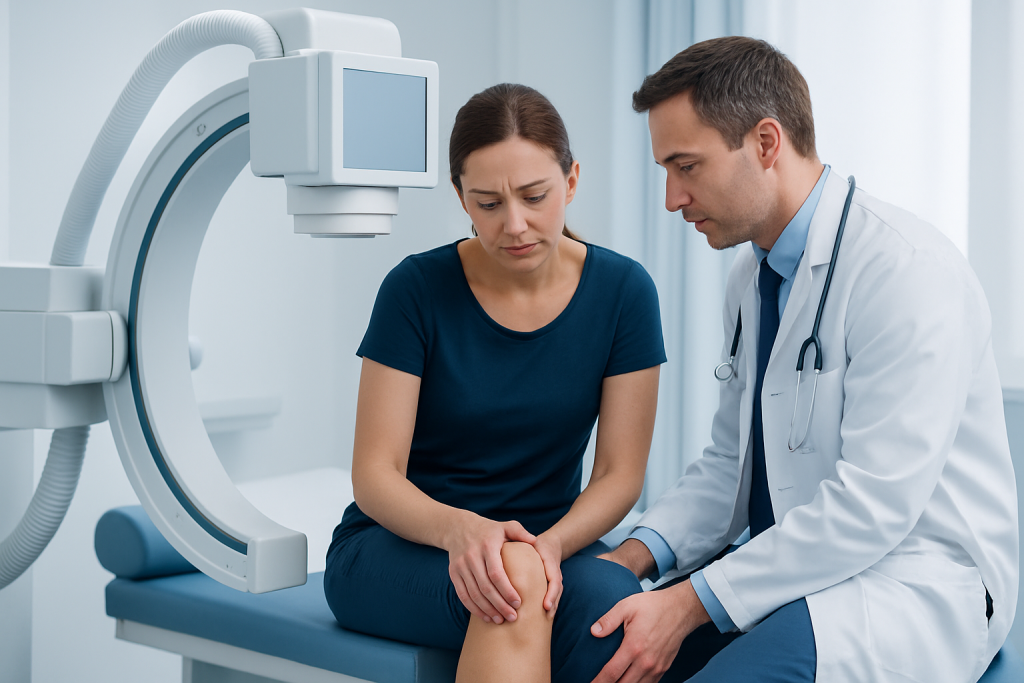
Inner knee pain can feel sharp, dull, aching, or tight. Some people notice it only during a specific movement, such as getting up from a chair or turning while walking. Others feel it more consistently, especially after standing for long periods or after exercise.
Depending on the cause, the knee may also swell, feel warm, or become stiff after rest. A person might hear clicking, feel the joint catch, or sense that the knee is unstable. In some cases, pain is strongest when pressing on a tender spot along the inside of the joint line or slightly below it.
- Pain with twisting, squatting, or stair climbing
- Swelling or stiffness
- Clicking, locking, or catching
- Feeling that the knee may give way
- Tenderness on the inner side of the knee
Symptoms that begin after a clear injury are especially important to describe during a medical visit. Even when the pain seems manageable, mechanical symptoms such as locking or instability can help point the clinician toward a meniscus or ligament problem.
Causes & Risk Factors

Several conditions can cause pain on the inside of the knee. A common one is an MCL injury, which affects the medial collateral ligament after a blow to the outer knee or a sudden twisting force. A ACL Tear or Meniscus Tear: How Orthopedic Surgeons Tell Which One Matters More" class="ahp-ilk">meniscus tear can also cause inner knee pain, especially when the knee is rotated under load or when pain appears with squatting and turning.
Tendon irritation is another frequent reason. The pes anserine tendons sit just below the inner knee and may become inflamed in people who run frequently, have tight hamstrings, or increase activity too quickly. Osteoarthritis can also affect the medial compartment of the knee, gradually wearing the cartilage that cushions the joint and leading to pain, stiffness, and reduced mobility.
Risk factors often reflect repeated stress rather than one single event. These may include high-impact sports, sudden training changes, excess body weight, older age, poor alignment of the legs, weak thigh or hip muscles, and a history of previous knee injury. Flat feet or uneven walking patterns may also place extra load on the inside of the knee.
Not every person with these risk factors develops pain, but they can make the joint more vulnerable. That is why evaluation usually includes a discussion of activity level, footwear, work demands, sports participation, and any recent changes in routine.
Diagnosis
Diagnosis begins with a detailed history and a physical examination. A clinician will ask when the pain started, whether it followed an injury, and which movements or positions aggravate it. They will also check for swelling, joint tenderness, range of motion, and any signs that the ligaments or meniscus may be involved.
Imaging is sometimes helpful, but it is not always the first step. X-rays can show arthritis, alignment issues, or evidence of prior injury. MRI is often used when a meniscus tear, ligament injury, or soft tissue problem is suspected and the exam suggests that more detail is needed. In selected cases, ultrasound may help assess tendons or fluid around the knee.
For patients who are traveling for care, diagnostic planning matters. A good workup should answer practical questions: Is surgery likely, or will rehabilitation be enough? How long will recovery take? What follow-up is needed once the patient is back home? Those answers help make the care plan safer and easier to continue after discharge.
Treatment Options
Treatment depends on the cause, the severity of pain, and whether the knee is stable. Many mild injuries start with a period of relative rest, ice, compression, elevation, and activity modification. A clinician may suggest temporary support, such as a brace or taping, to reduce strain while the tissue settles.
Physical therapy is often central to recovery. Exercises may focus on quadriceps strength, hip control, balance, and flexibility, because better mechanics can reduce load on the inner knee. When pain is related to arthritis or persistent inflammation, a doctor may discuss anti-inflammatory strategies, injections in selected cases, or other non-surgical options based on the person’s overall condition.
When structural damage is significant, surgery may be considered. Repair or partial removal of a torn meniscus, ligament treatment, or procedures for advanced arthritis can be discussed depending on age, activity level, and the specific findings. The aim is always to match the treatment to the diagnosis, rather than treating all inner knee pain the same way.
Recovery planning is especially important for international patients. The care team should explain what can be done before travel, what can wait, and how to continue exercises or wound care after returning home. If needed, Acibadem Health Point’s multidisciplinary specialists and JCI-accredited hospitals diagnose and treat this condition for international patients in a coordinated way.
Prevention & Self-care
Not every case of inner knee pain can be prevented, but many episodes become less frequent when the knee is supported by better movement habits. A gradual return to exercise is usually safer than jumping back into sports or long walks after a break. Warm-ups, mobility work, and strengthening around the hips and thighs can all reduce stress on the medial side of the knee.
Footwear and surface matter too. Shoes that are worn out or poorly matched to activity can alter walking and running mechanics. People who spend a lot of time kneeling, squatting, or climbing stairs may benefit from pacing those tasks and using supportive strategies when possible.
- Increase training volume slowly
- Strengthen hips, thighs, and calves
- Maintain a healthy body weight when appropriate
- Use proper technique during sports and lifting
- Take breaks from repetitive kneeling or twisting
At home, simple measures such as icing after activity and avoiding painful movements for a short time may help settle symptoms. If the pain keeps returning, self-care should not replace assessment, since repeated inner knee pain can signal an untreated mechanical problem or early arthritis.
When to See a Doctor
Medical evaluation is wise if inner knee pain lasts more than a short period, returns often, or limits walking, stairs, work, or sport. It is also important to seek care if the knee swells significantly, locks, feels unstable, or makes it difficult to bear weight.
Pain after a distinct injury deserves attention, especially if there was a pop, rapid swelling, bruising, or a sense that the knee shifted. These features can indicate ligament or meniscus damage, and early assessment helps guide the safest next steps.
People with known arthritis should also be checked if symptoms change, become more frequent, or begin interfering with sleep or daily function. A qualified doctor can confirm the cause, explain whether imaging is needed, and recommend a plan that fits the person’s lifestyle and recovery goals.
Frequently asked questions
What does pain on the inside of the knee usually mean?
Pain on the inside of the knee often points to a problem with the medial collateral ligament, meniscus, tendons, or the joint cartilage. The exact meaning depends on how the pain started and whether there are other symptoms such as swelling, locking, or instability.
Can inner knee pain go away on its own?
Mild pain from overuse or a minor strain may improve with rest, ice, and reduced activity. If symptoms keep returning or do not improve over time, a medical evaluation is recommended to rule out a more specific injury or arthritis.
Is a meniscus tear always severe?
No, meniscus tears vary widely. Some cause only mild aching, while others lead to catching, locking, or pain with twisting and squatting, which may need targeted treatment.
Should exercise stop completely if the inner knee hurts?
Not always. In many cases, activity is modified rather than stopped entirely, but painful twisting, running, or deep squatting may need to pause until symptoms settle. A doctor or physical therapist can help identify safer movements.
How is an MCL injury different from arthritis pain?
An MCL injury often follows a specific event, such as a side impact or twist, and may cause tenderness and instability. Arthritis pain usually develops more gradually and is often linked with stiffness, aching after activity, and reduced range of motion.
When is MRI needed for inner knee pain?
MRI is often considered when a meniscus tear, ligament injury, or other soft tissue problem is suspected and the physical exam does not give enough information. It is not necessary for every case, especially when symptoms are mild and improve with conservative care.
References
- American Academy of Orthopaedic Surgeons
- Mayo Clinic
- NHS
- Cleveland Clinic
- Arthritis Foundation
This article is for general information only and is not a substitute for professional medical advice. Please consult a qualified doctor about your individual situation.
More from the Health Library



Related Specialists

Prof. Dr. Ahmet Alanay
Orthopedic Surgery & Traumatology
Dr. Sinan Aksu
Orthopedic Surgery & Traumatology
Dr. Sirri Baştürk
Orthopedic Surgery & Traumatology
Prof. Dr. Korhan Özkan
Orthopedic Surgery & Traumatology