

Stress Fracture

Key Takeaways
- Stress fractures usually build up gradually, with pain that worsens during activity and improves with rest.
- They are often linked to repetitive movement, training changes, footwear issues, low bone density, or nutritional factors.
- Diagnosis may involve a physical exam and imaging, although early X-rays can look normal.
- Treatment focuses on rest, activity modification, and protecting the bone while it heals.
- Most people recover well when the fracture is recognized early and the cause is addressed.
A stress fracture is a small crack in a bone that develops from repeated loading rather than one sudden injury. It is common in active people, but it can also affect anyone whose bones are under ongoing strain or not getting enough time to recover.
Overview
A stress fracture is a tiny crack in a bone caused by repeated force over time. Rather than appearing after one clear accident, it often develops quietly when the bone is asked to تحمل more than it can repair between activities.
These injuries are seen often in runners, dancers, military recruits, and people who have suddenly increased their exercise routine. They can also occur in bones that are already more vulnerable because of low bone density, poor nutrition, or certain medical conditions.
Although the word “fracture” can sound severe, many stress fractures heal well with timely care. The key is to reduce load on the bone early enough for the body’s natural repair process to catch up.
Symptoms
Stress fracture pain usually starts gradually and is easy to dismiss at first. It may feel like a deep ache in a specific area of the foot, shin, hip, pelvis, or another weight-bearing bone.
At the beginning, discomfort may appear only during exercise and settle with rest. As the injury progresses, the pain can arrive sooner during activity, linger afterward, or be present even during normal walking.
- Localized pain that can often be pinpointed with one finger
- Tenderness to touch over a specific bone
- Swelling in the affected area
- Pain that increases with repeated impact
- Possible limping or change in movement to avoid discomfort
Because symptoms overlap with tendon, muscle, and joint problems, a stress fracture is not always obvious without an assessment. Persistent pain that follows a training increase deserves attention, even if the person still feels able to keep going.
Causes & Risk Factors

The basic mechanism is simple: bone normally renews itself, but repeated strain can outpace this repair process. When the same force is applied again and again, microscopic damage accumulates until a crack forms.
Common triggers include sudden changes in training volume, running on hard surfaces, poor biomechanics, inadequate recovery, and worn or unsupportive footwear. New activities that place unfamiliar stress on the body can have the same effect, especially when the pace of progression is too fast.
Certain factors make stress fractures more likely. These include low calcium or vitamin D intake, eating patterns that do not meet energy needs, menstrual irregularities, osteoporosis, previous stress fractures, and some medications or medical conditions that affect bone health.
Age and anatomy also matter. Bones that are already under high load, such as the metatarsals, tibia, and femoral neck, are more exposed to repeated stress in active people. In some cases, foot structure, muscle weakness, or gait differences contribute to uneven loading.
Diagnosis
Diagnosis usually begins with a careful history of symptoms, activity changes, and bone tenderness on examination. Clinicians often look for a pattern that fits overuse rather than a one-time traumatic event.
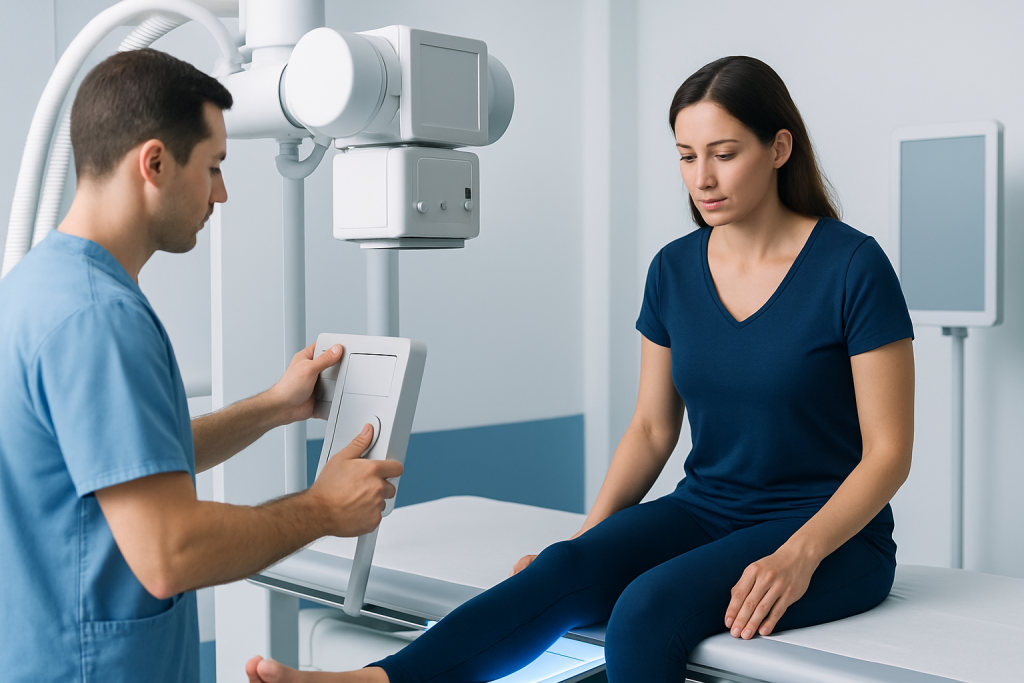
Imaging may be used to confirm the diagnosis or rule out other causes. Early X-rays can be normal because the bone changes take time to appear, so a normal first image does not always exclude a stress fracture.
When the diagnosis is uncertain or the location needs closer evaluation, MRI is often useful because it can show early bone stress and surrounding tissue changes. In some situations, bone scan or CT may be considered, depending on the bone involved and the clinical question.
Because pain in the hip, pelvis, or other high-risk areas can signal a more serious injury pattern, the choice of test matters. A qualified clinician will match the imaging approach to the symptoms, examination findings, and activity level of the person seeking care.
Treatment Options
Treatment is usually centered on reducing impact so the bone can heal. For many people, this means temporarily pausing the activity that caused the injury and replacing it with low-impact movement if advised by the clinician.
Rest does not always mean complete inactivity. Depending on the bone affected and the severity of the injury, a doctor may recommend protected weight-bearing, a walking boot, crutches, or a gradual return plan that keeps healing on track without overloading the bone.
Knee Pain Relief: Causes and Treatment" class="ahp-ilk">Pain relief may be used as part of the overall plan, but the main goal is protecting the fracture site and correcting the factors that led to it. Nutrition review, vitamin D or calcium assessment, footwear changes, training modification, and physical therapy are commonly considered.
Some stress fractures, especially in certain high-risk bones, need closer monitoring. Rarely, surgery is recommended when the fracture location, healing response, or structural stability makes non-surgical care less suitable.
Prevention & Self-care
Prevention is often about making the body’s workload more gradual and more predictable. A sudden jump in running distance, jump training, or repetitive impact is a common setup for trouble, so a stepwise approach is usually safer.
Self-care also includes taking bone health seriously. Enough energy intake, adequate calcium and vitamin D, regular meals, and recovery days all support the repair process that keeps bone resilient over time.
- Increase training load slowly and allow recovery between hard sessions
- Wear activity-appropriate shoes and replace them when they are worn out
- Mix impact exercise with lower-impact options when building fitness
- Pay attention to persistent, one-sided pain instead of pushing through it
- Discuss bone health if there is a history of low body weight, irregular periods, or repeated injuries
For people recovering after treatment, the return to sport or work should be gradual and guided by symptoms and clinician advice. Crossing the finish line too early can turn a healing injury into a longer setback, while a paced return usually gives the bone the best chance to remodel fully.
When to See a Doctor
A medical assessment is worthwhile when pain is localized, keeps returning, or becomes worse with activity rather than improving. This is especially important if the person has recently changed training, is limping, or cannot bear weight comfortably.
Immediate evaluation is sensible for pain in the hip, groin, or pelvis, or when there is significant swelling, worsening pain at rest, or difficulty using the limb. These patterns can point to a stress injury that needs prompt diagnosis and careful management.
Anyone with repeated bone injuries, menstrual changes, unexplained fatigue, poor nutrition, or concerns about bone strength should also speak with a clinician. Addressing the underlying cause can help prevent the same problem from returning.
For international patients arranging care from abroad, Acibadem Health Point can help connect them with multidisciplinary specialists and JCI-accredited hospitals that diagnose and treat stress fractures in a coordinated way, including follow-up planning after travel.
Recovery and Returning to Activity
Healing time varies with the bone involved, the severity of the crack, and how well the area is protected. The safest return is usually based on pain-free function, not on a fixed calendar alone.
Clinicians often look for several milestones before full activity resumes: walking without pain, no tenderness over the fracture site, and steady progress with low-impact exercise. From there, impact is usually added back in small steps.
It helps to think of recovery as a sequence rather than a single date. First comes protection, then rebuilding strength and movement, and finally reintroducing sport-specific loads with close attention to symptoms.
If pain returns during the ramp-up, the activity level may need to be reduced again. That adjustment is not a failure; it is often the body’s way of saying the bone is not ready for the next step yet.
Outlook
Most stress fractures heal well when they are identified early and the person follows the recommended rest and recovery plan. The longer the bone is overloaded, the more likely the injury is to linger or become more difficult to treat.
The overall outlook also depends on whether the underlying risk factors are corrected. Training habits, nutrition, bone density, and biomechanics all influence whether the same bone is asked to absorb too much stress again.
With the right combination of diagnosis, treatment, and gradual return to activity, many people go back to their usual routines safely. The aim is not only to heal the current injury, but also to reduce the chance of a repeat one.
Frequently asked questions
How is a stress fracture different from a regular fracture?
A regular fracture usually follows a single event, such as a fall or collision. A stress fracture develops gradually from repeated loading that creates small cracks in the bone over time.
Can a stress fracture heal on its own?
Some may improve if the stress on the bone is reduced early, but they still need proper evaluation. Continuing the same activity can delay healing or make the injury worse.
Why can my X-ray be normal if I have a stress fracture?
Early stress fractures may not show on X-ray right away because bone changes take time to become visible. If symptoms strongly suggest a stress injury, a clinician may order MRI or another test.
Should I keep exercising if the pain is mild?
It is usually better not to push through focal bone pain. Low-impact activity may be possible in some cases, but the safest choice depends on the bone involved and the severity of symptoms.
What foods support bone healing?
A balanced diet with enough protein, calcium, and vitamin D supports bone repair. If nutritional intake has been low, a doctor or dietitian may suggest a more specific plan.
Are stress fractures only a problem for athletes?
No. They are common in athletes, but they can also occur in people who are newly active, have repetitive work demands, or have weaker bones for other reasons.
References
- American Academy of Orthopaedic Surgeons
- Mayo Clinic
- NHS
- American Orthopaedic Foot & Ankle Society
- UpToDate
This article is for general information only and is not a substitute for professional medical advice. Please consult a qualified doctor about your individual situation.
More from the Health Library



Related Specialists

Prof. Dr. Ahmet Alanay
Orthopedic Surgery & Traumatology
Dr. Sinan Aksu
Orthopedic Surgery & Traumatology
Dr. Sirri Baştürk
Orthopedic Surgery & Traumatology
Prof. Dr. Korhan Özkan
Orthopedic Surgery & Traumatology