

Tibial Tuberosity

Key Takeaways
- The tibial tuberosity is a normal bony landmark below the kneecap that helps the knee straighten and bear load.
- Pain or swelling here is often linked to overuse, growth-related irritation, or tendon strain, especially in active young people.
- Diagnosis usually starts with a physical exam and may include imaging if symptoms are persistent, severe, or unusual.
- Most cases improve with activity modification, rest, ice, physical therapy, and other conservative measures.
- Persistent pain, significant swelling, trauma, or walking difficulty deserves medical evaluation to rule out a fracture, infection, or other condition.
The tibial tuberosity is the bony prominence on the front of the shin, just below the kneecap, where the patellar tendon attaches. In children, teenagers, and active adults, this area can become tender, swollen, or enlarged for several different reasons, most of them manageable with proper assessment and care.
Overview
The tibial tuberosity is the small, firm bump on the upper front part of the shinbone, just below the kneecap. It serves as the attachment point for the patellar tendon, which connects the thigh muscles to the lower leg and helps the knee extend during walking, running, jumping, and climbing stairs.
Because this area carries repeated force every time the knee bends and straightens, it can become irritated in people who are growing rapidly or training intensely. A noticeable bump at this site is not automatically a problem; in some people, it is simply a normal piece of anatomy that becomes more visible as body composition changes or after repeated activity.
When the tibial tuberosity becomes painful or swollen, the cause is often mechanical rather than dangerous. Still, symptoms that linger or interfere with daily movement should be taken seriously, especially when a person is planning travel for care and wants a clear diagnosis before leaving home or starting Herniated Disc Treatment Abroad: Injection, Rehab, or Surgery?" class="ahp-ilk">treatment abroad.
Symptoms
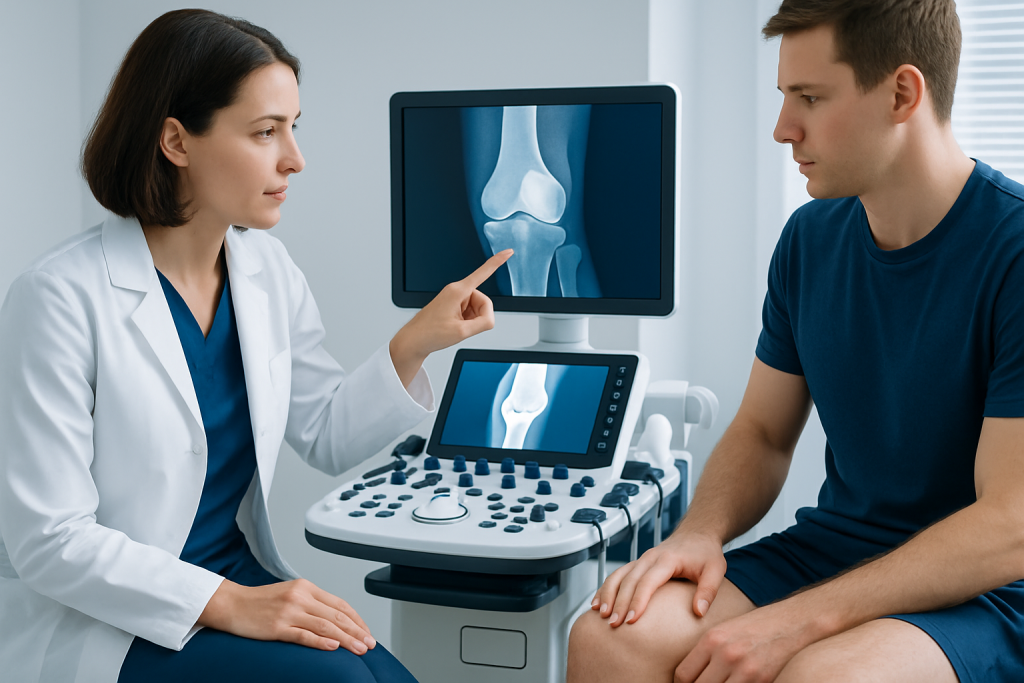
Problems involving the tibial tuberosity usually appear as pain at the front of the knee, just below the kneecap. The discomfort may be sharp during sport, dull after activity, or tender to the touch when kneeling, climbing stairs, or rising from a squat.
Swelling, warmth, and a visible or palpable bump are also common. In adolescents, the area may look more prominent during a growth spurt, and pain can be felt on one or both sides depending on activity patterns and growth-related stress.
Other symptoms may include:
- pain that worsens with jumping, running, or kneeling
- stiffness after exercise
- limping after activity
- tightness in the front of the thigh or around the kneecap
- reduced participation in sports or gym class
If the knee is unstable, very swollen, red, or painful after a fall or direct blow, the symptom pattern may point to something other than routine overuse and should be checked promptly.
Causes & Risk Factors

The tibial tuberosity is affected by the pull of the patellar tendon, so any situation that increases strain through the front of the knee can irritate it. In adolescents, one common cause is Osgood-Schlatter disease, a growth-related condition in which repetitive traction from the tendon irritates the developing bone and surrounding tissues.
Adults may experience pain at this site from patellar tendinopathy, direct trauma, repetitive kneeling, or biomechanical stress related to training load, footwear, flexibility, or muscle imbalance. Less commonly, a fracture, infection, or another inflammatory condition can involve the area.
Factors that can raise the likelihood of symptoms include:
- rapid growth during adolescence
- sports with running, jumping, cutting, or frequent squatting
- tight quadriceps or hamstrings
- sudden increase in training volume
- repeated kneeling or direct impact to the front of the knee
- prior injury to the knee or upper shin
In international patients, it is often helpful to describe the exact activities that trigger pain, because doctors use that pattern, along with age and exam findings, to decide whether the issue is a typical overuse condition or something that needs imaging before treatment plans are made.
Diagnosis
Diagnosis begins with a detailed history and a physical examination. A clinician will usually ask where the pain is located, what movements bring it on, whether swelling is present, and whether there was a recent injury, growth spurt, or increase in sport activity.
During the exam, the doctor may check tenderness over the tibial tuberosity, knee range of motion, walking pattern, muscle tightness, and strength around the hip and thigh. These findings often help distinguish a growth-related irritation from tendon pain, bursitis, or a more serious injury.
Imaging is not always necessary, but it can be useful when symptoms are severe, persistent, or atypical. X-rays may help assess the bone and rule out fracture or other structural problems, while ultrasound or MRI may be considered if the diagnosis is uncertain or if soft-tissue injury is suspected.
For patients traveling for care, bringing prior imaging, sports history, and any notes about previous treatments can make the first consultation more efficient and may reduce the need to repeat tests unnecessarily.
Treatment Options
Treatment depends on the cause of the symptoms, but most tibial tuberosity-related conditions improve with conservative care. The first goal is usually to reduce irritation while preserving safe movement, rather than forcing complete inactivity for long periods.
Common treatment approaches include activity modification, short-term rest from painful movements, ice after exercise, and targeted physical therapy. A therapist may focus on stretching tight muscles, improving movement mechanics, and strengthening the quadriceps, hamstrings, hips, and core to reduce stress on the knee.
In some cases, a clinician may recommend temporary use of supportive measures such as a knee strap, brace, or cushioned padding for kneeling. Over-the-counter pain relievers may be suggested in general terms when appropriate, but the choice should be guided by a doctor, especially for children, people with stomach, kidney, or bleeding concerns, or patients taking other medications.
Surgery is rarely needed for tibial tuberosity pain itself. It is considered only in unusual situations, such as a significant fracture, a separated bone fragment, or a persistent problem that does not improve with well-directed non-surgical treatment.
Prevention & Self-care
Prevention is often about load management. For active children, teens, and adults, the knee usually responds better when training increases gradually, recovery days are respected, and pain is not ignored until it becomes constant.
Helpful self-care habits include warming up before sport, keeping the quadriceps and hamstrings flexible, and choosing footwear that suits the activity and surface. If kneeling causes pain, using padding or modifying the task can reduce repeated irritation over time.
Practical steps that may help:
- reduce jumping or sprinting temporarily if pain flares
- avoid deep squats or repeated kneeling during recovery
- use ice after activity if it eases symptoms
- follow a guided exercise plan from a physiotherapist
- return to sport gradually rather than all at once
For families arranging treatment across borders, self-care plans should be realistic and easy to continue after returning home. A clear exercise program, written follow-up plan, and advice on safe activity progression are especially valuable when ongoing rehabilitation will happen in another country.
When to See a Doctor
Medical evaluation is appropriate when pain lasts more than a short period, keeps coming back, or limits walking, sports, school, or work. A doctor should also assess any swelling that is increasing, a bump that is unusually tender, or symptoms that do not match a straightforward overuse pattern.
Prompt care is particularly important after a fall, direct impact, or twisting injury if the person cannot bear weight, the knee looks deformed, or there is marked bruising. Redness, warmth, fever, or severe pain at rest may point to a condition that needs faster attention.
For persistent or complex knee pain, a consultation with an orthopedic specialist can help clarify the cause and create a safe plan for treatment and follow-up. Acibadem Health Point’s multidisciplinary specialists and JCI-accredited hospitals diagnose and treat musculoskeletal conditions for international patients, with coordination that supports both in-person care and aftercare planning.
Living With Tibial Tuberosity Pain
Most people do best when they understand that tibial tuberosity pain is usually manageable, but it should not be pushed through without adjustment. Small changes in activity, posture, and rehabilitation often make a meaningful difference over time.
Children and teens may need reassurance that growth-related pain does not always mean lasting damage. Adults, meanwhile, benefit from looking at training habits, work demands, and biomechanics so that symptoms are not repeatedly re-triggered.
Recovery is often a shared process between the patient, family, therapist, and physician. When care is planned thoughtfully, even patients who travel for treatment can usually return home with a practical roadmap for recovery and follow-up.
References
This article is intended for general education and does not replace a medical evaluation. If symptoms are persistent, severe, or unusual, a qualified clinician should assess the knee and recommend the right next step.
Trusted sources for further clinical context include orthopedic and pediatric health organizations that publish patient guidance on knee overuse injuries, growth-related apophysitis, tendon conditions, and musculoskeletal imaging.
Frequently asked questions
What is the tibial tuberosity?
The tibial tuberosity is the bony bump on the front of the shinbone just below the kneecap. It is where the patellar tendon attaches and helps the knee straighten during movement.
Why does the tibial tuberosity become painful in teenagers?
In growing adolescents, repeated pulling from the patellar tendon can irritate the area, especially during sports with running and jumping. This pattern is commonly seen with Osgood-Schlatter disease.
Is a bump below the kneecap always abnormal?
No, not always. Some people naturally have a noticeable tibial tuberosity, and it may become more visible with growth or lower body fat. Pain, swelling, or increasing tenderness are the features that make evaluation more important.
How is tibial tuberosity pain treated?
Treatment usually starts with reducing painful activity, using ice, and doing guided stretching and strengthening exercises. A clinician may also suggest supportive padding, a strap, or a brace depending on the cause.
Can someone keep playing sports with tibial tuberosity pain?
Sometimes light activity is possible, but it depends on the severity of symptoms and the specific diagnosis. If pain changes the way a person walks or jumps, rest and medical advice are usually better than pushing through.
When does tibial tuberosity pain need imaging?
Imaging may be helpful when the pain follows an injury, lasts a long time, or does not fit the usual overuse pattern. A doctor may order X-rays, and sometimes ultrasound or MRI, to rule out other causes.
References
- American Academy of Orthopaedic Surgeons
- Mayo Clinic
- National Institute of Arthritis and Musculoskeletal and Skin Diseases
- Nemours KidsHealth
- British Orthopaedic Association
This article is for general information only and is not a substitute for professional medical advice. Please consult a qualified doctor about your individual situation.
More from the Health Library



Related Specialists

Prof. Dr. Ahmet Alanay
Orthopedic Surgery & Traumatology
Dr. Sinan Aksu
Orthopedic Surgery & Traumatology
Dr. Sirri Baştürk
Orthopedic Surgery & Traumatology
Prof. Dr. Korhan Özkan
Orthopedic Surgery & Traumatology