Hyphema

Key Takeaways
- Hyphema is bleeding into the space between the cornea and the iris, often after eye trauma.
- Blurred vision, eye pain, light sensitivity, and visible blood in the eye are common warning signs.
- An eye specialist may check eye pressure because hyphema can lead to glaucoma or corneal staining.
- Treatment often includes rest, head elevation, eye protection, and medicines prescribed by a doctor.
- Follow-up is important even when symptoms improve, because rebleeding can occur in the days after injury.
Hyphema is blood that collects in the front part of the eye, usually after an injury, and it needs prompt medical evaluation to protect vision. With timely treatment and careful follow-up, many people recover well and avoid complications.
Overview
Hyphema is the medical term for blood collecting in the front chamber of the eye, the small space between the cornea and the iris. It most often happens after a blunt injury, such as being hit by a ball, a fall, a car-related impact, or another accident that jars the eye.
Because the eye is a delicate structure, even a small amount of bleeding can affect vision or raise pressure inside the eye. That is why hyphema is not something to watch casually at home for long; it usually deserves same-day assessment by an eye specialist or emergency team.
For people traveling for care, hyphema is one of those conditions where fast, organized evaluation matters more than trying to self-manage across borders. A clear plan for treatment, repeat eye checks, and return precautions helps protect sight and reduces uncertainty during recovery.
Symptoms
Symptoms can appear right away after the injury or become more noticeable over the first hours. Some people see a red pool or layered blood in the lower part of the eye, while others notice only blurred vision or a dark, hazy look.
Common symptoms include:
- Visible blood in the front of the eye
- Blurred or reduced vision
- Eye pain or a feeling of pressure
- Sensitivity to light
- Headache or nausea in some cases, especially if eye pressure rises
The amount of blood does not always match how serious the problem is. A small-looking hyphema can still interfere with eye pressure, and a larger one can sometimes improve but still require close monitoring.
Causes & Risk Factors

The most common cause of hyphema is blunt trauma to the eye. Sports injuries, interpersonal violence, workplace accidents, and falls are frequent examples, but even seemingly minor impacts can damage the tiny blood vessels in the iris or nearby structures.
Less commonly, hyphema can occur without a clear injury. It may be linked to eye surgery, abnormal blood vessels, inflammation inside the eye, certain bleeding disorders, or the use of blood-thinning medicines that make bleeding easier to start or harder to stop.
Several factors can increase the chance of hyphema or its complications:
- Playing contact or ball sports without eye protection
- Prior eye surgery or eye disease
- Bleeding or clotting disorders
- Use of anticoagulant or antiplatelet medicines, when medically appropriate
- Children and young adults, who are often exposed to sports-related injuries
In international-patient settings, it can be helpful to bring a medication list and any previous eye records, because these details may influence the evaluation and follow-up plan.
Diagnosis
Diagnosis starts with a careful eye examination and a discussion of what happened before the symptoms began. The specialist will usually ask about the injury, vision changes, pain, prior eye disease, and any medicines that affect bleeding.
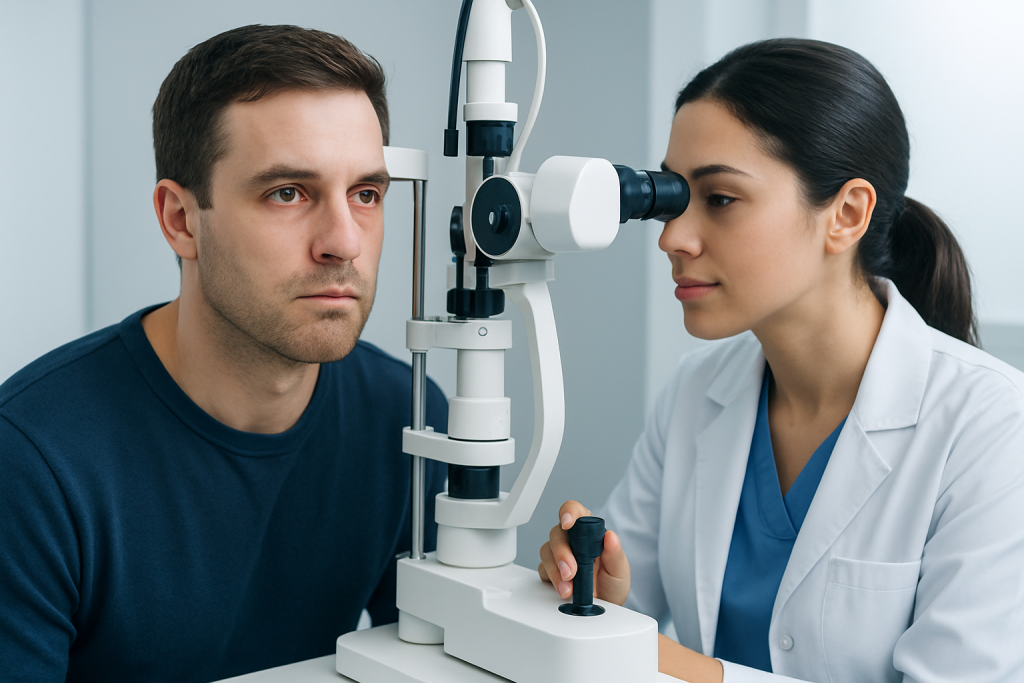
The eye examination may include checking visual acuity, looking at the front of the eye with a slit lamp, and measuring eye pressure if it is safe to do so. The doctor may also examine the pupil and the back of the eye when possible, since trauma can sometimes affect more than one part of the eye.
If the view inside the eye is limited, additional testing may be considered after the initial assessment. The main goal is to confirm the diagnosis, estimate how much blood is present, and identify complications that could threaten vision if not treated promptly.
Treatment Options
Treatment depends on the size of the bleed, the eye pressure, and whether the hyphema is causing other problems. Many patients are managed without surgery, but they still need careful observation because the situation can change over the first several days.
Typical treatment may include:
- Rest and limiting activities that could worsen bleeding
- Keeping the head elevated, even during sleep, to help the blood settle
- Protecting the eye with a shield rather than rubbing or pressing on it
- Medicines prescribed by the doctor to reduce inflammation or control pressure
- Regular follow-up visits to check healing and eye pressure
In some cases, hospital-based care is recommended, especially if the hyphema is large, eye pressure is elevated, vision is significantly reduced, or a person cannot reliably attend follow-up. Surgery is reserved for selected cases, such as persistent bleeding, uncontrolled pressure, or blood that does not clear appropriately.
Prevention & Self-care
After treatment begins, the most important self-care measure is to protect the eye from further strain. That means avoiding strenuous exercise, bending, heavy lifting, or anything that could increase pressure in the eye until the doctor says it is safe.
Using a protective eye shield, taking medicines exactly as directed, and attending follow-up appointments are central parts of recovery. It is also wise to avoid aspirin or other blood-thinning products unless the treating physician specifically says they are appropriate, because they can sometimes increase bleeding risk.
To reduce the chance of another episode, eye protection during sports, home projects, and work activities matters. For travelers who are recovering away from home, arranging follow-up before departure and knowing how to contact the eye team if symptoms change can make care smoother and safer.
When to See a Doctor
Hyphema should be assessed urgently, ideally the same day it is noticed. Any visible blood in the eye after an injury, especially when paired with blurred vision, pain, or light sensitivity, deserves prompt medical attention.
Seek immediate care if there is worsening vision, increasing pain, nausea, vomiting, a severe headache, or if the eye becomes more red or uncomfortable after seeming to improve. These changes can suggest higher eye pressure or rebleeding, which needs a doctor’s review.
Even when symptoms seem mild, follow-up is important because complications can appear after the first visit. For international patients, a coordinated team can help plan the next steps, and Acibadem Health Point’s multidisciplinary specialists and JCI-accredited hospitals diagnose and treat this condition for patients traveling from abroad.
Frequently asked questions
Is hyphema an emergency?
Yes, it should be treated as an urgent eye problem, especially if it follows an injury. Prompt evaluation helps protect vision and checks for pressure changes inside the eye.
Can a small hyphema heal on its own?
Some small hyphemas improve with rest and prescribed treatment, but they still need medical monitoring. The risk of rebleeding or pressure rise means follow-up remains important.
How long does recovery usually take?
Recovery varies depending on the amount of bleeding and whether complications develop. Many cases improve over days to weeks, but the doctor will decide the timeline based on eye exams, not only symptoms.
Should the person keep the head elevated?
Yes, head elevation is often recommended because it helps the blood settle in the lower part of the eye. This is usually paired with rest and avoidance of activities that could worsen bleeding.
Can hyphema affect vision permanently?
It can, if complications such as high eye pressure, corneal staining, or repeated bleeding are not managed. With timely care and close follow-up, many people recover without lasting problems.
Is it safe to fly after hyphema?
Air travel decisions should be made with the treating eye doctor, especially if eye pressure is elevated or follow-up is still needed soon. The safest approach is to confirm the plan before traveling.
References
- American Academy of Ophthalmology
- National Eye Institute
- Merck Manual Professional Edition
- Mayo Clinic
- World Health Organization
This article is for general information only and is not a substitute for professional medical advice. Please consult a qualified doctor about your individual situation.