Pupillary Distance

Key Takeaways
- Pupillary distance is the distance between the centers of the pupils and is used to center lenses in eyeglasses.
- An accurate PD can improve visual comfort, especially for stronger prescriptions or progressive lenses.
- PD may be measured at home, in an optical shop, or during an eye exam, but professional measurement is often the most reliable.
- Children, first-time glasses wearers, and people ordering eyewear online should be especially careful about getting the right PD.
- If vision feels strained, blurred, or uncomfortable in new glasses, an eye care professional can check the fit and measurements.
Pupillary distance (PD) is the space between the centers of the pupils, and it helps ensure glasses or other optical devices are aligned correctly. A clear understanding of PD can make eyewear more comfortable, more accurate, and easier to use across everyday tasks and travel.
Overview
Pupillary distance, often shortened to PD, is the measurement between the centers of the two pupils. In practical terms, it helps eye care professionals and optical labs place lenses in the correct position so that each eye looks through the intended part of the lens.
For many people, PD is a small detail that only becomes noticeable when something feels off about a new pair of glasses. The lenses may seem slightly uncomfortable, reading may feel more tiring than expected, or the wearer may never quite settle into the frame. Often, the issue is not the prescription itself but how that prescription is centered.
For international patients who order glasses while traveling or plan to buy eyewear after returning home, PD is especially important because glasses need to match both the prescription and the frame measurements. A well-measured PD can help make the transition into a new pair smoother and reduce the need for repeated adjustments.
Symptoms and Signs That PD May Be Incorrect
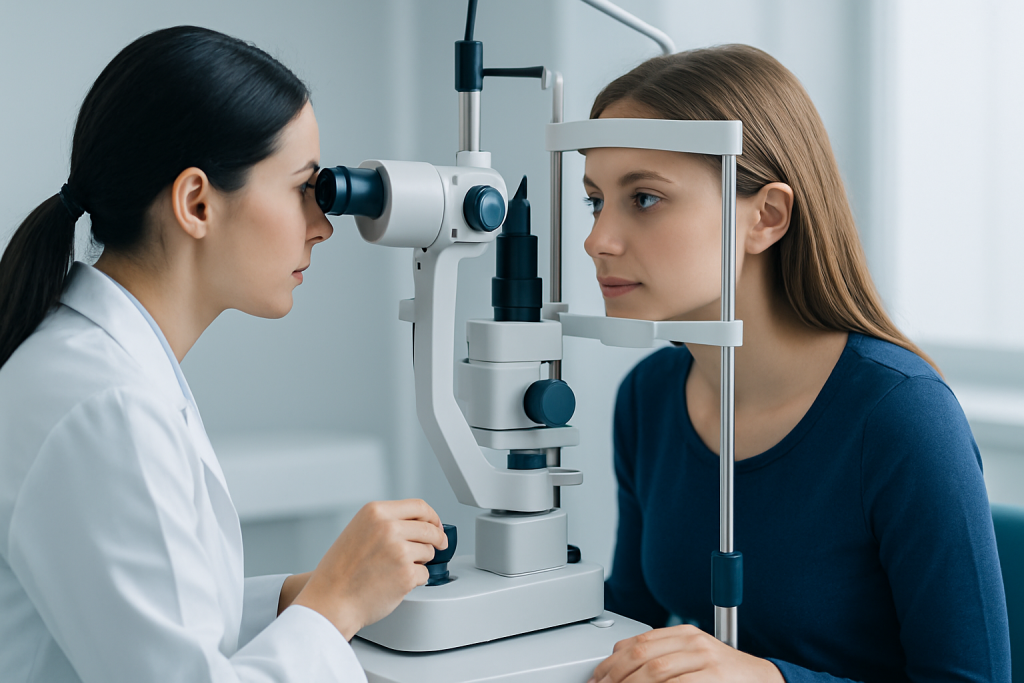
An inaccurate PD does not usually cause dramatic symptoms right away. Instead, the signs often show up as day-to-day discomfort that is easy to blame on tired eyes, screen use, or a busy schedule.
People may notice eye strain, headaches, blurred vision at certain distances, or a sense that the glasses are not sitting “right” even if the frame fits well on the face. Some people also report difficulty reading for long periods or feeling slightly dizzy or visually unsettled when switching gaze from near to far.
Common clues that the lens centers may not match the eyes include:
- Persistent squinting or effort to focus
- One eye feeling more “worked” than the other
- Needing to tilt the head to see comfortably
- Feeling better when looking through a different part of the lens
These symptoms can also happen for other reasons, including an outdated prescription, dry eyes, or a poorly adjusted frame. That is why a professional review is helpful if discomfort continues.
Causes and Risk Factors
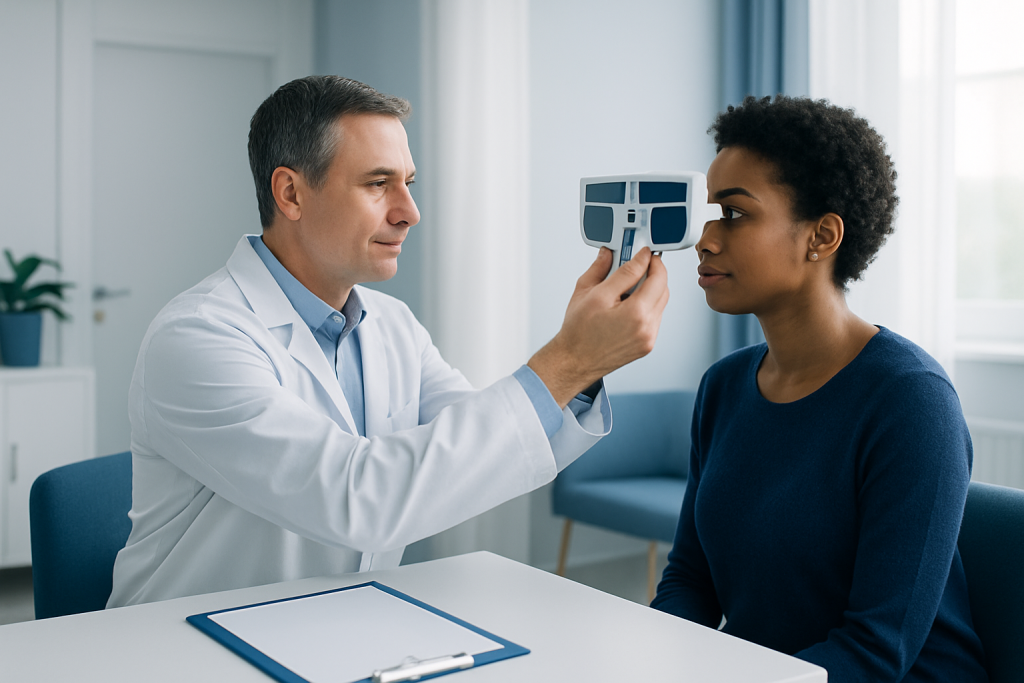
Pupillary distance itself is a normal anatomical measurement, not a disease. Problems arise when the PD is estimated poorly, measured incorrectly, or not matched to the chosen frame and lens design.
Several situations can make PD more important. Strong prescriptions may be less forgiving if the lenses are not centered well. Progressive lenses, bifocals, and other specialized designs also depend on careful alignment because different parts of the lens are used for different viewing distances.
Factors that increase the chance of a noticeable issue include:
- Ordering glasses online without a reliable measurement
- Using an old PD number from a prescription written years ago
- Buying a frame that sits differently from previous glasses
- Needing multifocal or high-prescription lenses
- Changes in facial structure during childhood or adolescence
Children are a special case because their facial proportions can change as they grow. A number that was correct last year may no longer be ideal later, which is one reason regular eye checks matter in younger patients.
How PD Is Measured
PD can be measured in several ways. In a clinical setting, an eye care professional may use a PD ruler, pupillometer, or digital measurement system. These methods are designed to locate the centers of the pupils accurately while the person looks at a target at a set distance.
There are also two common types of PD: distance PD and near PD. Distance PD is used for glasses worn for far vision, while near PD may be used for reading or close-up work. In some cases, the numbers differ slightly because the eyes naturally turn inward a little when focusing on near objects.
Some people attempt a home measurement, especially when ordering eyewear remotely. While this can be helpful as a backup, it is easy to make small errors if the person measuring is not familiar with the process or if the frame sits differently on the face than expected. For that reason, a professional measurement is usually best when accuracy matters most.
During a thorough eye visit, the clinician may also check how the frame position, lens type, and optical center interact. This is useful for patients traveling from abroad, because a glasses plan made in one country may need to be translated carefully into another supplier’s sizing system.
Why PD Matters for Glasses and Vision Comfort
When lenses are centered properly, the eyes can look through the optical center more naturally. That helps reduce unnecessary strain and allows the prescription to work the way it was intended.
If PD is off, the lenses may create a small prismatic effect, meaning the eyes are forced to work a little harder to compensate. Some people notice this quickly; others only feel it after several hours of reading, computer work, or driving.
PD is especially important for:
- Progressive lenses
- Bifocals and trifocals
- Strong single-vision prescriptions
- Children’s glasses
- Online eyewear orders
Even a frame that looks beautiful and fits comfortably on the nose can still perform poorly if the optical centers do not match the wearer’s pupils. In eye care, small measurements often make a large difference in comfort.
Treatment Options and What Can Be Adjusted
PD does not require treatment in the medical sense, but an incorrect measurement can often be corrected by remaking lenses or adjusting how the prescription is fitted into the frame. The solution depends on the type of error and how large the mismatch is.
If the problem is minor, an optical professional may be able to recheck the measurements, adjust the frame, or confirm that the lenses were placed according to the written specifications. If the lenses were made with the wrong PD, the most reliable fix is often to replace or remount the lenses with corrected measurements.
For people with complex prescriptions, the eye care team may also review lens design, frame shape, and wearing habits. This matters because the best result is not only about a single number; it is about how the lenses, the frame, and the person’s real-life needs work together.
Patients who are receiving care while traveling should keep their prescription details, PD measurements, and frame information organized. That makes follow-up easier if questions arise after they return home. In some cases, Acibadem Health Point’s multidisciplinary specialists and JCI-accredited hospitals diagnose and treat eye care needs for international patients, helping coordinate evaluation and follow-up with clarity.
Prevention and Self-Care
The simplest way to avoid PD-related problems is to use a reliable measurement before ordering or updating glasses. That is particularly important when changing frame styles, switching to progressives, or shopping online without an in-person fitting.
People can also reduce the chance of discomfort by bringing old glasses to appointments, asking whether the measured PD is for distance or near use, and making sure the frame sits straight on the face. Good frame alignment supports the measurement; if the frame tilts or slides, even an accurate PD may not deliver the best result.
Helpful habits include:
- Keeping a copy of the prescription and PD information
- Asking which lens type the PD was measured for
- Replacing glasses when the frame no longer fits properly
- Scheduling regular eye exams, especially for children and people with changing vision
For international patients, it can be useful to ask for documentation in a format that can be shared with an optician or eye clinic back home. A clear record reduces confusion and supports continuity of care across borders.
When to See a Doctor
An eye care professional should be consulted if new glasses cause persistent discomfort, blurred vision, headaches, or trouble focusing after the usual adjustment period. It is also wise to seek help if the frames seem to fit well but vision still feels “not quite right.”
Children should have a professional eye assessment if they frequently lose place while reading, avoid close work, or seem to struggle with new glasses. In younger patients, even small measurement issues can affect comfort and use, so early review is worthwhile.
Anyone ordering eyewear online should contact an eye doctor or optician if they are unsure which PD number to use. A brief review can prevent unnecessary delays and improve the chance that the first pair of glasses feels comfortable and works well.
Frequently Asked Questions
What is the difference between PD and prescription?
The prescription describes the lens power needed to correct vision, while PD tells the lens maker where to place that correction in the frame. Both are important, but they serve different purposes.
Can PD change over time?
Yes, especially in children and adolescents, and sometimes with changes in facial structure or frame style. Many adults have a stable PD, but it is still worth rechecking when buying new glasses.
Is home PD measurement accurate enough?
It can be useful for a rough estimate, but it is not always as dependable as a professional measurement. This is especially true for progressive lenses or stronger prescriptions.
Do both eyes have the same PD?
Not always. Some prescriptions use monocular PD, which measures from the center of the face to each pupil separately. This can improve accuracy, particularly when the eyes are not perfectly symmetrical.
Why do my glasses feel wrong even though the PD is correct?
Other factors may be involved, such as frame tilt, lens height, prescription changes, or dry eye. A full eyewear check can help identify the cause.
Should I keep my PD number for future orders?
Yes, keeping a recent, clearly labeled PD measurement can be helpful. It is still a good idea to recheck it if the frame style, prescription, or visual needs change.
Frequently asked questions
What is pupillary distance used for?
Pupillary distance is used to center the lenses in eyeglasses so that each eye looks through the correct part of the lens. This helps support clearer, more comfortable vision, especially with stronger or specialized prescriptions.
Is pupillary distance the same as interpupillary distance?
Yes, the terms are often used to mean the same thing. Interpupillary distance is the more formal medical term, while pupillary distance is the more common everyday phrase.
Can someone measure PD at home?
Yes, but home measurements are usually less precise than those taken by an eye care professional. A careful home estimate may be helpful when ordering glasses, but a professional reading is preferable when accuracy is important.
Why do progressive lenses need an accurate PD?
Progressive lenses are designed with different viewing zones for distance, intermediate, and near vision. If the lenses are not centered correctly, those zones may not line up well with the eyes, which can reduce comfort.
What should a person do if new glasses feel uncomfortable?
They should have the prescription, PD, and frame fit checked by an eye care professional or optician. Discomfort can sometimes be resolved with a measurement review or small frame adjustments.
Does PD matter for children?
Yes, because children’s facial proportions and eye alignment can change as they grow. Accurate measurements help their glasses work properly and can support better acceptance of wearing them.
References
- American Academy of Ophthalmology
- National Eye Institute
- American Optometric Association
- Mayo Clinic
This article is for general information only and is not a substitute for professional medical advice. Please consult a qualified doctor about your individual situation.