

Herniated Disc: Symptoms, Causes and Treatment

Key Takeaways
- A herniated disc can cause local pain, radiating pain, numbness, tingling, or weakness depending on which nerve is affected.
- Not every disc herniation causes symptoms, and the same imaging result can feel very different from one person to another.
- Most cases improve with time, guided activity changes, physical therapy, and other non-surgical care.
- Persistent weakness, walking difficulty, or bladder or bowel changes need prompt medical assessment.
- A doctor may use the symptom pattern, physical exam, and selective imaging to confirm the diagnosis and plan treatment.
Medically reviewed by the Acıbadem clinical team — August 19, 2026
Herniated disc symptoms often start with back or neck pain, then may spread into the arm or leg if a nerve is irritated. The pattern can vary widely, so understanding the warning signs helps patients seek the right evaluation and avoid unnecessary worry.
Overview
A herniated disc happens when the softer center of a spinal disc pushes through a weakened outer layer and begins to irritate nearby tissues, especially nerves. The result is not always dramatic. Some people feel a sharp, memorable pain; others notice only a dull ache, stiffness, or a strange “electric” feeling that travels into an arm or leg.
The exact symptoms depend on where the disc sits in the spine and whether it presses on a nerve root. A herniation in the neck may affect the shoulder, arm, or hand, while one in the lower back often sends symptoms into the buttock, thigh, calf, or foot. Because the pain can travel far from the spine, patients sometimes assume the problem is in the hip, leg, or shoulder rather than the back or neck.
For international patients, that uncertainty can be especially frustrating when symptoms begin during travel, long work trips, or after lifting luggage. A clear, early assessment helps separate a disc-related nerve problem from other causes of pain and guides the safest next step.
Symptoms
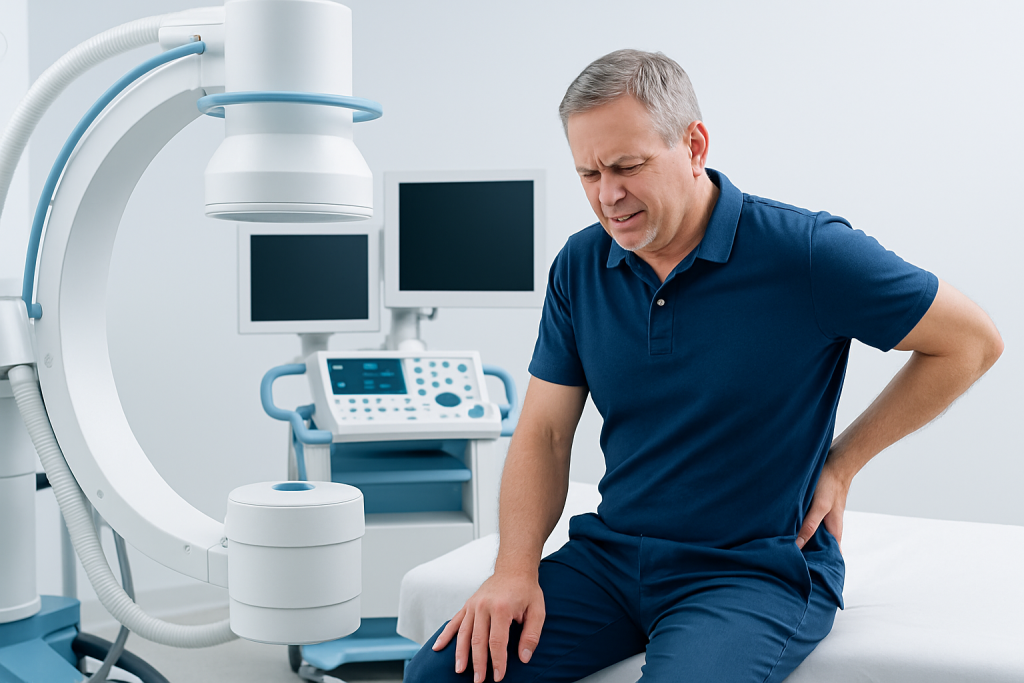
The most common symptom is pain that starts in the back or neck and then radiates along the path of the affected nerve. In the lower back, this is often described as sciatica: pain that may shoot through the buttock and down the leg. In the neck, pain may spread into the shoulder blade, arm, or fingers.
Many people also describe numbness, tingling, burning, or a “pins and needles” sensation. These feelings may come and go, worsen with coughing, sneezing, sitting, bending, or twisting, and improve when lying down or changing position. Muscle weakness can also appear, making it harder to lift the foot, grip objects, or stand on tiptoe.
Less common symptoms include a feeling that one side of the body is less coordinated, reduced reflexes, or pain that is intense enough to interrupt sleep. The symptom pattern can be uneven: a person may have severe leg pain with little back pain, or neck stiffness without much arm discomfort.
- Neck pain with shoulder, arm, or hand symptoms may suggest a cervical disc herniation.
- Low back pain with leg pain is often linked to a lumbar disc herniation.
- Weakness, especially when it is new or getting worse, deserves medical attention.
Not every herniated disc causes symptoms. Some are found incidentally on imaging done for another reason, which is why symptoms and exam findings matter more than a scan alone.
Causes & Risk Factors
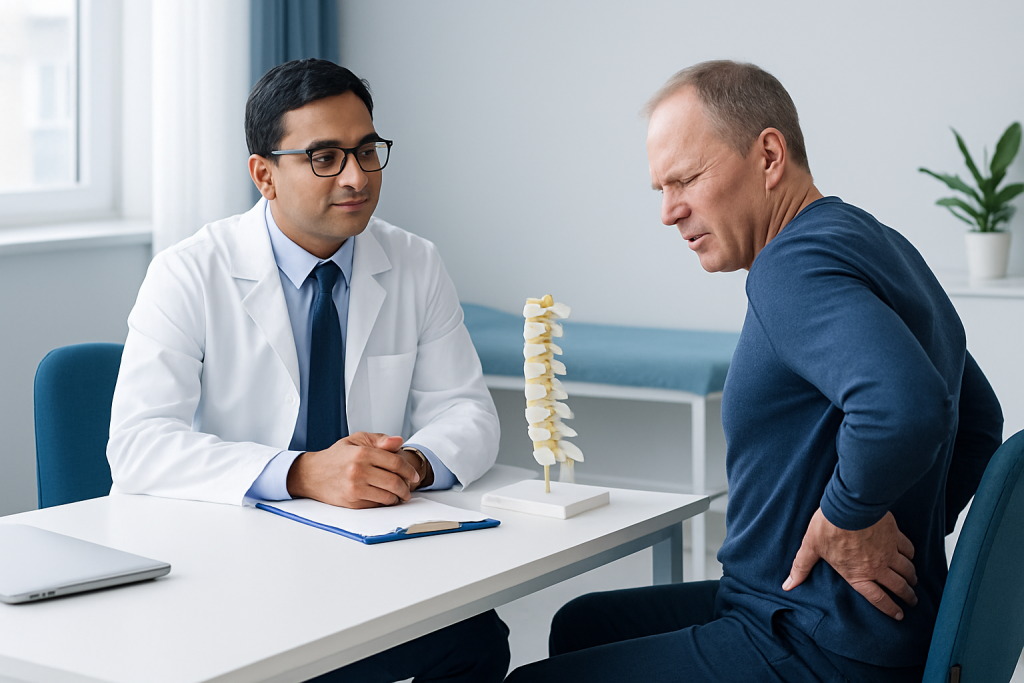
Spinal discs naturally change with age. Over time, they can lose hydration and flexibility, making the outer ring more prone to tearing. A disc may then herniate with a single movement or after repetitive strain that has been building quietly for months.
Common contributors include heavy lifting with poor mechanics, repeated bending and twisting, long periods of sitting, vibration exposure, and sudden awkward movements. A family tendency toward disc degeneration may also play a role, and some people are simply more vulnerable because of the way their spine is built.
Risk can increase with smoking, excess body weight, and jobs or sports that place frequent load on the spine. Still, herniated discs are not limited to athletes or physically demanding jobs; they can also appear after routine activities such as moving a suitcase, gardening, or getting out of a car.
It helps to think of disc herniation as the result of both wear and a trigger. The underlying disc becomes susceptible first, and then a movement, lift, or twist exposes the problem.
Diagnosis
Diagnosis begins with a detailed discussion of symptoms: where the pain starts, where it travels, what makes it worse, and whether weakness or numbness is present. A clinician will also ask about recent activity, prior spine problems, injuries, and the effect of symptoms on walking, sleep, work, and daily tasks.
A physical examination usually checks posture, spinal tenderness, range of motion, muscle strength, reflexes, and sensation. Simple movement tests can help identify which nerve root may be involved. In many cases, this clinical picture points strongly toward a herniated disc even before imaging is considered.
Imaging is not always needed right away. When symptoms are severe, persistent, or accompanied by neurological deficits, a doctor may recommend MRI because it shows discs, nerves, and soft tissues clearly. In selected situations, other tests may be used to rule out different causes of pain or to evaluate nerve function.
For patients traveling for care, it is helpful to bring any prior scans or reports, even if they were performed in another country. Comparing older images with a new exam can clarify whether the disc change is new, stable, or unrelated to the current pain.
Treatment Options
Most herniated disc symptoms are first treated without surgery. The goal is to calm nerve irritation, preserve movement, and help the person return to ordinary activities safely. Resting completely in bed is usually not helpful; guided activity is often better than prolonged immobility.
Treatment may include short-term Knee Pain Relief: Causes and Treatment" class="ahp-ilk">pain relief measures recommended by a clinician, physical therapy, posture and movement training, and gradual strengthening of the core and supporting muscles. Heat or cold, ergonomic changes, and avoiding motions that aggravate nerve pain can also make recovery more manageable.
If symptoms remain stubborn or function is limited, a doctor may consider additional options such as targeted injections or further specialist review. Surgery is usually reserved for specific situations, such as ongoing nerve compression with weakness, severe pain that does not improve, or signs that the nerves controlling bladder or bowel function may be involved.
For international patients, treatment planning often includes both the immediate phase and the return home. That means choosing a plan that can be followed consistently after travel, with clear instructions for exercises, activity limits, warning signs, and follow-up arrangements with a local physician.
Prevention & Self-care
Not every disc problem can be prevented, but everyday habits can reduce strain on the spine. The most useful approach is usually practical rather than perfect: move often, lift thoughtfully, and keep the back and core as strong and flexible as possible.
People with a history of disc symptoms often do better when they pace activities instead of alternating between total rest and sudden overexertion. Gentle walking, prescribed stretches, and ergonomically sensible sitting and sleeping arrangements can all help. Smoking cessation and weight management may also support spine health over time.
Self-care should be calming, not complicated. A person recovering from symptoms may find it useful to:
- avoid repeated bending, twisting, or heavy lifting during flare-ups
- use supportive seating and change position regularly during long trips
- follow the exercise plan given by a physical therapist or doctor
- return to activities step by step rather than all at once
Because pain can make people guarded and fearful of movement, reassurance matters. Many patients improve when they understand that sensible motion is usually part of recovery, not a threat to the disc.
When to See a Doctor
Medical evaluation is sensible when back or neck pain is traveling into the arm or leg, especially if the symptom pattern is new, persistent, or worsening. A doctor should also be seen if numbness or tingling continues, pain interferes with sleep or walking, or weakness makes normal tasks difficult.
Prompt care is especially important if symptoms suggest significant nerve involvement. Examples include foot drop, trouble gripping, increasing imbalance, or pain that becomes difficult to control despite basic self-care. Bladder or bowel changes require urgent assessment because they can signal a more serious compression problem.
Patients who are traveling or living abroad may feel unsure about the right point of care. In that situation, a spine specialist, orthopedic doctor, neurologist, or rehabilitation physician can help determine whether the issue is likely disc-related and whether further imaging or treatment is needed.
Acibadem Health Point’s multidisciplinary specialists and JCI-accredited hospitals diagnose and treat herniated disc symptoms for international patients, with care plans designed to be followed safely across borders.
Living With Recovery
Recovery from a herniated disc often happens in stages. Pain may settle before strength and confidence fully return, so it is common for patients to feel physically better while still being cautious with movement. That cautious period is normal and can be managed with clear guidance.
Follow-up matters because symptoms can evolve. A doctor may adjust exercise advice, review ergonomic habits, or look again at symptoms if pain shifts location or weakness changes. For people returning home after treatment abroad, a written plan can make the transition easier for both the patient and the local clinician who continues care.
Over time, many people learn how to recognize early warning signs of a flare and respond before pain becomes disruptive. That practical awareness, combined with medical support when needed, is often the most reassuring part of living with disc-related symptoms.
Frequently asked questions
What does a herniated disc usually feel like?
It often feels like back or neck pain that radiates into an arm or leg, sometimes with tingling, numbness, or weakness. Some people notice a sharp, shooting pain, while others mainly feel stiffness or a deep ache. The exact sensation depends on which nerve is irritated.
Can a herniated disc cause leg pain without much back pain?
Yes. A disc herniation in the lower back can irritate a nerve and cause pain to travel into the buttock, thigh, or calf even when the back itself does not hurt much. This pattern is common with sciatica.
Do all herniated discs need surgery?
No. Many people improve with non-surgical care such as guided activity, physical therapy, and symptom management. Surgery is usually considered only when pain is severe or persistent, or when nerve function is affected.
How is a herniated disc diagnosed?
A doctor usually starts with the symptom story and a physical examination, then decides whether imaging such as MRI is needed. The combination of symptoms, exam findings, and test results helps confirm whether a disc is truly causing the problem.
When should weakness be taken seriously?
New or worsening weakness should be assessed promptly because it can indicate meaningful nerve compression. Examples include trouble lifting the foot, gripping objects, or standing on tiptoe. Early evaluation helps protect nerve function.
What can someone do while waiting for an appointment?
Staying gently active, avoiding heavy lifting, and changing positions regularly are usually sensible first steps. It is also helpful to note which movements worsen symptoms and to seek urgent help if bladder, bowel, or major walking changes develop.
References
- National Institute of Neurological Disorders and Stroke
- American Association of Neurological Surgeons
- Mayo Clinic
- Cleveland Clinic
- NHS
This article is for general information only and is not a substitute for professional medical advice. Please consult a qualified doctor about your individual situation.
Joint and spine care in Turkey — expert assessment & treatment
JCI-accredited · board-certified surgeons · reply within 24h
Add us as a Preferred Source to see more of our trusted health content across Google Search, AI Overviews and Discover.
More from the Health Library



Related Specialists

Prof. Dr. Ahmet Alanay
Orthopedic Surgery & Traumatology
Dr. Sinan Aksu
Orthopedic Surgery & Traumatology
Dr. Sirri Baştürk
Orthopedic Surgery & Traumatology
Prof. Dr. Korhan Özkan
Orthopedic Surgery & Traumatology