

Gluteus Medius Exercises

Key Takeaways
- The gluteus medius helps keep the pelvis level and the hip stable during daily movement.
- Weakness or poor activation may contribute to hip, knee, or low-back discomfort.
- The best exercise plan usually combines activation, strengthening, balance, and movement control.
- Technique matters more than intensity, especially when pain or injury is present.
- Progress should be gradual and adjusted if symptoms increase or movement quality drops.
The gluteus medius is a key hip muscle that helps stabilize the pelvis during walking, climbing stairs, and standing on one leg. Well-chosen exercises can support movement, reduce strain elsewhere, and fit into a broader rehabilitation plan when guided by a qualified clinician.
Overview
The gluteus medius sits on the outer side of the hip and plays a quiet but important role in movement. Each time a person walks, steps up onto a curb, stands on one leg, or changes direction, this muscle helps keep the pelvis steady and the body aligned.
When the gluteus medius is underactive, weak, or not coordinating well with nearby muscles, people may notice poor balance, a waddling gait, hip discomfort, or strain in the knee and lower back. That is why gluteus medius exercises are often included in rehabilitation programs for hip pain, running injuries, recovery after surgery, and general movement training.
These exercises are not one-size-fits-all. Someone recovering after injury, another person returning to sport, and a traveler trying to stay active after a long flight may all need different starting points and pacing. A clinician or physiotherapist can help choose movements that match the person’s diagnosis, symptoms, and current strength level.
Symptoms That May Suggest Weak Hip Stabilizers
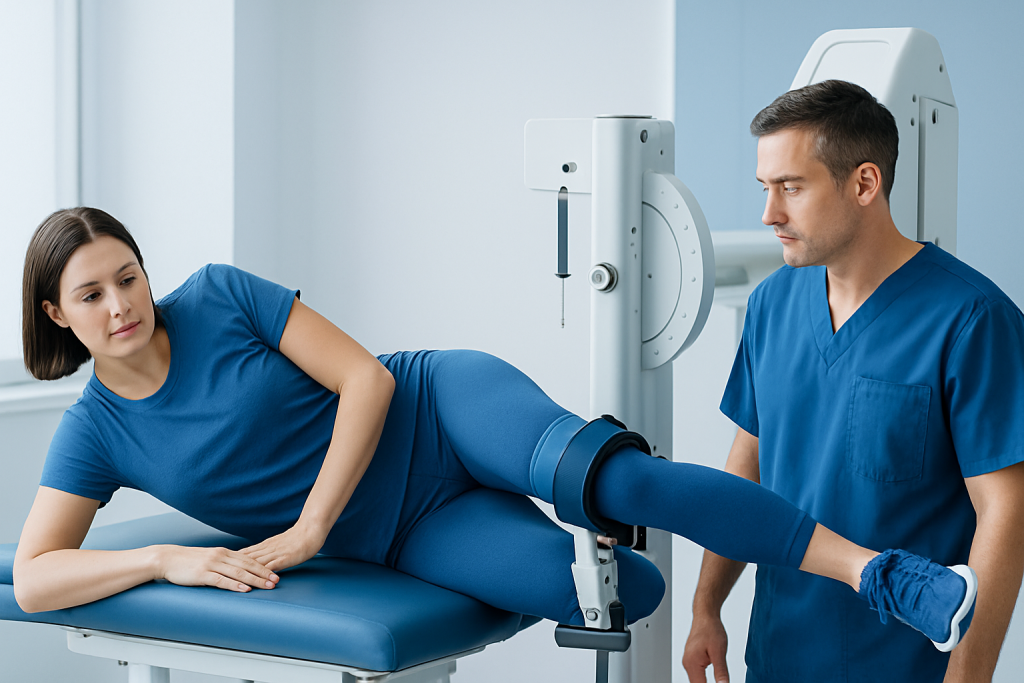
The gluteus medius does not usually announce itself with a single obvious symptom. Instead, its weakness may show up as movement changes that a person or clinician notices during everyday tasks.
Common clues include hip pain on the outer side of the leg, trouble standing comfortably on one leg, difficulty climbing stairs, or a feeling that the pelvis drops on one side while walking. Some people also describe pain around the knee or lower back, because poor hip control can shift stress to nearby joints.
Symptoms are not always caused by the gluteus medius alone. Hip joint problems, tendon irritation, nerve issues, or spinal conditions can produce similar patterns. That is one reason a proper assessment matters before starting or changing an exercise routine.
Causes & Risk Factors

Gluteus medius weakness can develop for many reasons. Inactivity, pain-related guarding, prolonged sitting, and recovery after injury can all reduce how effectively the muscle works. Athletes may also develop imbalances if training loads rise quickly or if technique changes place extra demand on one side.
Risk factors commonly include previous hip or pelvic injury, osteoarthritis, low back pain, pregnancy-related postural changes, and repetitive activities such as long-distance walking or running. In some people, the issue is not true weakness but poor timing: the muscle is present, yet it activates too late to stabilize the hip well.
International patients sometimes arrive after months of managing symptoms on their own, hoping for a clearer diagnosis and a more structured plan. A careful history, physical examination, and, when needed, imaging or gait analysis can help identify the real driver of the problem rather than focusing on the muscle alone.
Diagnosis
Assessment usually begins with a clinician asking about pain location, activity limits, previous injuries, and what makes symptoms better or worse. This history helps distinguish simple muscle weakness from tendon irritation, joint disease, or other causes of hip-region pain.
A physical examination may include observing walking, single-leg stance, step-down control, hip range of motion, and strength tests for the hip abductors. The clinician may also check the lower back, knees, and pelvis because the body often compensates across multiple regions.
Imaging is not always required. However, ultrasound or MRI may be used if tendon injury, structural problems, or another diagnosis is suspected. For patients traveling for care, a well-organized evaluation can be especially helpful because it supports a treatment plan that can continue safely after returning home.
Treatment Options
Gluteus medius exercises are usually part of a broader rehabilitation plan rather than a stand-alone fix. The right sequence often begins with activation and control, then moves toward strength, endurance, balance, and functional movements such as stepping, squatting, or sport-specific drills.
Early exercises may include side-lying leg raises, clamshells, banded lateral steps, bridge variations, or standing hip abduction. As tolerance improves, a therapist may progress to single-leg balance work, step-ups, side planks with hip support, and controlled hopping or running drills when appropriate.
Good form is more important than doing many repetitions. The pelvis should stay as level as possible, the trunk should remain steady, and pain should not noticeably worsen during or after the session. If an exercise causes pinching, sharp pain, or clear compensation patterns, it should be modified rather than forced.
- Activation: light, precise movements to wake up the muscle
- Strengthening: progressive resistance with good control
- Balance: single-leg tasks that challenge stability
- Functional training: movement patterns that resemble daily life or sport
Some patients also benefit from manual therapy, gait retraining, taping, load management, or treatment of contributing issues such as foot mechanics or core weakness. In more complex cases, a doctor may look for arthritis, tendon tears, nerve compression, or other conditions that need targeted medical care.
Prevention & Self-care
For many people, the most useful prevention strategy is consistency. Short, regular practice tends to work better than occasional intense sessions, especially for those rebuilding strength after a period of pain or inactivity.
Self-care can also include avoiding long uninterrupted sitting, varying positions through the day, and keeping walking or exercise loads within a comfortable range. When returning to sport or long-distance travel, gradual increases in activity give the hip muscles time to adapt.
Helpful habits may include:
- Warming up before exercise or sport
- Using slow, controlled motion instead of momentum
- Stopping if technique breaks down
- Supporting recovery with rest, hydration, and sleep
- Following a plan from a physiotherapist if symptoms recur
For people exercising while abroad or after medical treatment, it is sensible to keep routines simple and portable. A band, a wall, or a stable step is often enough to maintain progress without needing a full gym.
When to See a Doctor
Medical review is important if hip pain is persistent, worsening, associated with swelling or significant weakness, or limiting normal activities such as walking and climbing stairs. A clinician should also evaluate pain that follows a fall, injury, or sudden change in function.
It is wise to seek assessment if the hip feels unstable, if numbness or tingling appears, or if symptoms spread into the back or leg in a way that suggests another condition. Exercise should not be pushed through severe pain, especially when the diagnosis is unclear.
For international patients, a consultation before travel—or soon after arrival—can help avoid delays and unnecessary trial-and-error. Acibadem Health Point’s multidisciplinary specialists and JCI-accredited hospitals diagnose and treat musculoskeletal conditions for international patients, including cases where rehabilitation needs to be coordinated with imaging or specialist review.
FAQ
Q: Are gluteus medius exercises safe for beginners?
A: They can be safe when started at an appropriate level and performed with good technique. Beginners often do best with simple activation exercises before moving to resistance or balance work.
Q: How long does it take to strengthen the gluteus medius?
A: The timeline varies depending on the cause of weakness, consistency, and whether pain is present. Some people notice better control within weeks, while others need a longer rehabilitation period.
Q: Should gluteus medius exercises hurt?
A: Mild muscle effort is expected, but sharp pain or worsening joint pain is not. If symptoms increase clearly during or after exercise, the program should be adjusted by a clinician.
Q: Can weak gluteus medius muscles cause knee pain?
A: Yes, poor hip stability can change how the leg moves and increase stress at the knee. That does not mean the hip is always the only cause, so an evaluation is still important.
Q: Is walking enough to strengthen this muscle?
A: Walking is helpful for general activity, but it may not fully strengthen the gluteus medius if the muscle is underactive. Targeted exercises are often needed to improve strength and control.
Q: Do runners need different gluteus medius exercises?
A: Often they do, because running places higher demands on single-leg stability and hip control. A therapist may add movement drills, balance work, and a graded return-to-run plan.
References
- World Health Organization
- Mayo Clinic
- Cleveland Clinic
- American Academy of Orthopaedic Surgeons
- National Institute of Arthritis and Musculoskeletal and Skin Diseases
This article is for general information only and is not a substitute for professional medical advice. Please consult a qualified doctor about your individual situation.
More from the Health Library



Related Specialists

Prof. Dr. Ahmet Alanay
Orthopedic Surgery & Traumatology
Dr. Sinan Aksu
Orthopedic Surgery & Traumatology
Dr. Sirri Baştürk
Orthopedic Surgery & Traumatology
Prof. Dr. Korhan Özkan
Orthopedic Surgery & Traumatology