Glaucoma Surgery vs. Drops: How Doctors Decide the Right Step First

Key Takeaways
- Glaucoma treatment is chosen to lower eye pressure and protect the optic nerve, not just to improve vision symptoms.
- Eye drops are often the first treatment because they are non-surgical and can be started quickly.
- Surgery may be preferred when pressure is difficult to control, adherence is uncertain, or vision loss is advancing.
- The decision depends on glaucoma type, severity, age, overall eye health, and the patient’s ability to follow treatment.
- Follow-up is essential because glaucoma management often changes over time rather than staying the same forever.
Medically reviewed by the Acıbadem clinical team — June 13, 2026
Glaucoma treatment is usually started with eye drops, but surgery may be considered earlier when pressure is high, damage is progressing, or drops are not a good fit. The right first step depends on the type of glaucoma, the optic nerve’s condition, daily routine, and how safely pressure can be controlled over time.
Overview
Glaucoma is not one single disease, and that is one reason treatment plans can look very different from person to person. For many patients, the first step is a prescription eye drop designed to lower pressure inside the eye. For others, especially when the disease is more advanced or the pressure is already causing damage, a doctor may recommend a laser procedure or surgery sooner.
The central goal is always the same: reduce the risk of further optic nerve injury. Because glaucoma damage is often permanent, treatment choices are made with long-term protection in mind. Doctors weigh how quickly pressure must come down, how reliable the patient can be with daily medication, and whether an operation might provide steadier control than drops alone.
For international patients, that discussion may include practical questions as well: how long treatment must be continued after travel, where follow-up testing will happen, and whether a procedure can reduce the need for complex medication schedules across time zones. In glaucoma care, the most sensible first step is usually the one that matches both the eye and the patient’s real life.
Symptoms and What Patients Notice
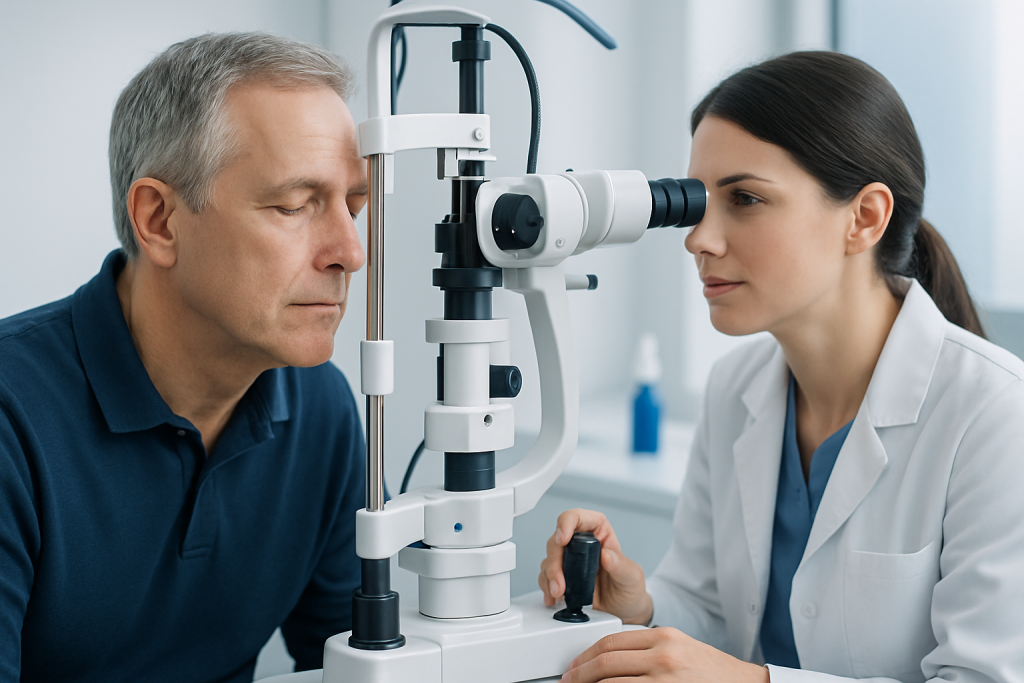
Many people with glaucoma do not notice symptoms early on. This is especially true for open-angle glaucoma, which can progress quietly while peripheral vision slowly changes. That silence is one reason the disease is often found during an eye examination rather than through a dramatic warning sign.
When symptoms do appear, they depend on the type of glaucoma. Some patients notice blurred vision, difficulty adjusting to darkness, halos around lights, or a gradual narrowing of side vision. In acute angle-closure glaucoma, symptoms can be more sudden and uncomfortable, with eye pain, headache, nausea, red eye, and rapid visual changes.
These differences matter because the treatment pathway can change quickly. A person with stable, slowly progressing disease may begin with drops, while someone with a sudden rise in eye pressure may need urgent intervention. The symptom pattern helps the doctor decide how quickly treatment should move from monitoring to medication, laser, or surgery.
Causes & Risk Factors
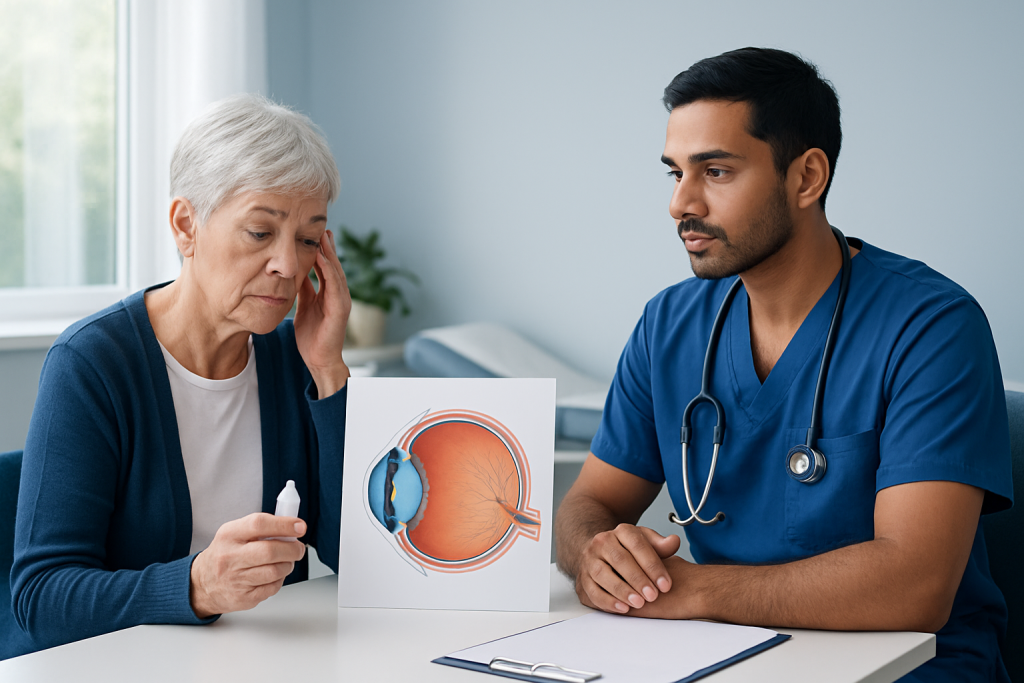
Glaucoma develops when the optic nerve is harmed, most often because the fluid pressure inside the eye is too high for that person’s eye to tolerate safely. In open-angle glaucoma, fluid drainage becomes less efficient over time. In angle-closure glaucoma, the drainage angle can become narrowed or blocked, making pressure rise more abruptly.
Risk is influenced by several factors, including age, family history, thin corneas, previous eye injury, high myopia, certain medical conditions, and long-term steroid use. Ethnicity and anatomy also matter for some forms of glaucoma. These factors do not determine treatment alone, but they help doctors judge how closely the patient should be monitored and how aggressively pressure should be lowered.
Doctors also think about the patient’s ability to use drops correctly and consistently. Some people have arthritis or dexterity challenges, memory difficulties, sensitive eyes, or a lifestyle that makes a multi-drop routine hard to maintain. In those cases, surgery or laser treatment may be considered earlier because the best treatment is the one the patient can actually sustain.
How Doctors Decide Between Drops and Surgery
The first decision is not simply “medication or surgery.” It is a broader question of how much pressure reduction is needed, how fast it must happen, and what strategy is likely to hold up over months and years. A doctor will look at eye pressure readings, optic nerve appearance, visual field testing, and sometimes imaging of the nerve fibers.
Eye drops are often chosen first when glaucoma is newly diagnosed, pressure is only moderately elevated, and the optic nerve damage is limited or stable. Drops may also be the practical choice when the patient can attend regular checkups and use the medication reliably. However, drops can cause eye irritation, redness, dryness, or eyelid changes, and some people need more than one medication to reach a safe pressure target.
Surgery may move to the front of the line when pressure is too high for the stage of disease, when the optic nerve is changing despite drops, or when medication is unlikely to be used consistently. Doctors also consider whether a patient has already tried multiple medications, whether cataract surgery could be combined with pressure-lowering treatment, and whether the eye anatomy makes a procedure more effective than drops alone.
- Lower disease stage with manageable pressure: drops are often tried first.
- Advanced damage or rapidly changing visual fields: surgery may be discussed sooner.
- Poor drop tolerance or difficulty with daily use: procedure-based treatment may be more suitable.
- Angle-closure or mixed-mechanism disease: laser or surgery may be part of the initial plan.
Diagnosis and Testing Before Treatment
Before recommending a first step, the eye doctor confirms the type of glaucoma and measures how much damage has already occurred. Common tests include tonometry to check eye pressure, optic nerve examination, visual field testing, gonioscopy to assess the drainage angle, and optical coherence tomography (OCT) to study nerve fiber loss.
These results help determine whether the disease is mild, moderate, or advanced. They also help the doctor compare future visits to the original baseline. In glaucoma, the value of a test is often less about a single number and more about whether the eye is changing over time.
For someone traveling for care, this diagnostic phase is especially important because follow-up may happen across locations. A clear baseline helps the local ophthalmologist and the patient’s home doctor interpret later changes. It also supports safer decisions if the patient will need continued medication management after surgery or while recovering abroad.
Treatment Options
Eye drops remain a mainstay of glaucoma treatment because they can lower eye pressure without an operation. Different classes of drops work in different ways, either by reducing fluid production or improving drainage. Doctors choose the medication based on the type of glaucoma, the patient’s eye surface health, and whether one drop is likely to be enough.
Surgery is recommended when a stronger or more stable pressure reduction is needed. Options may include laser procedures, minimally invasive glaucoma surgery (often called MIGS), trabeculectomy, or drainage device implantation. The best procedure depends on the type of glaucoma, the degree of vision risk, and whether another eye operation, such as cataract surgery, is being planned at the same time.
The practical trade-off is straightforward: drops are less invasive and easier to start, while surgery may offer better pressure control or reduce dependence on daily medication. That does not mean surgery is always the next step, only that it becomes more attractive when the pressure target is hard to reach or maintain with drops alone.
Patients should also know that some treatment plans combine methods. A person may begin with drops, add a laser treatment, and later move to surgery if the pressure goal is still not met. In glaucoma care, stepping up treatment is not a sign of failure; it is often the expected path when the disease needs more protection than the first plan can provide.
Prevention & Self-care
Glaucoma cannot always be prevented, but progression can often be slowed when treatment is followed carefully and appointments are kept. Using drops exactly as prescribed is one of the most important parts of self-care. Missing doses, stopping treatment because the eye “feels fine,” or changing medications without medical advice can allow pressure to rise again.
Patients can support treatment by learning how to instill drops correctly, spacing different drops as advised, and reporting side effects early. If hands are shaky or vision is poor, devices that help guide drop placement may be useful. It is also sensible to tell the doctor about other medications, because some drugs can affect eye pressure or interact with eye care planning.
After surgery, self-care becomes even more specific. Patients may need to protect the eye, avoid rubbing it, and attend scheduled follow-up visits so the surgeon can check healing and pressure. For people returning to another country after treatment, clear discharge instructions and a shared follow-up plan are especially helpful.
- Keep all eye appointments, even when vision feels unchanged.
- Use drops consistently and ask for a simpler routine if needed.
- Wear any protective shield or follow activity limits after surgery.
- Tell the doctor about allergies, other eye conditions, and current medications.
When to See a Doctor
Anyone with known glaucoma should seek review if vision seems worse, drops are causing persistent irritation, or the medication schedule has become difficult to manage. A routine follow-up is also important when the doctor wants to see whether the pressure target is truly protecting the optic nerve.
Urgent care is needed for sudden eye pain, severe redness, headache with nausea, rapid vision changes, or halos around lights, especially if these symptoms come on quickly. These can be signs of a pressure emergency and should not be watched at home. Even when the symptoms turn out to have another cause, prompt assessment is the safer choice.
Patients considering treatment abroad may benefit from an early consultation with an experienced eye team so that surgery, drops, and follow-up timing can be planned together. Acibadem Health Point’s multidisciplinary specialists and JCI-accredited hospitals diagnose and treat glaucoma for international patients, with care coordinated around both medical needs and travel realities.
Frequently asked questions
Do all glaucoma patients start with eye drops?
No. Eye drops are common first treatment, but not the only option. Doctors may suggest laser treatment or surgery sooner if pressure is high, damage is advanced, or drops are unlikely to work well enough.
Why would surgery be chosen before drops?
Surgery may be considered earlier when the optic nerve is already under significant risk, when pressure needs a stronger reduction, or when a patient cannot use drops consistently. The aim is to protect vision as reliably as possible.
Can drops still be used after glaucoma surgery?
Yes, sometimes they can. Some patients need fewer drops after surgery, while others continue medication if the pressure target has not been fully reached. The plan depends on healing and follow-up results.
Are glaucoma drops safe to use long term?
Many people use them safely for years, but side effects can happen, including redness, stinging, dryness, or allergy-like reactions. Regular checkups help the doctor adjust treatment if needed.
What is the difference between glaucoma surgery and laser treatment?
Laser treatment uses focused light energy to improve fluid drainage or reduce fluid production, while surgery creates or improves a drainage pathway using a procedure in the eye. Both can lower pressure, and the best choice depends on the type and stage of glaucoma.
How do doctors decide if treatment is working?
They compare eye pressure, optic nerve findings, visual field testing, and OCT results over time. Treatment is considered successful when pressure is low enough to slow or stop further damage, not simply when the eye feels comfortable.
References
- American Academy of Ophthalmology
- National Eye Institute
- World Health Organization
- Glaucoma Research Foundation
This article is for general information only and is not a substitute for professional medical advice. Please consult a qualified doctor about your individual situation.