Can You Have Vision Surgery If Your Prescription Is Still Changing?

Key Takeaways
- Vision surgery is usually considered when the prescription has been stable for a period of time.
- A changing prescription can reflect age, eye strain, dry eye, hormonal changes, diabetes, or other eye conditions.
- The right procedure depends on the eye’s shape, corneal thickness, tear film, and overall health, not just the glasses number.
- A careful pre-surgery evaluation helps doctors decide whether to wait, treat an underlying issue, or choose a different procedure.
- People who travel for care should plan enough time for testing, consultation, and follow-up before and after surgery.
Medically reviewed by the Acıbadem clinical team — June 13, 2026
A changing prescription does not automatically rule out vision surgery, but it often means the eyes are not yet ready. Doctors usually look for a stable prescription and healthy eye measurements before recommending laser or lens-based correction.
Overview
When someone asks whether they can have vision surgery while their prescription is still changing, the short answer is: sometimes, but not usually right away. Most surgeons want to see that the vision has settled before recommending a procedure such as LASIK, PRK, SMILE, or, in some cases, lens-based surgery.
That caution is not a sign that surgery is impossible. It simply reflects how these procedures are planned. Vision surgery is designed to correct a stable optical problem, so doctors first try to understand why the prescription is shifting and whether the eyes are ready for a lasting change.
For international patients, this question often comes up during a short trip planning phase. A person may want to combine consultation, treatment, and recovery in one visit, but the eye team may advise waiting if the prescription is still moving. That extra time can improve the quality of the result and reduce the chance of needing an adjustment later.
Symptoms and Signs That a Prescription May Be Changing
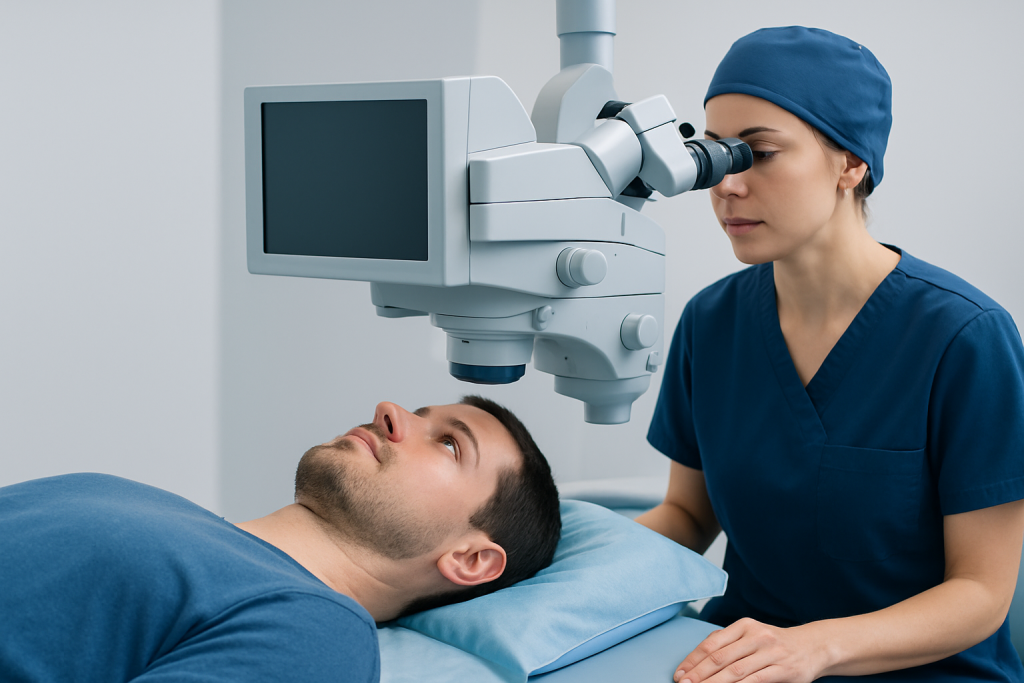
People often notice a changing prescription in everyday ways before it appears on an eye chart. They may find that street signs look softer than before, reading feels less comfortable, or one pair of glasses no longer seems as clear as it did only months earlier.
Some people also notice fluctuating blur. Vision may be sharp in the morning and less clear later in the day, or one eye may seem different from the other. These changes do not always mean the eye disease is worsening, but they do signal that a new evaluation is worthwhile.
- Needing new glasses more often than expected
- Blurred distance or near vision that shifts over time
- More squinting, eye fatigue, or headaches during visual tasks
- One eye changing faster than the other
- Temporary improvement after blinking, resting, or using lubricating drops
These signs matter because the surgeon is not only correcting the current prescription. The goal is to correct a prescription that is likely to remain similar after surgery, so the pre-operative story is as important as the exam results.
Causes and Risk Factors for a Changing Prescription

A prescription can change for many reasons, and not all of them are a barrier to surgery. In younger adults, the eye may still be naturally changing, especially in the years when myopia progresses. In middle age, presbyopia gradually affects near vision, which can make it seem as though the prescription is shifting even when the distance correction is relatively stable.
Other common reasons include dry eye, which can cause inconsistent measurements, and hormonal changes, which may temporarily affect the cornea and tear film. Diabetes and blood sugar fluctuations can also alter vision, so good medical control is important before any refractive procedure.
Doctors also look for conditions that can make surgery less predictable or less appropriate at that moment. These include:
- Unstable myopia or astigmatism
- Corneal disorders, such as keratoconus
- Active eye inflammation or infection
- Significant dry eye disease
- Pregnancy or recent hormonal shifts
- Uncontrolled diabetes or other systemic illness
Risk factors are not the same for every patient. Age, family history, eye shape, contact lens wear, and general health all affect whether the eyes have reached a point where surgery can be planned safely.
How Doctors Decide Whether Surgery Is Appropriate
A surgeon does not base the decision only on the glasses prescription. The evaluation usually starts with a detailed history: how long the prescription has been changing, how often new glasses have been needed, whether vision fluctuates, and whether there are medical issues that could affect the eyes.
Then the eye team performs measurements to see whether the cornea and tear film are suitable for surgery. These tests may include corneal mapping, refraction, pupil assessment, tear evaluation, eye pressure checks, and a dilated retinal exam. The purpose is to see the whole picture, not just the numbers on the prescription form.
For some patients, the best recommendation is to wait and repeat the evaluation after a period of stability. For others, the doctor may identify a treatable reason for the change, such as dry eye, and suggest correcting that first. In certain cases, a different treatment may be more suitable than laser vision correction.
Typical signs that surgeons want to see include:
- Minimal change in prescription over time
- Healthy corneal thickness and shape
- Stable eye surface and tear film
- No active eye disease
- Realistic expectations about what surgery can and cannot do
Treatment Options and Timing
If the prescription is still changing, the first “treatment” may actually be patience and observation. Doctors often suggest waiting until the measurements are steady enough to make surgery more predictable. For many people, that waiting period is temporary and leads to a better long-term result.
When the eyes do become stable, several vision correction options may be discussed. LASIK, PRK, and SMILE are common laser procedures for certain corneal shapes and prescriptions. Some people may be better candidates for lens-based procedures, especially if the cornea is not suitable for laser treatment or if age-related lens changes are part of the visual problem.
Sometimes the priority is not surgery but eye-surface treatment. Artificial tears, lid hygiene, or treatment for dry eye can make vision measurements more reliable. If the issue is related to another medical condition, such as diabetes, addressing that condition first may improve both safety and accuracy.
Timing matters for patients traveling from another country. It helps to leave room for preoperative testing, possible repeat measurements, and post-treatment checks before returning home. A rushed schedule can make it harder to confirm that the eyes are ready and to review the healing process carefully.
Prevention and Self-care While Waiting
Anyone waiting for a stable prescription can take practical steps to protect eye comfort and support accurate future measurements. Good habits will not freeze the prescription in place, but they can reduce avoidable fluctuations and make follow-up visits more informative.
Patients are usually advised to use their glasses or contact lenses as directed and avoid changing correction on their own. If contact lenses are worn, the surgeon may ask the patient to stop them temporarily before testing, because lens wear can affect corneal shape and lead to less accurate readings.
Helpful self-care can include:
- Using lubricating drops if dry eye has been diagnosed
- Taking regular screen breaks to reduce eye strain
- Managing blood sugar carefully if diabetes is present
- Following the eye doctor’s advice about contact lens removal before evaluation
- Returning for repeat measurements if the doctor recommends monitoring
It is also sensible to keep records of prior prescriptions, test results, and any eye symptoms. For people planning care abroad, this paperwork can help the surgeon see the pattern more clearly and avoid unnecessary delays.
When to See a Doctor
It is a good idea to see an eye doctor if vision has changed enough to make reading, driving, or daily tasks less comfortable, especially if new glasses seem out of date sooner than expected. A routine eye examination can clarify whether the change is ordinary progression or a sign that more evaluation is needed.
Someone considering vision surgery should schedule a dedicated refractive consultation rather than relying only on a standard refraction. That appointment is where the surgeon checks whether the prescription is stable, whether the cornea is suitable, and whether another issue needs treatment first.
Prompt review is especially important if there is sudden blur, eye pain, flashing lights, a curtain-like shadow, or a rapid change in vision. Those symptoms are not typical “just need new glasses” problems and should be assessed without delay.
For patients seeking care internationally, Acibadem Health Point can connect them with multidisciplinary specialists and JCI-accredited hospitals that diagnose and treat vision-related conditions for international patients. The goal is to help patients move through testing, decision-making, treatment, and follow-up with clear guidance at every step.
Living With Unstable Vision Before Surgery
A changing prescription can be frustrating, especially for people who were hoping to stop wearing glasses or contact lenses soon. Still, it is often better to wait than to proceed before the eyes have settled. The most reliable outcomes usually come from careful timing, not from forcing a procedure early.
Patients who are unsure where they stand should ask their eye doctor a few direct questions: What is causing the prescription change? How long should the eyes be stable before surgery is considered? Is there a treatable reason for the fluctuation, such as dry eye or contact lens wear?
Clear answers to those questions can turn uncertainty into a practical plan. In many cases, the next step is simply to monitor the eyes, treat what can be improved, and revisit surgery once the measurements have become steady enough to guide a safe decision.
Frequently asked questions
Can I have LASIK if my prescription is still changing?
Sometimes, but most surgeons prefer to wait until the prescription has been stable for a period of time. Stability helps the doctor choose the correct treatment and lowers the chance that the eyes will need another correction later.
How long should my prescription be stable before surgery?
The exact time frame depends on the surgeon and the patient’s age, eye health, and type of vision change. Many doctors look for a documented period of stability across repeat examinations rather than a single test result.
Why does a changing prescription matter for surgery?
Vision surgery is planned around the eye’s current measurements. If those measurements are still shifting, the final result may be less predictable, which is why doctors often recommend waiting or treating the cause first.
Can dry eye make my prescription seem different?
Yes. Dry eye can cause blurred or inconsistent vision and can also affect the accuracy of eye measurements. Treating the eye surface first often makes the evaluation more reliable.
If I wear contact lenses, do they affect my surgery evaluation?
They can. Contact lenses may temporarily change the cornea’s shape, so doctors often ask patients to stop wearing them before measurements are taken.
What if my vision is changing because of diabetes or another medical condition?
The underlying condition should be reviewed and managed before surgery is planned. Better control of the medical problem can improve both safety and the accuracy of the eye measurements.
References
- American Academy of Ophthalmology
- National Eye Institute
- World Health Organization
- NHS
- Mayo Clinic
This article is for general information only and is not a substitute for professional medical advice. Please consult a qualified doctor about your individual situation.