

Foraminal Stenosis: Symptoms, Causes and Treatment

Key Takeaways
- Foraminal stenosis is a narrowing of the openings that allow spinal nerves to leave the spine.
- Symptoms often include neck or back pain that may travel into an arm or leg, along with numbness, tingling, or weakness.
- Diagnosis usually combines a physical examination with imaging such as MRI or CT.
- Treatment often starts with conservative care, including activity changes, physical therapy, and pain relief medicines.
- Surgery may be considered when nerve compression is severe, persistent, or causing progressive weakness.
Medically reviewed by the Acıbadem clinical team — August 19, 2026
Foraminal stenosis happens when the spaces where spinal nerves exit the spine become too narrow, sometimes leading to pain, tingling, numbness, or weakness. Many people improve with a combination of guided exercise, medication, injections, or, when needed, surgery tailored to the location and severity of the narrowing.
Overview
Foraminal stenosis is a spine condition in which one or more neural foramina, the small passageways where spinal nerves exit the spinal column, become narrowed. When that space tightens, a nerve root can be irritated or compressed, which may create symptoms not only at the back or neck but also along the path of the affected nerve into the shoulder, arm, buttock, or leg.
The condition can develop in the cervical, thoracic, or lumbar spine, although it is most commonly discussed in the neck and lower back. In everyday life, it is often one part of a larger picture of age-related spinal change, disc wear, arthritis, or previous injury. For many people, the narrowing progresses slowly, which gives time to plan treatment thoughtfully rather than urgently.
In an international-patient setting, foraminal stenosis is often evaluated after symptoms have already affected travel, work, or sleep. That is one reason a careful diagnosis matters: it helps distinguish nerve compression from muscle strain, joint pain, or other causes that can feel similar but need different treatment.
Symptoms

The symptom pattern depends on which nerve is affected and where the narrowing is located. Some people mainly notice local neck or back discomfort, while others feel a sharper, radiating pain that follows a nerve pathway. This pain may be described as burning, shooting, aching, or electric-like.
Common symptoms may include:
- Pain in the neck or lower back that spreads to the arm, hand, buttock, thigh, or leg
- Numbness or tingling in the skin
- Muscle weakness or heaviness in the affected limb
- Pain that worsens with certain positions, such as standing, extending the spine, or turning the head
- Reduced comfort during walking, sitting, sleeping, or lifting
Symptoms can be mild and intermittent, or they can become more persistent over time. Because nerve symptoms can overlap with other spinal conditions, a person should not assume that all arm or leg pain comes from muscle strain or “wear and tear” alone.
Causes & Risk Factors
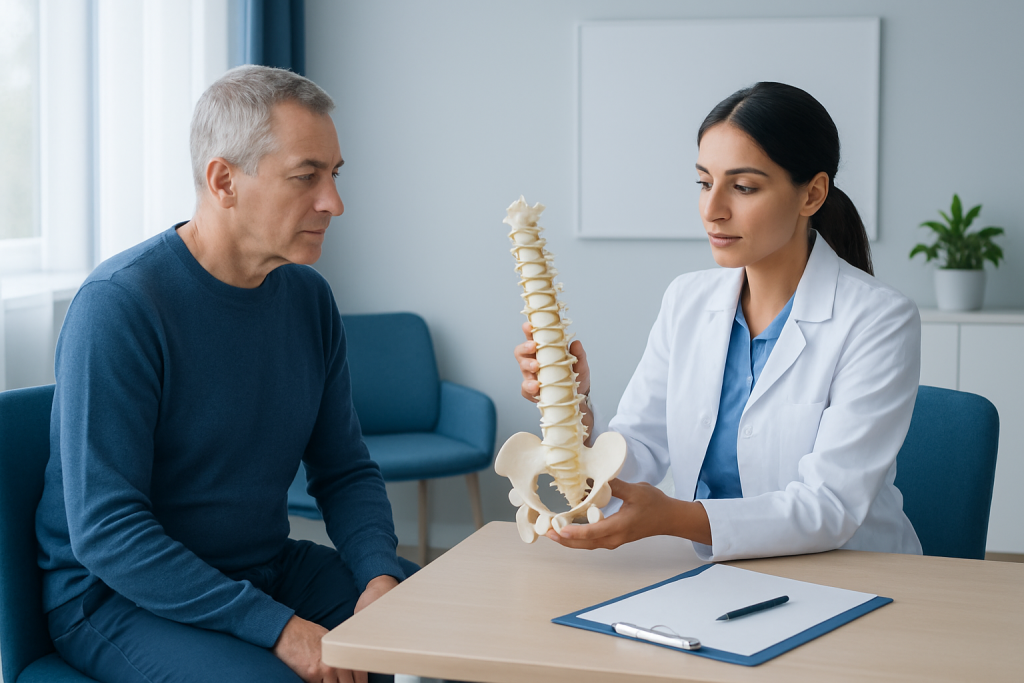
Foraminal stenosis usually develops when age-related changes alter the shape of the spine and reduce the available space around the nerve. Bone spurs, disc height loss, thickened ligaments, joint arthritis, and disc bulging can all contribute to the narrowing. In some people, a prior spinal injury or surgery may also affect the opening through which the nerve travels.
Risk is often higher in people with spinal osteoarthritis, degenerative disc disease, scoliosis, or a history of repetitive strain on the back or neck. Occupations and activities that place repeated load on the spine may contribute to symptoms, though they are rarely the only factor. Genetics can also influence how the spine changes with time.
It helps to think of foraminal stenosis not as one single event, but as a process. The spine may tolerate gradual changes for years before a nerve becomes irritated enough to cause noticeable pain or weakness.
Diagnosis
Diagnosis begins with a detailed discussion of the symptoms, including where the pain starts, where it travels, what makes it better or worse, and whether there is numbness or weakness. A physical examination helps the clinician assess movement, reflexes, sensation, and muscle strength. These details help identify which nerve root may be involved.
Imaging studies are often used to confirm the suspected cause. MRI is commonly preferred because it shows soft tissues, discs, nerves, and the degree of narrowing clearly. CT scans may be helpful when bone changes need a closer look, and X-rays can show alignment, arthritis, or instability in some cases.
In selected situations, other tests may be recommended to clarify the diagnosis or rule out conditions that mimic nerve compression. The goal is not simply to label the narrowing, but to understand whether the nerve is truly affected and how that matches the person’s symptoms.
Treatment Options
Treatment is usually individualized according to symptom severity, the nerve involved, and how much the condition limits daily life. Many people begin with conservative care, especially when weakness is mild or absent. The aim is to calm nerve irritation, improve movement, and reduce the strain that repeatedly triggers pain.
Non-surgical options may include guided physical therapy, posture and movement changes, anti-inflammatory or pain-relieving medicines when appropriate, and targeted spinal injections in some cases. These approaches do not “erase” the narrowing, but they can reduce inflammation and make the nerve less reactive.
Surgery may be considered when symptoms persist despite conservative care, when pain is severe and disabling, or when weakness is worsening. The exact procedure depends on the location of the stenosis and the underlying cause; options may include foraminotomy, decompression, or procedures combined with stabilization if the spine is unstable.
For international patients, treatment planning often includes timing, recovery logistics, and coordination with rehabilitation after return home. That broader planning can be just as important as the procedure itself, especially when the person will need follow-up across borders.
Prevention & Self-care
Not every case of foraminal stenosis can be prevented, because many cases are related to natural spinal aging. Still, certain habits may help protect the spine and reduce symptom flare-ups. Regular, appropriate movement is usually better than prolonged inactivity, because the spine and supporting muscles function best when they are gently conditioned.
Helpful self-care strategies may include:
- Staying active with low-impact exercise approved by a clinician
- Using good posture during work, reading, and device use
- Avoiding repeated heavy lifting or awkward twisting when possible
- Maintaining a healthy body weight to reduce spinal load
- Using heat or cold, if advised, to ease discomfort
- Following a home exercise program from a physical therapist
It is also sensible to pay attention to warning patterns, such as pain that consistently worsens with certain movements or positions. Those clues can help clinicians tailor care more effectively, especially when the patient is managing recovery while traveling or arranging care from abroad.
When to See a Doctor
Medical evaluation is recommended if neck or back pain lasts more than a short period, keeps returning, or begins to travel into an arm or leg. Numbness, tingling, or weakness are especially important to report because they suggest nerve involvement rather than simple muscular strain. Early assessment can help reduce the chance that symptoms interfere further with walking, hand function, sleep, or daily tasks.
Prompt care is particularly important if weakness is progressing, balance is changing, or pain is severe enough to limit basic activities. If symptoms appear after an injury, or if there is a history of spinal disease, a timely assessment can help determine whether imaging or specialist review is needed. A qualified doctor can explain whether the stenosis is mild and manageable, or whether a more active treatment plan is appropriate.
For people seeking evaluation abroad, centers with coordinated imaging, spine specialists, and rehabilitation support can simplify the path from diagnosis to recovery. Acibadem Health Point brings multidisciplinary specialists and JCI-accredited hospitals together to diagnose and treat foraminal stenosis for international patients in a structured, patient-centered way.
Recovery and Outlook
The outlook for foraminal stenosis varies, but many people manage symptoms successfully without surgery, especially when the condition is identified before major weakness develops. Improvement often comes from combining several measures rather than relying on one single solution. A gradual return to normal activity is typically more realistic than expecting symptoms to disappear overnight.
When surgery is needed, recovery depends on the exact procedure, the person’s overall health, and how long the nerve has been irritated. Some symptoms, such as pain, may improve sooner than numbness or weakness. Rehabilitation is often part of recovery, because restoring strength, flexibility, and confidence in movement helps the spine function more comfortably over time.
Regular follow-up matters because symptoms can change. A treatment plan that works well at one stage may need to be adjusted later if nerve irritation settles, returns, or is influenced by new activity demands.
Frequently asked questions
What is the difference between foraminal stenosis and spinal stenosis?
Spinal stenosis is a broad term for narrowing within the spine. Foraminal stenosis is a specific type that affects the foramina, the openings where nerves leave the spinal canal. It can cause pain or nerve symptoms in the area served by the affected nerve.
Can foraminal stenosis cause arm or leg pain?
Yes. Because the condition compresses a nerve root, pain may travel along that nerve into the arm, hand, buttock, or leg. The exact pattern depends on whether the narrowing is in the neck or lower back.
Does foraminal stenosis always require surgery?
No. Many people improve with non-surgical treatment such as physical therapy, medications, activity adjustment, or injections. Surgery is usually reserved for persistent pain, significant limitation, or worsening weakness.
Can exercise make foraminal stenosis worse?
Some movements can aggravate symptoms, especially positions that narrow the nerve opening further. Gentle, clinician-guided exercise is often helpful, but the safest plan is one designed around the person’s specific symptoms and spine findings.
How is foraminal stenosis diagnosed?
A doctor usually starts with a history and physical examination, then uses imaging such as MRI or CT when needed. The goal is to match the imaging findings with the person’s symptoms, since narrowing on a scan does not always mean the nerve is the source of pain.
Is foraminal stenosis the same as a pinched nerve?
A pinched nerve is a common way to describe nerve compression, and foraminal stenosis can be one cause of it. However, other problems can also pinch or irritate a nerve, so a proper evaluation is important.
References
- American Academy of Orthopaedic Surgeons
- North American Spine Society
- Mayo Clinic
- National Institute of Neurological Disorders and Stroke
This article is for general information only and is not a substitute for professional medical advice. Please consult a qualified doctor about your individual situation.
Joint and spine care in Turkey — expert assessment & treatment
JCI-accredited · board-certified surgeons · reply within 24h
Add us as a Preferred Source to see more of our trusted health content across Google Search, AI Overviews and Discover.
More from the Health Library



Related Specialists

Prof. Dr. Ahmet Alanay
Orthopedic Surgery & Traumatology
Dr. Sinan Aksu
Orthopedic Surgery & Traumatology
Dr. Sirri Baştürk
Orthopedic Surgery & Traumatology
Prof. Dr. Korhan Özkan
Orthopedic Surgery & Traumatology