

Avulsion Fracture: Symptoms, Causes and Treatment

Key Takeaways
- Avulsion fractures are caused by a strong pull from a tendon or ligament on the bone.
- Pain, swelling, bruising, and difficulty moving the affected area are common signs.
- X-rays are often used first, but MRI or CT may help when the injury is subtle or complex.
- Treatment ranges from rest and immobilization to surgery, depending on the fracture location and displacement.
- Rehabilitation is important for restoring strength, flexibility, and safe return to activity.
Medically reviewed by the Acıbadem clinical team — August 19, 2026
An avulsion fracture happens when a small piece of bone is pulled away by a tendon or ligament during a sudden, forceful movement. It can look minor at first, but proper diagnosis matters because the injury may affect joint stability, mobility, and healing.
Overview
An avulsion fracture occurs when a tendon or ligament pulls off a small fragment of bone at its attachment site. This usually follows a sudden movement such as twisting, sprinting, jumping, or a hard impact, and it can happen in the ankle, wrist, hand, knee, hip, or shoulder.
Although the piece of bone may be small, the injury can still be important because it may signal strain or damage to the soft tissues that stabilize a joint. For that reason, people are often advised not to assume the pain will “walk off,” especially if movement becomes limited or weight-bearing feels unstable.
For international patients, the practical issue is often deciding how urgent the injury is before traveling home or continuing a trip. A clear diagnosis helps determine whether simple immobilization is enough or whether the injury needs closer orthopedic follow-up and a structured rehabilitation plan.
Symptoms
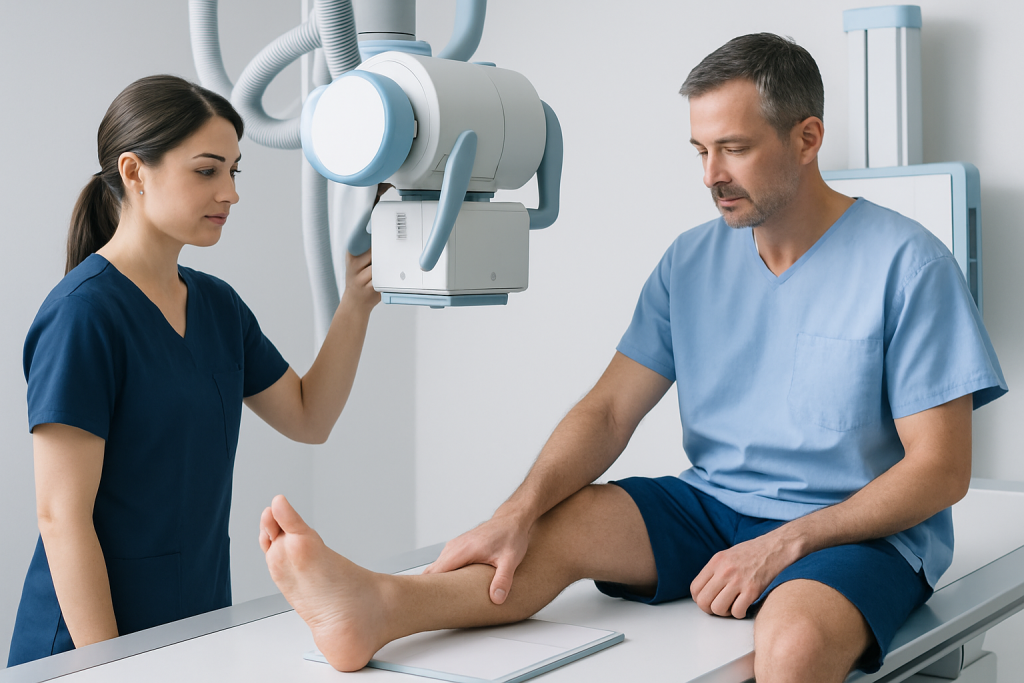
Symptoms usually begin right after the injury. Pain is often sharp and localized to one spot, especially when the injured tendon or ligament is stretched or when pressure is placed on the area.
Common signs include swelling, bruising, tenderness, reduced range of motion, and difficulty using the joint normally. In the lower limb, a person may limp or avoid putting weight on the leg; in the upper limb, gripping, lifting, or rotating the arm may feel painful or weak.
Some avulsion fractures are easy to notice because the joint looks swollen or feels unstable. Others are less obvious and may resemble a sprain, which is why persistent pain after a twisting injury should be assessed by a clinician.
- Sudden pain at the time of injury
- Swelling or bruising near a joint
- Limited movement or stiffness
- Pain with walking, gripping, or lifting
- Occasional feeling of instability or weakness
Causes & Risk Factors
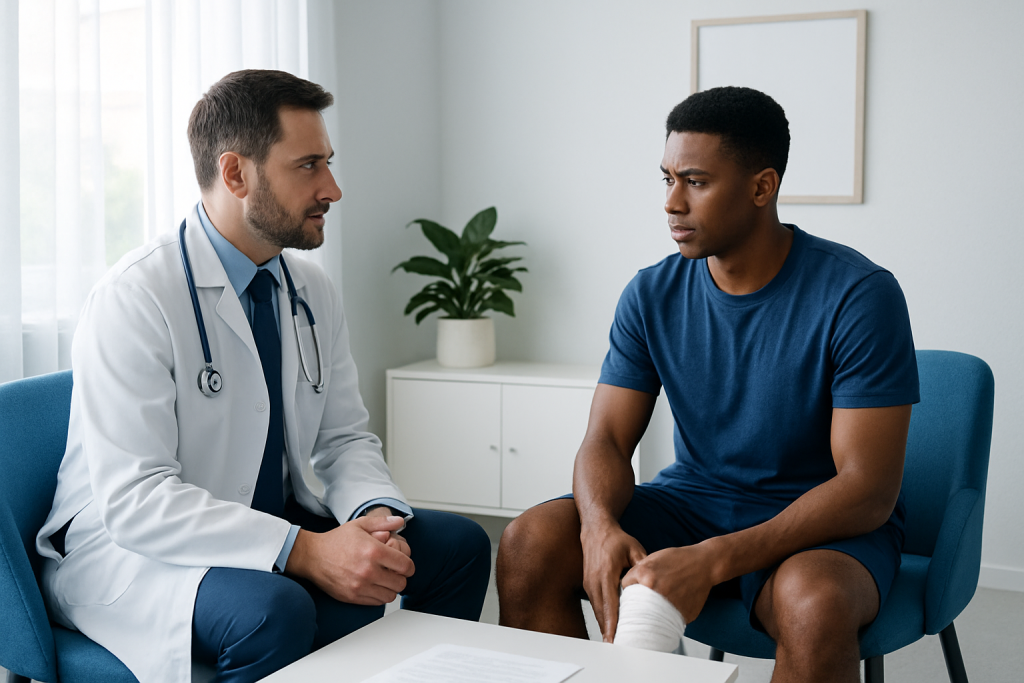
The injury is usually caused by a sudden force that exceeds the strength of the bone at the tendon or ligament attachment. This can happen during sports, a fall, a slip, or a rapid change in direction.
Sports that involve sprinting, jumping, kicking, or quick pivots are common settings for avulsion fractures. They can also occur in daily life, especially when someone catches a foot on uneven ground or braces for a fall with an outstretched hand.
Several factors may increase risk, including participation in high-impact sports, prior injury to the same area, reduced flexibility, poor conditioning, and weaker bones. In children and adolescents, growth plates and developing bone can make certain avulsion injuries more likely, while in adults the injury may reflect a forceful strain on a previously stressed tendon or ligament.
Diagnosis
Diagnosis begins with a careful history of how the injury happened and a physical examination of pain, swelling, range of motion, and joint stability. The doctor may ask the person to describe the exact movement that caused the problem, because the mechanism often points toward a specific type of injury.
X-rays are commonly used to look for a separated bone fragment and to check whether the joint alignment is affected. If the fragment is small, hidden, or the symptoms are greater than the X-ray suggests, additional imaging such as MRI or CT may be recommended to assess the soft tissues and the full extent of the injury.
In an international-care setting, imaging can be especially useful because it helps create a clear treatment plan before travel, allowing the patient to understand whether follow-up must be arranged soon after returning home. A focused diagnosis also helps distinguish an avulsion fracture from a sprain, tendon injury, or more complex fracture pattern.
Treatment Options
Treatment depends on where the fracture is located, how far the bone fragment has moved, and whether the joint remains stable. Many avulsion fractures heal well without surgery when the fragment is small and alignment is preserved.
Conservative treatment may include rest, temporary immobilization with a splint, brace, boot, or cast, and a gradual return to movement once pain decreases. Ice, elevation, and activity modification are often used early to help control swelling and protect the area while healing begins.
Surgery may be considered if the fragment is significantly displaced, if the joint is unstable, if a tendon is no longer functioning properly, or if the injury involves a high-demand athlete or a weight-bearing joint that needs precise restoration. After either approach, rehabilitation is usually important to rebuild strength, restore motion, and reduce the chance of reinjury.
- Non-surgical care: rest, immobilization, pain control, and monitored healing
- Surgical care: fixation or repair when alignment or stability is compromised
- Rehabilitation: stretching, strengthening, and movement retraining
Prevention & Self-care
Not every avulsion fracture can be prevented, but careful preparation can lower risk. Warm-up routines, sport-specific conditioning, and exercises that improve balance and flexibility help the body handle sudden loads more safely.
People returning to sport or exercise after an injury should follow a stepwise plan rather than rushing back to full activity. Protective braces or taping may be recommended in some situations, especially when a joint has already been injured and needs extra support during recovery.
At home, the most helpful self-care usually includes protecting the injured area, following the immobilization plan, avoiding painful movements, and attending follow-up appointments. It is also important not to test the injury too early, because a fragment that appears small on imaging can still need time to heal properly.
- Use proper warm-up and cool-down routines
- Build strength and flexibility gradually
- Wear appropriate footwear and protective gear
- Follow return-to-play guidance after injury
- Keep rehabilitation appointments if they are prescribed
When to See a Doctor
Medical assessment is advisable when pain follows a sudden twisting, pulling, or impact injury and does not settle quickly. It is especially important to be seen if swelling is significant, movement is limited, or the person cannot bear weight or use the limb normally.
Urgent evaluation is recommended if the limb looks deformed, numbness develops, the pain is severe, or the joint feels unstable. These signs may indicate a more serious fracture, a tendon injury, or nerve and blood vessel involvement that needs prompt attention.
People who are traveling should seek care sooner rather than later, since early imaging and a clear plan can make onward travel safer and follow-up easier. Acibadem Health Point’s multidisciplinary specialists and JCI-accredited hospitals diagnose and treat avulsion fractures for international patients, helping coordinate care across imaging, orthopedics, and rehabilitation.
Recovery and Follow-up
Recovery time varies based on the bone involved, the size of the fragment, and whether the injury was treated surgically or non-surgically. Some people improve steadily with a few weeks of protection, while others need a longer phase of guided rehabilitation before activity feels normal again.
Follow-up visits are important because healing is not judged only by Knee Pain Relief: Causes and Treatment" class="ahp-ilk">pain relief. The clinician may check movement, strength, joint stability, and repeat imaging if needed to confirm the bone is healing in the correct position.
For patients managing recovery across borders, having copies of imaging reports, treatment notes, and rehabilitation instructions can simplify care with a local doctor after travel. This continuity helps ensure that return to work, exercise, or sport happens safely and at the right pace.
Frequently asked questions
What is an avulsion fracture in simple terms?
It is a small break where a tendon or ligament pulls off a piece of bone. The injury often happens during a sudden movement, such as twisting, jumping, or catching oneself during a fall. Even though the bone fragment may be small, the surrounding soft tissues can also be affected.
Can an avulsion fracture heal without surgery?
Yes, many avulsion fractures heal without surgery if the fragment has not moved much and the joint remains stable. Treatment may include rest, immobilization, and gradual rehabilitation. A doctor decides based on the injury location and imaging findings.
How can an avulsion fracture be different from a sprain?
A sprain injures a ligament, while an avulsion fracture involves a piece of bone being pulled away at the attachment site. The symptoms can feel similar at first, which is why imaging is often needed. X-rays and, sometimes, MRI help clarify the diagnosis.
What should someone do right after the injury?
The injured area should be protected and kept from further stress. Ice, elevation, and avoiding weight-bearing or painful movement are commonly recommended until medical evaluation is completed. If the pain is severe or the joint appears unstable, prompt assessment is important.
Does an avulsion fracture always need a cast?
Not always. Some injuries are managed with a brace, splint, boot, or other support instead of a cast, depending on the bone involved and how stable the fracture is. The goal is to protect healing while allowing safe recovery.
When is it safe to return to sports or exercise?
Return should wait until pain has eased, motion and strength are returning, and a clinician says the bone and joint are ready for more load. Rushing back too soon can slow healing or lead to another injury. A gradual return plan is usually the safest approach.
References
- American Academy of Orthopaedic Surgeons
- Mayo Clinic
- NHS
- Cleveland Clinic
- Merck Manual Professional Edition
This article is for general information only and is not a substitute for professional medical advice. Please consult a qualified doctor about your individual situation.
Joint and spine care in Turkey — expert assessment & treatment
JCI-accredited · board-certified surgeons · reply within 24h
Add us as a Preferred Source to see more of our trusted health content across Google Search, AI Overviews and Discover.
More from the Health Library


Related Specialists

Prof. Dr. Ahmet Alanay
Orthopedic Surgery & Traumatology
Dr. Sinan Aksu
Orthopedic Surgery & Traumatology
Dr. Sirri Baştürk
Orthopedic Surgery & Traumatology
Prof. Dr. Korhan Özkan
Orthopedic Surgery & Traumatology