Fibroglandular Density

Key Takeaways
- Fibroglandular density describes breast tissue composition, not a disease.
- Denser breast tissue can make mammograms harder to interpret in some cases.
- Breast density varies naturally with age, hormones, body composition, and menopause.
- Additional imaging may be recommended depending on breast density and overall risk.
- Regular screening and asking questions about results can help guide the right next steps.
Fibroglandular density is a common mammogram finding that describes how much glandular and connective tissue is present in the breast compared with fatty tissue. It is not a diagnosis, but it can affect how easily changes are seen on imaging and may influence follow-up discussions with a doctor.
Overview
Fibroglandular density is a phrase many people first hear after a routine mammogram. It refers to the mix of fibrous and glandular tissue within the breast, compared with fatty tissue, and it is part of a normal breast description rather than a diagnosis on its own.
Radiology reports often describe breasts as having scattered areas of fibroglandular density, heterogeneously dense tissue, or extremely dense tissue. These terms help doctors understand what the mammogram image looks like and whether certain changes may be more difficult to spot against denser tissue.
For many patients, this finding becomes important because they are trying to make sense of an otherwise brief report. Understanding the wording can make the next steps feel more manageable, especially when care is being coordinated from another country or reviewed after travel.
Symptoms
Fibroglandular density itself does not usually cause symptoms. A person typically does not feel whether their breast tissue is dense, and the finding is most often identified only on imaging.
Some people notice that their breasts feel firmer, lumpy, or more sensitive at certain times in the menstrual cycle, but these sensations are not reliable ways to judge breast density. They may reflect normal hormonal changes rather than a specific imaging pattern.
Because the finding is usually silent, it is often discovered incidentally during screening or diagnostic mammography. The main issue is not how it feels, but how it can affect image interpretation and the visibility of underlying changes.
Causes & Risk Factors

Breast density is influenced by the natural balance of glandular, fibrous, and fatty tissue. Younger people tend to have denser breasts, and density often decreases gradually with age, especially after menopause.
Hormonal factors can also play a role. Pregnancy, breastfeeding, hormone therapy, and some individual differences in estrogen exposure may affect how dense breast tissue appears on imaging. Genetics may contribute as well.
Common factors associated with denser breasts include:
- Younger age
- Lower body fat percentage
- Premenopausal status
- Hormonal influences, including hormone therapy
- Family tendency toward dense breast tissue
Breast density is only one part of a person’s overall breast health picture. It is considered alongside age, family history, prior biopsies, and other risk factors when doctors think about screening plans.
Diagnosis
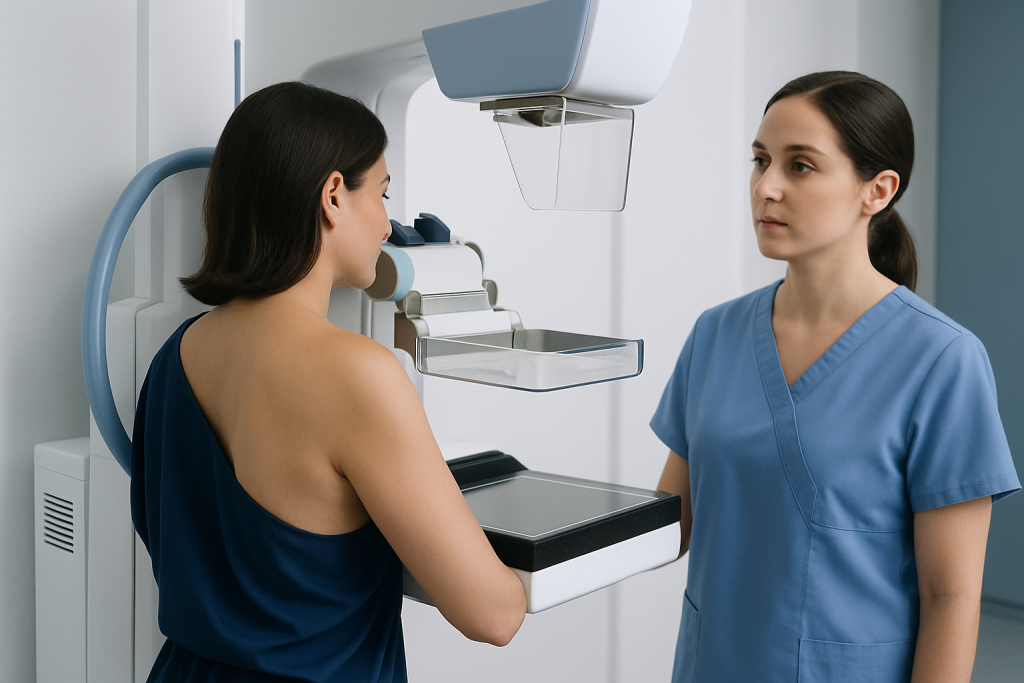
Fibroglandular density is assessed through breast imaging, most commonly mammography. The radiologist reviews how much of the breast appears as white, dense tissue versus darker fatty tissue and then includes a density category in the report.
In some settings, ultrasound or breast MRI may be used as a supplement, but these tests are not automatic for everyone with dense breasts. Whether more imaging is appropriate depends on the person’s age, symptoms, and individual risk profile.
It can help to ask for the exact wording of the report and a plain-language explanation. A clear discussion with a doctor can turn a short radiology phrase into a practical plan, especially for international patients who may need records explained across different healthcare systems.
Treatment Options
Fibroglandular density does not need treatment because it is not an illness. The real focus is on screening, risk assessment, and choosing the right imaging strategy for the individual patient.
If a mammogram shows dense tissue, a doctor may recommend continuing routine screening, repeating imaging at the usual interval, or adding another test if the overall risk or symptoms justify it. For some patients, breast ultrasound or MRI may be helpful as part of a fuller evaluation.
When there is concern about a lump, discharge, skin change, or a new area seen on imaging, the next step is directed by the finding rather than by density alone. In that setting, the goal is to identify whether the tissue change is benign or needs closer review, not to “treat” density itself.
Prevention & Self-care
Breast density cannot usually be prevented, since it is a normal tissue characteristic influenced by age and hormones. Even so, people can take practical steps that support early detection and informed decision-making.
Keeping regular screening appointments is one of the most useful habits. It also helps to keep prior mammogram reports, because comparing images over time can make subtle changes easier to evaluate.
Helpful self-care and planning steps include:
- Ask what the density category means in the report
- Learn whether your overall breast cancer risk changes follow-up advice
- Share family history and prior breast procedures with the doctor
- Report any new breast lump, nipple discharge, skin dimpling, or persistent pain
- Keep copies of imaging for future comparisons, especially when care is split across countries
A thoughtful screening plan is often the most effective response. Many patients feel more confident once they understand that dense breasts are common and that the next step is usually clarification, not urgency.
When to See a Doctor
A doctor should be consulted if a mammogram report mentions dense breasts and the result is unclear, especially if the patient is unsure whether additional imaging is needed. This is also a good time to review family history, past biopsies, hormone use, and any symptoms.
Prompt medical attention is appropriate if there is a new lump, persistent one-sided breast pain, nipple discharge, skin changes, or any finding that feels different from the person’s usual breast pattern. These symptoms do not automatically mean cancer, but they do deserve evaluation.
For people arranging care while traveling, it is reasonable to ask for a written summary of the findings and a follow-up plan that can be shared with a local doctor at home. Acibadem Health Point’s multidisciplinary specialists and JCI-accredited hospitals diagnose and treat breast conditions for international patients in a coordinated way.
Living With the Result
Hearing that breasts are dense can be unsettling at first because the wording sounds technical. In practice, it is often a routine imaging descriptor that simply means the doctor may need to look a little more carefully or consider the full risk picture.
Most people with fibroglandular density continue with standard screening and normal daily life. The most useful step is often a calm, informed conversation about what the report means for that individual, rather than assuming that the finding itself is harmful.
When patients understand the term, keep track of their reports, and know when to seek follow-up, dense breast tissue becomes much easier to navigate. That clarity can be especially valuable when care is being organized across borders and different medical teams need to work from the same information.
Frequently asked questions
Is fibroglandular density the same as breast cancer?
No. Fibroglandular density is a description of breast tissue composition, not a diagnosis of cancer. It can matter because dense tissue may make some findings harder to see on a mammogram, so doctors consider it alongside other risk factors.
Can dense breasts be felt during a self-exam?
Usually not in a reliable way. Some people notice normal lumpiness or firmness, but that does not accurately measure breast density. Imaging is the standard way to assess it.
Does fibroglandular density always mean more testing is needed?
Not always. Many people with dense breasts continue routine screening without extra imaging. The decision depends on the density category, symptoms, age, and overall breast cancer risk.
Can breast density change over time?
Yes, it can change gradually, especially with age and hormonal shifts such as menopause. That is one reason comparing with prior mammograms can be helpful.
Should a person with dense breasts worry about mammogram accuracy?
Dense tissue can make mammograms more challenging to read in some cases, but mammography is still an important screening tool. If needed, a doctor may suggest supplemental imaging to improve evaluation.
What should an international patient bring to a follow-up visit?
It is helpful to bring the mammogram report, image files if available, prior breast imaging, and a list of medications or hormone therapies. A clear record makes it easier for a new doctor to compare findings and recommend the right next step.
References
- American College of Radiology
- National Cancer Institute
- American Cancer Society
- Radiological Society of North America
- World Health Organization
This article is for general information only and is not a substitute for professional medical advice. Please consult a qualified doctor about your individual situation.
More from the Health Library



Related Specialists

Prof. Dr. A. Taner Usta
Gynecology & Obstetrics
Prof. Dr. Ahmet Tayyar
Gynecology & Obstetrics
Prof. Dr. Ahmet Cem Batukan
Gynecology & Obstetrics
Dr. Sevgi Selen
Gynecology & Obstetrics