

Cardiac CT vs. Coronary Angiography: Which Test Is the Better Fit?

Key Takeaways
- Cardiac CT is noninvasive and often used to evaluate coronary artery disease in selected patients.
- Coronary angiography is an invasive catheter-based test that provides detailed images of the coronary arteries.
- The right test depends on symptoms, heart disease risk, kidney function, prior test results, and urgency.
- Neither test is automatically better; each has strengths in different clinical scenarios.
- A cardiologist can help choose the most appropriate option and explain what the results mean.
Medically reviewed by the Acıbadem clinical team — June 13, 2026
Cardiac CT and coronary angiography are both used to look at the heart’s blood vessels, but they answer different questions and suit different situations. The best choice depends on symptoms, overall risk, and whether a clearer view of artery narrowing or a broader noninvasive assessment is needed.
Overview
When someone is trying to understand whether chest discomfort, shortness of breath, or a stronger family history of heart disease could point to coronary artery problems, two tests often come up: cardiac CT and coronary angiography. They are related because both help doctors look at the coronary arteries, yet they are not interchangeable. One is usually a noninvasive scan performed with a CT machine; the other is an invasive catheter-based procedure that has long been considered the reference standard for directly visualizing the arteries.
For many people, the question is not which test is “better” in the abstract, but which one is more useful for a specific clinical situation. A person with mild symptoms and a low-to-intermediate likelihood of coronary disease may be a good candidate for cardiac CT. Someone with concerning symptoms, a high-risk stress test, or a need for possible immediate treatment may be better served by coronary angiography.
For international patients, the practical side matters too. The best test is often the one that balances diagnostic clarity, safety, timing, and the ability to plan next steps efficiently—especially when appointments, travel, and follow-up may all happen across different countries.
How Cardiac CT and Coronary Angiography Differ
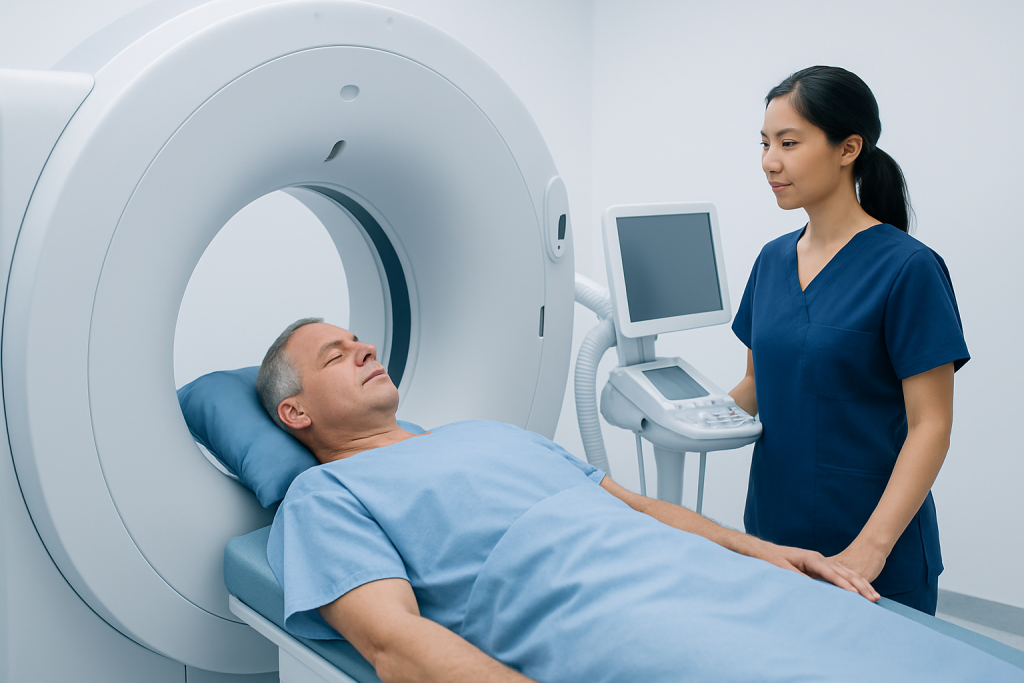
Cardiac CT, often called coronary CT angiography when the coronary arteries are specifically being assessed, uses X-rays and contrast dye to create detailed images of the heart and vessels. It is performed outside the body, usually with a short scan time, and does not require a catheter to be threaded into the heart. In many cases, it can show whether plaque is present and whether there appears to be narrowing in the coronary arteries.
Coronary angiography, by contrast, is done in a catheterization lab. A thin catheter is inserted through an artery, typically in the wrist or groin, and guided to the heart. Contrast dye is injected directly into the coronary arteries while X-ray images are taken in real time. Because the images are dynamic and highly detailed, this test can more precisely define blockages and can be paired with treatment in the same session if needed.
The difference is not just technical; it affects the patient experience. Cardiac CT is usually quicker and less invasive, while coronary angiography involves a procedure, monitoring, and a brief recovery period. That said, coronary angiography can offer a clearer path to immediate intervention when a significant blockage is found.
Symptoms and Clinical Situations That Lead to Testing

Doctors may consider either test when a person has symptoms that could be related to reduced blood flow in the heart. These symptoms can include chest pressure, pain that spreads to the arm or jaw, unexplained shortness of breath, reduced exercise tolerance, or episodes of discomfort that appear with exertion. Sometimes the concern is not a symptom at all, but an abnormal stress test or a high-risk medical history.
Cardiac CT is often used when the goal is to rule out significant coronary artery disease in someone with chest symptoms that are not clearly high-risk. It can be particularly helpful when the clinician wants a noninvasive anatomical look at the coronary arteries. It may also be considered in some people with atypical chest pain, depending on age, risk factors, and local expertise.
Coronary angiography is more commonly chosen when symptoms are more suggestive of active or advanced coronary disease, when noninvasive tests raise concern, or when a doctor believes treatment may be needed quickly. In hospital settings, it may also be the preferred test for patients with acute coronary syndrome or other urgent presentations. The exact path depends on the whole picture, not one symptom in isolation.
Causes & Risk Factors
The main reason these tests are ordered is the possibility of coronary artery disease, which develops when plaque builds up in the arteries supplying the heart. Plaque can narrow the vessels over time and, in some cases, lead to a sudden blockage. Imaging helps doctors see whether plaque is present, how much narrowing exists, and whether the findings match the symptoms.
Risk factors that may make coronary evaluation more likely include high blood pressure, high cholesterol, diabetes, smoking, obesity, a family history of early heart disease, and older age. A person with several of these factors may need testing even if symptoms are subtle, because the threshold for looking closely at the arteries is lower.
Test selection is also influenced by kidney function, ability to lie still and hold breath, heart rhythm, previous procedures, allergies to contrast material, and whether the person can safely receive certain medications used during imaging. These practical details often matter as much as the medical question itself.
Diagnosis: What Each Test Can Show
Cardiac CT provides a picture of the coronary arteries and nearby structures. It can show calcium buildup, plaque, and areas where the vessel appears narrowed. In some cases, it can also reveal alternative explanations for symptoms, such as other chest structures that may be contributing to the problem. Because it is noninvasive, it is often used early in the diagnostic process.
Coronary angiography gives a very detailed view of the inside of the arteries and remains especially valuable when a cardiologist needs the most precise assessment of narrowing. It is often considered the best option when there is a strong suspicion of obstructive disease or when an intervention like angioplasty or stent placement may be performed during the same procedure. This makes it both a diagnostic and potentially therapeutic test.
Neither test answers every question. Cardiac CT is excellent for many people but may be less suitable if heavy calcium makes the images harder to interpret. Coronary angiography is highly detailed, but because it is invasive, it is usually reserved for situations where the expected benefit outweighs the procedure burden. A doctor interprets the result alongside symptoms, blood tests, stress testing, and overall risk.
Treatment Options: What Happens If a Problem Is Found
If cardiac CT suggests coronary artery disease, the next step may be medication, lifestyle changes, further testing, or referral to a cardiologist for a more targeted plan. In some cases, the scan may show only mild plaque, which still matters because it signals a need for cardiovascular risk reduction. In others, the findings may lead to coronary angiography for a closer look.
If coronary angiography identifies a significant blockage, the physician may decide to treat it during the same session with balloon angioplasty and stent placement. If the disease is more extensive or in a pattern not suited to catheter-based treatment, the person may be referred for other strategies, including medication optimization or coronary bypass surgery evaluation. The procedure can therefore move the care plan forward quickly when time matters.
For patients traveling for care, treatment planning should include the logistics of follow-up. That may mean arranging local lab checks, medication review, imaging report access, and clear instructions about when to fly, resume work, or seek help if symptoms return. Good care extends beyond the scan room or procedure table.
Prevention & Self-care
Whether a person undergoes cardiac CT, coronary angiography, or both, the broader goal is usually the same: lowering cardiovascular risk over time. That often includes heart-healthy eating, regular physical activity as advised by a doctor, not smoking, managing blood pressure and cholesterol, and controlling diabetes if present. These measures do not replace medical testing, but they make the results more meaningful and the long-term outlook more favorable.
Before cardiac CT, patients are usually told to follow preparation instructions carefully, which may include avoiding caffeine for certain protocols, staying still during the scan, and sharing information about allergies or kidney problems. Before coronary angiography, patients may need fasting instructions and medication guidance, and they should discuss prior reactions to contrast dye and any blood thinner use.
After either test, it is helpful to keep a written record of the findings, the follow-up plan, and any medications started or changed. International patients may find it especially useful to request a copy of the report and images, since this supports continuity of care once they return home.
When to See a Doctor
A doctor should be consulted if chest discomfort, shortness of breath, or exercise-related symptoms are new, recurrent, or unexplained. Even when symptoms are mild, they should not be ignored if the person has several cardiovascular risk factors or a strong family history. Early evaluation can help determine whether imaging is needed and which type is most appropriate.
Urgent medical attention is needed for chest pain that is severe, persistent, or accompanied by sweating, nausea, fainting, or pain spreading to the arm, back, neck, or jaw. In those situations, the question is not whether to schedule a test later, but how quickly a clinician can assess the heart. Coronary angiography may become part of that urgent evaluation if the situation suggests significant coronary disease.
Acibadem Health Point’s multidisciplinary specialists and JCI-accredited hospitals diagnose and treat coronary artery conditions for international patients, with coordinated care that can support both testing and follow-up. Even so, the most important step remains an individualized discussion with a qualified doctor who can match the test to the person, not just the diagnosis.
Frequently asked questions
Is cardiac CT the same as coronary angiography?
No. Cardiac CT is a noninvasive scan, while coronary angiography is an invasive catheter-based procedure. Both can assess the coronary arteries, but they are used in different situations and answer slightly different clinical questions.
Which test is better for ruling out coronary artery disease?
For selected patients with lower to intermediate risk, cardiac CT can be very helpful for ruling out significant disease. The best choice depends on symptoms, age, risk factors, and whether a doctor needs a more detailed or immediate assessment.
Does coronary angiography always lead to stent placement?
No. Coronary angiography is primarily a diagnostic test, and many people do not need a stent after it. If a significant blockage is found, the doctor decides whether treatment during the procedure is appropriate.
Is cardiac CT safer than coronary angiography?
Cardiac CT is less invasive, so it is often considered lower burden for many patients. However, both tests involve contrast dye and some level of radiation, so safety depends on the person’s health status and the reason for testing.
Can these tests show the same level of detail?
They show detail in different ways. Coronary angiography provides very precise, real-time images of the artery lumen, while cardiac CT gives a noninvasive anatomical view that can also show plaque and calcium.
What should an international patient bring to the appointment?
It helps to bring prior test results, medication lists, allergy information, and any history of kidney disease or contrast reaction. Having these details available makes it easier for the team to choose the most appropriate test and plan follow-up smoothly.
References
- American College of Cardiology
- American Heart Association
- Society of Cardiovascular Computed Tomography
- National Heart, Lung, and Blood Institute
- Radiological Society of North America
This article is for general information only and is not a substitute for professional medical advice. Please consult a qualified doctor about your individual situation.
More from the Health Library



Related Specialists

Prof. Dr. Cahide Soydaş Çınar
Cardiology
Dr. Nurettin Ümit Özak
Orthopedic Surgery & Traumatology
Dt. Duygu Taş
Oral & Dental Health
Dt. Selen Burçak Şimşek
Oral & Dental Health