Home Pregnancy Test At Home

Key Takeaways
- Home pregnancy tests detect pregnancy hormone in urine, but timing matters for accuracy.
- Testing too early can lead to a negative result even if pregnancy has started.
- A positive result should be confirmed with a healthcare professional, especially if symptoms are unusual.
- A missed period is a common reason to test, but irregular cycles can make timing less straightforward.
- Follow the instructions carefully and check the result within the recommended time window.
A home pregnancy test can offer an early, private first look at whether pregnancy may be present. Knowing when to test, how to read the result, and when to confirm it with a clinician can make the process calmer and more reliable.
Overview
A home pregnancy test is usually the first step when pregnancy is suspected. It is designed to detect human chorionic gonadotropin, often called hCG, a hormone that appears after a fertilized egg implants in the uterus. For many people, the test offers an immediate sense of direction at a private moment, before deciding whether to arrange medical confirmation.
Even though these tests are simple to use, they work best when the timing is right. A test taken too early may not detect enough hCG, while a test read outside the recommended time window can be confusing. For that reason, understanding the process matters as much as the result itself.
For Myomectomy Recovery for International Patients: The Usual Travel Timeline" class="ahp-ilk">international patients, the question is often not only “Is this pregnancy real?” but also “What should happen next if I am far from home?” A clear, reliable first test can help someone plan follow-up care, whether that means connecting with a local clinician or arranging an appointment after travel.
Symptoms and Reasons People Test
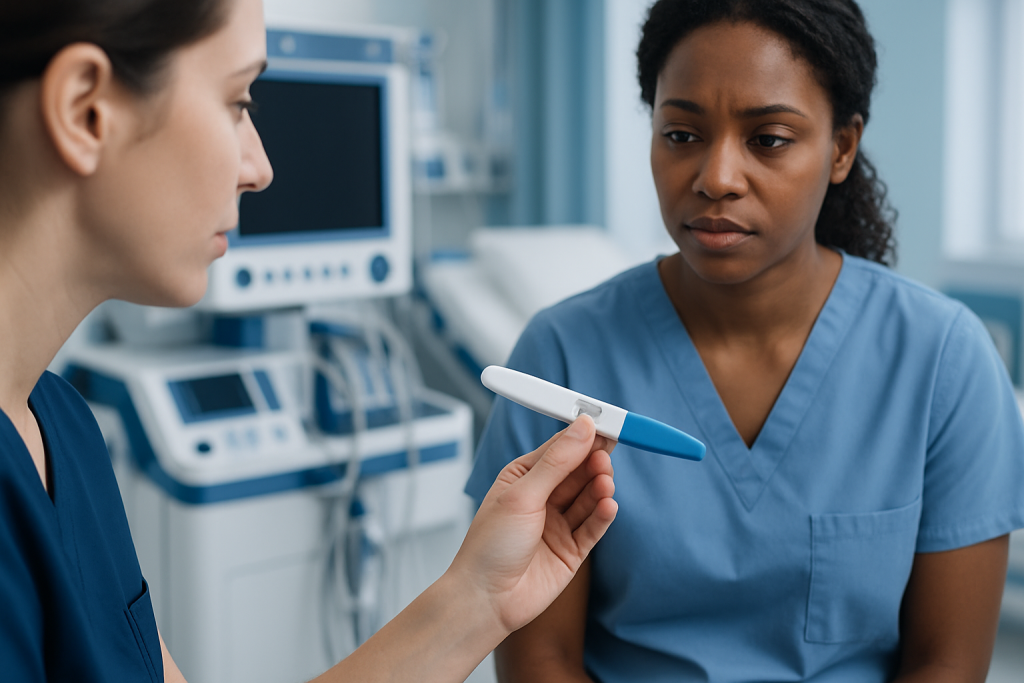
Many people reach for a home pregnancy test after noticing a missed period, but that is not the only reason. Some notice breast tenderness, nausea, fatigue, mild cramping, or a stronger sense that their cycle feels different from usual. Others test after unprotected sex, contraceptive failure, or fertility treatment.
Symptoms alone cannot confirm pregnancy. Early pregnancy symptoms can overlap with premenstrual changes, stress, illness, or shifts in sleep and routine. That is why a test is helpful: it turns a guess into a more structured next step.
- Missed or unusually light period
- Breast fullness or tenderness
- Nausea or food sensitivity
- Fatigue or sleepiness
- Frequent urination
- Spotting or mild cramping
People with irregular cycles may find symptom-based timing less reliable. In those situations, testing based on recent sexual activity and following up if the result is unclear can be more useful than waiting for a perfectly predictable period.
How Home Pregnancy Tests Work
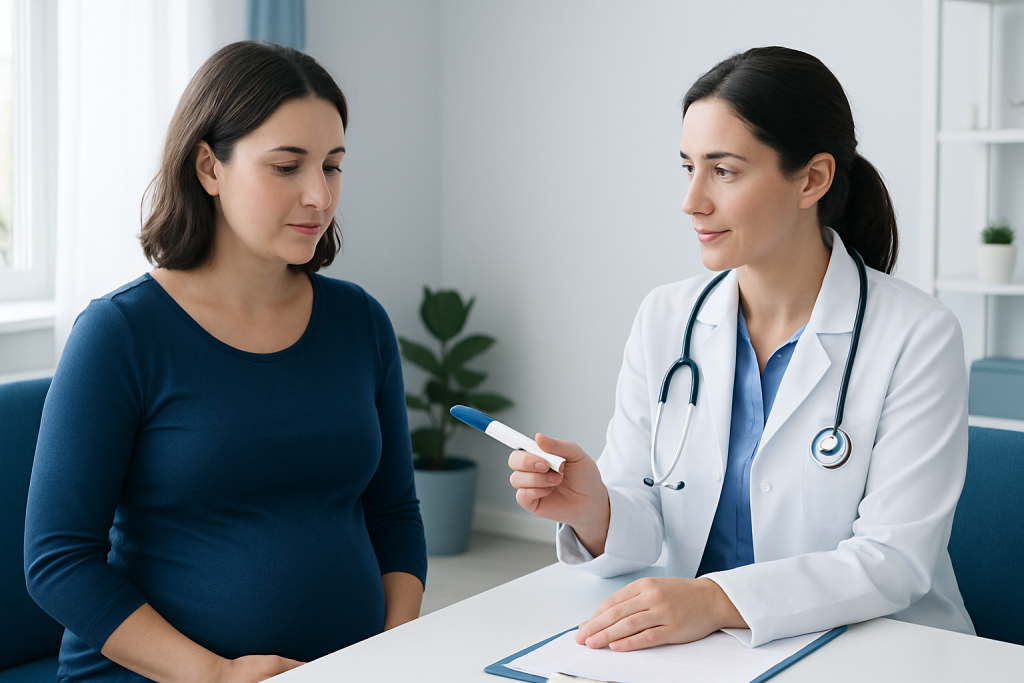
Most home pregnancy tests use a small strip or device that reacts to hCG in urine. After implantation, hCG begins to rise, and the test can detect it once the level is high enough. Some tests are more sensitive than others, which is one reason different brands may give different answers around the same point in time.
Urine concentration can also affect results. A first-morning urine sample is often recommended because it may contain a higher concentration of hCG, especially in early pregnancy. Drinking large amounts of fluid right before testing may dilute urine and make early detection less likely.
It helps to think of the test as a screening tool, not a final diagnosis. A home result gives useful information, but a clinician may still recommend a blood test or ultrasound depending on the timing, symptoms, and medical history.
Causes of False Results and Risk Factors
A negative test does not always mean there is no pregnancy. Testing before hCG has risen enough is the most common reason for a false negative. This can happen if ovulation occurred later than expected, if the cycle is irregular, or if the test is taken very soon after conception.
False positives are less common, but they can occur. Some fertility medications that contain hCG may affect the result, and certain medical conditions can sometimes produce a misleading reading. Reading the test too early or too late, after the result window has passed, may also cause confusion.
Factors that can affect accuracy include:
- Testing before a missed period or too soon after sex
- Using diluted urine
- Not following the instructions exactly
- Checking the test after the recommended time has passed
- Recent fertility treatment or hCG-containing medication
- Irregular ovulation or cycle timing
When someone is traveling, jet lag and changes in routine can make cycle tracking harder. In that setting, it can be helpful to test again after a short interval if the first result is negative and pregnancy is still possible.
Diagnosis and Confirming the Result
A home test is a useful starting point, but it is not the end of the diagnostic process. A clinician may confirm pregnancy with a urine test, a blood test, or an ultrasound, depending on how far along the pregnancy may be and whether there are any symptoms that need attention. This is especially important if the result is unexpected or if the person has a history of ectopic pregnancy, miscarriage, or fertility treatment.
Blood tests can detect pregnancy earlier than many urine tests and may help clarify uncertain results. Ultrasound becomes more useful later, when the pregnancy should be visible in the uterus. The right sequence depends on timing and on the person’s overall health picture.
For patients arranging care from another country, it is often helpful to share the exact date of the last menstrual period, the brand of test used, and the timing of the result. Those details can make remote consultation or in-person follow-up more efficient and reduce unnecessary repeat testing.
Treatment Options and Next Steps After a Positive Test
There is no treatment for a positive pregnancy test itself, but there are many next steps that may be discussed with a doctor. The first priority is confirmation of the pregnancy and an assessment of whether it is developing in the expected location and timeframe. After that, care may include prenatal planning, review of medications, or discussion of available options based on the person’s goals and medical situation.
If the pregnancy is desired, early medical guidance can help with lifestyle choices, vitamin use, and planning the first prenatal visit. If the pregnancy is not planned, a clinician can provide nonjudgmental counseling about available choices according to local medical and legal frameworks. The most important step is to seek timely, professional advice rather than trying to interpret the result alone.
When people are far from home, continuity matters. A coordinated clinic or hospital team can help bridge testing, confirmation, and follow-up care so that the person knows exactly what happens next and when.
Prevention and Self-care
Pregnancy testing itself cannot be “prevented,” but a few habits can make the process more reliable and less stressful. Reading the instructions before starting, checking the expiration date, and using the test at the recommended time of day all improve the quality of the result. Keeping a simple record of cycle dates can also help with timing.
After a positive result, self-care depends on the person’s plans and health status. A balanced diet, hydration, avoiding alcohol and smoking, and reviewing medications with a clinician are sensible early steps if pregnancy may continue. If the result is negative but pregnancy is still suspected, repeating the test after a few days is often reasonable.
Practical self-care tips:
- Use the first-morning urine when possible
- Do not drink excessive fluids just before testing
- Follow the exact reading time in the instructions
- Repeat the test if a period still does not begin
- Seek medical confirmation for any positive result
For patients who may return home soon after testing, keeping a photo of the result within the valid reading window can be useful for later discussion with a doctor, although it does not replace medical confirmation.
When to See a Doctor
Medical evaluation is a good idea after any positive home pregnancy test, especially if there are questions about timing or cycle regularity. A doctor should also be contacted if the test is negative but the period remains absent, because pregnancy may still be possible or another issue may be affecting the cycle.
Prompt assessment is especially important if there is abdominal pain, one-sided pelvic pain, fainting, shoulder pain, or heavy bleeding. These symptoms do not always mean something serious, but they do deserve timely review because they can signal a pregnancy-related complication that needs medical attention.
It is also sensible to seek advice if the result is hard to interpret, if different tests give different answers, or if fertility treatment or medication could be affecting the result. For people traveling internationally, arranging follow-up early can make care smoother and reduce the stress of managing uncertainty far from home. Acibadem Health Point’s multidisciplinary specialists and JCI-accredited hospitals diagnose and treat this condition for international patients, with coordinated support from testing through follow-up.
Frequently asked questions
How soon can a home pregnancy test be taken?
Many tests are designed for use after a missed period, although some sensitive tests may detect pregnancy a little earlier. Testing too early can miss rising hCG levels, so if the first result is negative and pregnancy is still possible, repeating the test after a few days is often reasonable.
Is a first-morning urine sample better?
It often is, especially in early pregnancy, because urine may be more concentrated. A concentrated sample can make it easier for the test to detect hCG if hormone levels are still low.
Can a home pregnancy test be wrong?
Yes, false negatives and, less commonly, false positives can happen. Timing, urine dilution, medications, and not following the instructions exactly are common reasons for confusing results.
What should someone do after a positive test?
A positive home result should be confirmed with a healthcare professional. The next step is usually to discuss timing, symptoms, and the best way to verify and plan care.
What if the test is negative but the period still does not come?
It is reasonable to repeat the test after a short interval if pregnancy is still possible. If the period remains absent or symptoms continue, a doctor can help check for pregnancy or other causes of cycle changes.
Can travel or stress affect the test result?
Travel and stress do not change the hormone the test measures, but they can make cycle timing harder to judge. That can lead to testing too early or misunderstanding when a repeat test is needed.
References
- American College of Obstetricians and Gynecologists
- Mayo Clinic
- NHS
- World Health Organization
This article is for general information only and is not a substitute for professional medical advice. Please consult a qualified doctor about your individual situation.
More from the Health Library



Related Specialists

Prof. Dr. A. Taner Usta
Gynecology & Obstetrics
Prof. Dr. Ahmet Tayyar
Gynecology & Obstetrics
Prof. Dr. Ahmet Cem Batukan
Gynecology & Obstetrics
Dr. Sevgi Selen
Gynecology & Obstetrics