Aura In Migraine Headaches

Key Takeaways
- Migraine aura often affects vision, but it can also involve speech, sensation, or movement.
- Aura symptoms usually develop gradually and are temporary, though they can feel unsettling.
- Not every headache with flashing lights or tingling is migraine, so new symptoms should be medically assessed.
- Treatment focuses on reducing attack frequency, easing symptoms, and identifying individual triggers.
- Sudden, one-sided, or first-time neurological symptoms should be checked promptly to rule out other causes.
Migraine aura is a set of temporary neurological symptoms that can appear before or during a migraine headache. Understanding these symptoms can help people recognize migraine patterns early, discuss the right treatment with a doctor, and know when symptoms need urgent medical attention.
Overview
Migraine aura is the name for a temporary set of neurological symptoms that may happen before a migraine headache begins, although some people experience aura during the headache phase or without much head pain at all. The experience is often distinctive: symptoms tend to build gradually, last for a limited time, and then resolve completely.
For many people, the first sign is visual, such as shimmering lights, zigzag patterns, blind spots, or a “heat-wave” distortion across part of the visual field. Others notice tingling, numbness, difficulty finding words, or a brief sense that normal coordination is off. Because these symptoms can resemble other medical conditions, a careful diagnosis matters.
For international patients considering care, migraine assessment often involves more than confirming a headache history. Doctors may review the timing of symptoms, triggers, medicines, and any past neurological events to distinguish migraine aura from conditions that require different treatment. A clear diagnosis can make future attacks easier to manage and less frightening when they occur.
Symptoms
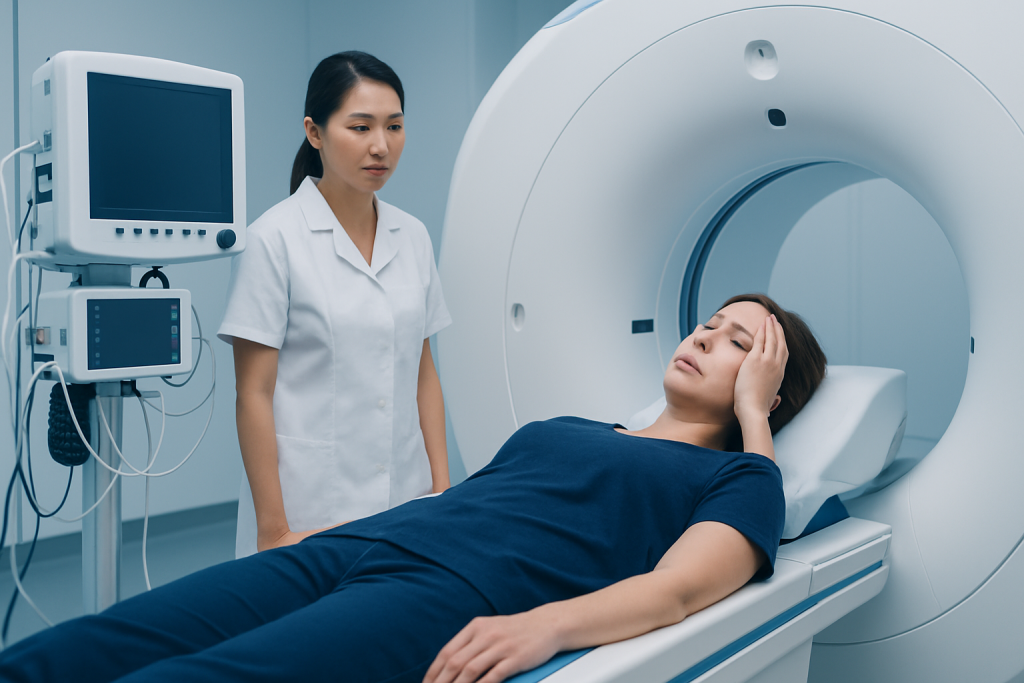
Aura symptoms are usually temporary and reversible, but they can vary from person to person and from one attack to another. Visual changes are the most common, and they often start small before spreading across the visual field. Some people describe a sparkling arc, a blind patch, flashing dots, or blurred edges that make reading or driving difficult for a short period.
Other aura symptoms may include pins-and-needles sensations in the hand or face, numbness, trouble speaking, or a feeling that words are “stuck.” Less commonly, people may notice dizziness, changes in smell, or weakness. The key feature is that the symptoms typically evolve over minutes rather than starting all at once.
Common aura features include:
- Visual disturbances such as flashing lights, zigzags, or blind spots
- Tingling or numbness, usually on one side of the body
- Difficulty speaking or finding words
- Gradual symptom spread over several minutes
- Complete resolution, usually within an hour, though timing can vary
Because aura can feel similar to stroke symptoms, a first episode or a change in the usual pattern deserves medical attention. Even when the cause turns out to be migraine, it is better to confirm that with a clinician than to assume it is harmless.
Causes & Risk Factors

The exact cause of migraine aura is not fully understood, but it is linked to changes in brain activity and nerve signaling. One widely accepted explanation is a wave of altered electrical and chemical activity that moves across the brain’s outer surface and temporarily affects vision, sensation, or speech. This does not usually mean brain damage; it reflects a functional change that passes.
People with migraine often notice that attacks happen after predictable triggers. These triggers do not cause aura in every person, and they can change over time. Common triggers include stress, disrupted sleep, skipped meals, dehydration, certain foods or alcohol, bright light, hormonal shifts, and sensory overload. For some individuals, travel itself can be a trigger because of sleep changes, time-zone shifts, long flights, or dehydration.
Risk factors may include a personal or family history of migraine, being younger or middle-aged, and, in some cases, hormonal influences. Aura is not limited to one gender, but patterns can differ across life stages. A doctor may also ask whether attacks started recently or have become more frequent, since that information helps decide whether additional testing is needed.
Diagnosis
Diagnosis begins with a detailed history. A doctor will usually ask what the aura feels like, how quickly it develops, how long it lasts, whether it is followed by headache, and whether symptoms are always the same on each side of the body or in the same part of the visual field. These details help separate migraine aura from other neurological problems.
In many cases, migraine with aura is diagnosed clinically, meaning based on symptoms and examination rather than a single test. However, if the aura is new, atypical, prolonged, associated with weakness, or occurs for the first time later in life, doctors may recommend imaging or other tests to rule out stroke, seizure, eye disease, or structural brain conditions. This careful approach is especially important when someone is seeking treatment far from home and needs a clear plan before returning to travel.
The evaluation may include a neurological exam, blood pressure check, and, when appropriate, brain imaging or blood work. Keeping a symptom diary can help enormously. Notes about the timing of aura, headache severity, menstrual cycle, sleep, food, travel, and medicines can make patterns easier to spot during consultation.
Treatment Options
Treatment for migraine aura focuses on the migraine itself, since aura is usually part of the same underlying condition. Some people benefit from acute medicines taken early in the attack, while others need preventive treatment if episodes are frequent, disabling, or difficult to predict. A doctor chooses therapy based on the person’s symptoms, health history, and how migraine affects daily life.
Acute treatment may include medications intended to reduce headache pain, nausea, or light sensitivity once an attack begins. Preventive treatment may be considered when migraine attacks are recurring, prolonged, or especially disruptive. Doctors may also review whether the person’s current medicines are helping, whether another diagnosis needs to be ruled out, and whether any medication-overuse pattern is developing.
For some patients, a multidisciplinary approach is useful. Neurologists may work with imaging specialists, internists, and, when needed, ophthalmologists or emergency clinicians to clarify the picture. This is particularly helpful for international patients who arrive with incomplete records and want a practical plan that can continue after they go home.
Important treatment principles include:
- Starting therapy early, if prescribed by a doctor
- Using preventive treatment when attacks are frequent or disabling
- Reviewing current medicines to avoid overuse
- Adjusting treatment if aura changes character or becomes more severe
- Following up to reassess symptoms over time
Prevention & Self-care
Although migraine aura cannot always be prevented, many people reduce attacks by learning their personal triggers and protecting their routine. Regular sleep, steady meals, hydration, and balanced activity can make a meaningful difference. For some people, simply avoiding long gaps without food or sleep is enough to reduce attack frequency.
Practical self-care also includes building a calm response plan for the first signs of aura. That may mean stopping driving, resting in a quiet place, reducing bright light, and taking any doctor-recommended acute medicine as early as instructed. Since aura can affect vision and concentration, safety comes first during the episode.
Helpful habits often include:
- Keeping a headache and aura diary
- Staying hydrated, especially during travel
- Maintaining consistent sleep and meal schedules
- Managing stress with realistic routines, not perfection
- Limiting known personal triggers when possible
People traveling for care may also benefit from planning ahead: carrying medicines in hand luggage, preserving a written diagnosis, and scheduling follow-up before departure if symptoms have changed. That kind of preparation can reduce anxiety and make recovery feel more manageable after returning home.
When to See a Doctor
A doctor should evaluate any first-time aura, any aura that changes pattern, and any episode that includes weakness, confusion, fainting, or trouble speaking that is new or severe. It is especially important to seek prompt assessment if symptoms come on suddenly, if they are only on one side in an unusual way, or if they do not resolve as expected. These features can overlap with conditions other than migraine.
People who already know they have migraine should still check in with a clinician if attacks become more frequent, more intense, or harder to treat. New neurological symptoms should never be dismissed as “just migraine” without review, even in someone with a long migraine history. A fresh assessment can confirm whether the pattern still fits aura or whether further testing is needed.
For patients considering treatment abroad, a neurology visit can be a useful way to establish a clear diagnosis and follow-up plan before traveling back home. Acibadem Health Point’s multidisciplinary specialists and JCI-accredited hospitals diagnose and treat migraine-related conditions for international patients, with attention to safe continuity of care.
Living With Migraine Aura
Living with aura often means learning the personal rhythm of attacks and responding early rather than waiting for the episode to fully develop. Many people feel more in control once they understand that aura is temporary, that it usually follows a recognizable pattern, and that it can be managed with the right medical guidance. That knowledge can reduce fear, especially after a first frightening episode.
Still, migraine with aura deserves respect. Because symptoms can mimic other neurological problems, the safest approach is to document changes carefully and keep a low threshold for medical review when something feels different. With diagnosis, treatment, and realistic self-care, many people are able to continue work, travel, and daily life with fewer disruptions.
Summary
Migraine aura is a temporary neurological event that most often causes visual changes but may also affect speech, sensation, or coordination. It can be part of migraine with or without prominent headache, and it should be assessed when it is new or changing.
Recognizing the pattern, learning triggers, and working with a doctor on treatment can make attacks more manageable. When symptoms are unusual or sudden, prompt evaluation helps ensure the right diagnosis and supports safe, confident care.
Frequently asked questions
What is migraine aura?
Migraine aura is a temporary neurological symptom that can happen before or during a migraine. It most often affects vision, but it can also involve tingling, numbness, or speech changes.
How long does aura usually last?
Aura often lasts for several minutes and commonly resolves within an hour, although timing can vary. If symptoms last much longer than usual or do not go away, medical assessment is important.
Can aura happen without a headache?
Yes, some people experience aura without a significant headache afterward. Even then, the symptoms should still be discussed with a doctor, especially if they are new or unusual.
How is migraine aura different from a stroke?
Migraine aura usually develops gradually and is temporary, while stroke symptoms often start suddenly and need urgent care. Because the two can look similar, any first-time or sudden neurological symptom should be checked promptly.
Do triggers cause aura in everyone?
No, triggers are highly individual. Stress, poor sleep, dehydration, certain foods, and travel-related routine changes may matter for some people but not for others.
When should someone seek urgent help?
Urgent medical care is needed if aura symptoms start suddenly, include weakness, severe confusion, fainting, or speech problems, or if the pattern is different from usual. It is always safer to have new neurological symptoms evaluated.
References
- World Health Organization
- International Headache Society
- National Institute of Neurological Disorders and Stroke
- American Headache Society
- Mayo Clinic
This article is for general information only and is not a substitute for professional medical advice. Please consult a qualified doctor about your individual situation.