Venous Insufficiency: Symptoms, Causes and Treatment

Key Takeaways
- Venous insufficiency is a circulation problem in the leg veins, often linked to weakened vein valves.
- Common signs include leg heaviness, swelling, aching, varicose veins, and skin changes around the ankles.
- Diagnosis usually starts with a medical history, physical exam, and a duplex ultrasound.
- Treatment may include compression therapy, exercise, leg elevation, procedures, and skin care depending on severity.
- Early attention can help reduce discomfort and lower the risk of ulcers or other complications.
Medically reviewed by the Acıbadem clinical team — August 19, 2026
Venous insufficiency happens when the veins in the legs have trouble sending blood back toward the heart. It can cause swelling, aching, heaviness, and skin changes, but many people improve with timely diagnosis and the right mix of treatment and self-care.
Overview
Venous insufficiency is a condition in which the veins in the legs do not move blood upward as efficiently as they should. Healthy veins contain one-way valves that help blood travel back to the heart against gravity. When those valves weaken or the vein walls lose tone, blood can pool in the lower legs, especially after long periods of standing or sitting.
This condition is often called chronic venous insufficiency when it develops over time. It may appear gradually, which is one reason people sometimes dismiss early signs as ordinary tiredness or age-related swelling. In reality, the symptoms can be the body’s way of signaling that leg circulation needs attention.
Venous insufficiency ranges from mild discomfort to more advanced changes such as skin darkening, inflammation, or venous ulcers. The good news is that many people find meaningful relief once the condition is identified and managed in a structured way. For international patients, planning care can also involve understanding which treatments are most appropriate before travel and how follow-up will be arranged after returning home.
Symptoms
The earliest clues are often subtle. A person may notice that one or both legs feel heavy, tired, or achy by the end of the day. Swelling around the ankles is common, particularly after sitting for long hours, and symptoms may improve after resting or elevating the legs.
As venous insufficiency progresses, additional signs may appear. These can include visible varicose veins, itching or tingling in the legs, cramps at night, or a sense of tightness in the skin. Some people also notice that symptoms worsen in warm weather or after long flights, which can be especially relevant for patients traveling internationally.
More advanced venous disease can lead to skin changes near the ankles and lower calves. The skin may become discolored, dry, or thickened, and small wounds may heal slowly. A vein specialist may look for a pattern of symptoms that suggests blood is pooling rather than moving efficiently back toward the heart.
- Leg heaviness or fatigue
- Swelling, often near the ankles
- Aching, throbbing, or cramping
- Itching, tingling, or burning
- Visible varicose veins
- Skin darkening or irritation
Causes & Risk Factors

Venous insufficiency usually develops when the valves inside the leg veins become damaged or stretched. Without proper valve closure, blood can flow backward and accumulate in the lower limbs. Over time, this extra pressure can affect nearby tissues and contribute to discomfort, swelling, and skin changes.
Several factors may raise the chance of developing the condition. A family history of vein disease, older age, pregnancy, obesity, and a personal history of blood clots can all play a role. Jobs or routines that involve prolonged standing or sitting may also increase strain on the leg veins, which helps explain why the symptoms are common in people with limited movement during the workday or while traveling.
Sometimes venous insufficiency follows a prior deep vein thrombosis or other event that has affected the vein structure. In other cases, no single trigger is identified. A careful medical history helps the clinician determine whether the problem is mainly valve weakness, prior clot damage, or another form of venous disease.
- Family history of varicose veins or vein disease
- Pregnancy or multiple pregnancies
- Prolonged standing or sitting
- Excess body weight
- Past blood clots or vein injury
- Reduced mobility
Diagnosis
Diagnosis usually begins with a conversation about symptoms, daily habits, and any history of clots, surgery, pregnancy, or long-distance travel. The clinician may examine the legs while the patient is standing and sitting, because venous pooling can be more visible in certain positions.
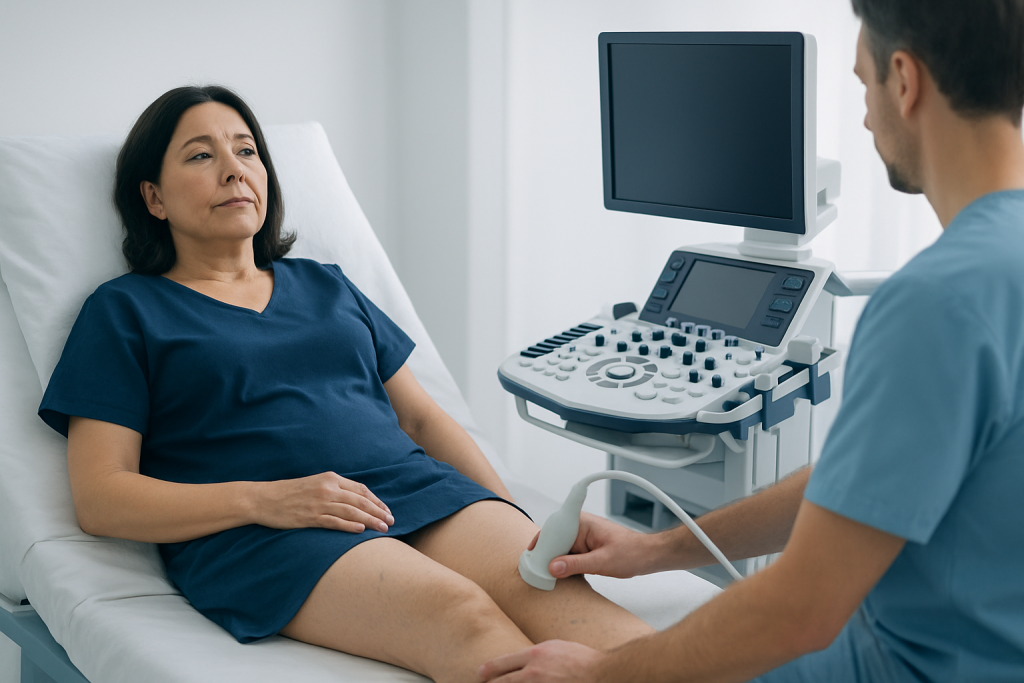
The most common imaging test is a duplex ultrasound. This noninvasive study shows how blood moves through the veins and whether valves are allowing backward flow. It can also help rule out other problems that may cause leg swelling, which is important because not every swollen leg is due to venous insufficiency.
In some cases, additional testing may be needed if symptoms are complex or if a procedure is being planned. The overall goal is to map the vein problem clearly before choosing treatment. That approach helps patients, including those traveling for care, understand what can be done during one visit and what needs follow-up closer to home.
Treatment Options
Treatment is tailored to the severity of symptoms and the condition of the veins. For many people, compression therapy is the starting point because it supports circulation and can reduce swelling and discomfort. Leg elevation and regular walking are often recommended alongside compression, since calf muscle movement helps push blood upward.
When symptoms persist or when reflux is more advanced, a clinician may discuss vein procedures. Depending on the pattern of disease, these may include minimally invasive techniques that close or seal faulty veins, such as endovenous ablation or sclerotherapy. Some patients with more complicated anatomy may need other approaches, and the exact plan depends on ultrasound findings and overall health.
Skin care is also important, especially when irritation, discoloration, or ulcer risk is present. If an ulcer has already formed, treatment may involve wound care, compression, and close follow-up. Across all treatment paths, the aim is not only to improve appearance but also to reduce pressure in the veins and protect the skin for the long term.
- Compression stockings or wraps
- Walking and calf-strengthening activity
- Leg elevation when resting
- Minimally invasive vein procedures when appropriate
- Skin and wound care for advanced cases
Prevention & Self-care
Not every case of venous insufficiency can be prevented, especially when family history or prior vein injury is involved. Still, everyday habits can make symptoms easier to manage and may slow progression. Small changes often matter more than people expect, particularly for those who spend much of the day at a desk, on their feet, or in transit.
Regular movement is one of the simplest supports for leg veins. Walking, ankle pumps, and calf exercises can help the muscles act as a natural squeeze for venous return. Elevating the legs after work or during recovery from travel can also ease pressure, while maintaining a healthy body weight may reduce strain on the veins.
For people wearing compression stockings, fit and comfort matter. They should be selected with guidance from a clinician, especially if there is diabetes, peripheral artery disease, or numbness in the feet. It is also wise to protect the skin with gentle cleansing and moisturizing, because dry or fragile skin is more prone to irritation in areas with poor circulation.
- Take walking breaks when sitting or standing for long periods
- Elevate the legs above heart level when possible
- Use compression as recommended
- Stay hydrated and avoid prolonged immobility
- Protect and moisturize the skin
When to See a Doctor
Medical evaluation is important if leg swelling is persistent, one-sided, painful, or accompanied by skin changes or visible veins that are becoming more noticeable. A clinician should also be consulted if the leg symptoms are affecting work, sleep, travel, or day-to-day comfort. Because several conditions can look similar, proper assessment helps distinguish venous insufficiency from other causes of swelling.
Prompt care is especially important if a person notices a wound that is slow to heal, new redness or warmth, or sudden worsening of swelling after travel or immobility. These findings do not always mean something serious, but they do deserve attention so the underlying cause can be identified safely. A professional assessment is also advisable before starting compression if there are circulation concerns in the arteries.
For patients considering treatment abroad, it can help to gather previous reports, ultrasound results, medication lists, and photos of any skin changes before the appointment. That preparation allows the specialist to assess the condition efficiently and plan both treatment and follow-up. Acıbadem Health Point’s multidisciplinary specialists and JCI-accredited hospitals diagnose and treat venous insufficiency for international patients, with care organized around clear communication and continuity.
Outlook and Living With Venous Insufficiency
Many people live well with venous insufficiency once they understand how to support circulation day to day. The condition often needs ongoing management rather than a single one-time fix, especially when symptoms have been present for years. That does not mean the outlook is poor; it simply means vein health benefits from consistent attention.
Follow-up is useful after treatment, particularly if symptoms return or if there are ongoing skin changes. Some patients may need adjustments to compression, activity routines, or procedure planning over time. For international patients, a clear aftercare plan is especially valuable because it helps connect treatment done abroad with monitoring at home.
With accurate diagnosis, realistic expectations, and steady self-care, most patients can reduce discomfort and protect the lower legs from further strain. The key is not to wait until the symptoms become difficult to ignore. Earlier evaluation usually gives more options and a smoother path to improvement.
Frequently asked questions
What is the difference between varicose veins and venous insufficiency?
Varicose veins are enlarged, twisted veins that are often visible under the skin. Venous insufficiency is the broader circulation problem that can cause varicose veins, swelling, aching, and skin changes. Some people have varicose veins without major symptoms, while others have more significant reflux and discomfort.
Can venous insufficiency go away on its own?
It usually does not resolve completely on its own because the underlying vein valves do not typically repair themselves. However, symptoms can often be improved with compression, movement, leg elevation, and, in some cases, procedures. Early assessment can help choose the most effective plan.
Is venous insufficiency dangerous?
It is often manageable, but it should not be ignored, especially if symptoms are worsening. Advanced cases can lead to skin damage or venous ulcers, and sudden swelling or pain may signal another condition that needs urgent evaluation. A doctor can determine how serious the problem is in each case.
Do compression stockings help everyone?
Compression stockings help many people by supporting blood flow and reducing swelling. They are not suitable for every patient, especially if there may be significant arterial disease or certain nerve and skin problems. A clinician can advise on the right type and fit before use.
What tests confirm venous insufficiency?
A duplex ultrasound is the main test because it shows both the vein structure and the direction of blood flow. The clinician may also examine the legs and ask about symptoms, travel, prior clots, and family history. Sometimes more testing is needed if the diagnosis is unclear or a procedure is being planned.
Can flying make venous insufficiency worse?
Long flights can temporarily worsen leg swelling because of prolonged sitting and reduced movement. Simple steps such as walking when safe, flexing the ankles, staying hydrated, and using recommended compression may help during travel. People with a history of clots or significant swelling should ask a doctor for personalized guidance before flying.
References
- Mayo Clinic
- Cleveland Clinic
- National Heart, Lung, and Blood Institute
- Society for Vascular Surgery
- NHS
This article is for general information only and is not a substitute for professional medical advice. Please consult a qualified doctor about your individual situation.
Persistent digestive symptoms? Get evaluated in Turkey
JCI-accredited · board-certified surgeons · reply within 24h
Add us as a Preferred Source to see more of our trusted health content across Google Search, AI Overviews and Discover.