

Training For Biceps

Key Takeaways
- The biceps help bend the elbow and turn the forearm, so training should target both movements thoughtfully.
- Good form, gradual progression, and recovery matter more than chasing heavy weights quickly.
- Biceps work best as part of a balanced upper-body plan that also strengthens the back, shoulders, and triceps.
- Persistent pain, swelling, numbness, or sudden weakness should be assessed by a qualified clinician.
- People returning to exercise after injury or surgery may benefit from individualized rehabilitation guidance.
Training for biceps is often part of a broader strength routine, but effective results depend on technique, balanced programming, and recovery. This guide explains how the biceps work, how to train them safely, and when arm pain or weakness deserves medical attention.
Overview
Training for biceps is usually about more than the visible shape of the upper arm. The biceps brachii is a two-headed muscle that crosses both the shoulder and elbow, which means it helps with elbow flexion and forearm rotation. In everyday life, it contributes to lifting, carrying, turning a doorknob, and many pulling movements.
For people building strength, improving function, or simply staying active, the biceps are best trained as part of a complete upper-body routine. That approach supports better movement quality and lowers the chance of overuse from doing one exercise pattern repeatedly. It also matters for international patients who may be training while traveling or resuming exercise after a procedure; consistency and sensible load progression are usually more useful than dramatic changes in routine.
A well-planned biceps program can be simple. The goal is not to isolate the muscle endlessly, but to use a few effective movements with control, enough recovery, and realistic expectations. When training is matched to fitness level and any existing joint or tendon issues, the results are typically safer and more sustainable.
Symptoms and What Healthy Training Feels Like
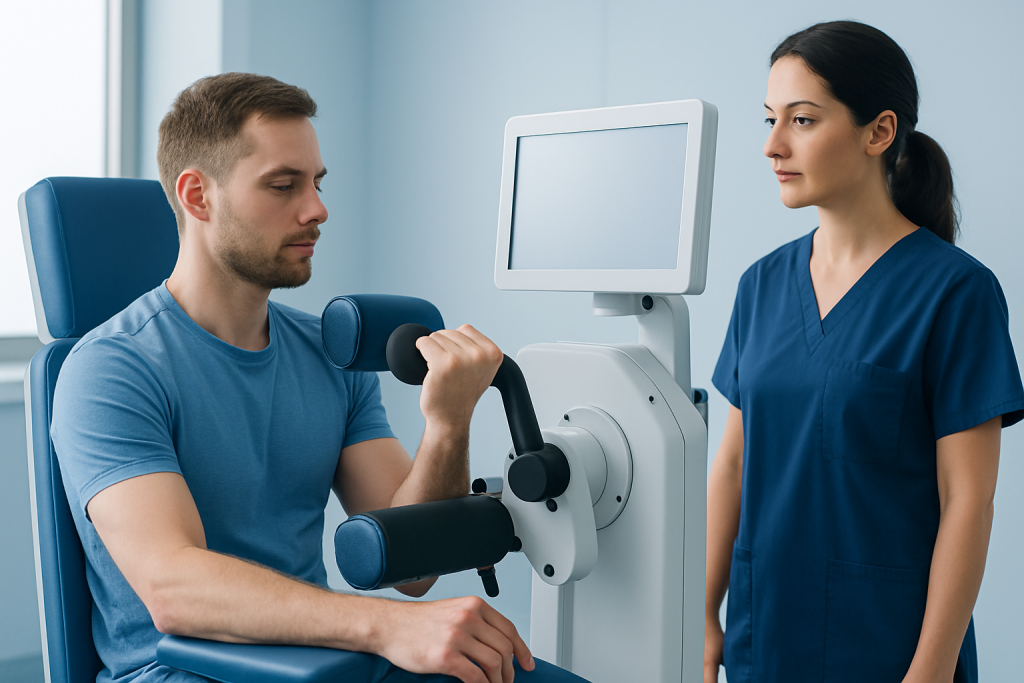
During biceps training, a mild burning sensation in the muscle during the last repetitions can be normal. A temporary feeling of fatigue or soreness the next day may also occur, especially when introducing a new exercise or increasing volume. These responses usually settle with rest and do not by themselves mean injury.
By contrast, pain that is sharp, sudden, or located near the elbow or shoulder is worth paying attention to. Discomfort that changes lifting technique, lingers for several days, or appears together with bruising, swelling, or weakness may suggest tendon irritation or strain rather than ordinary workout fatigue.
People sometimes mistake a “good pump” for progress and continue training through warning signs. A safer habit is to notice what the body is saying: muscle effort should feel challenging, but joints, tendons, and nerves should not be forced into pain. If an exercise consistently causes symptoms, it is usually better to adjust the movement than to push through it.
Causes & Risk Factors

Most biceps problems related to exercise come from loading errors rather than from the muscle itself. Common triggers include using momentum, lifting too much too soon, skipping warm-up, or repeating curls without balancing them with back and shoulder work. Poor wrist position or excessive swinging can also shift stress to the elbow and forearm.
Some people are more likely to develop irritation because of their training history or daily demands. This includes beginners who increase volume rapidly, athletes who use gripping and pulling heavily, and people who return to exercise after a long break. Prior shoulder, elbow, or cervical spine problems can also affect how the arm tolerates exercise.
Risk can rise when rest is limited. Tendons and muscles adapt during recovery, not only during the workout itself. Sleep, hydration, nutrition, and spacing sessions appropriately all play a role, especially for someone training while traveling and trying to maintain a routine in a new environment.
Diagnosis
Most people do not need formal testing for routine biceps training questions. A clinician or physiotherapist typically starts with a history of symptoms, exercise habits, previous injuries, and any recent changes in training load. They may ask which movements hurt, whether the discomfort is during lifting or afterward, and whether there was a single event that caused the problem.
A physical examination can help distinguish muscle soreness from tendon or joint issues. The clinician may check range of motion, resistance strength, tenderness, swelling, and signs of nerve involvement. If symptoms suggest a tear, tendon injury, or another condition, imaging such as ultrasound or MRI may be recommended.
For international patients, diagnosis is often made more efficiently when previous imaging reports, surgical notes, and exercise history are available. Bringing those records helps the treating team understand whether the arm problem is a new strain, an older injury that has flared up, or part of a broader shoulder or neck issue.
Treatment Options
When training causes mild soreness or overuse discomfort, the first step is usually to reduce aggravating activity and allow recovery. That may mean lowering the weight, cutting the number of sets, changing exercise selection, or pausing curls temporarily while keeping the arm active through pain-free movements. Gentle mobility and balanced upper-body work are often part of the plan.
If the issue is tendon irritation or a strain, a guided rehabilitation program may be helpful. This often progresses from symptom control to controlled loading, then to heavier resistance as tolerance improves. The exact sequence depends on the diagnosis, how long symptoms have been present, and the person’s overall fitness goals.
Treatment is not only about the biceps themselves. Because the arm works in a chain, clinicians may also address scapular control, shoulder stability, grip mechanics, and posture. In some cases, anti-inflammatory medicines or other treatments may be discussed by a doctor, but exercise-based rehabilitation is frequently central. If a tear or more serious injury is present, a specialist may recommend additional intervention.
Prevention & Self-care
The most reliable way to protect the biceps is to train them with structure. A short warm-up, controlled repetitions, and gradual progression usually matter more than chasing maximum weight. Using a full range of motion that remains comfortable, and avoiding swinging or jerking the load, helps keep the work where it belongs.
Balanced training matters as well. Rows, pulldowns, chin-up variations, and triceps work can support healthier arm mechanics than curls alone. Recovery should be planned, not accidental: alternating hard and lighter sessions, eating enough protein and overall calories for the training goal, and getting sufficient sleep all help muscle adaptation.
- Start with a load that allows clean form for all planned repetitions.
- Increase only one variable at a time, such as weight, sets, or frequency.
- Stop if sharp pain, numbness, or joint catching develops.
- Use a mirror, coach, or video feedback to reduce swinging and shoulder shrugging.
- After travel or time away from the gym, restart at a lower intensity than before.
Self-care also includes realism. The biceps respond to steady practice over time, not to daily maximal effort. People who are recovering from illness, injury, or surgery should ask a qualified clinician or rehabilitation specialist before resuming strength training, especially if they are managing care across countries or returning home soon after treatment.
When to See a Doctor
Medical advice is appropriate when arm pain is severe, persistent, or associated with swelling, bruising, deformity, numbness, or sudden weakness. These features can point to a tendon injury, tear, or another condition that needs evaluation rather than simple rest. Pain that spreads from the neck or shoulder into the arm may also need assessment.
It is also wise to seek care if symptoms interfere with daily tasks, continue despite a period of modified exercise, or keep returning whenever training resumes. A doctor or physiotherapist can help identify the exact source of the problem and create a safer return-to-training plan.
People visiting another country for care often appreciate a coordinated approach, especially when arm symptoms are part of a larger orthopedic or rehabilitation concern. At Acibadem Health Point, multidisciplinary specialists and JCI-accredited hospitals diagnose and treat these conditions for international patients in a structured, patient-centered way.
Living Well With Arm Training Goals
Training for biceps does not need to be complicated to be effective. The best results usually come from consistency, sound mechanics, and attention to the rest of the upper body. That approach supports both appearance goals and functional strength for lifting, carrying, and daily activities.
For people who train at home, in a gym, or while traveling, the same principles apply: begin conservatively, build gradually, and respect pain signals. If a routine no longer feels safe or productive, it is reasonable to reset the plan with help from a qualified professional. A small adjustment early often prevents a longer setback later.
With thoughtful progression and recovery, biceps training can remain a simple and rewarding part of an active lifestyle. When symptoms suggest something more than ordinary workout fatigue, timely evaluation helps keep the next phase of training both safer and more effective.
Frequently asked questions
How often should biceps be trained?
For most people, biceps can be trained one to three times per week depending on the overall program and recovery. The exact frequency should reflect experience level, total upper-body volume, and whether other pulling exercises already work the biceps. Adequate rest between sessions helps the muscle adapt.
Are curls the only good exercise for biceps?
No. Curls are a common and useful option, but chin-ups, rows, and other pulling exercises also train the biceps. A varied plan often produces better overall arm strength and helps reduce repetitive stress.
Why do the elbows hurt during biceps workouts?
Elbow pain may come from tendon irritation, form issues, or training volume that is too high. Using momentum, gripping too tightly, or increasing weight too quickly can all contribute. If the pain persists or worsens, it should be evaluated.
Is soreness after a workout normal?
Mild soreness one or two days after training can be normal, especially after a new routine. It should gradually improve rather than intensify. Sharp pain, bruising, or weakness is not typical soreness and deserves medical attention.
Can someone train biceps after a shoulder injury?
Sometimes, but only after the injury has been assessed and the person is cleared to exercise. Because the biceps crosses the shoulder, some movements may need to be modified. A rehabilitation specialist can help choose safe exercises and progression.
What should a traveler do if arm pain starts during a trip?
It is sensible to reduce the activity that triggers pain, avoid heavy lifting, and monitor for swelling or weakness. If symptoms are significant or ongoing, seeing a local clinician is better than waiting until the trip ends. Keeping previous medical records and exercise history handy can help the assessment go more smoothly.
References
- American Academy of Orthopaedic Surgeons
- Mayo Clinic
- National Institute of Arthritis and Musculoskeletal and Skin Diseases
- American College of Sports Medicine
This article is for general information only and is not a substitute for professional medical advice. Please consult a qualified doctor about your individual situation.
More from the Health Library



Related Specialists

Prof. Dr. Ahmet Alanay
Orthopedic Surgery & Traumatology
Dr. Sinan Aksu
Orthopedic Surgery & Traumatology
Dr. Sirri Baştürk
Orthopedic Surgery & Traumatology
Prof. Dr. Korhan Özkan
Orthopedic Surgery & Traumatology