Spotting During Ovulation

Key Takeaways
- Light spotting around mid-cycle may happen when ovulation occurs and is often brief.
- Hormone changes are a common reason, but infection, polyps, fibroids, or pregnancy-related bleeding can also cause spotting.
- Tracking the timing, color, and amount of bleeding helps a doctor interpret the pattern more accurately.
- Medical review is important if spotting is heavy, persistent, painful, or happens outside the usual cycle pattern.
- A gynecologist can use history, examination, and tests to rule out other causes and recommend treatment if needed.
Spotting during ovulation can be a normal part of the menstrual cycle for some women, often caused by hormone shifts around the time an egg is released. Understanding the pattern, possible causes, and warning signs can help distinguish a harmless change from a problem that needs evaluation.
Overview
Spotting during ovulation refers to light vaginal bleeding that appears around the middle of the menstrual cycle, when an egg is typically released from the ovary. For many women, it is short-lived, mild, and noticed only as pink, red, or brown discharge on underwear or toilet tissue.
This type of bleeding is often linked to the normal hormonal changes that happen during ovulation. A brief rise and fall in estrogen can make the uterine lining slightly less stable for a short time, which may lead to light spotting in some cycles but not others.
Because mid-cycle bleeding can also come from other causes, it helps to look at the full pattern rather than the spotting alone. Timing, volume, pain, and whether the symptom repeats each month can all guide the next step in care.
Symptoms
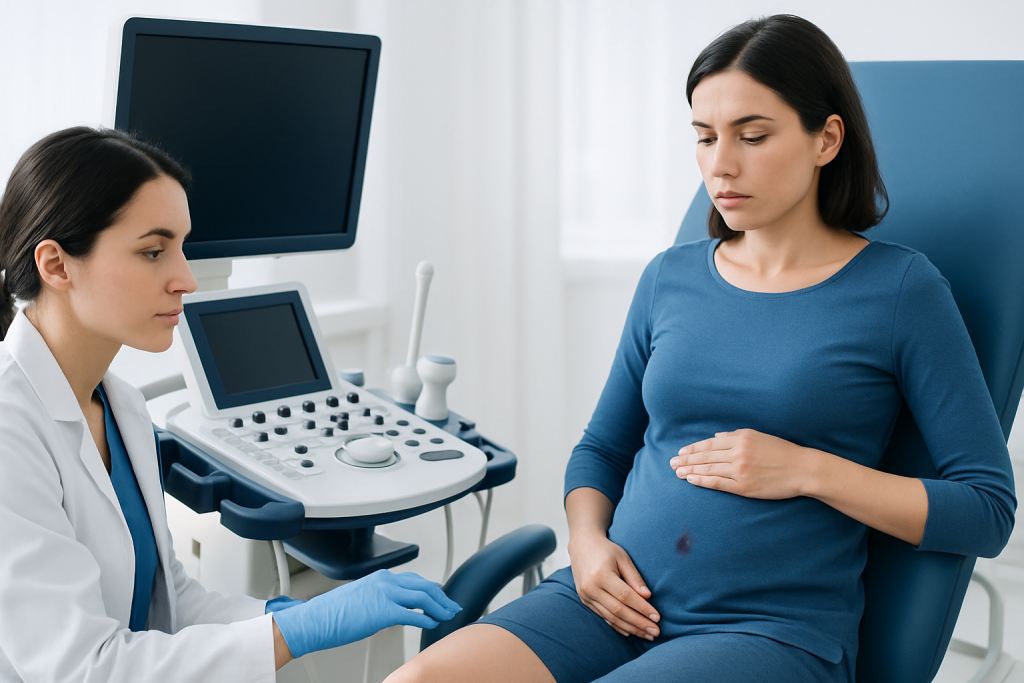
Ovulation spotting is usually light and brief. It may appear as a small amount of pinkish or brown discharge, or as a few drops of blood that do not require a pad or tampon.
Some women also notice other ovulation-related signs at the same time, such as mild one-sided pelvic discomfort, a change in cervical mucus, or a temporary increase in libido. These signs can occur together, but they do not always appear in every cycle.
Symptoms that suggest a different cause include bleeding that becomes heavier than spotting, lasts several days, occurs after sex, or is accompanied by strong pain, fever, itching, foul-smelling discharge, dizziness, or missed periods. Those patterns deserve medical evaluation rather than assuming ovulation is the explanation.
Causes & Risk Factors

The most common explanation for spotting during ovulation is a temporary hormone fluctuation. Around ovulation, estrogen levels change quickly, and that shift can affect the uterine lining enough to cause a small amount of bleeding.
Other possible causes include cervical sensitivity, especially after intercourse or a pelvic exam, and benign growths such as cervical polyps or uterine fibroids. In some cases, infections of the vagina, cervix, or pelvis can also lead to unexpected bleeding.
Risk may be higher in people who have irregular cycles, are starting or changing hormonal contraception, are under significant stress, have thyroid problems, or are approaching perimenopause. Spotting can also occur in early pregnancy, including implantation bleeding, so timing matters when pregnancy is possible.
When a woman is planning fertility treatment or monitoring her cycle for conception, mid-cycle spotting may be noticed more clearly. In that setting, a clinician usually considers both normal ovulation-related changes and fertility-related conditions that might need attention.
Diagnosis
Diagnosis usually begins with a careful conversation about cycle timing, bleeding pattern, contraception, pregnancy possibility, pain, and any recent infections or procedures. A doctor may ask when the spotting occurs relative to the period, because true ovulation bleeding tends to happen roughly mid-cycle.
A pelvic examination may be recommended if the bleeding is recurrent, unexplained, or accompanied by other symptoms. Depending on the situation, tests might include a pregnancy test, cervical screening if due, swabs for infection, blood tests, or an ultrasound to look for structural causes such as polyps or fibroids.
For women tracking ovulation for fertility reasons, cycle charts, ovulation predictor kits, or ultrasound monitoring may help confirm the timing of ovulation. Even then, spotting should not be assumed to be harmless if it becomes more frequent, heavier, or different from the usual pattern.
Treatment Options
Many cases of spotting during ovulation do not need treatment if the bleeding is light, brief, and clearly linked to the cycle. In those situations, reassurance and observation are often enough.
If a specific cause is found, treatment focuses on that issue. An infection may require medication, hormonal irregularities may be addressed with contraception or other hormone-based treatment, and polyps or fibroids may be managed medically or removed if they are causing symptoms.
For women with spotting related to fertility treatment or cycle monitoring, the plan may involve adjusting the treatment approach or following the cycle more closely. A doctor can help determine whether the bleeding is part of a normal ovulatory pattern or a sign that the treatment plan needs refinement.
It is best to avoid self-treating recurrent bleeding with hormones or over-the-counter products without medical guidance, especially when pregnancy is possible or when the cause has not been confirmed.
Prevention & Self-care
Spotting linked to ovulation cannot always be prevented, because it may simply reflect a normal hormonal shift. Still, keeping a cycle diary can make patterns easier to spot and can help a doctor interpret what is happening.
Recording the start and end of each period, the days of mid-cycle spotting, any pelvic pain, and sexual activity can be very useful. A simple tracking app or paper calendar can provide enough detail for a first consultation.
General self-care includes using panty liners if needed, staying hydrated, and noting any triggers or changes such as new contraception, travel, illness, or stress. If a woman is traveling internationally for care, bringing prior cycle records, test results, and medication lists can make the appointment more efficient and reduce repeat testing.
Maintaining routine gynecologic checkups also supports prevention by helping identify structural or hormonal issues early. For women receiving care abroad, a coordinated follow-up plan is especially helpful so that symptoms can be reviewed after returning home.
When to See a Doctor
Medical advice is recommended if spotting is frequent, lasts longer than a day or two, becomes heavier, or happens outside the expected mid-cycle window. It is also important to seek care if the bleeding follows sex, if periods become irregular, or if there is any chance of pregnancy.
Prompt evaluation is sensible when spotting is paired with pelvic pain, fever, unusual discharge, dizziness, or bleeding after menopause. These symptoms do not always mean something serious, but they do deserve a proper assessment.
Women who are trying to conceive, undergoing fertility evaluation, or managing known conditions such as fibroids or endometriosis should mention any new spotting to their clinician. In some cases, Acibadem Health Point’s multidisciplinary specialists and JCI-accredited hospitals diagnose and treat menstrual and fertility-related concerns for Myomectomy Recovery for International Patients: The Usual Travel Timeline" class="ahp-ilk">international patients in a coordinated setting.
The goal of care is not to label every small bleed as a problem, but to make sure the cause is clear and the next steps are safe. That approach is especially valuable when a woman is balancing everyday life, travel, and follow-up across different countries.
Frequently Asked Questions
Is spotting during ovulation normal?
It can be normal for some women, especially when it is very light and occurs around the middle of the cycle. A one-time episode is often not concerning, but repeated or unusual bleeding should be checked.
What color is ovulation spotting?
It is often pink, red, or brown. Brown spotting usually means the blood is older and has taken longer to leave the uterus or vagina.
Can ovulation spotting mean pregnancy?
Sometimes bleeding around the middle of the cycle is unrelated to ovulation, and early pregnancy bleeding can also occur. If pregnancy is possible, a test and medical advice are the safest next steps.
Does ovulation spotting affect fertility?
Not usually. Light mid-cycle spotting on its own does not mean a woman cannot conceive, but recurrent bleeding should be discussed if conception is taking longer than expected.
Should ovulation spotting be treated?
Not always. If it is clearly mild and tied to ovulation, treatment may not be needed; if another cause is found, the doctor will recommend appropriate care.
Can stress cause spotting around ovulation?
Stress can affect hormone patterns and cycle regularity, which may make spotting more noticeable. It is still important not to assume stress is the only cause if the bleeding is persistent or changing.
What should a woman tell the doctor about spotting?
The timing, amount, color, pain level, cycle length, contraception use, and any pregnancy possibility are especially helpful details. These clues often make diagnosis faster and more accurate.
References
- American College of Obstetricians and Gynecologists
- NHS
- Mayo Clinic
- World Health Organization
This article is for general information only and is not a substitute for professional medical advice. Please consult a qualified doctor about your individual situation.
More from the Health Library



Related Specialists

Prof. Dr. A. Taner Usta
Gynecology & Obstetrics
Prof. Dr. Ahmet Tayyar
Gynecology & Obstetrics
Prof. Dr. Ahmet Cem Batukan
Gynecology & Obstetrics
Dr. Sevgi Selen
Gynecology & Obstetrics