Can You Get Pregnant On Your Period

Key Takeaways
- Bleeding during a period does not fully prevent pregnancy.
- Sperm can survive inside the reproductive tract for several days.
- Short or irregular cycles can make ovulation happen soon after a period.
- Different types of vaginal bleeding can look like a period but have other causes.
- Reliable contraception is the best way to prevent unplanned pregnancy.
Pregnancy during a period is less likely, but it is not impossible. Understanding how the menstrual cycle works helps explain why timing, cycle length, and sperm survival can sometimes overlap in ways that allow conception.
Overview
For many people, a period feels like the part of the cycle when pregnancy should be off the table. In reality, that assumption is close to true for some, but not for everyone. Pregnancy depends on when ovulation happens, how long sperm can remain alive, and whether bleeding is truly a menstrual period or another kind of vaginal bleeding.
The question is especially relevant for people with short, irregular, or difficult-to-track cycles. It also comes up when a person has sex near the end of their period and ovulates earlier than expected. From a practical point of view, the safest way to think about the menstrual cycle is that pregnancy risk changes across the month rather than disappearing completely on any one day.
For international patients planning care, fertility questions often become more important when cycles are irregular, contraception is uncertain, or pregnancy is desired after travel or treatment. A clear understanding of cycle timing can make discussions with a clinician more focused and useful.
How pregnancy can happen during a period
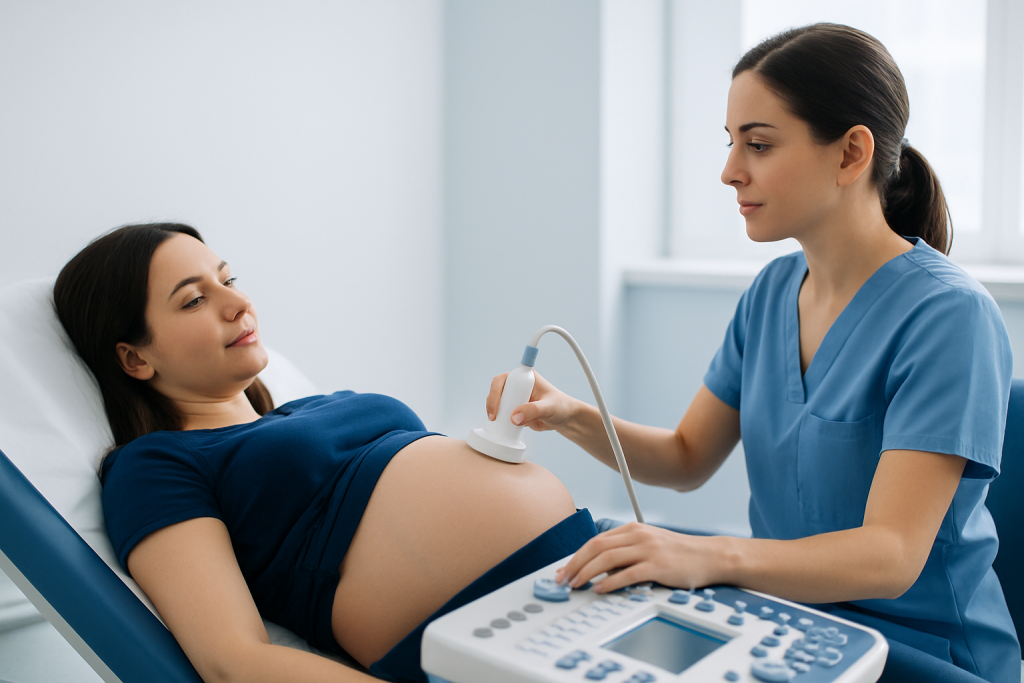
Pregnancy begins when sperm meets an egg after ovulation. The egg is available for a short time, but sperm can survive in the reproductive tract for several days under favorable conditions. That means sex during a period may still lead to pregnancy if ovulation happens soon afterward.
This is most likely when cycles are short. For example, if a period lasts several days and ovulation occurs early in the next cycle, sperm from sex during bleeding may still be present when the egg is released. The risk is lower in many people with regular, longer cycles, but it is not zero.
It is also worth remembering that not every episode of bleeding is a true period. Spotting around ovulation, bleeding related to hormonal contraception, and bleeding from infections or other gynecologic conditions can all be mistaken for menstruation. That is one reason why “I was on my period” is not always a reliable way to estimate fertility risk.
Symptoms and signs to notice

There are usually no special symptoms that prove pregnancy happened from sex during a period. Early pregnancy symptoms can be very similar to premenstrual symptoms, which is why timing matters so much. Common early signs include a missed period, breast tenderness, nausea, fatigue, and more frequent urination.
Some people notice light spotting and assume it is an early period, when it may actually be implantation bleeding or another type of bleeding. Others may have irregular cycles and find it hard to tell whether their bleeding pattern is normal. If cycles change suddenly, become much heavier, or are associated with pain, it is reasonable to seek medical advice.
Because the body does not give a clear “safe” signal during menstruation, fertility awareness methods work best only when cycles are regular and well tracked. Even then, they are not as reliable as barrier methods, hormonal contraception, or long-acting reversible contraception for preventing pregnancy.
Causes & risk factors
Several factors can make pregnancy during or right after a period more likely. Short menstrual cycles are one of the most important. When ovulation happens earlier in the cycle, the fertile window can overlap with the days right after menstrual bleeding ends.
Irregular cycles also increase uncertainty. Stress, weight changes, certain medications, postpartum changes, breastfeeding, perimenopause, and conditions such as polycystic ovary syndrome can all make ovulation harder to predict. In these situations, a bleeding episode may not give much information about fertility timing.
Other practical risk factors include having sex near the end of a period without contraception, assuming bleeding means no ovulation is possible, and using cycle tracking without backup methods when a pregnancy would be difficult to manage. If someone is travelling, recovering from illness, or changing routines, cycle tracking can become even less dependable.
- Short cycles, often under 28 days
- Irregular or unpredictable ovulation
- Sex near the end of menstrual bleeding
- Misinterpreting spotting as a true period
- Using no contraception or inconsistent contraception
How doctors evaluate the situation
If pregnancy is possible, the first step is usually a home urine pregnancy test at the appropriate time after sex or after a missed period. Testing too early can give a false negative, so timing matters. A clinician may recommend repeat testing if the result is unclear and symptoms continue.
When periods are irregular or bleeding patterns are unusual, a doctor may ask about cycle length, recent sexual activity, contraception, and any symptoms such as pain or heavy bleeding. In some cases, blood tests or an ultrasound may be used to clarify whether bleeding is related to the menstrual cycle, pregnancy, or another cause.
For patients arranging care from another country, it helps to bring a simple cycle history: first day of the last period, usual cycle length, bleeding pattern, and any contraception used. That information can guide a more efficient consultation and reduce guesswork.
Treatment options and pregnancy planning
If pregnancy is not desired, emergency contraception may be an option after unprotected sex, depending on timing and individual circumstances. A clinician or pharmacist can advise on the most appropriate method and the time window in which it may still work. Ongoing contraception can then be discussed to reduce future uncertainty.
If pregnancy is desired, sex during or soon after a period is not inherently harmful. The main question is whether the fertile window is being reached. Couples trying to conceive often benefit from understanding cycle timing, including ovulation signs and the typical window when conception is most likely.
If pregnancy has occurred, care focuses on confirming the pregnancy, estimating gestational age, and checking that the pregnancy is developing normally. People with pain, significant bleeding, dizziness, or a history of ectopic pregnancy should seek prompt medical assessment, because early pregnancy symptoms should never be ignored if they are unusual.
Prevention & self-care
The most dependable way to prevent pregnancy is to use contraception consistently and correctly. Barrier methods, hormonal options, and long-acting reversible methods each have different benefits, and the best choice depends on health history, comfort, and future pregnancy plans. A clinician can help match the method to the person, especially when cycles are irregular.
Tracking cycles can still be useful, but it works best as a support tool rather than the only protection if pregnancy would not be welcome. Apps can help record patterns, yet they should not replace medical guidance when cycles are changing or bleeding is unusual. If self-tracking is being used for conception, multiple signs of ovulation may be more informative than calendar dates alone.
Simple self-care also matters: maintain a record of bleeding dates, note changes in flow or pain, and seek advice for persistent irregularity. For people traveling for fertility care or gynecologic evaluation, having these details ready can make appointments more productive and reduce repeat testing.
When to see a doctor
Medical advice is sensible if a period is late and pregnancy is possible, if bleeding is unusually heavy, or if cycles are frequently irregular. It is also worth speaking with a doctor when there is confusion about whether bleeding is a true period or spotting from another cause. Clear answers often come from combining history, testing, and sometimes imaging.
Prompt care is especially important if bleeding is accompanied by severe pain, fainting, shoulder pain, fever, or one-sided pelvic pain, because these symptoms can signal a more urgent problem. Anyone with a positive pregnancy test and bleeding should be assessed, even if the bleeding seems light.
Acibadem Health Point’s multidisciplinary specialists and JCI-accredited hospitals support international patients who need evaluation for menstrual concerns, fertility questions, or pregnancy-related care. The goal is to provide clear diagnosis, coordinated treatment, and follow-up that fits the realities of traveling for medical care.
Frequently asked questions
Can you get pregnant on your period?
Yes, it is possible, although it is less likely for many people. The risk depends on cycle length, when ovulation happens, and whether bleeding is truly a menstrual period. If pregnancy would not be welcome, contraception is still important during menstruation.
Why is pregnancy possible if I am bleeding?
Because sperm can survive for several days and ovulation may happen soon after the bleeding stops. If those timing windows overlap, conception can occur. Bleeding itself does not stop ovulation from happening later in the cycle.
Are some people more likely to get pregnant on their period?
People with short or irregular cycles are more likely to have timing overlap between bleeding and ovulation. Those who are not using reliable contraception also have a higher risk. Mistaking spotting for a period can add more uncertainty.
How soon after a period can pregnancy happen?
Pregnancy can happen quickly if ovulation occurs early and sperm are already present. This is why fertile days are not fixed for everyone and can vary from cycle to cycle. Short cycles make the overlap more likely than longer cycles do.
How can someone tell if bleeding is a period or something else?
Pattern, timing, and associated symptoms all help, but they do not always give a definite answer. A doctor may use cycle history, a pregnancy test, and sometimes an ultrasound or other evaluation. Any unusual or persistent bleeding deserves medical attention.
What should I do after unprotected sex during my period?
If pregnancy is not desired, it is reasonable to ask about emergency contraception as soon as possible. A pregnancy test may also be needed later, depending on timing. If there is pain, heavy bleeding, or a positive test, medical evaluation is important.
References
- American College of Obstetricians and Gynecologists
- MedlinePlus
- Mayo Clinic
- National Health Service
- World Health Organization
This article is for general information only and is not a substitute for professional medical advice. Please consult a qualified doctor about your individual situation.