Rarest Eye Color

Key Takeaways
- Eye color depends mainly on iris melanin and how light interacts with the eye.
- Green, gray, and some blue variations are relatively uncommon; true red or violet eyes are rare and usually linked to specific conditions or lighting effects.
- Eye color is inherited through multiple genes, so family patterns can be unpredictable.
- A sudden change in eye color or new difference between the two eyes should be assessed by an eye specialist.
Eye color is shaped by genetics, melanin, and the way light scatters in the iris. Some colors are uncommon worldwide, but the rarest eye color is better understood as a result of biology than as a simple ranking.
Overview
People often ask which eye color is the rarest, but the answer is more nuanced than a single chart or ranking. In everyday life, the most uncommon eye colors are usually those seen in only a small share of the world’s population, such as green or gray. Truly unusual appearances, like red or violet eyes, are far less common and are often linked to very specific biological conditions rather than ordinary inheritance.
Eye color is not simply painted onto the iris. It is influenced by the amount of melanin in the iris, the structure of the iris itself, and the way light scatters as it passes through the eye. That means two people with the same general eye color can still look quite different in different lighting.
For international patients who are planning care across borders, eye color may come up in the context of a general eye examination, family history, or a concern about a new change in appearance. In most cases, eye color itself is harmless, but a fresh change in color should not be ignored because it can sometimes reflect an underlying eye condition.
How eye color is determined
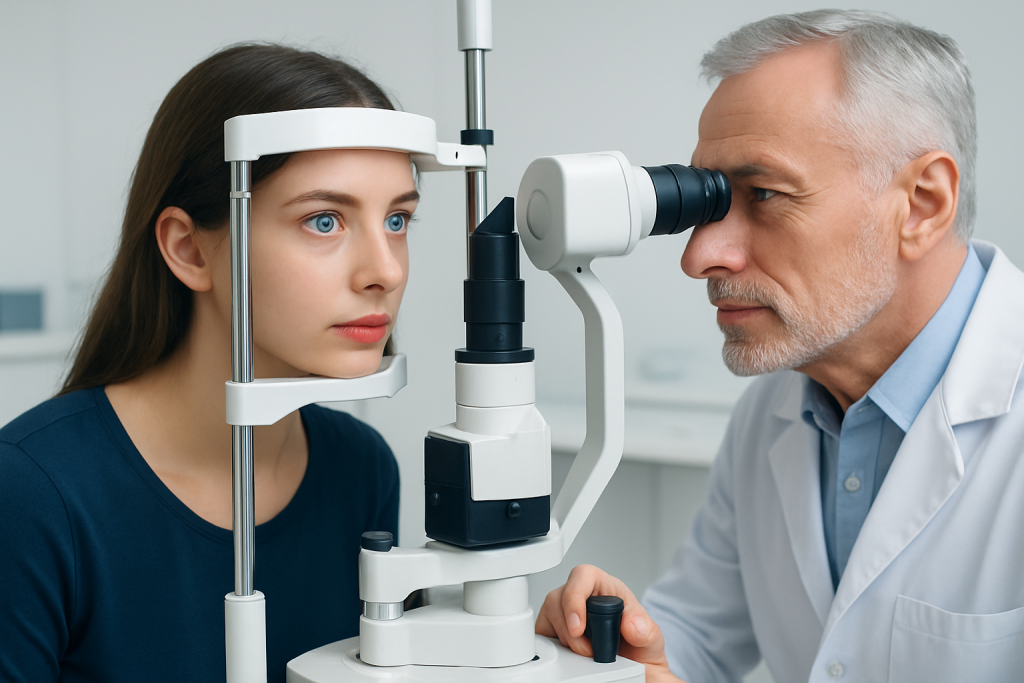
Eye color is mainly set by melanin, the pigment that also affects skin and hair color. Brown eyes contain more melanin in the iris, while blue eyes contain less. Green, hazel, and gray eyes sit somewhere in between, with color influenced by pigment levels and the way the iris scatters light.
Many people assume a single gene decides eye color, but the biology is more complex. Several genes work together, which is why children may have eye colors that differ from both parents or from siblings. This also explains why eye color can vary within families without following a simple pattern.
Infant eye color can also change during early childhood as melanin develops. A baby who appears to have blue or gray eyes at birth may later develop hazel or brown eyes as pigment increases. That early change is usually a normal part of development, not a disease process.
- More melanin generally leads to darker eyes.
- Less melanin generally leads to lighter eyes.
- Light scattering can make some eyes appear green, gray, or blue.
- Genetics can be complex, so eye color inheritance is not always predictable.
Which eye colors are rarest

There is no universal list that applies perfectly to every country or population, because eye color frequencies vary widely by ancestry and geography. Globally, brown eyes are the most common by far. Among lighter eye colors, green is often considered one of the rarest naturally occurring colors, followed by gray and some shades of blue.
Hazel eyes are also less common than brown, but they are not usually placed at the very top of rarity lists because their appearance can vary a lot from person to person. Some eyes look green in one light and brown in another, which makes exact classification difficult. That is one reason why public claims about the “rarest eye color” should be read carefully.
Unusual eye appearances such as red, violet, or very pale blue are generally not considered typical eye colors in the usual sense. Red or pink may be seen in albinism because very little pigment is present, allowing blood vessels to show through. Violet can sometimes be reported in certain forms of albinism or under strong lighting, but it is not a standard everyday eye color.
In practical terms, the rarest eye color is best thought of as a spectrum of uncommon pigment patterns rather than a single winner. This perspective is more medically accurate and helps avoid confusion when eye color appears to shift with age, lighting, or camera effects.
Why rare eye colors happen
Rare eye colors usually reflect lower levels of melanin or a particular pattern of light scattering in the iris. When the iris contains less pigment, more light is reflected back, which can make eyes look blue, gray, or green. Small differences in iris texture can also change how color is perceived from one person to the next.
Some conditions can affect eye color in a more striking way. Albinism is one well-known example, where reduced pigment in the eyes, skin, and hair can create very light irises and increased light sensitivity. Another example is heterochromia, where the two eyes have different colors, or one iris has more than one color.
Rare eye color can also be influenced by ancestry. Some eye colors are more common in certain populations and less common in others, which is why a color considered rare in one region may be seen more often in another. That is also why eye color should always be described in context, not as an absolute global label.
- Low iris melanin can make eyes appear lighter.
- Light scattering affects how blue, gray, and green tones are seen.
- Genetic variation can produce uncommon shades or mixed colors.
- Medical conditions may also influence appearance, especially when color change is recent or uneven.
When eye color is a medical issue
Most eye colors are simply a normal variation in human genetics. However, a new change in eye color, especially in one eye only, deserves attention. That is because inflammation, injury, certain medicines, pigment changes, or other eye disorders can alter the appearance of the iris.
Parents may also notice that a child’s eyes do not match in color or that one eye looks noticeably lighter or darker than the other. Sometimes this is a harmless inherited trait, but it can also be a sign of heterochromia that should be evaluated, especially if it appears after birth rather than being present from the start.
People with albinism or other causes of low pigment may also experience light sensitivity, reduced visual clarity, or nystagmus, depending on the underlying condition. In those cases, the eye color itself is not the concern so much as the broader eye health picture. A careful eye examination helps determine whether the appearance is simply genetic or part of something that needs treatment.
How doctors evaluate unusual eye color
An eye specialist typically begins with a conversation about when the eye color was first noticed, whether it has changed, and whether there is any family history of different eye colors or eye disease. A review of symptoms such as blurred vision, pain, light sensitivity, redness, or headaches helps guide the next steps.
The examination may include checking visual acuity, looking closely at the iris and pupil, and assessing the front and back of the eye with specialized instruments. If the specialist suspects an underlying condition, additional tests may be recommended to look for inflammation, pigment abnormalities, or other structural issues.
For patients traveling from another country, it can help to bring older photos, previous medical records, medication lists, and any information about family eye conditions. These details often make it easier to understand whether the eye color has always looked that way or whether something has changed over time. In many cases, a straightforward clinic visit is enough to provide reassurance.
Treatment options and what can be done
There is no treatment needed for ordinary eye color, whether it is common or rare. If a person simply has green, gray, hazel, or another uncommon natural color, no medical action is required. The goal of care is to identify whether the appearance is part of normal genetics or whether there is an underlying condition that needs attention.
If eye color changes because of inflammation, injury, or another eye disorder, treatment focuses on the cause. A doctor may recommend medicine, close monitoring, or follow-up tests depending on the diagnosis. In conditions like albinism or heterochromia, management may center on protecting vision, managing light sensitivity, and ensuring the eyes are healthy overall.
Cosmetic contact lenses can change eye appearance, but they should only be used with proper fitting and professional guidance. Poorly fitted or unregulated lenses may increase the risk of irritation and infection. Anyone considering them should have an eye professional involved, especially if there is already a history of dry eyes or sensitivity.
Prevention and self-care
Eye color itself cannot usually be prevented or changed naturally, because it is part of a person’s genetic makeup. What can be protected is overall eye health. Regular eye examinations are one of the most useful steps, especially if the person has unusual pigmentation, light sensitivity, or a family history of inherited eye conditions.
Simple self-care can also help preserve comfort. Sunglasses with UV protection, a hat in bright sunlight, and awareness of eye strain from screens can be useful, particularly for people with lighter irises or reduced pigment. These habits do not alter eye color, but they can reduce discomfort and support long-term eye wellness.
If someone is traveling for care, good preparation makes follow-up easier. Keeping copies of test results, using the same prescription eyewear if recommended, and knowing when the next check-up is due can help continuity of care after returning home. For international patients, Acibadem Health Point’s multidisciplinary specialists and JCI-accredited hospitals can diagnose and treat eye conditions with coordinated care for visitors from abroad.
- Wear UV-protective sunglasses outdoors.
- Seek prompt care for sudden color change or eye discomfort.
- Use contact lenses only with professional guidance.
- Keep records for follow-up appointments if care is received abroad.
When to see a doctor
An eye specialist should be seen if the eye color has changed recently, if one eye looks noticeably different from the other, or if there are symptoms such as pain, blurred vision, redness, light sensitivity, or pupil changes. These signs do not always point to a serious problem, but they do deserve evaluation.
It is also wise to seek medical advice if a child’s eye color difference appears after infancy, or if a person with a known condition such as albinism experiences a new visual concern. Even when the main question is simply “Why do my eyes look this way?”, a professional exam can provide clear answers and peace of mind.
People who notice an unusual eye color while planning surgery, immigration travel, or medical tourism should include eye care in their broader health review. A specialist can explain whether the appearance is normal for that person or whether a diagnostic workup is appropriate before travel or after arrival.
Frequently asked questions
What is the rarest eye color naturally?
Green is often considered one of the rarest natural eye colors worldwide, though gray and some shades of blue are also uncommon. The answer changes by population, because eye color frequencies vary across regions and ancestry groups.
Can eye color change over time?
Yes, eye color can shift slightly in childhood as pigment develops, and lighting can also make eyes appear different. A sudden change in one or both eyes in adulthood should be checked by an eye doctor.
Are red or violet eyes real eye colors?
They are not typical everyday eye colors. Red or pink may appear in albinism because of very low pigment, and violet can sometimes be seen as an optical effect or in certain rare conditions.
Why do some people have two different eye colors?
This is called heterochromia. It can be a harmless inherited trait, but if it appears later in life or comes with other symptoms, it should be evaluated by an eye specialist.
Does having a rare eye color mean a person has better or worse vision?
Not by itself. Eye color alone does not determine vision quality, although some conditions associated with low pigment, such as albinism, can affect sight.
Can contact lenses make any eye color look rare?
Colored contact lenses can change appearance, but they should be used carefully and only with proper professional fitting. They do not change the eye’s natural pigment and should never be worn without safe hygiene and guidance.
References
- American Academy of Ophthalmology
- National Eye Institute
- MedlinePlus
- NHS
- World Health Organization
This article is for general information only and is not a substitute for professional medical advice. Please consult a qualified doctor about your individual situation.