Radiation Therapy Planning: What Actually Happens Before the First Session
Key Takeaways
- Planning is a separate step from treatment and is designed to make radiation more accurate and safer.
- Simulation, imaging, and body-positioning help the team reproduce the same setup for each session.
- Small skin marks, masks, molds, or other devices may be used to keep the patient still and aligned.
- The planning process is individualized based on the cancer type, location, and treatment goal.
- Questions about travel, timing, comfort, and follow-up are best discussed before treatment starts.
Medically reviewed by the Acıbadem clinical team — June 13, 2026
Before radiation therapy begins, the team carefully maps the treatment area, protects nearby healthy tissue, and confirms the plan matches the patient’s anatomy and diagnosis. Knowing the steps in advance can make the first session feel more familiar and manageable, especially for international patients arranging care from abroad.
Overview
Radiation therapy planning is the stage where the treatment team turns a diagnosis into a precise, repeatable plan. Before the first beam is ever delivered, radiation oncologists, medical physicists, dosimetrists, and radiation therapists work together to define exactly where the radiation should go and what needs to be avoided.
For many patients, this is the first time they see how much detail is involved in modern radiotherapy. The process is not a delay; it is the part that helps treatment fit the body as closely as possible. When patients are traveling from another country, planning also helps coordinate appointments, expected treatment length, and any support needed for comfortable daily visits.
Although the steps vary by cancer type and machine technology, the goal is consistent: create a plan that is effective, safe, and tailored to the person rather than to a generic template.
What the planning visit is meant to accomplish

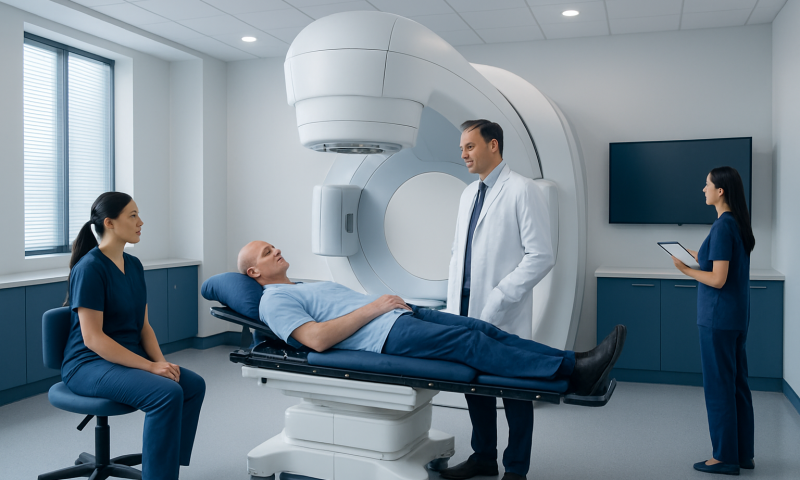
The planning visit, sometimes called simulation, is where the team gathers the information needed to design treatment. The body is mapped in the same position that will be used during therapy so the plan can be reproduced accurately day after day.
During this visit, the team may review recent scans, confirm the diagnosis and target area, and decide whether any special devices are needed to improve positioning. A patient with a brain tumor may need a custom mask, while someone receiving radiation to the pelvis may need a different setup to reduce movement and protect nearby organs.
Some patients are surprised that the planning step can take longer than an actual treatment session. That is normal. It is the careful front-loading of work that makes the later sessions faster and more consistent.
Simulation and imaging: building the map
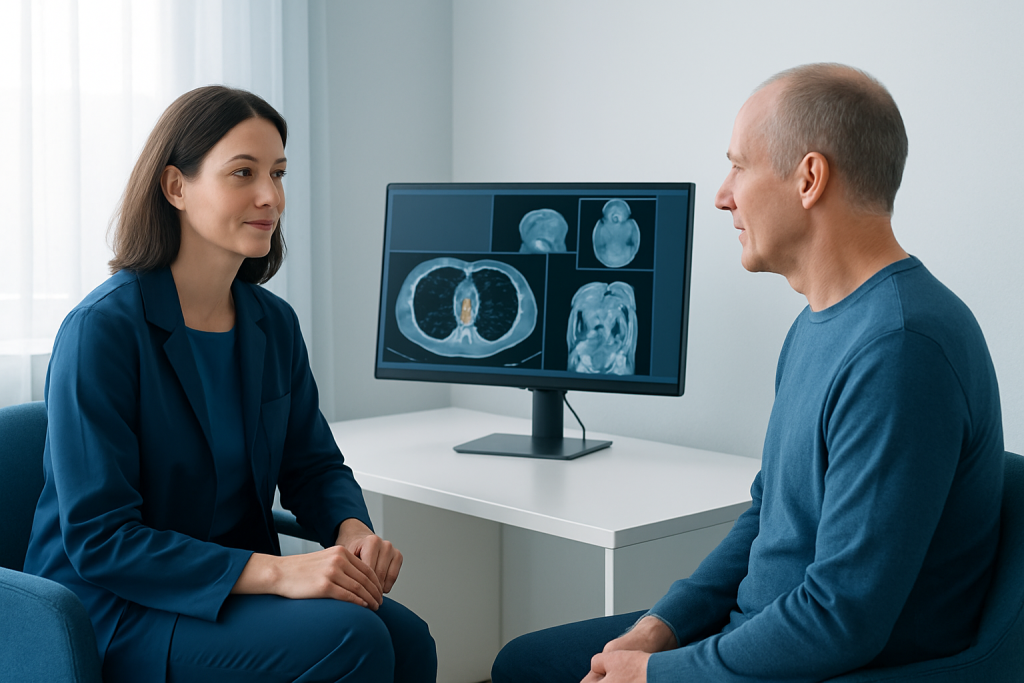
Simulation usually involves a CT scan, although other imaging studies such as MRI or PET may be fused with the planning images. These scans help the team see the tumor, nearby organs, and body contours in the exact position used for treatment.
Patients are often asked to lie still on a flat treatment table while the team adjusts cushions, supports, or immobilization devices. The purpose is not comfort alone, but reproducibility. If the same position can be recreated each day, the radiation can be aimed more precisely.
In some cases, tiny skin marks or small tattoos are placed to guide alignment. They are usually much less noticeable than patients expect, but they can be very important for daily setup. Some centers may use temporary markers instead of tattoos, depending on the treatment type and equipment.
- CT simulation is the most common planning scan.
- MRI or PET images may be combined with CT data for better detail.
- Positioning tools help reduce movement and improve consistency.
- Marks or reference points guide alignment during each session.
How the team decides the treatment shape and dose
Once the images are collected, the radiation oncologist outlines the target area and identifies organs that should receive as little radiation as possible. The dosimetrist and physicist then use specialized software to design beam angles, intensity patterns, and dose distribution.
This part of planning is highly individualized. A tumor near the lungs, for example, may require a different approach than one in the head and neck or prostate area. The team balances two priorities at once: delivering enough radiation to treat the cancer while reducing exposure to healthy tissue.
Patients do not usually see the full technical process, but they may hear terms such as 3D-conformal radiotherapy, intensity-modulated radiation therapy, image-guided radiation therapy, or stereotactic treatment. These describe different planning and delivery methods, each chosen for specific needs.
Questions, preparation, and safety checks before treatment starts
Before the first session, the team checks whether the patient needs instructions about bladder filling, bowel preparation, fasting, breathing techniques, or medication timing. These instructions are not random; they help keep internal organs in the same position from day to day.
Safety checks are a major part of the process. The team confirms the treatment site, reviews allergies or contrast needs if imaging is involved, verifies prior surgery or implants, and checks for any pregnancy concerns when relevant. If the patient has had recent weight changes, pain, swelling, or new symptoms, the plan may need to be adjusted.
For international patients, this is also the right time to clarify practical details: how many sessions are expected, whether treatment can begin soon after arrival, how follow-up will work after returning home, and who will receive the treatment summary for local doctors. Clear coordination early on can make the rest of the journey much smoother.
What patients might feel during planning
Planning is usually not painful, but it can feel unfamiliar. Patients may need to lie still for a longer time than they expected, and some may feel anxious about the equipment or the possibility of being confined in a mask or mold.
If a mask is needed, the team explains how it will be made and how it helps with accuracy. Most patients adjust better once they understand that these devices are not restrictive for punishment or control; they are tools for precision and safety. When discomfort is likely, the team can often suggest small adjustments or breathing strategies.
It is helpful for patients to speak up if they feel anxious, claustrophobic, or unable to remain still. Planning works best when the team knows what is difficult in advance, because small accommodations are often possible.
How to prepare and support recovery during the planning phase
Patients are usually advised to wear comfortable clothing and follow any skin-care or positioning instructions given by the center. Bringing a current medication list, recent imaging reports, and a written question list can help the appointment run more efficiently.
Because the planning phase may involve several steps in one day, some patients benefit from arranging transportation, rest time, and a companion if allowed. International patients may also want to build in time for translation support, document review, and any needed baseline tests before treatment begins.
Self-care during this stage is practical rather than elaborate. Good hydration, adequate sleep, and avoiding unapproved skin products on the treatment area can help reduce avoidable problems. If the care team gives specific instructions for the site being treated, those directions should take priority.
- Bring prior scans, pathology reports, and a medication list.
- Wear loose, comfortable clothing to the appointment.
- Ask about work, travel, or lodging timing before treatment starts.
- Follow all site-specific instructions exactly as given.
When to see a doctor
Patients should contact their radiation oncology team if they develop new pain, swelling, fever, shortness of breath, or any symptom that affects positioning before treatment starts. Even small changes can matter during planning, because the treatment plan may need to reflect the body’s current condition.
It is also wise to ask for medical advice if there is uncertainty about pregnancy, implanted devices, recent surgery, or whether a symptom should change the treatment schedule. The team can often address concerns quickly, and early communication may prevent delays.
After planning and throughout treatment, patients should report skin changes, difficulty swallowing, fatigue that feels out of proportion, or any side effects that worsen rather than improve. If care is being coordinated across borders, patients should make sure they know exactly whom to contact once they return home. At Acibadem Health Point, multidisciplinary specialists and JCI-accredited hospitals help diagnose and treat radiation therapy cases for international patients in a coordinated way.
Frequently asked questions
Is radiation therapy planning the same as the first treatment session?
No. Planning happens before treatment begins and is used to map the target area, confirm positioning, and build the treatment plan. The first session usually follows after the plan has been reviewed and approved.
Why do some patients need tattoos or skin marks?
These marks help the team line up the body in the same position for each session. They are usually small and may be temporary or permanent depending on the treatment center and technique.
Will the planning scan hurt?
The scan itself is usually painless. The main challenge is often staying still in the planned position for the time needed to capture accurate images.
What if the patient feels anxious in the mask or on the table?
That is a common concern, and the team can often help with reassurance, practice sessions, or small adjustments. Patients should mention discomfort right away so the staff can respond early.
Can the plan change after it is made?
Yes. If the body changes, new symptoms appear, or follow-up imaging shows something different, the plan may be adjusted. Radiation teams regularly check that the treatment still fits the patient’s current situation.
What should an international patient ask before traveling for treatment?
They should ask how long planning and treatment will take, what imaging or tests are needed on arrival, and how follow-up will be shared with doctors at home. It is also helpful to confirm language support, scheduling, and the contact person for questions after travel.
References
- American Cancer Society
- National Cancer Institute
- Radiation Oncology Society
- American Society for Radiation Oncology
- World Health Organization
This article is for general information only and is not a substitute for professional medical advice. Please consult a qualified doctor about your individual situation.