

Patellofemoral Pain Syndrome: Symptoms, Causes and Treatment

Key Takeaways
- Pain is usually felt around or behind the kneecap and often worsens with bending, stairs, or prolonged sitting.
- The condition is commonly related to overuse, movement patterns, muscle imbalance, or training changes rather than a single injury.
- Diagnosis is mainly based on history and physical examination; imaging is used when another problem is suspected.
- Treatment often centers on relative rest, physical therapy, strengthening, flexibility work, and gradual return to activity.
- Most people recover well, but ongoing swelling, locking, giving way, or severe pain should be assessed by a doctor.
Medically reviewed by the Acıbadem clinical team — August 19, 2026
Patellofemoral pain syndrome is a common source of pain around the front of the knee, especially during stairs, squatting, running, or long periods of sitting. It usually improves with a combination of activity adjustment, targeted exercise, and time, although persistent symptoms deserve a proper orthopedic evaluation.
Overview
Patellofemoral pain syndrome is a broad term for pain felt in the front of the knee and around the kneecap, also called the patella. Some people notice it as a dull ache, while others describe a sharp, catch-like discomfort when they move from one position to another.
The condition is sometimes called runner’s knee, but it is not limited to athletes. It can appear in people who have recently increased walking, stair climbing, squatting, cycling, or other activities that place repeated load on the knee. For many patients, the first step toward improvement is understanding that the problem is often related to how the knee is being used, not necessarily to permanent damage.
Because the pain may flare during everyday activities rather than only during sport, it can interfere with work travel, sightseeing, airport walking, or long periods of sitting on a flight. A clear diagnosis helps patients plan recovery realistically and choose treatments that fit daily life.
Symptoms
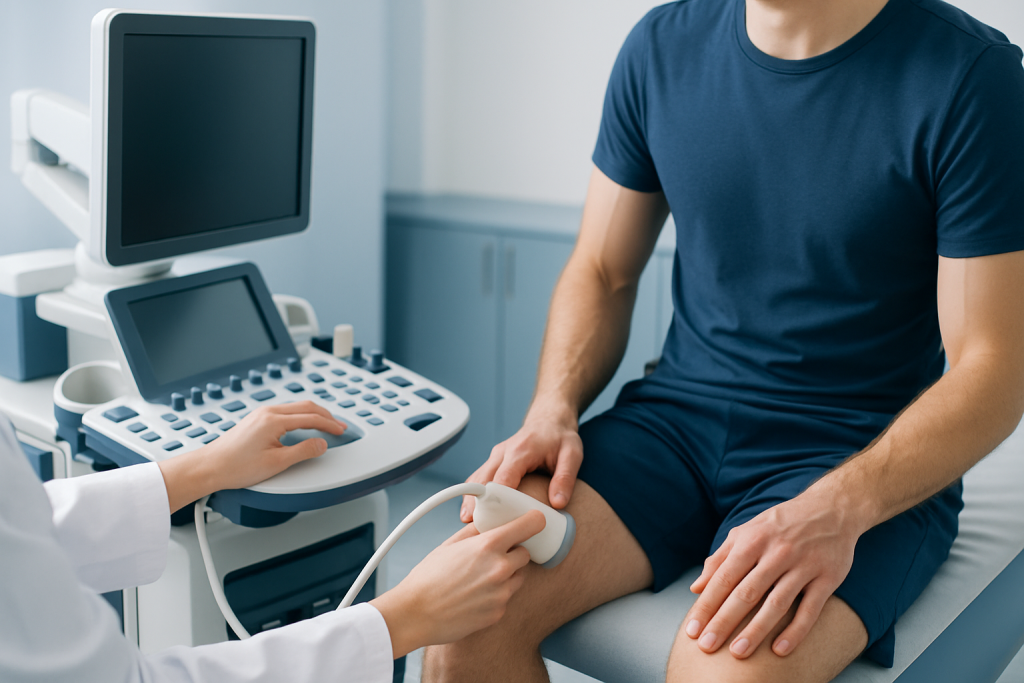
The main symptom is pain at the front of the knee, usually around or behind the kneecap. It may be present in one knee or both, and it often becomes more noticeable with repeated bending or load-bearing activity.
People commonly report discomfort when going up or down stairs, squatting, kneeling, running downhill, rising from a chair, or sitting with the knee bent for a long time. The knee may also feel stiff after rest, especially after a long car ride, film, meeting, or flight.
Typical symptoms can include:
- aching or pressure around the kneecap
- pain during squats, lunges, or step-downs
- pain after prolonged sitting with the knee bent
- tenderness when pressing around the front of the knee
- occasional sensations of weakness or instability without true joint damage
Swelling is usually minimal. If the knee locks, gives way repeatedly, becomes very swollen, or pain follows a distinct injury, another diagnosis may need to be considered.
Causes & Risk Factors

Patellofemoral pain syndrome is usually multifactorial. Rather than a single cause, it often develops when the tissues around the kneecap are overloaded faster than they can adapt. That overload may come from sudden changes in activity, training on hills, new footwear, altered work routines, or long periods of sitting followed by intense exercise.
Contributing factors may include weakness or poor endurance in the hip and thigh muscles, reduced flexibility in the quadriceps or hamstrings, foot mechanics that change how force travels through the leg, or movement patterns that increase stress at the front of the knee. In some people, knee shape or alignment also plays a role, but that does not automatically mean the knee is “damaged.”
Common risk factors include:
- a recent increase in running, jumping, walking, or stair use
- long periods of kneeling or squatting
- hip, thigh, or calf muscle imbalance
- prior knee pain or overload injuries
- repeated downhill activity or hard-surface training
Because the condition is often linked to load management, international patients preparing for travel should think beyond rest alone. A long trip, packed sightseeing schedule, or carrying luggage can keep the knee irritated unless activities are paced thoughtfully.
Diagnosis
Diagnosis is usually made through a careful conversation and physical examination. A doctor will ask where the pain is felt, what movements make it worse, how activity has changed over time, and whether there was a specific injury. This history is often more useful than a scan when the pattern is typical.
During the examination, the clinician may observe walking, squatting, step-down movements, and knee alignment. They may also check hip strength, flexibility, foot position, and tenderness around the kneecap. These observations help identify contributing factors that can guide treatment.
X-rays or other imaging are not always needed. They may be recommended if symptoms are unusual, if there is swelling, locking, catching, instability, or if the doctor wants to rule out arthritis, cartilage injury, fracture, or another knee condition. In many cases, the diagnosis remains clinical and treatment begins without delay.
Treatment Options
Treatment is usually conservative at first and focuses on reducing irritation while building better support around the knee. The aim is not complete inactivity, but rather a smarter balance between rest and movement. Many people improve when they temporarily scale back the specific actions that provoke pain and then rebuild tolerance gradually.
Physical therapy is often central. A tailored program may emphasize strengthening of the hips, quadriceps, and core, along with flexibility work and movement retraining. The exact plan depends on the person’s activity level, symptoms, and goals, whether that means returning to recreational sport, a demanding job, or comfortable travel.
Other approaches may include:
- short-term activity modification instead of complete rest
- ice after flare-ups if it feels soothing
- supportive taping or a knee brace in selected cases
- shoe or orthotic review when foot mechanics contribute
- gradual return to running, hiking, or stair-heavy routines
Pain medicines or anti-inflammatory medicines may sometimes be used, but they should be discussed with a doctor, especially for patients with stomach, kidney, heart, or other medical concerns. Surgery is rarely needed for uncomplicated patellofemoral pain syndrome and is considered only when another structural problem is identified.
Prevention & Self-care
Self-care works best when it is specific. Instead of avoiding all movement, patients usually do better by identifying which activities irritate the knee and adjusting them intelligently. Shorter walking segments, slower stair use, or temporary limits on deep squats can keep symptoms from escalating while the knee settles.
Strength and flexibility matter, but so does pacing. A person who has been inactive and then returns to long walks, gym classes, or intensive sightseeing may need a gradual build-up rather than a full schedule on day one. For travelers, planning rest breaks, lighter luggage, and more comfortable footwear can be as important as any exercise routine.
Helpful habits may include:
- increase activity gradually, especially running and stair work
- alternate higher-load and lower-load days
- wear shoes that feel stable and comfortable for the activity
- maintain the home exercise plan recommended by a physical therapist
- use better squat and step mechanics rather than forcing depth
Improvement is often measured in function, not just pain. A knee that tolerates daily tasks better each week is moving in the right direction, even if occasional mild soreness remains during recovery.
When to See a Doctor
Medical evaluation is appropriate when front-of-knee pain lasts more than a few weeks, limits work or exercise, or keeps returning after attempts at self-care. A doctor can confirm the diagnosis, check for contributing factors, and rule out other causes of knee pain.
Prompt assessment is especially important if the pain began after a clear injury, the knee is swollen, the joint locks or gives way, there is fever or redness, or weight-bearing becomes difficult. These features do not always signal a serious problem, but they deserve careful attention.
Patients who are traveling for care or following up from another country may benefit from a coordinated plan that includes diagnosis, therapy instructions, and a realistic recovery timeline before returning home. At Acibadem Health Point, multidisciplinary specialists and JCI-accredited hospitals diagnose and treat patellofemoral pain syndrome for international patients as part of coordinated orthopedic care.
Living With Patellofemoral Pain Syndrome
Patellofemoral pain syndrome can be frustrating because the pain often appears during ordinary movement rather than a dramatic injury. The good news is that most cases improve when the knee is supported with the right combination of load management, exercise, and follow-up.
Recovery is usually a stepwise process. Some days feel better than others, and that variation is normal. What matters most is that pain gradually becomes less limiting and that activities can be resumed without repeatedly triggering a flare.
For patients who must balance treatment with work, family duties, or international travel, practical planning is part of care. Clear instructions from the treating team, a home exercise plan, and a gradual return schedule can make the difference between temporary relief and lasting improvement.
Frequently asked questions
Is patellofemoral pain syndrome the same as runner’s knee?
Runner’s knee is a common name for patellofemoral pain syndrome. The term describes pain around the kneecap, often brought on by repetitive bending or loading. It can affect runners, but also people who walk a lot, climb stairs frequently, or sit for long periods.
Does this condition mean the kneecap is out of place?
Usually, no. Most cases are related to how forces pass through the knee, along with muscle strength, flexibility, and movement patterns. The kneecap may track less smoothly in some people, but that does not automatically mean it is dislocated or structurally damaged.
Will rest alone fix the problem?
Short-term rest can calm an irritated knee, but complete rest by itself often does not solve the underlying issue. A gradual exercise plan, especially one focused on hip and thigh strength, is commonly part of recovery. The best approach is usually relative rest plus rehabilitation.
Can someone keep exercising with patellofemoral pain syndrome?
Often yes, but the activity may need to be adjusted. Lower-impact options, shorter sessions, and avoiding painful ranges can help keep fitness going without repeatedly flaring the knee. A physical therapist can suggest a safe progression back to full activity.
How long does recovery usually take?
Recovery varies from person to person and depends on how long symptoms have been present, activity demands, and how consistently the treatment plan is followed. Some people improve within weeks, while others need a longer rehabilitation period. Persistent pain should be reviewed by a clinician.
When is imaging needed?
Imaging is not always required because many cases are diagnosed by history and examination. It may be useful if the pain pattern is unusual, if there is swelling or mechanical symptoms, or if the doctor suspects another knee condition. The decision is based on the individual case.
References
- American Academy of Orthopaedic Surgeons
- Mayo Clinic
- NHS
- American Physical Therapy Association
- Cleveland Clinic
This article is for general information only and is not a substitute for professional medical advice. Please consult a qualified doctor about your individual situation.
Joint and spine care in Turkey — expert assessment & treatment
JCI-accredited · board-certified surgeons · reply within 24h
Add us as a Preferred Source to see more of our trusted health content across Google Search, AI Overviews and Discover.
More from the Health Library



Related Specialists

Prof. Dr. Ahmet Alanay
Orthopedic Surgery & Traumatology
Dr. Sinan Aksu
Orthopedic Surgery & Traumatology
Dr. Sirri Baştürk
Orthopedic Surgery & Traumatology
Prof. Dr. Korhan Özkan
Orthopedic Surgery & Traumatology