

Knee Brace: Uses, Types and Benefits

Key Takeaways
- Knee braces are used to support, protect, or unload the knee joint in a range of conditions.
- Different braces serve different purposes, from simple compression sleeves to rigid functional or hinged designs.
- A brace is most helpful when it is matched to the diagnosis and worn correctly.
- Braces can reduce symptoms, but they do not replace rehabilitation, strength work, or medical evaluation.
- Persistent swelling, instability, locking, or worsening pain deserves assessment by a qualified doctor.
Medically reviewed by the Acıbadem clinical team — August 19, 2026
A knee brace can help stabilize the joint, ease strain, and support recovery after injury or surgery. The right brace depends on the cause of symptoms, activity level, and a clinician’s guidance.
Overview
A knee brace is a device worn around the knee to provide support, limit harmful movement, or reduce stress on specific parts of the joint. For some people, it is a short-term aid after an injury; for others, it is part of a longer plan for managing arthritis, ligament problems, or recovery after surgery.
The challenge is that “knee brace” describes many different products. A soft sleeve that offers compression is very different from a hinged brace that controls side-to-side motion. Choosing the right type matters because the best brace is the one that matches the reason it is being used.
For international patients planning care away from home, a brace may also be part of a wider treatment path that includes imaging, physiotherapy, and follow-up checks. In that setting, the goal is not only comfort during travel, but safe movement and a clear recovery plan once the person returns home.
Symptoms and situations a knee brace may help
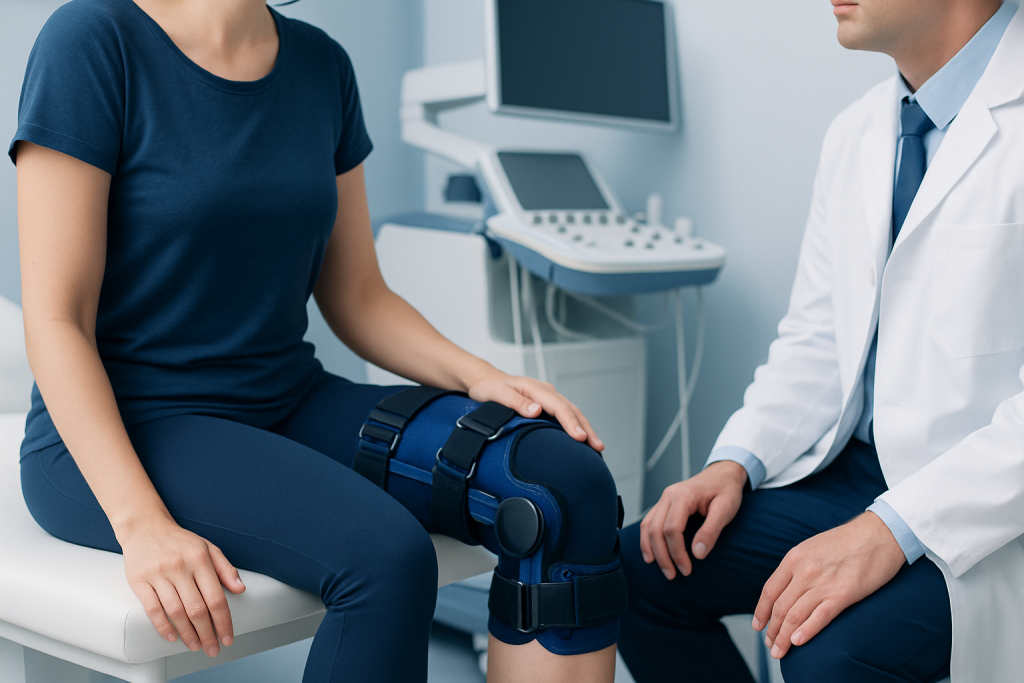
A brace is often considered when the knee feels unstable, painful, swollen, or weak during daily activities. It may help people who notice the joint giving way, especially when climbing stairs, walking on uneven ground, or returning to sport after injury.
Braces are commonly used in conditions such as ligament sprains, meniscus injuries, osteoarthritis, patellar tracking problems, and after selected surgeries. They may also be recommended temporarily while a diagnosis is being clarified, particularly if movement is painful and the knee needs gentle protection.
Typical reasons a clinician may suggest bracing include:
- Support after a sprain, strain, or minor instability
- Protection during rehabilitation after surgery or injury
- Compression to help manage swelling and awareness of the joint
- Unloading one area of the knee in arthritis or cartilage wear
- Helping an athlete return gradually to activity
A brace should not be viewed as proof that the knee can be ignored. If symptoms continue despite support, the underlying cause may need a different treatment approach.
Causes and risk factors

Knee problems that lead to bracing often begin with injury, overuse, or wear-and-tear changes in the joint. A torn ligament, irritated tendon, meniscus injury, or cartilage degeneration can all alter how the knee moves and create a sense that it needs outside support.
Risk tends to rise with activities that place repeated stress on the joint, such as running, jumping, pivoting, or frequent kneeling. People with weak thigh and hip muscles, previous knee injuries, or alignment issues may also place extra load on the knee and notice symptoms sooner.
Age-related changes matter as well. As cartilage becomes less resilient over time, some people develop arthritis-related pain and stiffness that improve with a brace designed to offload pressure. In these cases, the brace is usually one part of a broader strategy that also includes exercise, weight management when relevant, and movement modification.
Not every painful knee benefits from bracing. Pain from infection, referred pain from the hip or back, or an acute fracture needs proper medical evaluation rather than a brace alone.
Types of knee braces
Not all knee braces are built for the same task. A soft compression sleeve may improve comfort and give a sense of warmth and support, while a hinged brace can help control motion after ligament injury or surgery. Unloader braces are designed to shift pressure away from the worn part of the joint, often in osteoarthritis.
Some braces are primarily preventive or supportive, and others are corrective or protective. A clinician may choose a brace based on the exact problem, how active the person is, and whether the goal is Knee Pain Relief: Causes and Treatment" class="ahp-ilk">pain relief, stability, or motion control.
Common categories include:
- Sleeves: lightweight compression and mild support
- Hinged braces: extra stability with controlled bending
- Functional braces: support for ligament injuries and return to activity
- Unloader braces: reduce pressure on one side of the knee
- Immobilizers: limit motion when temporary protection is needed
Because fit matters, the same brace can feel helpful for one person and uncomfortable for another. A brace that slips, pinches, or changes walking pattern should be reassessed.
Diagnosis and how clinicians decide on bracing
A brace is usually recommended after a medical history and physical examination. The clinician will ask when the pain began, what activities worsen it, whether the knee swells, and whether there are episodes of locking, catching, or giving way.
Examination may include tests of stability, range of motion, tenderness, and gait. Imaging such as X-rays or MRI may be used when the diagnosis is unclear or when the clinician needs more detail about bone, cartilage, or ligament injury.
The decision to use a brace is often practical rather than dramatic: can it reduce symptoms, protect healing tissue, or help the person move safely while treatment continues? In an international-patient setting, this may involve coordinating imaging, fitting, physiotherapy instructions, and a plan for follow-up once the patient has traveled back home.
It is important to match the brace to the diagnosis. A brace that is appropriate for mild arthritis is not necessarily suitable after a ligament tear, and a temporary immobilizer should not usually be worn longer than advised.
Treatment options
A knee brace is best understood as one tool within treatment, not the treatment by itself. Many knee conditions improve with a combination of rest from aggravating activity, targeted exercise, pain relief measures, and sometimes bracing.
For injuries, the early focus is often on protecting the joint, reducing swelling, and restoring safe movement. For chronic conditions such as osteoarthritis, bracing may be paired with strengthening exercises, physical therapy, activity adjustment, and sometimes injections or surgery if symptoms remain limiting.
How the brace is used matters. It may be worn only during walking or sport, for a limited time each day, or during specific phases of rehabilitation. Overuse of a brace can sometimes lead to stiffness or dependence on external support, so usage should be reviewed regularly.
Useful treatment partners often include:
- Physiotherapy to restore strength, balance, and joint control
- Home exercises approved by a clinician
- Ice or elevation for short-term swelling, when appropriate
- Pain relief strategies recommended by a doctor
- Surgical care when structural damage requires it
How to use a knee brace safely
Correct fit is essential. A brace that is too loose may slide down and fail to support the knee, while one that is too tight can irritate the skin, reduce comfort, and discourage proper movement. If the brace has straps or hinges, the fitting instructions should be followed carefully.
Skin should be checked regularly for redness, pressure marks, numbness, or swelling below the brace. A light layer of clothing under the brace may help some people, but the fit should still be secure and not overly bulky.
It is also sensible to keep moving in the ways a clinician allows. Gentle walking or exercises prescribed by a physiotherapist can support circulation and recovery, while sudden twisting, jumping, or returning too quickly to sport may set progress back.
Travelers who are recovering away from home should bring the brace, written instructions, and a summary of their diagnosis if possible. That makes it easier for follow-up clinicians in another country to understand exactly what was recommended and whether the plan needs adjustment.
Prevention and self-care
Not every knee problem can be prevented, but the joint often responds well to steady, sensible care. Maintaining thigh and hip strength, using proper technique during sport, and progressing activity gradually all reduce strain on the knee.
Self-care also includes paying attention to warning patterns. Recurrent swelling after exercise, repeated giving way, or pain that lasts longer than expected after a twist or fall should not be dismissed as simple soreness. Early assessment can prevent a minor issue from becoming a longer recovery.
Helpful habits include:
- Warm up before exercise and cool down afterward
- Use supportive footwear for walking and training
- Avoid sudden increases in activity volume
- Balance rest with movement to prevent stiffness
- Follow rehabilitation exercises consistently if prescribed
For people with arthritis or prior knee injury, a brace may be part of ongoing self-management. The aim is to keep the person active and comfortable, not to replace conditioning or medical review.
When to see a doctor
Medical evaluation is advisable if the knee is swollen, unstable, locked, or painful enough to limit daily life. A brace can support symptoms, but it does not identify the cause, and some problems need prompt treatment to protect the joint.
It is especially important to seek advice after a sports injury, a fall, or any episode in which the knee cannot bear weight normally. Persistent warmth, fever, severe redness, or rapidly increasing swelling should also be assessed without delay.
People who are already using a brace should check in with a clinician if the device no longer helps, if walking becomes more difficult, or if numbness and skin irritation develop. Acibadem Health Point’s multidisciplinary specialists and JCI-accredited hospitals diagnose and treat knee conditions for international patients, with care plans designed to continue safely beyond the initial visit.
In many cases, the right next step is not “more brace,” but a better diagnosis and a rehabilitation plan that fits the person’s specific knee problem and daily demands.
Frequently asked questions
What does a knee brace actually do?
A knee brace supports the joint in different ways depending on its design. It may reduce strain, improve comfort, limit harmful movement, or provide compression and stability while healing takes place.
Can a knee brace make the knee stronger?
A brace can support the knee, but it does not strengthen muscles or repair tissue on its own. Strength and control usually improve through rehabilitation exercises and guided activity.
Should a knee brace be worn all day?
Not always. Some braces are meant only for activity, while others are used for specific periods during recovery; the right schedule depends on the diagnosis and clinician advice.
Is a soft sleeve enough for knee pain?
A soft sleeve may help with mild swelling, warmth, or general support, but it is not suitable for every problem. More unstable injuries or arthritis-related pressure changes may need a different brace type.
Can a brace delay recovery if used too much?
If worn longer than needed, a brace can sometimes contribute to stiffness or overreliance on external support. That is why follow-up and rehabilitation are important parts of care.
When is knee pain a sign that I need a doctor?
A doctor should evaluate knee pain that is severe, persistent, associated with swelling or instability, or follows an injury. Locking, inability to bear weight, or rapidly worsening symptoms also deserve prompt assessment.
References
- American Academy of Orthopaedic Surgeons
- Mayo Clinic
- National Institute of Arthritis and Musculoskeletal and Skin Diseases
- NHS
This article is for general information only and is not a substitute for professional medical advice. Please consult a qualified doctor about your individual situation.
Joint and spine care in Turkey — expert assessment & treatment
JCI-accredited · board-certified surgeons · reply within 24h
Add us as a Preferred Source to see more of our trusted health content across Google Search, AI Overviews and Discover.
More from the Health Library


Related Specialists

Prof. Dr. Ahmet Alanay
Orthopedic Surgery & Traumatology
Dr. Sinan Aksu
Orthopedic Surgery & Traumatology
Dr. Sirri Baştürk
Orthopedic Surgery & Traumatology
Prof. Dr. Korhan Özkan
Orthopedic Surgery & Traumatology