

Knee Pain: Causes, Symptoms and Treatment

Key Takeaways
- Knee pain can start suddenly after an injury or develop gradually from overuse or arthritis.
- Pain location, swelling, stiffness, and instability can help point to the cause.
- Diagnosis often includes a physical exam and, when needed, imaging or lab tests.
- Treatment may involve rest, activity changes, physical therapy, medication, or procedures.
- Early medical advice is helpful when pain is severe, persistent, or affects weight-bearing.
Medically reviewed by the Acıbadem clinical team — August 19, 2026
Knee pain is a common symptom with many possible causes, from strain and sports injuries to arthritis and inflammation. A careful evaluation helps identify the source and guide treatment that supports walking, movement, and daily comfort.
Overview
Knee pain is one of the most common reasons people look for orthopedic care, yet it is not a diagnosis on its own. It is a signal that something in or around the knee is irritated, injured, inflamed, or wearing down.
The knee carries body weight, absorbs impact, and depends on a balance of bones, cartilage, ligaments, tendons, muscles, and the joint lining. Because so many structures work together, the source of pain can range from a minor strain to arthritis or a more significant internal injury. Understanding where the pain is coming from matters more than simply naming the symptom.
For many people, knee pain affects daily choices in a very practical way: how long they can walk, whether they can use stairs, how confidently they travel, and how easily they return to exercise or work. A clear assessment can help patients avoid unnecessary worry and choose the right level of care.
Symptoms
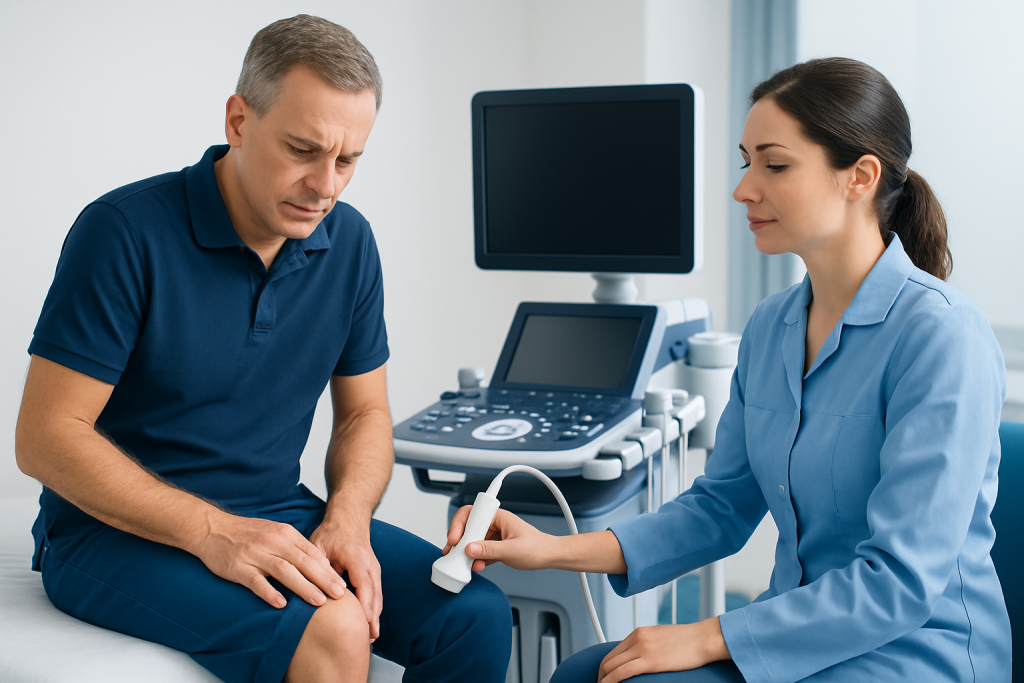
Knee pain does not always feel the same from person to person. Some people notice a sharp pain after twisting the knee, while others describe a dull ache that builds during the day or after sitting for a long time.
Common features include swelling, stiffness, warmth, clicking, catching, weakness, or a sense that the knee may give way. Pain may be felt in the front of the knee, along the inner or outer side, behind the knee, or deep inside the joint.
It can help to notice a few details before a medical visit:
- When the pain began and whether it followed an injury
- Whether the knee swells, locks, or feels unstable
- What movements make it worse, such as stairs, kneeling, running, or standing up
- Whether symptoms are improving, staying the same, or gradually becoming more limiting
Some causes also bring symptoms outside the knee itself, such as fever, redness, or pain in other joints. These patterns can be useful clues for the clinician.
Causes & Risk Factors

Knee pain can arise from acute injury, repetitive stress, age-related change, or a medical condition that affects the joint. In younger and active adults, the pain often follows a fall, a sports collision, a sudden twist, or repeated loading during training. In older adults, cartilage wear and arthritis become more common explanations.
Typical causes include ligament sprains, meniscus tears, tendon irritation, bursitis, patellofemoral pain, osteoarthritis, inflammatory arthritis, gout, and referred pain from the hip or lower back. In some cases, the pain is linked to infection or another systemic problem that needs prompt attention.
Risk factors vary by cause, but several patterns come up often. These include previous knee injury, high-impact sports, long periods of kneeling or squatting, excess body weight, muscle weakness, poor alignment, and occupations that place repetitive stress on the joint. Age can also increase risk, especially for degenerative conditions.
Travel, changes in routine, and carrying luggage can make an already sensitive knee feel worse. For international patients, it is important to mention any prior imaging, treatment, or surgery so the new team can build on existing information rather than repeat steps unnecessarily.
Diagnosis
Diagnosis usually begins with a detailed history and a physical examination. The clinician will ask how the pain started, where it is located, what makes it better or worse, and whether there has been trauma, swelling, locking, or instability.
During the examination, the doctor may compare both knees, check range of motion, assess tenderness, test ligament stability, and look for signs of fluid in the joint. Walking pattern, hip and ankle alignment, and muscle strength may also be reviewed, since nearby structures can influence knee symptoms.
Depending on the findings, additional tests may be recommended. X-rays can show arthritis, fractures, or alignment changes. MRI may be used when soft tissue injury is suspected, such as a meniscus or ligament problem. Ultrasound can help evaluate fluid, tendons, or bursae. Blood tests or joint fluid analysis may be needed if infection or inflammatory disease is a concern.
Good diagnosis is often as much about ruling things in and out as it is about naming one condition. That careful approach helps ensure treatment matches the real problem.
Treatment Options
Treatment depends on the cause, severity, and how much the knee pain interferes with daily life. Many patients improve with conservative care, especially when the problem is related to overuse, mild injury, or early arthritis.
Initial management may include relative rest, temporary reduction of activities that aggravate the knee, ice or heat when appropriate, and support such as a brace or walking aid in selected cases. Physical therapy is often central because strengthening the muscles around the knee and improving movement patterns can reduce strain on the joint.
Medication may be recommended to ease pain or inflammation, but the right choice depends on the person’s overall health, age, and other medical conditions. In some situations, injections, drainage of fluid, or other procedures may help. Surgical treatment may be considered for significant ligament injuries, certain meniscus tears, advanced arthritis, or problems that do not improve with non-surgical care.
For patients traveling from another country, treatment planning should also consider rehabilitation logistics. Follow-up visits, imaging review, and physical therapy access after returning home are important parts of the plan, not afterthoughts.
Prevention & Self-care
Not every cause of knee pain can be prevented, but many flare-ups can be reduced with consistent habits. The goal is not to protect the knee by avoiding all activity; it is to keep the joint strong, mobile, and well supported.
Helpful self-care habits include maintaining a healthy body weight, warming up before exercise, increasing activity gradually, using proper footwear, and building strength in the quadriceps, hamstrings, hips, and calves. People who squat, kneel, or climb often for work may benefit from pacing breaks and ergonomic adjustments.
Simple symptom management can also make daily life easier:
- Choose lower-impact exercise during flares, such as cycling or swimming if tolerated
- Use ice after an acute strain or swelling episode, if recommended by a clinician
- Avoid sudden increases in running, jumping, or stair use
- Pay attention to pain that lingers after activity rather than settling quickly
If a patient is returning home after Herniated Disc Treatment Abroad: Injection, Rehab, or Surgery?" class="ahp-ilk">treatment abroad, it helps to leave with a clear home plan for exercise, wound care if relevant, medication review, and follow-up timing. Acibadem Health Point’s multidisciplinary specialists and JCI-accredited hospitals can diagnose and treat knee pain for international patients, with coordination that supports recovery after travel.
When to See a Doctor
Medical evaluation is wise when knee pain lasts more than a short period, returns frequently, or limits walking, work, sleep, or sports. It is also appropriate when home measures do not bring steady improvement.
Prompt assessment is especially important if the knee is very swollen, red, warm, deformed, unstable, or unable to bear weight. A doctor should also be seen if pain follows a major injury, the knee locks, there is a fever, or the person feels unwell overall.
Even when symptoms seem manageable, earlier care can prevent a small problem from becoming a longer one. That is particularly true when patients are planning travel, because an untreated knee injury can become harder to manage away from home or without access to familiar records.
Living Well With Knee Pain
Many people with knee pain continue to work, travel, and stay active once the cause is identified and treatment is matched to the condition. The most useful plan is usually the one that fits the person’s routine, goals, and real-life demands.
Tracking symptoms can help. A simple note about activity level, swelling, stiffness, and pain timing may reveal patterns that guide treatment adjustments. It can also help clinicians judge whether the knee is healing or whether a different strategy is needed.
Patience is important, especially when recovery involves physical therapy or gradual strengthening. The knee often responds best to steady, measured progress rather than abrupt changes. With appropriate care, many patients regain comfort and confidence in movement.
Frequently asked questions
What is the most common cause of knee pain?
There is no single most common cause for everyone, because the answer depends on age, activity level, and health history. In active people, overuse and injury are common; in older adults, arthritis becomes more likely. A clinician can help identify which pattern fits the symptoms.
Can knee pain go away on its own?
Some mild knee pain from strain or overuse may improve with rest and reduced activity. Pain that is severe, recurrent, or lasting longer than expected should be evaluated so the underlying cause is not missed. Ongoing symptoms often improve more reliably when the problem is clearly identified.
When should imaging be done for knee pain?
Imaging is usually considered when the examination suggests injury, arthritis, or another condition that cannot be confirmed by symptoms alone. X-rays and MRI are not needed for every patient, but they can be useful when results will change treatment. The doctor will decide based on the history and physical exam.
Is walking good or bad for knee pain?
It depends on the cause and how the knee responds. Gentle walking may be helpful for some people, while others need temporary activity reduction to let inflammation settle. If walking consistently increases pain, swelling, or limping, it is better to have the knee assessed.
Can knee pain come from the hip or back?
Yes. Pain can sometimes be felt in the knee even when the hip, lower back, or nerves are the main source. That is one reason a full musculoskeletal examination is important.
What can international patients prepare before traveling for knee care?
It helps to gather prior imaging, surgery notes, medication lists, and a short symptom timeline before the trip. Patients should also think ahead about rehabilitation needs after returning home. Clear records make it easier for the treating team to coordinate safe, efficient care.
References
- American Academy of Orthopaedic Surgeons
- Mayo Clinic
- NHS
- Arthritis Foundation
- National Institute of Arthritis and Musculoskeletal and Skin Diseases
This article is for general information only and is not a substitute for professional medical advice. Please consult a qualified doctor about your individual situation.
Joint and spine care in Turkey — expert assessment & treatment
JCI-accredited · board-certified surgeons · reply within 24h
Add us as a Preferred Source to see more of our trusted health content across Google Search, AI Overviews and Discover.
More from the Health Library



Related Specialists

Prof. Dr. Ahmet Alanay
Orthopedic Surgery & Traumatology
Dr. Sinan Aksu
Orthopedic Surgery & Traumatology
Dr. Sirri Baştürk
Orthopedic Surgery & Traumatology
Prof. Dr. Korhan Özkan
Orthopedic Surgery & Traumatology