Myoclonic Epileptic Seizures

Key Takeaways
- Myoclonic seizures usually appear as quick, shock-like muscle jerks that may affect one area or the whole body.
- They can occur as part of epilepsy syndromes, sleep-related conditions, metabolic problems, or other neurological disorders.
- Diagnosis often includes a detailed history, neurological examination, EEG, and sometimes brain imaging or blood tests.
- Treatment may involve anti-seizure medicines, trigger management, and lifestyle adjustments tailored to the underlying cause.
- Keeping a seizure diary and getting enough sleep can help reduce seizure risk for some patients.
- Prompt medical evaluation is important when seizures are new, changing, prolonged, or associated with injury or loss of consciousness.
Myoclonic epileptic seizures are brief, sudden muscle jerks that can happen on their own or as part of an epilepsy syndrome. Understanding the pattern of symptoms, triggers, and available treatments can help patients and families seek the right neurological care with confidence.
Overview
Myoclonic epileptic seizures are sudden, brief muscle jerks that can make a person’s arm, shoulder, leg, or even the whole body twitch unexpectedly. They are often described as lightning-fast movements because they happen so quickly and may seem to come out of nowhere.
These jerks are not the same as an ordinary startle response, although they can look similar. In epilepsy, myoclonic seizures may happen on their own or as part of a broader seizure pattern. For many patients, the key step is not only naming the symptom, but identifying why it is happening.
Some people have a single seizure type, while others experience myoclonic jerks alongside absence seizures, generalized tonic-clonic seizures, or sleep-related events. Because the causes can vary, evaluation by a neurology specialist is important for a clear diagnosis and a treatment plan that fits the person’s age, medical history, and daily life.
Symptoms
The hallmark symptom is a sudden, brief jerk of a muscle or group of muscles. It may look like the person has been shocked, tossed by a quick spasm, or momentarily “thrown” by an involuntary movement.
Myoclonic seizures often affect the arms and shoulders, but the legs, face, or trunk can also be involved. Some patients notice several jerks in a row, while others have isolated episodes. These movements may happen more often after waking, when sleep is interrupted, or during times of stress or fatigue.
Depending on the underlying seizure disorder, other symptoms may appear as well. A person might drop objects, stumble, briefly lose awareness, or have a generalized seizure at another time. If the jerks cluster, become more frequent, or begin to interfere with writing, eating, or walking, that pattern deserves medical attention.
Causes & Risk Factors

Myoclonic jerks can arise from different parts of the nervous system, and not every myoclonic movement is epileptic. In epilepsy, the jerks come from abnormal electrical activity in the brain. This is why the same outward symptom can have different meanings depending on the context.
Common epilepsy-related causes include juvenile myoclonic epilepsy and other generalized epilepsy syndromes. In some people, myoclonic seizures are linked to sleep deprivation, missed medicines, alcohol use, flashing lights, or stress. Certain neurological conditions, infections, head injuries, and metabolic disturbances can also lead to similar movements.
Risk factors may include a personal or family history of seizures, prior brain injury, certain genetic conditions, and some developmental or neurological disorders. For international patients seeking care, it is especially useful to bring prior EEG reports, imaging studies, medication lists, and a timeline of symptoms, since these details often shorten the diagnostic journey.
Diagnosis
Diagnosis usually begins with a careful conversation about what the jerks look like, when they happen, and whether the person stays fully awake during them. A doctor may ask about sleep habits, recent illness, alcohol intake, stress, medications, and any family history of epilepsy.
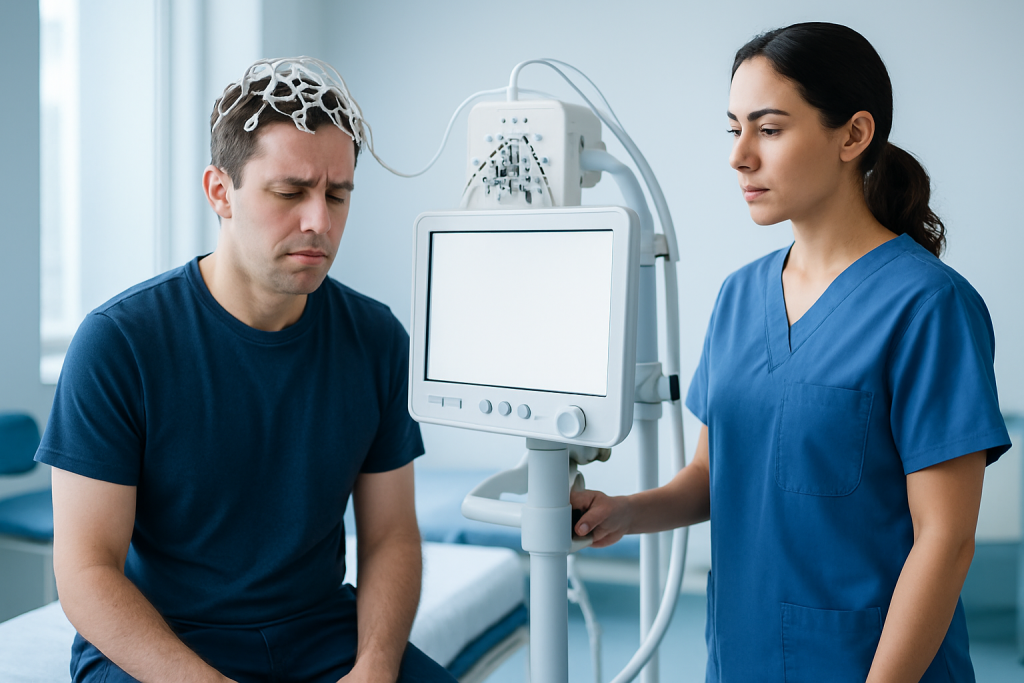
A neurological examination helps assess strength, coordination, reflexes, and thinking. An electroencephalogram, or EEG, is often important because it records the brain’s electrical activity and may show patterns that support a diagnosis of epilepsy. In some cases, the EEG is combined with sleep deprivation or prolonged monitoring to increase the chance of capturing an event.
Depending on the situation, doctors may also order brain imaging, such as MRI, and blood tests to look for metabolic or other medical causes. If a patient has traveled from another country, a specialist team may review existing test results and decide what additional studies are truly necessary, helping avoid repeating everything from the beginning.
Treatment Options
Treatment depends on the cause, the seizure type, and how often the jerks occur. Anti-seizure medicines are commonly used, especially when myoclonic seizures are part of an epilepsy syndrome. The exact medicine choice is individualized because some drugs are more suitable for generalized epilepsy than others.
When seizures are triggered or worsened by sleep loss, missed medication, or alcohol, addressing those factors becomes part of treatment. In selected cases, doctors may adjust therapy over time based on EEG findings, seizure frequency, side effects, and the patient’s response. Families should not stop or change medication on their own, even if the jerks seem mild.
For some patients, treatment also includes education about seizure first aid, safety planning, and follow-up visits to monitor control. If a different neurological or medical condition is causing the myoclonic movements, the treatment plan may focus on that underlying problem rather than epilepsy alone.
Prevention & Self-care
Not every myoclonic seizure can be prevented, but some people can reduce seizure risk by protecting their sleep, taking medicines consistently, and avoiding known triggers. A steady routine often matters more than people expect, especially in generalized epilepsies that are sensitive to tiredness and irregular schedules.
A seizure diary can be very helpful. Recording the time of day, recent sleep, stress levels, missed doses, alcohol use, and what the jerks looked like gives the treating doctor practical clues. If seizures appear after international travel, jet lag and disrupted sleep should also be noted.
- Maintain regular sleep and wake times as much as possible.
- Take prescribed medicines exactly as directed.
- Limit alcohol and avoid recreational drugs.
- Use safety precautions around heights, water, and machinery if seizures are not fully controlled.
- Arrange follow-up before long trips so treatment does not lapse while traveling.
Self-care is not a substitute for medical treatment, but it can make seizure management more predictable. Small daily habits often support better long-term control when combined with proper neurological care.
When to See a Doctor
Any new, unexplained, or recurring muscle jerks should be discussed with a doctor, especially if they happen in clusters, affect daily activities, or are accompanied by confusion or loss of awareness. Early assessment is useful because not all jerks are epileptic, and the correct diagnosis changes the treatment approach.
Urgent medical care is important if a seizure lasts unusually long, if seizures happen back-to-back without recovery, if there is injury, breathing difficulty, or a first-time seizure in a person who has never been diagnosed. New neurological symptoms such as weakness, severe headache, fever, or trouble speaking also need prompt evaluation.
For patients coming from abroad, it is reasonable to seek care where neurology, imaging, EEG testing, and follow-up can be coordinated in one setting. Acibadem Health Point’s multidisciplinary specialists and JCI-accredited hospitals diagnose and treat myoclonic epileptic seizures for international patients, with attention to both the medical workup and the practical steps of cross-border care.
Frequently asked questions
Are myoclonic seizures always a sign of epilepsy?
No. Myoclonic jerks can happen for several reasons, and some are not epileptic. A doctor looks at the full pattern of symptoms, test results, and medical history to determine the cause.
Why do myoclonic seizures often happen after waking up?
In some epilepsy syndromes, the brain is more vulnerable to seizures during transitions between sleep and wakefulness. Sleep deprivation can make this pattern more noticeable.
Can stress cause myoclonic seizures?
Stress does not usually cause epilepsy by itself, but it can lower seizure threshold in some people and make existing seizures more likely. Good sleep, routine, and treatment adherence often help reduce this effect.
What tests are commonly used to diagnose them?
Doctors often use EEG to look for abnormal electrical activity and may order MRI or blood tests depending on the clinical picture. The history of the events is just as important as the tests.
Can myoclonic seizures be treated successfully?
Many patients improve with the right anti-seizure medicine and trigger management. The best outcome usually comes from a treatment plan matched to the underlying seizure type and reviewed regularly.
What should family members do during a myoclonic seizure?
They should stay calm, protect the person from falling or injury, and observe what happens. If the jerk is followed by loss of consciousness, a longer seizure, or repeated events, medical help should be sought.
References
- Epilepsy Foundation
- National Institute of Neurological Disorders and Stroke
- International League Against Epilepsy
- Mayo Clinic
This article is for general information only and is not a substitute for professional medical advice. Please consult a qualified doctor about your individual situation.