

Lower Backache Pain

Key Takeaways
- Lower backache pain often improves with rest, gentle movement, and simple self-care, but persistent pain should be checked by a clinician.
- Common causes include muscle strain, poor posture, disc problems, arthritis, and, less often, infection or other medical conditions.
- Diagnosis usually starts with a medical history and physical examination; imaging is not always needed right away.
- Treatment may include activity changes, physical therapy, medicines recommended by a doctor, and, in some cases, procedures or surgery.
- Certain warning signs, such as leg weakness, fever, or changes in bladder or bowel control, need prompt medical attention.
Lower backache pain is common and can range from a short-lived muscle strain to a sign of a spine or nerve problem. Understanding the likely cause helps guide safe relief, appropriate treatment, and timely medical care when symptoms do not settle.
Overview
Lower backache pain refers to discomfort felt below the ribs and above the hips. It may stay in one small area, spread across the lower back, or travel into the buttocks and legs if a nerve is involved. For many people, it is linked to everyday strain rather than a serious disease, but the pattern, timing, and associated symptoms help determine what is happening.
The lower back carries much of the body’s weight and allows bending, twisting, lifting, and standing. Because it works so hard, it is vulnerable to overuse, stiffness, and injury. Pain can start after lifting something awkwardly, long hours at a desk, a long flight, a sports activity, or sometimes without a clear trigger.
For international patients, back pain can be especially inconvenient because travel, luggage handling, and long periods of sitting often aggravate symptoms. A careful evaluation helps distinguish a simple strain from a condition that may need targeted treatment before travel plans, work demands, or rehabilitation goals can safely resume.
Symptoms
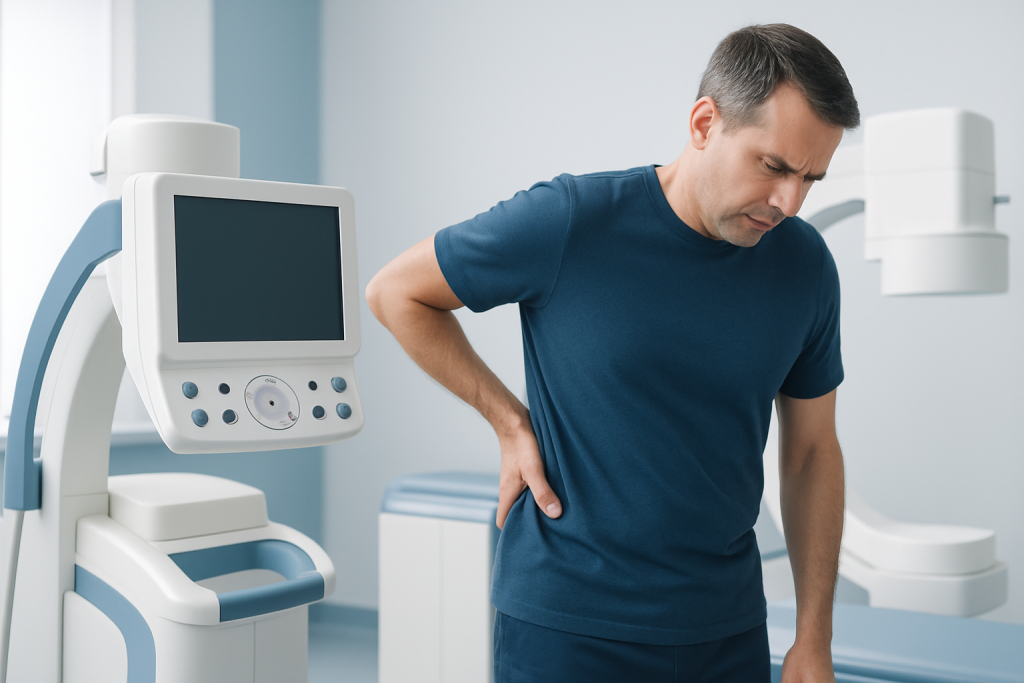
Lower backache pain does not always feel the same from person to person. It may be dull, achy, tight, sharp, or burning. Some people notice stiffness in the morning, while others feel pain later in the day after sitting, walking, or lifting.
The pain may remain local or radiate to the hips, buttocks, or one leg. When a nerve is irritated, symptoms can include tingling, numbness, or weakness. In many cases, bending, coughing, standing too long, or changing position makes the discomfort worse.
Symptoms that deserve closer attention include:
- Pain after a fall, accident, or significant strain
- Pain that wakes the person from sleep or steadily worsens
- Fever, unexplained weight loss, or feeling unwell
- Numbness, weakness, or difficulty walking
- Loss of bladder or bowel control
These features do not always mean something dangerous is present, but they suggest that the pain should be assessed promptly rather than simply watched at home.
Causes & Risk Factors

Most lower backache pain is mechanical, meaning it comes from muscles, ligaments, joints, discs, or the way the spine is being used. A sudden lift, repeated bending, prolonged sitting, poor ergonomic setup, or a combination of these can irritate the tissues and lead to pain. Muscle spasm and stiffness are common companions of this type of back pain.
Other possible causes include a bulging or herniated disc, degenerative changes in the spine, arthritis, spinal narrowing, and irritation of a nerve root. Less commonly, back pain may be related to infection, inflammatory disease, kidney problems, a fracture, or pain referred from another body area.
Risk is higher in people who smoke, carry excess body weight, have weak core muscles, work in physically demanding jobs, or spend many hours sitting without movement breaks. Age can also play a role, since wear-and-tear changes become more common over time. Previous back injury may make future episodes more likely, especially if posture, lifting habits, or conditioning are not addressed.
Diagnosis
Diagnosis usually begins with a conversation about when the pain started, what makes it better or worse, whether it travels into the legs, and whether any warning signs are present. The clinician may also ask about recent travel, work duties, exercise routines, recent injuries, and any history of cancer, infection, osteoporosis, or inflammatory disease.
A physical examination typically checks posture, movement, tenderness, muscle strength, reflexes, and sensation. These findings help identify whether the pain seems muscular, joint-related, disc-related, or nerve-related. For many people, this first assessment provides enough information to begin treatment safely.
Imaging tests such as X-rays, MRI, or CT scans are not always needed immediately. They are usually considered if there are red-flag symptoms, if pain persists despite appropriate care, or if the doctor suspects a specific structural problem. Blood tests or other studies may be ordered when infection, inflammation, or another medical condition is suspected.
Treatment Options
Treatment depends on the cause and how severe the pain is. For simple strain or overuse, the first step is often a short period of relative rest, followed by gradual return to normal activity. Gentle movement is usually preferred over staying in bed for long periods, since prolonged inactivity can increase stiffness and slow recovery.
Doctors may recommend pain-relief medicines appropriate for the person’s health profile, along with heat or cold therapy and targeted exercises. Physical therapy is often helpful because it can improve mobility, strengthen supporting muscles, and teach safer movement patterns. For people traveling from abroad, treatment plans are often designed to be practical, with clear instructions for the return home and follow-up care.
When a disc, nerve, or more advanced spine condition is involved, additional treatments may be needed. These can include injections, bracing in selected cases, or surgery when symptoms are severe, persistent, or associated with nerve problems. Surgery is not the first step for most lower backache pain, but it may be considered when other approaches are not enough or when nerve function is at risk.
Prevention & Self-care
Many episodes of lower backache pain can be reduced with everyday habits that protect the spine. Regular movement, posture awareness, and core strengthening are especially important. Even small changes, such as standing up during long travel days or adjusting a workstation, can make a meaningful difference.
Helpful self-care habits include:
- Use safe lifting techniques and avoid twisting while carrying weight
- Take movement breaks during long sitting periods or flights
- Strengthen the core and stay active with doctor-approved exercise
- Maintain a healthy body weight where possible
- Set up chairs, screens, and desks to support a neutral posture
- Sleep in a position that keeps the spine comfortable and supported
When pain is mild, a person may find that heat, gentle stretching, and light activity are enough to ease symptoms. If one side of the back is consistently more painful, if the pain returns repeatedly, or if a particular movement always triggers it, that pattern is worth discussing with a clinician so the underlying cause can be addressed.
When to See a Doctor
Medical evaluation is a good idea when lower backache pain lasts longer than expected, keeps returning, or interferes with work, travel, sleep, or everyday movement. If home care is not helping after several days, or if the pain is becoming more intense, a doctor can help identify the cause and adjust treatment safely.
Prompt assessment is especially important if the pain follows an injury, spreads below the knee, or comes with numbness, weakness, fever, unexplained weight loss, or bladder or bowel changes. These symptoms do not always point to a serious condition, but they should not be ignored.
For people planning care across borders, it is sensible to arrange evaluation before a long journey if the pain is severe or unstable. Acibadem Health Point’s multidisciplinary specialists and JCI-accredited hospitals diagnose and treat lower backache pain for international patients, with attention to both treatment and recovery planning after travel.
Living With Lower Backache Pain
Ongoing back pain can be frustrating, especially when it limits sitting, walking, exercise, or sleep. A practical plan usually works better than trying to push through everything at once. Tracking what worsens the pain, what helps, and how symptoms change over time can give both the patient and clinician useful clues.
Recovery often improves when treatment is matched to the cause. That may mean strengthening weak muscles, treating arthritis, managing a disc problem, or addressing posture and work habits. Follow-up matters, because back pain that does not improve as expected sometimes needs a revised plan rather than simply more rest.
With the right evaluation and steady self-care, many people regain comfort and mobility. The goal is not only to reduce pain, but to help the spine function well again in daily life, whether the person is at home, at work, or returning after treatment abroad.
Frequently asked questions
Is lower backache pain usually serious?
Most lower backache pain is caused by strain or other mechanical issues and improves with time and appropriate care. However, pain that is severe, persistent, or accompanied by warning signs should be medically assessed.
Should someone rest completely when the lower back hurts?
Complete bed rest is usually not recommended for long periods. Gentle movement and gradual return to normal activity are often better, unless a doctor advises otherwise.
When is imaging needed for back pain?
Imaging is not required for every episode of back pain. It is usually considered when symptoms suggest nerve involvement, after an injury, or when pain does not improve with initial treatment.
Can poor posture really cause lower backache pain?
Yes, poor posture and prolonged sitting can place extra stress on the lower back. Over time, that stress may contribute to muscle fatigue, stiffness, and pain.
What can a person do during a long flight if their back hurts?
Changing position regularly, standing or walking when safe, and using good lumbar support can help. It is also wise to avoid heavy lifting with luggage and to seek medical advice before traveling if symptoms are significant.
Does lower back pain always come from the spine?
Not always. Pain can also come from muscles, joints, nerves, kidneys, or other conditions that refer pain to the back, which is why a proper assessment matters.
References
- World Health Organization
- National Institute of Neurological Disorders and Stroke
- Mayo Clinic
- NHS
- American Academy of Orthopaedic Surgeons
This article is for general information only and is not a substitute for professional medical advice. Please consult a qualified doctor about your individual situation.
More from the Health Library



Related Specialists

Prof. Dr. Ahmet Alanay
Orthopedic Surgery & Traumatology
Dr. Sinan Aksu
Orthopedic Surgery & Traumatology
Dr. Sirri Baştürk
Orthopedic Surgery & Traumatology
Prof. Dr. Korhan Özkan
Orthopedic Surgery & Traumatology