

Ac Joint

Key Takeaways
- The AC joint connects the collarbone to the highest point of the shoulder blade and is important for shoulder movement.
- AC joint injuries often happen after a fall, sports collision, or direct impact to the shoulder.
- Pain on the top of the shoulder and discomfort when reaching across the body are common symptoms.
- Diagnosis usually includes a physical exam and sometimes X-rays or other imaging.
- Many mild AC joint injuries improve with rest, activity modification, and rehabilitation, while more severe cases may need surgery.
- A doctor should evaluate persistent pain, visible deformity, weakness, or trouble using the arm normally.
The acromioclavicular, or AC, joint is the small joint at the top of the shoulder that helps the arm move smoothly. When it is injured, people may notice pain on the top of the shoulder, swelling, and difficulty lifting the arm.
Overview
The acromioclavicular joint, commonly called the AC joint, sits at the top of the shoulder where the collarbone meets the acromion, the bony edge of the shoulder blade. It acts like a small but important hinge, helping the shoulder move with reach, lift, and rotation.
People usually become aware of this joint only after it is irritated or injured. An AC joint problem can range from a mild sprain to a more significant separation of the ligaments that hold the joint in place. For someone who needs to travel for care, this injury can be especially frustrating because everyday tasks such as carrying luggage, fastening a seatbelt, or lifting a bag may become uncomfortable.
Most AC joint injuries are manageable, and many improve with the right combination of rest, support, and guided rehabilitation. The treatment plan depends on how much the ligaments are stretched or torn and on how much the injury affects shoulder function.
Symptoms
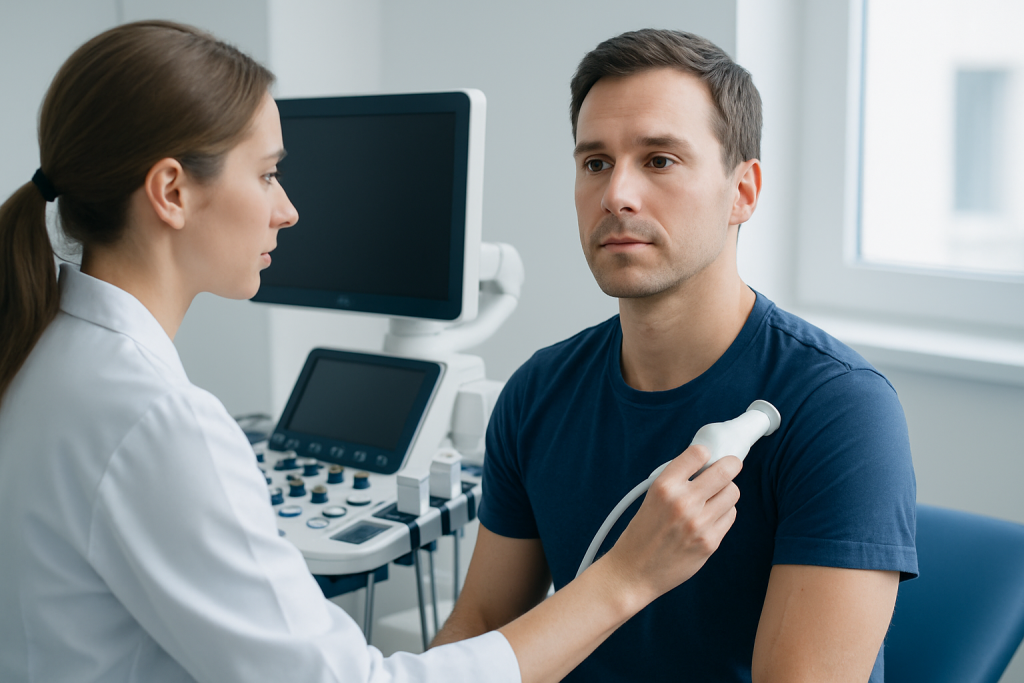
AC joint injuries typically cause pain right on the top of the shoulder rather than deep inside the joint. The area may feel tender to touch, and swelling or bruising can appear soon after the injury.
Movements that bring the arm across the body, such as reaching for the opposite shoulder or placing an object on a shelf, often make the pain more noticeable. Some people also feel weakness, stiffness, or a clicking sensation with shoulder motion.
In more serious injuries, the end of the collarbone may look raised or uneven compared with the other side. Pain may be severe enough to limit dressing, carrying items, or sleeping on the affected shoulder.
- Pain at the top of the shoulder
- Swelling or bruising
- Tenderness over the AC joint
- Reduced range of motion
- Visible bump or deformity in some cases
- Difficulty lifting or crossing the arm
Causes & Risk Factors

The most common cause of AC joint injury is a direct blow to the shoulder, especially when the arm is held close to the body. Falls onto the shoulder are a classic trigger, but contact sports, cycling accidents, and workplace injuries can also place sudden stress on the joint.
Injuries happen when the ligaments around the AC joint are stretched, partially torn, or completely torn. When that support weakens, the collarbone may shift upward and the joint becomes painful and unstable.
Some people face a higher risk because of the activities they do or the demands placed on the shoulder. Sports that involve collisions or falls, jobs that require overhead lifting, and a previous shoulder injury can all increase vulnerability. Age-related wear and repetitive strain may also make the area less tolerant of force.
Diagnosis
Diagnosis begins with a careful history and physical examination. A clinician will usually ask how the injury happened, where the pain is located, and which movements are difficult or uncomfortable.
During the exam, the doctor may press on the top of the shoulder, test shoulder motion, and compare the injured side with the uninjured side. Certain positions help show whether the AC joint is the main source of pain.
X-rays are commonly used to look for separation, alignment changes, or a fracture near the shoulder. In some situations, especially when symptoms are unclear or the injury is complex, other imaging such as MRI may help assess the ligaments and nearby soft tissues.
For international patients, having imaging reviewed alongside the examination can be helpful when planning treatment from abroad, since the severity of the injury guides whether simple care or a more structured orthopedic approach is needed.
Treatment Options
Treatment depends on the severity of the injury. Mild AC joint sprains often respond well to rest, a sling for short-term comfort, ice, and gradual return to movement. The goal is to calm pain early while preventing the shoulder from becoming too stiff.
Rehabilitation is often an important part of recovery. A physiotherapist may guide gentle range-of-motion work, then progress to strengthening the shoulder blade, rotator cuff, and surrounding muscles that help stabilize the joint.
More significant separations may require a longer period of support and a more cautious recovery plan. Surgery is usually considered when the joint is badly displaced, when pain and instability continue despite non-surgical care, or when the person’s work or sport demands make a stable shoulder especially important.
Common treatment approaches may include:
- Rest and temporary activity modification
- Ice and comfort measures early after injury
- Sling use for selected cases
- Knee Pain Relief: Causes and Treatment" class="ahp-ilk">Pain relief recommended by a doctor
- Physical therapy and supervised strengthening
- Surgery for selected moderate to severe injuries
Recovery time varies. Some people return to daily use relatively quickly, while others need a longer rehabilitation period before lifting, sports, or overhead work feels normal again.
Prevention & Self-care
Not every AC joint injury can be prevented, but shoulder protection and good movement habits can lower risk. People who play contact sports or do heavy lifting often benefit from strengthening the muscles around the shoulder blade and learning safe techniques for falls and overhead tasks.
After an injury, self-care focuses on protecting the joint while it heals. Short-term rest from painful activity is helpful, but complete immobilization for too long can slow recovery, so movement usually needs to be restarted gradually under medical guidance.
Travelers recovering away from home should plan practical support early. This may include arranging assistance with luggage, keeping prescribed braces or slings accessible during the trip, and scheduling follow-up care before leaving the treatment destination. Clear instructions from the care team make it easier to continue rehabilitation in another country.
- Strengthen shoulder and upper back muscles
- Use proper technique during sports and lifting
- Avoid pushing through sharp shoulder pain
- Follow rehabilitation guidance consistently
- Prepare for travel with simple shoulder-support strategies
When to See a Doctor
Medical evaluation is a good idea soon after a shoulder injury if pain is focused at the top of the shoulder, especially when the injury followed a fall or direct impact. Early assessment helps distinguish an AC joint problem from other shoulder injuries that may need different treatment.
Prompt care is also important if the shoulder looks deformed, the pain is severe, or the arm feels weak, numb, or difficult to move. Persistent pain that does not improve with rest, or pain that returns when activity resumes, should not be ignored.
People traveling for care should ask for follow-up instructions before returning home, including what activities to avoid, how to continue therapy, and which warning signs should trigger another medical review. Acibadem Health Point’s multidisciplinary specialists and JCI-accredited hospitals diagnose and treat AC joint injuries for international patients, with coordinated orthopedic care and rehabilitation when needed.
Recovery and Return to Activity
Recovery is usually guided by symptoms and function rather than a fixed calendar. The shoulder should be able to move comfortably, tolerate daily use, and regain strength before sports, heavy lifting, or overhead tasks are resumed.
A staged return is often safest. Light activities come first, followed by controlled strengthening, then more demanding tasks once pain and instability have settled. If the shoulder becomes more painful after activity, that is often a sign that the pace should slow down.
For those balancing recovery with international travel, planning ahead matters. Keeping follow-up notes, imaging reports, and rehabilitation instructions in one place can make it easier for the next clinician to continue care smoothly after the trip.
Frequently asked questions
What is the AC joint?
The AC joint is the small joint at the top of the shoulder where the collarbone meets the shoulder blade. It helps the shoulder move and stay stable during lifting and reaching.
How can someone tell if the AC joint is injured?
Pain on the top of the shoulder, tenderness, swelling, and pain when moving the arm across the body are common clues. A visible bump near the collarbone may suggest a more significant separation.
Is an AC joint injury the same as a shoulder dislocation?
No. An AC joint injury involves the joint at the top of the shoulder, while a shoulder dislocation usually refers to the ball of the upper arm bone coming out of the shoulder socket. They are different injuries and are treated differently.
Does every AC joint injury need surgery?
No. Many mild to moderate injuries improve without surgery through rest, support, and rehabilitation. Surgery is usually reserved for more severe separations or persistent symptoms.
How long does recovery take?
Recovery depends on the injury grade, the person’s activity level, and how well the shoulder responds to treatment. Mild injuries may improve in weeks, while more severe cases can take longer and may need structured rehabilitation.
Can the shoulder heal well after an AC joint injury?
Many people recover good function, especially when the injury is recognized early and treated appropriately. Some may still notice mild discomfort with heavy lifting or contact sports, so follow-up care is important.
References
- American Academy of Orthopaedic Surgeons
- Mayo Clinic
- MedlinePlus
- National Health Service
This article is for general information only and is not a substitute for professional medical advice. Please consult a qualified doctor about your individual situation.
More from the Health Library



Related Specialists

Prof. Dr. Ahmet Alanay
Orthopedic Surgery & Traumatology
Dr. Sinan Aksu
Orthopedic Surgery & Traumatology
Dr. Sirri Baştürk
Orthopedic Surgery & Traumatology
Prof. Dr. Korhan Özkan
Orthopedic Surgery & Traumatology