

Levoscoliosis

Key Takeaways
- Levoscoliosis means the spine curves toward the left when viewed from behind.
- Some people have no symptoms, while others notice uneven shoulders, back pain, or posture changes.
- Doctors evaluate the curve, its cause, and whether it is stable, progressive, or linked to another condition.
- Treatment depends on age, curve size, symptoms, and progression; it may include observation, bracing, physical therapy, or surgery.
- Many people with levoscoliosis live well with monitoring, exercise, and tailored follow-up.
Levoscoliosis describes a spinal curve that bends to the left, usually seen on imaging rather than felt directly by the person. It may be mild and harmless, or it may signal an underlying condition that deserves orthopedic evaluation.
Overview
Levoscoliosis is a description of spinal alignment, not a diagnosis by itself. It means the spine curves to the left when viewed from behind, creating an “S” or “C” shape on an X-ray or other imaging study.
For some people, this finding is incidental and causes no day-to-day problems. For others, it may be associated with pain, stiffness, imbalance, or an underlying issue such as muscle asymmetry, a structural spine condition, or a neurologic problem. The practical question is not only whether a curve exists, but why it is there and whether it is changing over time.
International patients often first hear the term after a scan done for back pain, a Knee Pain Relief: Causes and Treatment" class="ahp-ilk">Pain Relief" class="ahp-ilk">sports injury, or a routine health check. In that setting, a clear orthopedic review helps separate a mild, stable curvature from a curve that needs closer follow-up or treatment.
Symptoms

Levoscoliosis may not cause noticeable symptoms, especially when the curve is small. In those situations, the finding may appear only on imaging obtained for another reason.
When symptoms do occur, they can include uneven shoulders, a waistline that looks higher on one side, one hip appearing more prominent, back fatigue, or pain after standing or sitting for long periods. Some people also notice that clothing fits differently or that they lean slightly to one side.
If the curve is more significant, it can affect posture and, in some cases, the mechanics of the chest or abdomen. In children and adolescents, the concern is often progression during growth; in adults, stiffness, nerve irritation, or degenerative changes may be more relevant.
- Visible spinal or shoulder asymmetry
- Back discomfort or muscle fatigue
- Reduced flexibility
- Rib prominence on one side
- Occasional nerve-related symptoms if the spine is affected near the nerve roots
Causes & Risk Factors
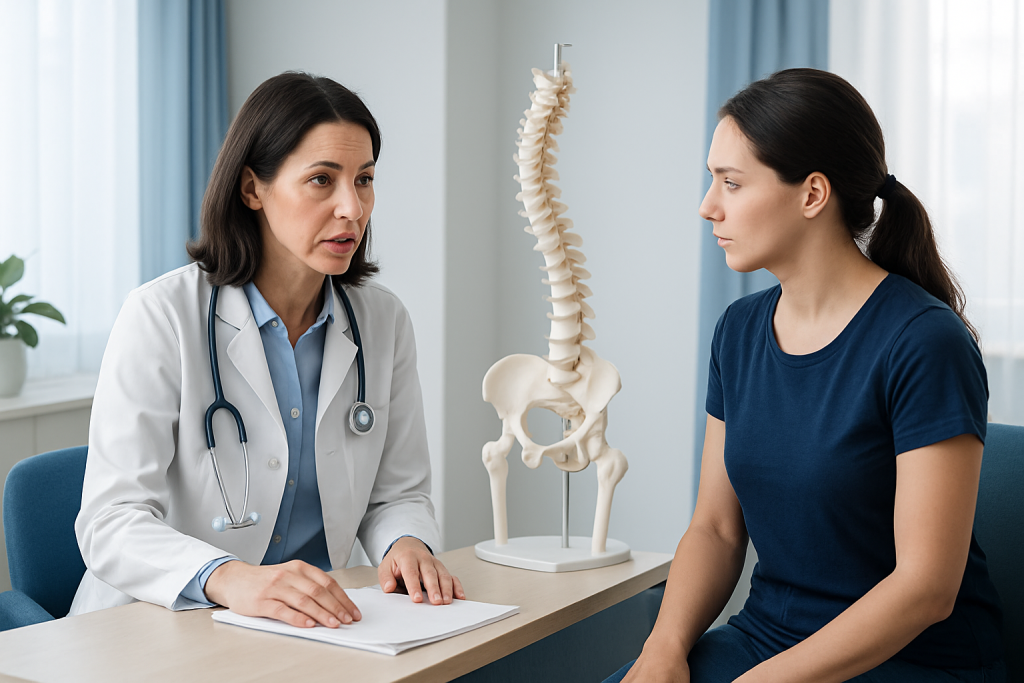
Levoscoliosis can arise for several reasons. In some people, it is part of idiopathic scoliosis, meaning no single cause is identified. In others, the curve reflects a known condition such as vertebral differences present from birth, degenerative wear in adulthood, or compensation for another structural issue.
Age matters. In children and teenagers, scoliosis may appear during periods of rapid growth. In adults, curves may become more noticeable as discs and joints wear down, especially in the lower spine. Less commonly, neurologic or muscular disorders can influence spinal alignment.
Risk factors vary with the underlying cause, but commonly include family history of scoliosis, growth spurts, prior spinal problems, osteoporosis, and spinal degeneration. A curve that bends left in the thoracic spine may also prompt clinicians to look more carefully for causes beyond routine idiopathic scoliosis, depending on the whole clinical picture.
Diagnosis
Diagnosis starts with a history and physical examination. A doctor will ask about pain, posture, function, family history, prior injuries, growth patterns, and any neurologic symptoms such as numbness, weakness, or changes in walking.
The spine is then examined for shoulder height, rib prominence, pelvic alignment, and range of motion. Imaging, usually an X-ray, confirms the direction and size of the curve and helps measure how much the spine is deviating from straight alignment. If the presentation is unusual or symptoms suggest nerve or spinal cord involvement, MRI or other imaging may be recommended.
For patients traveling from another country, bringing previous scans and reports can be especially helpful. A surgeon or spine specialist can compare older images with current ones to see whether the curve is stable or progressing, which often guides whether observation or treatment is the most appropriate next step.
Treatment Options
Treatment depends on the person, the curve, and the cause. Not every levoscoliosis needs active intervention; some curves are simply monitored. If the spine is still growing, periodic follow-up is often used to watch for progression.
Bracing may be considered in certain children and adolescents with progressive curves while growth remains. It does not usually straighten the spine permanently, but it may help reduce the chance that the curve worsens. Physical therapy can support posture, core strength, flexibility, and movement confidence, although it is not a substitute for treating a significant structural curve.
When pain, imbalance, neurologic symptoms, or curve progression become more important, a specialist may discuss additional options. Surgery is reserved for selected cases, typically when the curvature is severe, worsening, or causing functional problems that do not respond to conservative care. For adults coming from abroad, planning should include the likely recovery period, rehabilitation needs, and follow-up once they return home.
- Observation with repeat examinations and imaging
- Physical therapy and guided exercise
- Bracing in appropriate growing patients
- Pain management and symptom-directed care
- Spinal surgery in carefully selected cases
Prevention & Self-care
Not every case of levoscoliosis can be prevented, especially when it is related to genetics, growth, or structural spine changes. Still, people can take practical steps that support comfort, function, and timely review.
Keeping the back and core active through safe, regular movement may help reduce stiffness and improve body awareness. Good sitting and lifting habits can also lower strain on the back, especially for people who work at a desk or carry luggage often. If a clinician has recommended follow-up, keeping those appointments matters because curve changes are easier to manage when caught early.
For patients recovering after treatment, self-care is usually about pacing activity, following rehabilitation advice, and watching for new symptoms rather than pushing through pain. It can be useful to keep digital copies of imaging and clinic notes, particularly for international follow-up visits.
- Stay active with clinician-approved exercise
- Practice posture-friendly sitting and lifting
- Follow recommended brace or therapy plans
- Keep records of imaging and specialist reports
- Seek reassessment if symptoms change
When to See a Doctor
Medical evaluation is appropriate if a person notices a new spinal curve, uneven shoulders, persistent back pain, or a change in posture that seems to be getting worse. Children and teenagers should be assessed sooner if family members observe asymmetry during growth.
Prompt review is especially important when levoscoliosis is accompanied by weakness, numbness, leg pain, balance problems, bowel or bladder changes, or unexplained weight loss. These symptoms do not always mean something serious, but they do deserve attention because they may indicate nerve involvement or another condition needing treatment.
People who have already been told they have a curve should also return if pain changes, daily function declines, or the appearance seems to shift. Acibadem Health Point’s multidisciplinary specialists and JCI-accredited hospitals can diagnose and treat levoscoliosis for international patients, with coordinated care that supports both the procedure itself and the steps that follow after travel.
Living with Levoscoliosis
Many people do well with levoscoliosis once they understand what the curve means for their own body. The experience is often more about monitoring and adjustment than urgent intervention, especially when the curve is mild and stable.
A thoughtful plan usually combines medical follow-up, movement, and realistic expectations. That may mean scheduled imaging, targeted exercise, and, when needed, treatment for pain or progression. For those who receive care away from home, asking about documentation, rehabilitation, and follow-up timing can make the transition smoother.
With the right evaluation, most patients can avoid unnecessary worry and focus instead on the practical question: how to keep the spine as healthy and functional as possible over time.
Frequently asked questions
Is levoscoliosis the same as scoliosis?
Levoscoliosis is a type of scoliosis. The term describes the direction of the spinal curve, meaning it bends to the left when viewed from behind. It does not, by itself, explain the cause or severity of the curve.
Can levoscoliosis cause pain?
Yes, it can, but not everyone with the condition has pain. Mild curves may cause no symptoms, while larger or degenerative curves can lead to back discomfort, stiffness, or muscle fatigue. Pain should be assessed in context with the curve and overall spine health.
Does levoscoliosis always need treatment?
No. Some cases only need observation, especially if the curve is small and not progressing. Treatment is considered when there is pain, growth-related progression, functional limitation, or another underlying problem that needs attention.
How is levoscoliosis diagnosed?
Doctors usually start with a physical examination and then confirm the curve with imaging, often an X-ray. If symptoms or findings suggest nerve involvement or an unusual cause, additional imaging such as MRI may be recommended.
Can exercise improve levoscoliosis?
Exercise cannot usually erase a structural spinal curve, but it can help with strength, flexibility, posture, and comfort. A clinician or physical therapist can suggest movements that are appropriate for the person’s age, curve type, and symptoms.
When should a child with levoscoliosis be checked again?
Children and teens should return for follow-up as advised, especially during growth spurts. Reassessment is important if the curve appears more uneven, clothing fit changes, or there is new pain or posture change.
References
- American Academy of Orthopaedic Surgeons
- National Institute of Arthritis and Musculoskeletal and Skin Diseases
- Scoliosis Research Society
- Mayo Clinic
This article is for general information only and is not a substitute for professional medical advice. Please consult a qualified doctor about your individual situation.
More from the Health Library



Related Specialists
Prof. Dr. Ahmet Alanay
Orthopedic Surgery & Traumatology
Dr. Sinan Aksu
Orthopedic Surgery & Traumatology
Dr. Sirri Baştürk
Orthopedic Surgery & Traumatology
Prof. Dr. Korhan Özkan
Orthopedic Surgery & Traumatology