Arthritis In Hands

Key Takeaways
- Hand arthritis commonly causes pain, stiffness, swelling, and reduced grip strength.
- Several forms can affect the hands, including osteoarthritis, rheumatoid arthritis, psoriatic arthritis, and post-injury arthritis.
- Diagnosis may involve a physical exam, imaging, and sometimes blood tests to clarify the cause.
- Treatment usually combines activity changes, exercises, medicines, splints, and in some cases procedures or surgery.
- Early medical review is important when symptoms are persistent, worsening, or affecting daily function.
Arthritis in the hands can make everyday tasks feel slow and tiring, from opening a jar to writing a message. Understanding the type of arthritis involved helps guide treatment, hand protection, and long-term symptom control.
Overview
Arthritis in the hands refers to inflammation or wear-related change in the joints of the fingers, thumb, and wrist area. Because the hands are used constantly, even mild arthritis can become noticeable in daily life. Small tasks such as turning a key, gripping a cup, buttoning a shirt, or typing may start to feel harder than they used to.
There is more than one reason hand arthritis develops. In some people, the cartilage that cushions the joints slowly wears down over time, while in others the immune system attacks the joint lining and causes ongoing inflammation. The experience can therefore vary widely: one person may mainly notice stiffness after rest, while another may have swelling, warmth, and changing finger shape.
For international patients thinking about care away from home, the main goal is not only pain relief but also preserving function. A clear diagnosis helps match treatment to the type of arthritis, which is especially important when travel, work, and follow-up plans must be organized across countries.
Symptoms
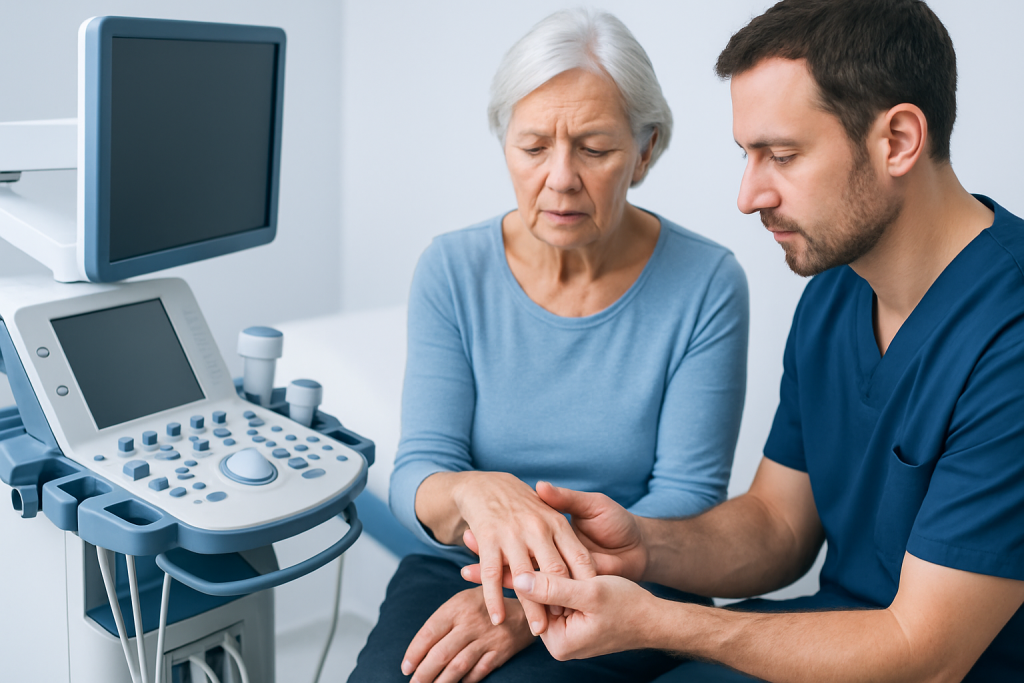
Hand arthritis does not always begin with dramatic pain. Many people first notice that their hands feel stiff in the morning or after sitting still for a while. The stiffness may ease as the joints warm up, but it can return after repetitive activity or long periods of use.
Common symptoms include aching or tenderness in the finger joints, swelling around the knuckles or thumb base, a reduced ability to make a fist, and weaker grip strength. Some people also report clicking, grinding, or a sense that the joint is “catching” during movement.
Different types of arthritis may look slightly different. Osteoarthritis often affects the end joints of the fingers or the thumb base and can lead to bony enlargement. Inflammatory forms, such as rheumatoid arthritis, more often cause soft swelling, warmth, and symptoms in several joints on both hands. Psoriatic arthritis may be linked with finger swelling that resembles a sausage-like shape and can occur with skin or nail changes.
- Morning stiffness or stiffness after rest
- Pain during gripping or pinching
- Swelling, redness, or warmth
- Reduced range of motion
- Joint shape changes over time
Causes & Risk Factors

There is no single cause of arthritis in the hands. In osteoarthritis, the cartilage covering the joint surfaces gradually thins, and the bones may rub or remodel in response. This process can be influenced by age, prior injuries, repetitive strain, and genetics.
Inflammatory arthritis has a different mechanism. In rheumatoid arthritis and some other autoimmune conditions, the body’s immune system mistakenly targets the joint lining. This causes swelling and can damage the joint over time if not properly treated. Psoriatic arthritis is another immune-related condition that can involve the fingers, thumbs, and nail-bearing joints.
Risk factors may include older age, family history, prior fractures or ligament injuries, heavy repetitive hand use, obesity, smoking, psoriasis, and other autoimmune disease. For some patients, hormonal changes or occupation-related strain may also contribute. It is worth noting that hand arthritis is not simply an unavoidable part of aging; the pattern of symptoms often points to a specific cause that can be assessed.
Diagnosis
Diagnosis usually begins with a conversation about how the symptoms started, which joints are involved, and what activities make them better or worse. A clinician will examine the hands for swelling, tenderness, deformity, stiffness, and changes in movement or grip strength. The pattern of joint involvement often provides important clues.
Imaging tests may be used to clarify the diagnosis. X-rays can show joint space narrowing, bone spurs, alignment changes, or damage patterns typical of arthritis. In some cases, ultrasound or MRI may be helpful, especially when inflammation is suspected or when earlier changes need to be seen more clearly.
Blood tests are sometimes ordered when an inflammatory or autoimmune condition is possible. These tests do not diagnose arthritis on their own, but they can support the overall picture and help distinguish between osteoarthritis and conditions such as rheumatoid arthritis. For patients traveling for care, it is useful to bring prior imaging reports, blood work, and a list of past treatments so the new team can review the full history without repeating unnecessary steps.
Treatment Options
Treatment depends on the type of arthritis, how advanced it is, and how much it affects daily function. Many people improve with a combination approach rather than a single treatment. The main aim is to reduce pain, maintain motion, and protect the joints from further strain.
Non-surgical care often includes activity modification, hand therapy, splinting, and exercises designed to preserve flexibility and strength. Medicines may be recommended to reduce pain or inflammation, depending on the cause. In inflammatory arthritis, disease-modifying medications are often important because they can help control the underlying immune process rather than only easing symptoms.
When symptoms remain troublesome despite conservative care, procedures may be considered. These can include injections in selected cases or surgery for significant joint damage, severe deformity, or loss of function. Surgical options vary by joint and diagnosis and may involve joint fusion, joint replacement, or correction of specific finger or thumb problems. The best choice depends on the person’s age, activity needs, and overall hand function.
For people receiving treatment abroad, planning matters. Follow-up appointments, rehabilitation, and medication monitoring should be organized before travel whenever possible so that recovery continues smoothly after returning home.
- Hand therapy and stretching programs
- Splints or braces for support
- Pain-relief or anti-inflammatory medicines when appropriate
- Immune-targeting treatment for inflammatory arthritis
- Selected injections or surgical repair for advanced disease
Prevention & Self-care
Not every case of hand arthritis can be prevented, but daily habits can reduce strain and support joint function. The hands often respond well to small practical changes repeated consistently over time. Simple adjustments may be especially valuable for people who use their hands for work, caregiving, art, or frequent device use.
Warmth, pacing, and joint protection are common self-care strategies. Some people find that soaking the hands in warm water, using heat before activity, or resting the joints after repetitive tasks reduces stiffness. It can also help to choose tools with larger grips, use jar openers, and avoid forceful pinching when possible.
Regular movement remains important. Gentle range-of-motion exercises, approved strengthening routines, and maintaining overall health can support joint function. If a person has inflammatory arthritis, following the prescribed treatment plan and attending monitoring visits are especially important because early control can reduce long-term joint damage.
- Use ergonomic tools and larger handles when possible
- Break repetitive tasks into shorter sessions
- Keep the hands moving with gentle exercises
- Protect joints from overgripping and prolonged strain
- Stop smoking and address other health risks where relevant
When to See a Doctor
Medical review is recommended when hand pain or stiffness lasts more than a short period, keeps returning, or begins to interfere with work and self-care. A doctor should also be consulted if joints are visibly swollen, warm, or progressively changing shape. These features can suggest inflammation or a more active form of arthritis.
It is especially important to seek assessment if symptoms involve several joints, if there is morning stiffness that lasts a long time, or if the pain begins after a prior injury and never fully settles. Numbness, sudden loss of function, fever, or significant redness also deserve prompt evaluation, since not every hand problem is due to arthritis alone.
For patients considering treatment in another country, it is sensible to arrange an orthopedic or rheumatology review before traveling if the diagnosis is uncertain. Acibadem Health Point’s multidisciplinary specialists and JCI-accredited hospitals can evaluate and treat hand arthritis for international patients, with care plans that support both treatment and follow-up.
Living Well With Hand Arthritis
Hand arthritis often becomes easier to manage when people understand which movements aggravate their joints and which strategies help them function better. Many patients continue working, cooking, traveling, and pursuing hobbies by adjusting the way tasks are done rather than giving them up entirely. Occupational and hand therapy can be especially practical for this reason.
Recovery and adaptation are usually gradual. Flare-ups may happen, but they do not always mean the condition is rapidly worsening. Keeping appointments, using prescribed supports, and reporting new symptoms early can help refine treatment over time. A thoughtful plan is particularly valuable when someone is balancing treatment with international travel or a return home after care.
With the right diagnosis and a consistent care plan, many people with arthritis in the hands are able to protect function and reduce pain meaningfully. The most useful next step is often a qualified medical assessment that matches treatment to the exact type of arthritis rather than treating all hand pain as the same problem.
Frequently asked questions
Is arthritis in the hands the same as normal aging?
No. Age can increase the likelihood of joint wear, but hand arthritis is not simply a normal or unavoidable part of aging. The underlying cause may be osteoarthritis, autoimmune inflammation, or another joint problem that deserves proper evaluation.
Can hand arthritis be treated without surgery?
Yes, many people manage symptoms without surgery. Hand therapy, splints, activity changes, and appropriate medicines are often helpful, especially when treatment begins before major joint damage develops.
What is the difference between osteoarthritis and rheumatoid arthritis in the hands?
Osteoarthritis is mainly related to joint wear and structural change, while rheumatoid arthritis is an autoimmune condition that causes inflammation in the joint lining. They can look different on examination and may require different treatment approaches.
Do hand exercises help or make arthritis worse?
Gentle, well-chosen exercises usually help by maintaining movement and reducing stiffness. Aggressive or painful exercises may aggravate symptoms, so it is best to follow guidance from a clinician or hand therapist.
When should swelling in the fingers be checked by a doctor?
Swelling should be checked if it persists, keeps returning, or comes with warmth, redness, stiffness, or reduced function. Early assessment is especially important if several joints are involved or if symptoms are getting worse over time.
Can traveling for treatment be practical for hand arthritis?
It can be, especially when the patient needs a specialist opinion or a coordinated treatment plan. Good preparation, including review of previous tests and post-visit follow-up arrangements, helps make care safer and more convenient.
References
- American College of Rheumatology
- Arthritis Foundation
- National Institute of Arthritis and Musculoskeletal and Skin Diseases
- World Health Organization
This article is for general information only and is not a substitute for professional medical advice. Please consult a qualified doctor about your individual situation.