Imaging Costs Abroad: What Makes One Scan More Expensive Than Another?

Key Takeaways
- More complex imaging studies usually cost more because they take longer and require more advanced equipment and expertise.
- Contrast material, sedation, and specialized reporting can raise the total price of a scan.
- Hospital-based imaging may cost more than standalone centers, but it can also include broader support and faster access to specialists.
- A clear quote should show what is included, such as the scan, radiologist report, and any follow-up consultation.
- Patients traveling abroad should ask about preparation, recovery time, image delivery, and how results will be shared with their home doctor.
Medically reviewed by the Acıbadem clinical team — June 13, 2026
Imaging prices can vary widely from one scan to another, especially when care is sought abroad. The final cost usually reflects the technology used, the body area examined, the need for contrast, and the level of interpretation and support included.
Overview
Two people can book what sounds like a similar scan and still receive very different price estimates. That difference is not always about the country alone. It often comes from the kind of imaging study, the body part being examined, the level of detail needed, and whether the scan is part of a larger care plan.
For international patients, the cost question usually begins before travel is booked. A person comparing options from another country may need to think beyond the scan itself and look at the full pathway: pre-scan review, the appointment environment, the radiologist’s report, and any next steps if the findings need specialist input.
Imaging is often a gateway test. It may confirm a diagnosis, rule out a concern, or help a doctor plan treatment. Because of that, the price is shaped not just by technology, but by the clinical purpose behind the study.
Why some scans cost more than others
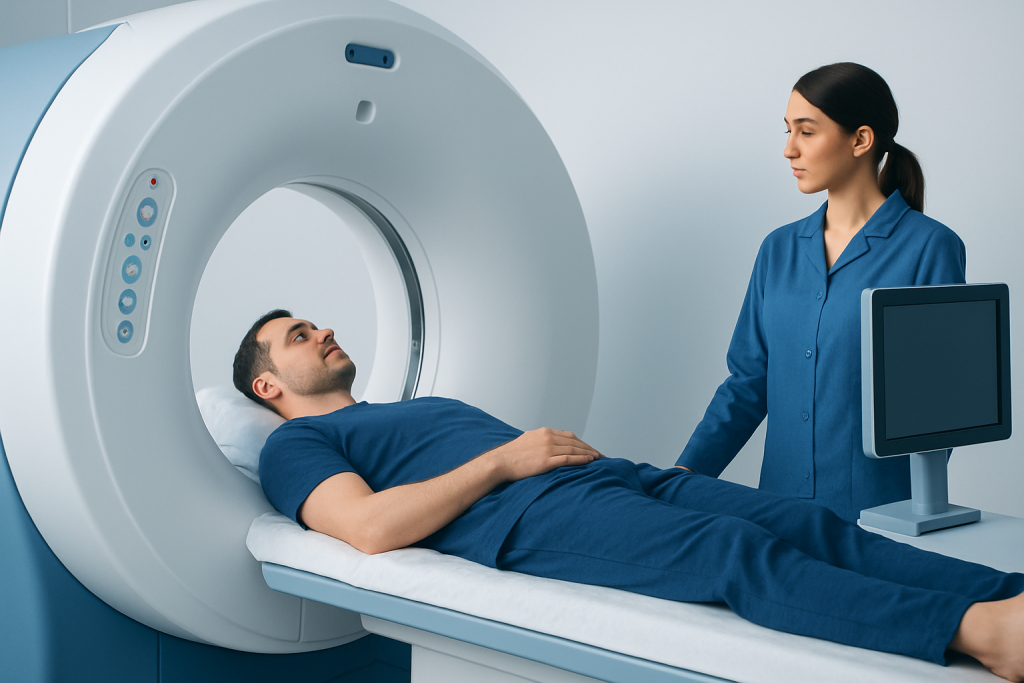
The simplest way to understand imaging prices is to look at the work involved. A short, straightforward X-ray generally uses less time and fewer resources than a detailed MRI of the spine or a whole-body CT study. More image slices, more sequences, or a larger area to cover usually mean a higher cost.
Different scans also rely on different types of equipment. Ultrasound uses sound waves and is often relatively efficient to perform, while MRI uses powerful magnets and careful technical setup. CT scans involve specialized machines and radiation planning, and some studies require extra software or reconstruction to produce the clearest result.
In many cases, the medical question itself drives the price. A scan looking for a single, clear issue may be simpler than one designed to assess multiple organs, compare old and new findings, or support pre-surgical planning. The more information the doctor needs, the more likely the exam will be customized, and customization often affects cost.
- Type of scan: X-ray, ultrasound, CT, MRI, or PET/CT
- Size of the area examined: one joint versus several body regions
- Technical complexity: routine imaging versus detailed protocols
- Interpretation needs: standard report versus specialist review
Common factors that change the price

Contrast material is one of the most common reasons a scan becomes more expensive. Some studies use an injected or swallowed contrast agent to make blood vessels, organs, or inflammation easier to see. Contrast adds preparation, monitoring, and sometimes extra safety screening, especially when kidney function or allergies need to be considered.
Sedation can also affect cost. This is more common for patients who cannot stay still for long periods, feel anxious in enclosed spaces, or are undergoing a longer examination. Sedation may require additional staff, observation time, and recovery arrangements afterward.
The setting matters too. A scan done in a high-acuity hospital environment may include access to emergency support, on-site specialists, and coordinated follow-up. A standalone imaging center may be less expensive for routine studies, but it may not offer the same breadth of support if the scan leads to a more complex diagnosis.
Other cost drivers can include urgent scheduling, after-hours appointments, second opinions on the images, digital image transfer, and translation of the report for international patients. In cross-border care, even details like airport transfer timing or coordination with an interpreter may indirectly shape the overall experience, though these services are separate from the medical scan itself.
MRI, CT, ultrasound, and X-ray: what tends to be different
X-rays are generally used for fast, focused questions such as fractures, chest symptoms, or dental and orthopedic checks. They are often among the more accessible imaging options because the exam is quick and the equipment is relatively straightforward.
Ultrasound is widely used for abdominal, pelvic, thyroid, breast, and vascular assessments. Its cost is often influenced by how detailed the exam needs to be and whether the operator must spend extra time capturing views from several angles or with Doppler techniques.
CT scans usually cost more than X-rays and often more than ultrasound because they create cross-sectional images and can cover larger areas quickly. MRI frequently sits at the higher end for many routine comparisons because it takes longer, uses more specialized machinery, and demands careful protocol selection to answer the clinical question accurately.
PET/CT and other advanced hybrid studies are typically more expensive still, as they combine imaging methods or use tracers that require specialized handling. These are not ordered casually; they are chosen when the doctor needs information that simpler scans cannot provide.
What is usually included in the quoted price
A patient comparing prices abroad should always ask what the quote actually contains. Some facilities list only the scan itself, while others bundle the radiology interpretation, image storage, same-day consultation, and follow-up communication into one amount. Two quotes can look similar until the fine print is compared.
A complete imaging package may include pre-scan review by a clinician, the actual procedure, a written report, digital copies of images, and a discussion of findings. In some international programs, coordination support is also provided so the patient can share results with their home physician after returning.
It is also sensible to ask what is not included. Additional contrast, extra sequences, follow-up imaging, pathology correlation, or a specialist appointment after an unexpected result may be billed separately. Clear communication before travel helps prevent confusion and allows the patient to budget for the full care journey, not only the scan slot.
How to compare imaging options abroad safely
Price matters, but it should never be the only question. A lower figure is not automatically better if the facility cannot provide clear reporting, appropriate safety screening, or timely access to a qualified specialist. When comparing options, patients benefit from asking practical questions in plain language.
Useful questions include whether the radiologist is board-qualified, whether the report is available in English or another preferred language, whether contrast is used, and how long the results take. International patients may also want to know how the images will be delivered securely and whether the facility can speak with the referring doctor abroad if needed.
It can help to think in terms of fit rather than bargain hunting. The best choice is often the one that matches the clinical need, the patient’s comfort level, and the follow-up plan. For someone traveling for care, that may mean paying a little more for smoother coordination, especially when time away from home is limited.
- Ask for an itemized quote before booking.
- Confirm whether contrast, sedation, and reporting are included.
- Check turnaround time for the written report and image files.
- Make sure the facility can support your language and travel needs.
Preparing for a scan and looking after yourself afterward
Good preparation can prevent delays and sometimes avoid repeat imaging. Patients should follow the center’s instructions carefully, especially if fasting is required, contrast is planned, or certain medications need to be discussed in advance. Bringing previous scans and reports can also help the radiologist make a more accurate comparison.
After the scan, most people can return to normal activities quickly, although this depends on the exam and whether sedation or contrast was used. Drinking fluids, if advised, may help after certain contrast studies. If a patient feels unwell after a scan, especially with rash, breathing difficulty, swelling, or persistent pain, medical advice should be sought promptly.
For those traveling home soon after imaging, the recovery plan should be realistic. It is wise to allow time for results, follow-up questions, and any unexpected next step before boarding a long flight. A scan may be a short appointment, but the care around it often continues after the patient leaves the facility.
When to see a doctor
A doctor should be consulted when symptoms suggest a condition that may need imaging, such as persistent pain, unexplained weight loss, a lump, neurological symptoms, shortness of breath, or ongoing abdominal complaints. Imaging is most useful when it is chosen for a clear medical reason rather than as a stand-alone decision.
Patients should also seek medical guidance if they have kidney disease, a history of contrast reaction, pregnancy, implanted devices, or severe claustrophobia. These factors do not always prevent imaging, but they can change which scan is safest and most appropriate.
When choosing imaging abroad, it is reasonable to ask for a coordinated review of the results. Acibadem Health Point’s multidisciplinary specialists and JCI-accredited hospitals diagnose and treat many imaging-related conditions for international patients, with the goal of making the process understandable and well organized from first review to follow-up.
Frequently asked questions
Why can one MRI cost much more than another MRI?
The difference may come from the body area being scanned, whether contrast is used, and how long the exam takes. More detailed protocols or specialist interpretation can also increase the price. Two MRIs may sound similar, but the clinical question behind them can be very different.
Is CT always cheaper than MRI?
Not always, but CT is often less expensive for many routine studies because it is faster and usually less time-intensive. That said, pricing varies by facility, country, and what is included in the report or follow-up. The medical reason for the scan is just as important as the machine used.
Does contrast always add a lot to the cost?
Contrast usually adds some cost because it requires extra materials, preparation, and safety checks. The amount can vary depending on the type of contrast and whether additional monitoring is needed. Patients should ask in advance if contrast is included in the quoted price.
What should international patients ask before booking imaging abroad?
They should ask what is included in the quote, how long results take, whether the report will be in a usable language, and how images will be shared. It is also helpful to confirm if contrast, sedation, or follow-up consultation are extra. Clear answers make travel planning much easier.
Can a scan be done if someone has kidney problems or a metal implant?
Often yes, but the imaging choice may need to be adjusted. Kidney function matters for some contrast studies, and implanted devices may affect whether MRI is suitable. A doctor or radiology team should review these details before the appointment.
How can a patient avoid unexpected imaging charges?
The best approach is to request an itemized estimate and ask what could change the final bill. Patients should also share all relevant medical history before the scan so the team can plan appropriately. If extra imaging becomes necessary, it is better to know why than to rush through the appointment.
References
- Radiological Society of North America
- American College of Radiology
- World Health Organization
- National Institute of Biomedical Imaging and Bioengineering
- International Atomic Energy Agency
This article is for general information only and is not a substitute for professional medical advice. Please consult a qualified doctor about your individual situation.