Breast Imaging Abroad: Mammogram, Ultrasound, or MRI—Which Do You Actually Need?

Key Takeaways
- Mammograms are the main screening test for many women, but they are not the only option.
- Breast ultrasound is often used to evaluate a lump or clarify a finding seen on another scan.
- Breast MRI can be very helpful in higher-risk situations or when more detailed imaging is needed.
- The best test depends on symptoms, breast density, prior results, and personal cancer risk.
- A doctor should interpret imaging results together with the physical exam and medical history.
Medically reviewed by the Acıbadem clinical team — June 13, 2026
Choosing the right breast imaging test depends on age, breast density, symptoms, risk factors, and the clinical question a doctor is trying to answer. Mammogram, ultrasound, and MRI each see different aspects of breast tissue, so the most useful test is not always the most advanced one.
Overview
When someone is planning breast imaging abroad, the first question is often not which machine is newest, but which test is actually appropriate. Mammogram, ultrasound, and MRI are designed for different jobs, and each can answer a different clinical question.
A mammogram uses low-dose X-rays to look for changes in breast tissue. Ultrasound uses sound waves and is especially useful for separating a fluid-filled cyst from a solid lump. MRI uses magnetic fields and contrast dye to create very detailed images, which can help in more complex situations or when a doctor needs a broader view of both breasts.
For international patients, the practical challenge is that the best test is usually decided by a physician after reviewing symptoms, age, family history, and any prior scans. In other words, the right study is chosen to fit the person, not the other way around.
Symptoms and Signs That Need Imaging
Breast imaging may be recommended after a new symptom appears, even if the symptom seems minor at first. A lump, thickened area, skin dimpling, nipple discharge, pain in one spot, or a change in breast shape can all prompt a closer look.
Some people have no symptoms but are advised to have screening because of age or increased risk. Others are sent for imaging after a routine physical exam finds a small area that feels different. In many cases, the goal is simply to sort out whether a change is harmless, needs monitoring, or requires a biopsy.
Not every breast symptom means cancer. Many findings are due to cysts, benign tissue changes, hormonal variation, or inflammation. Imaging helps clarify what is going on so that next steps are based on evidence rather than guesswork.
Causes & Risk Factors: Why the Choice of Test Changes
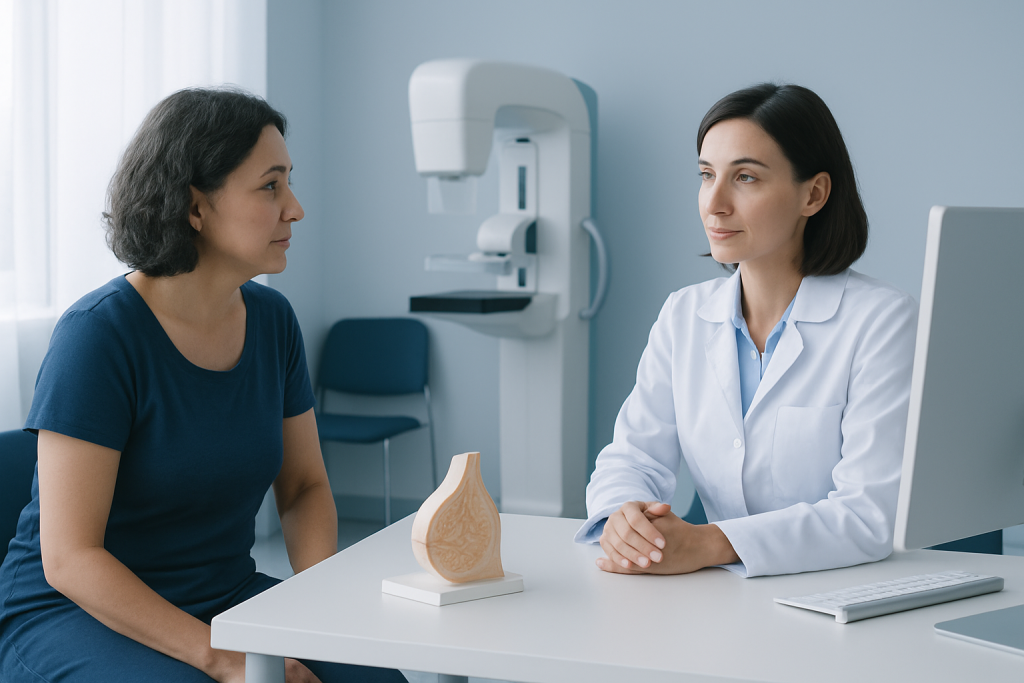
The choice of imaging depends on more than the symptom itself. Age matters, because younger breasts tend to contain more glandular tissue and can appear denser on mammography, which sometimes makes ultrasound especially helpful. Breast density can also influence how well a mammogram shows certain findings.
Personal and family history also shape the plan. A person with a strong family history of breast cancer, a known inherited mutation, prior chest radiation, or a history of high-risk breast lesions may need MRI in addition to mammography. By contrast, someone with a clearly felt lump may start with ultrasound, especially if the clinician wants to know whether the area is cystic or solid.
There are also travel-related considerations. If a patient is arranging care abroad, it is useful to bring previous reports and images, not just written summaries. Comparing old and new studies often makes interpretation more accurate and can prevent duplicate testing.
How Mammogram, Ultrasound, and MRI Differ
Each test has strengths, limitations, and typical uses. Mammography is often the backbone of breast screening because it can detect small calcifications and architectural changes that may not be felt on exam. It is especially valuable for routine screening and for evaluating many breast concerns in adults.
Ultrasound is usually the next step when a mammogram shows something unclear or when a doctor needs to examine a palpable area more closely. It does not use radiation, and it can be performed quickly. Because it shows tissue movement and fluid content well, it is particularly useful for targeted questions.
MRI offers the most detailed soft-tissue view, but it is not the right answer for every situation. It may find abnormalities that require follow-up, so it is usually reserved for higher-risk screening, problem-solving when other tests are inconclusive, or staging after a diagnosis has already been made.
- Mammogram: best for routine screening and calcifications.
- Ultrasound: best for evaluating a specific lump or clarifying a finding.
- MRI: best for detailed assessment in selected higher-risk or complex cases.
Diagnosis: How Doctors Decide Which Test You Need
Doctors begin with history and physical examination before choosing an imaging study. They ask how long the change has been present, whether it moves or feels fixed, whether there is pain, and whether there are risk factors such as previous biopsies or family history.
For many patients, the process is staged. A screening mammogram may be followed by diagnostic mammographic views or ultrasound if the first images need clarification. If the results remain uncertain, MRI may be recommended to gather more information before treatment decisions are made.
For international patients, communication is especially important. A clear explanation of why one test was ordered instead of another can reduce anxiety and help the patient plan time, expectations, and follow-up before traveling home.
Treatment Options After the Imaging Result
Imaging itself is not treatment, but it often determines what happens next. If the finding is benign, the plan may be reassurance, routine screening, or a short-term follow-up scan. If the area looks suspicious, a biopsy may be recommended to obtain tissue for diagnosis.
When cancer is found, further imaging may be used to map the extent of disease and guide surgery, chemotherapy, hormone therapy, radiation therapy, or a combination of treatments. The scan type influences planning, but pathology remains the final word when a tissue diagnosis is needed.
For someone traveling for care, treatment planning should include timing for results, any needed biopsy, and enough flexibility for a return visit or remote follow-up. A good imaging plan is one that fits both the medical question and the practical reality of recovery across borders.
Prevention & Self-care
Breast imaging cannot prevent disease on its own, but regular screening can find changes earlier, when treatment is often simpler. The best schedule is individualized and should be based on age, personal risk, and a doctor’s recommendation.
Self-care also matters between visits. Patients should know their own baseline breast appearance and seek advice if they notice a new lump, nipple change, skin puckering, persistent one-sided pain, or unusual discharge. Wearing a supportive bra, keeping follow-up appointments, and bringing prior imaging records to new appointments can all make care smoother.
For people receiving care abroad, preparing a folder with previous mammograms, ultrasound reports, MRI reports, biopsy results, and medication lists is very helpful. That record can save time and make repeat interpretation more precise.
When to See a Doctor
Medical review is appropriate when a new breast lump appears, a known lump changes, or a symptom does not go away after a short period. A doctor should also be consulted if one breast looks or feels different, the nipple inverts suddenly, or there is bloody or spontaneous discharge.
People with a strong family history of breast cancer, known genetic risk, prior chest radiation, or a previous high-risk breast biopsy should ask about the best screening plan even if they feel well. Those preparing for imaging abroad may benefit from a pre-travel consultation so the correct test is ordered before arrival.
If a patient is uncertain about next steps, a breast specialist or radiologist can explain why one test is preferred over another and how results will be shared. At Acibadem Health Point, multidisciplinary specialists and JCI-accredited hospitals diagnose and treat breast conditions for international patients, with coordinated support for imaging, biopsy, and follow-up.
What to Expect During the Appointment
Understanding the visit can make breast imaging less stressful. A mammogram usually takes a few minutes per breast position and may feel briefly uncomfortable because the breast is compressed for image clarity. Ultrasound is usually painless and involves gel and a handheld probe moving over the skin.
MRI takes longer and may require contrast dye through a vein. The patient lies still inside the scanner, and the team gives instructions before and during the exam. If contrast is planned, the doctor will review allergies, kidney function, and any relevant medical history first.
Results may be available the same day or after expert review, depending on the facility and the complexity of the case. International patients should ask in advance how reports will be delivered and whether images can be shared digitally for follow-up at home.
Frequently asked questions
Is a mammogram always the first breast imaging test?
No. Mammography is common for screening, but the first test depends on the symptom and the clinical question. A doctor may choose ultrasound first for a palpable lump, especially in younger patients or when cyst versus solid tissue needs to be distinguished.
When is breast ultrasound better than mammography?
Ultrasound is often better for evaluating a specific lump, especially when the doctor wants to see whether it is fluid-filled or solid. It can also be helpful when breast tissue is dense or when a mammogram needs a closer look at one area.
Who usually needs breast MRI?
Breast MRI is often used for people at higher risk, such as those with certain genetic factors or very strong family history. It may also be ordered when other imaging is inconclusive or when more detailed mapping is needed after a cancer diagnosis.
Does having a breast MRI mean cancer is likely?
No. MRI can be ordered for many reasons, including screening in higher-risk patients or clarifying an unclear finding. The test itself does not diagnose cancer; it simply provides more detailed information for the care team.
Should someone bring old breast imaging when traveling abroad?
Yes, if possible. Prior images and reports help doctors compare old and new findings, which can improve accuracy and reduce duplicate testing. This is especially useful when care is being arranged across countries or health systems.
What if the imaging result is normal but the symptom remains?
A normal scan is reassuring, but persistent symptoms still deserve follow-up if they do not improve. A doctor may recommend repeat examination, a different type of imaging, or observation over time depending on the situation.
References
- American Cancer Society
- National Comprehensive Cancer Network
- American College of Radiology
- World Health Organization
- Radiological Society of North America
This article is for general information only and is not a substitute for professional medical advice. Please consult a qualified doctor about your individual situation.